This post has nothing to do with the startup world. David Graeber was an American anthropologist, author of Bullshit Jobs and co-author of The Dawn of Everything, two books as astonishing as they are stimulating.
The author is “one of the most influential intellectuals in the Anglo-Saxon world.” He can be described as an anarchist, very left-leaning, with a great distrust of centralized institutions and politics. I will simply copy the summary of these two books, which are among the most fascinating I have read in recent years.
A dramatically new understanding of human history, challenging our most fundamental assumptions about social evolution—from the development of agriculture and cities to the origins of the state, democracy, and inequality—and revealing new possibilities for human emancipation.
For generations, our remote ancestors have been cast as primitive and childlike—either free and equal innocents, or thuggish and warlike. Civilization, we are told, could be achieved only by sacrificing those original freedoms or, alternatively, by taming our baser instincts. David Graeber and David Wengrow show how such theories first emerged in the eighteenth century as a conservative reaction to powerful critiques of European society posed by Indigenous observers and intellectuals. Revisiting this encounter has startling implications for how we make sense of human history today, including the origins of farming, property, cities, democracy, slavery, and civilization itself.
Drawing on pathbreaking research in archaeology and anthropology, the authors show how history becomes a far more interesting place once we learn to throw off our conceptual shackles and perceive what’s really there. If humans did not spend 95 percent of their evolutionary past in tiny bands of hunter-gatherers, what were they doing all that time? If agriculture, and cities, did not mean a plunge into hierarchy and domination, then what kinds of social and economic organization did they lead to? The answers are often unexpected, and suggest that the course of human history may be less set in stone, and more full of playful, hopeful possibilities, than we tend to assume.
The Dawn of Everything fundamentally transforms our understanding of the human past and offers a path toward imagining new forms of freedom, new ways of organizing society. This is a monumental book of formidable intellectual range, animated by curiosity, moral vision, and a faith in the power of direct action.
From the publisher website.
Does your job make a meaningful contribution to the world? In the spring of 2013, David Graeber asked this question in a playful, provocative essay titled “On the Phenomenon of Bullshit Jobs.” It went viral. After one million online views in seventeen different languages, people all over the world are still debating the answer.
There are hordes of people—HR consultants, communication coordinators, telemarketing researchers, corporate lawyers—whose jobs are useless, and, tragically, they know it. These people are caught in bullshit jobs.
Graeber explores one of society’s most vexing and deeply felt concerns, indicting among other villains a particular strain of finance capitalism that betrays ideals shared by thinkers ranging from Keynes to Lincoln. “Clever and charismatic” (The New Yorker), Bullshit Jobs gives individuals, corporations, and societies permission to undergo a shift in values, placing creative and caring work at the center of our culture. This book is for everyone who wants to turn their vocation back into an avocation and “a thought-provoking examination of our working lives” (Financial Times).
From the publisher webiste.
I listened to Xavier Niel on France Culture on December 6th and I had the confirmation of a relatively atypical character. Asked in particular about Elon Musk, here is his answer: Xavier Niel distinguishes between the entrepreneur, “probably the best in the world”, and the character, “completely crazy and potentially dangerous”. He praises his willingness to consider savings for the American state: “if he applies these savings in a reasoned way, to reduce the operating costs of the American state, I am sure that it will go very well. If, after that, we start to overflow, that’s nonsense!”, he qualifies. According to Xavier Niel, it is not so much the fact of paying fot Twitter 45 billion to own the social network that poses a problem, but rather the fact that the product takes on the image of its owner, “which is less exciting”, considers the boss of Free. The price doesn’t shock me if he sets up a plan that will make this company generate money. The purpose of a company is to bring together three parties: employees, customers and shareholders. Consequently, these three parties must be happy. However, the customers are not happy in his case.” In the dialogue he establishes with Jean-Louis Missika, we find a rather fascinating character who uses “ouais” (yeah) and “nan” (nope) as if he were still the kid from Crétail where he grew up. The character is a billionaire but his career has not prevented him from (or perhaps helped him to) staying down to earth unlike some of his counterparts in Silicon Valley.
I liked this book which doesn’t give advice but allows you to understand certain things about his character and his vision of entrepreneurship. A first example: I believe that youthfulness as a state of mind is essential. It is found more often in young people, because when we get older, we become richer, we harden. Youthfulness allows you to create incredible things. You don’t yet have the constraints that are imposed on you when you get older. With age, society imposes limits on you, you no longer have the optimism or the attitude towards risk that you had in youth. Whereas when you are 20 years old, when you leave school, you want to eat the world; you want to do crazy things. [Page 35]
Beyond the usual explanations about this world, Niel expresses unfailing optimism. When I started investing in startups, I was convinced that all entrepreneurs were going to be successful, that they were all going to create huge companies. Well, there were a few disappointments, but you get the idea. In another genre, I thought that Putin was threatening to invade Ukraine but would never act. Just like I thought that Covid would be over in 3 days, and that Brexit would never happen. I am a walking disaster when it comes to forecasts, because I am too optimistic. There are people who use the word “genius” to talk about me; it’s ridiculous, I am absolutely not a genius. I have two strengths, which are based precisely on my lack of intelligence: the simplification of problems, and naivety. […]
JLM: And when it fails?
XN: And when it fails, I forget and move on. Because if you let yourself get discouraged by your failures, or if you listen to everyone who tells you “it’s impossible”, you do nothing. […] When I created Station F, I hoped to welcome 1000 start-ups. And François Hollande, to whom I presented the project, said to me: “But are you sure there are 1000 start-ups in France?” Well, you know what, at the time, I had never asked myself the question! Yet it’s a logical question, I should have thought about it, done a market study, that kind of thing. [Page 39]
The important thing is not the project, it’s the founder. [Page 133]
With Kima, yeah, we have a method. We spread the risks. We invest small amounts – around 150,000 euros – in a hundred start-ups each year. Between failures and trade sales, we must have 1,500 participations.
JLM: Less than fifty that work out of 1,500, that’s not a lot…
XN: It’s part of the game. Yes, you’re wrong, and you’re wrong often. […] We don’t finance success, we finance progress. […] Of all my investments, [Square] is the most spectacular performance. I think we did x1,000. […]
The Americans I know who had success with their start-ups were all developers. [Page 139]
Not only did they have the idea for their product, but they also developed their own software, website or app. Google, Facebook, Snapchat, they were all created like that: by people who coded their own products. Hence this idea that a start-up has a better chance of succeeding when there is a coder among its founders. That’s why I created 42.
[whereas] unicorn founders, I love them, but they always have the same faces: three white guys who went to business school [page 145]
Being an entrepreneur is [page 146]
choosing what you do during the day. If you don’t want to make something, you don’t do it. You create your own job. There’s no greater freedom. Is that okay, is that convincing enough?
JLM: Rather. But you’re forgetting the pressure…
XN: That’s not what’s important. What’s important is what you’re capable of creating. […] For me, this desire to create something from an idea, to bring together different people to bring something to society, create value, invent a different product, help the most disadvantaged. Entrepreneurship is an attitude, a state of mind. You don’t need to start a company to be an entrepreneur. Are you launching an association, a project, a social media account with a real editorial line? For me, you’re an entrepreneur. Entrepreneurship isn’t just about business. You can be an entrepreneur in humanitarian, social, educational, environmental, and so on.
A desire for revenge? [Page 204]
The taste for the game is enough in itself. No need for psychology. Everyone likes to play; it’s the playing fields that differ. Mine was the telecom market. Everything is a fucking game. An eternal game, that people have been playing since the beginning of the world. So I play, and whatever the game, I want to win. I want to be first. It’s more or less long, sometimes you get overtaken. And then you catch up. That’s what gives life spice.
[…] When I try to understand why I failed, it’s not because I regret having lost money. It’s because I want to be number one. […] Nope, I just like winning. Money is just a signal that you have won a game, because you are playing with money. [page 205]
Niel is not naive. He is even a fighter. When he returned to Créteil to talk to the “kids” It is not easy to catch their attention. We are mostly white, old, even old fools. So I have a trick to wake them up. I tell them: “I also went to school here in Créteil, and then I went to jail.” And then all of a sudden, the kids wake up. [Page 22] He also admits “Me, since I was little, I wanted to earn money” [page 15] while his first words of the interview are “Frankly, I had the happiest childhood in the world. We were a very close-knit family. I swear, everything was perfect. I was so happy that I thought I was the king of the world, and that my parents hid it from me so that I could have a normal life.”
My closest friends are entrepreneurs, some are Americans, some of whom have created social networks or others are investors. I like entrepreneurs because they are different, because they have a little grain of madness, because I am never bored with them: people see me as a billionaire, but I see myself as an entrepreneur. [Page 222]
How do you explain the excesses of entrepreneurs? [Page 227]
JLM: When Elon Musk challenges Mark Zuckerberg to an MMA fight, everyone laughs but he ridicules the ecosystem. In a less visible way, the positions taken by Peter Thiel or Marc Andreessen are just as sulphurous, and give the impression of a caste that believes itself above ordinary mortals. You know them a little, how do you explain these excesses?
XN: The people you mentioned are very different from each other. There are some who are a little crazy and who believe they have superior intelligence. And there are others who are a little like children in the playground. It’s… special: But that doesn’t prevent them from having their charm and being interesting. […] But they’re not all like that. And besides, they left Silicon Valley. It’s a part of the ecosystem. Very noisy, yes, but only a part of it.
JLM: We don’t hear the others anymore. They’re nowhere to be seen.
XN: That’s not true, they just do something else. And then if you take the current boss of Google, Sundar Pichai, he’s an Indian immigrant who doesn’t consider himself superior to the rest of humanity. I don’t know his political ideas, but I’m sure they’re quite different from Elon Musk’s. […] Elon Musk only represents himself. He’s locked himself into a transgressive extremist persona and I don’t know how he’s going to get out of it, because by talking bullshit, the time comes when you pay for it. The moral is that you can be both a brilliant entrepreneur and a dirty jerk.
You know when you talk to them, you find yourself in an unreal world, where disruptive innovation is always for tomorrow morning. How many times have I heard that nuclear fusion is in a year. Same for carbon capture. That’s what makes entrepreneurs strong: for them, if you don’t try, you have no chance of succeeding: So they try, again and again. That’s why, despite all their questionable attitudes, I love these people so much.
As a conclusion
I have already discussed the excesses of Silicon Valley, for example here. Its excesses sadden me and yet, I have a certain fascination for the achievements of its entrepreneurs. This is probably the same reason why I also enjoyed reading Une sacrée envie de foutre le bordel (A real desire to cause trouble). We may not agree at all with Xavier Niel. We may not agree with everything Xavier Niel says. The book is full of exciting anecdotes and also of questionable points of view, we must simply remember that the man is optimistic and defends freedom almost without limits. His limit is the law, and even that… not at the beginning.
Xavier Niel’s book has a bit of this effect. We often find the child behind the billionaire, his style, his passions. We discover that the entrepreneur is a cataphile. He ventures there about once a month, much more when he was younger…
The last sentence of the book [page 300]: F…!, it’s still indecent, how lucky I was!
PS. For those interested in politics and Silicon Valley, a seminar throughout the first half of 2025 seems to have an enticing program, Digital Capitalism and Ideologies.
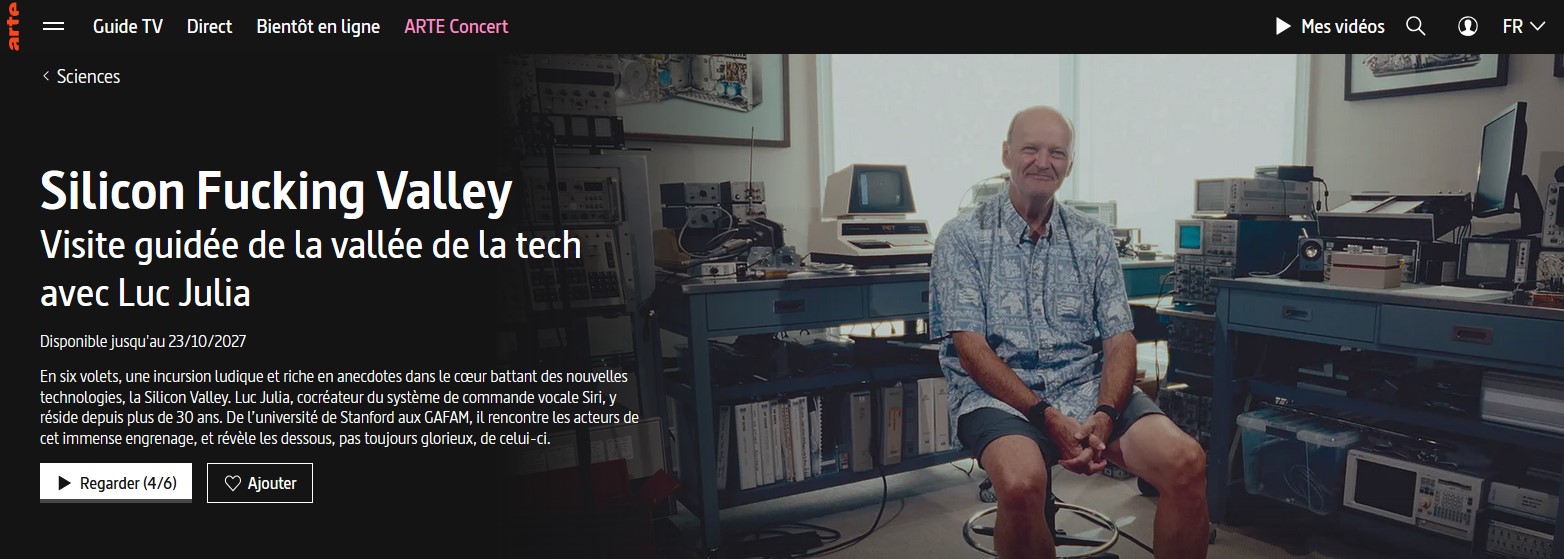
It’s a podcast from France Culture that introduced me to Arte’s new series, Silicon Fucking Valley. I’ll take two sentences from it: “Stories that are sometimes well-known but always necessary to recall in order to participate in our digital culture and allow everyone to be able to decode our connected world a little” and “I had a little more trouble with the sometimes frenetic pace of the episodes, which are stuck in 15 short minutes. A voice-over, very present, which accompanies the viewer a little too much, who would sometimes benefit from breathing to find the time to construct their own thoughts. The writing follows the recipes of videos published on social networks whose objective is to capture attention.”
And I want to add, without, I hope, coming across as the grumpy one, that the series is sometimes lazy due to its inaccuracies, even if of little importance:
– why say that the Stanford campus (7km2) is a third of the area of Paris (which is 100km2)?
– why say that the diplomas of this university are awarded on the Quad when they are rather awarded in the stadium where Steve Jobs made his famous speech (1st article of this blog)?
– why say that the tuition fees amount to $80,000 when they are $65,000 already (forgetting to add that at the Master’s level, I think that a majority of students have a scholarship or a sponsor…)?
– why say that the Computer History Museum is in Menlo Park when it is in Mountain View?
If we forget these details and this frantic pace, then, yes, there are some very interesting things. You will discover Luc Julia and Adam Cheyer at the origin of Siri from SRI (check CALO), a startup sold to Apple for “$200M according to the rumor” and which did not leave me with very good memories because EPFL should have gotten a bigger piece of the pie during that sale. Julia is right, it was crap. The F… word is appropriate!
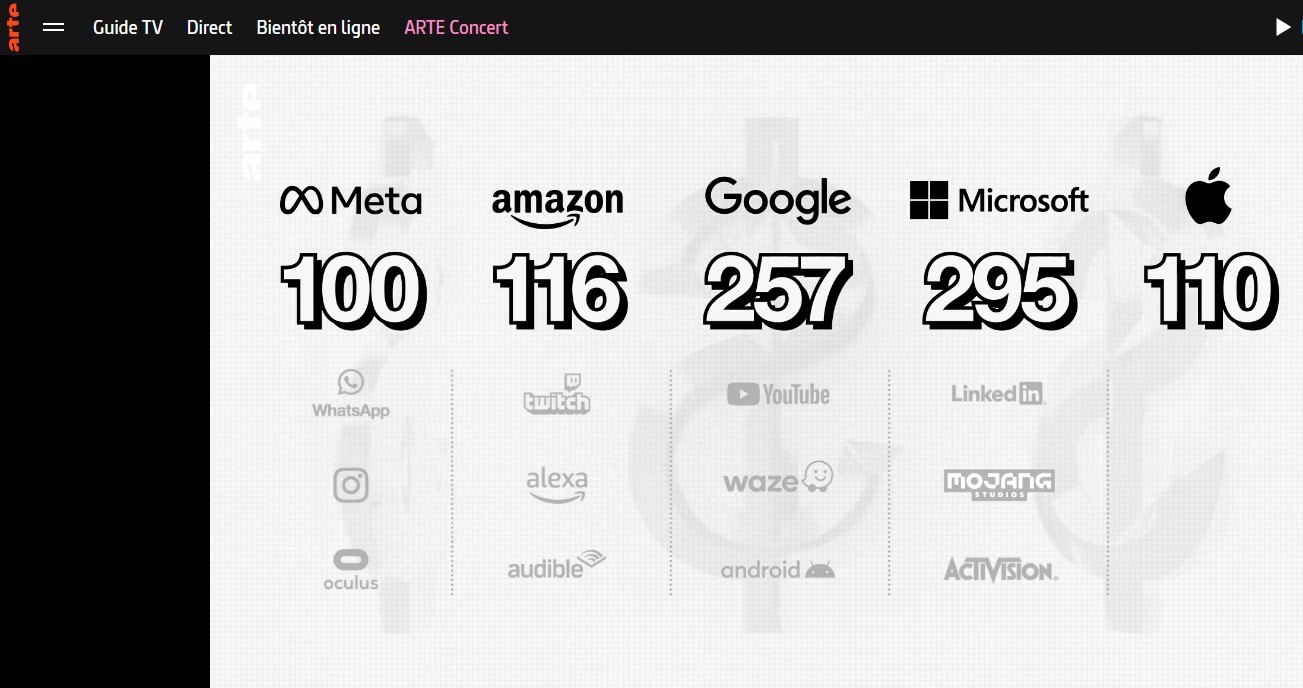
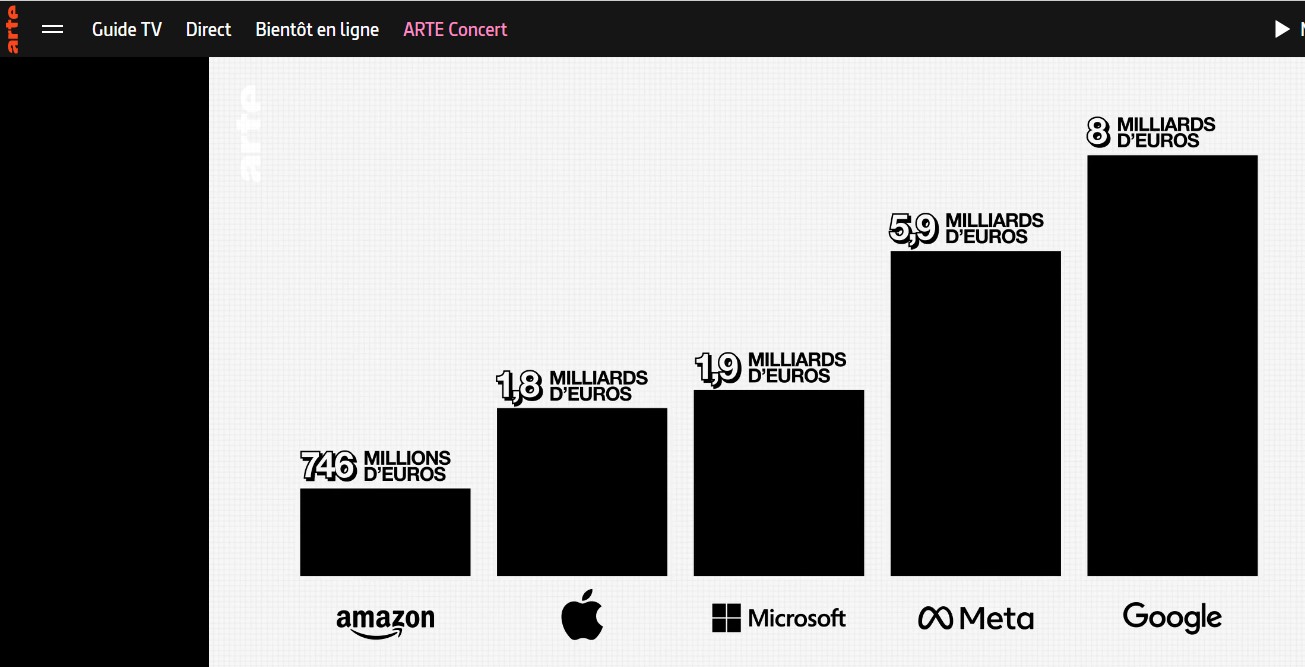
You will also discover Curious Marc. It may also remind you of what the “Mother of All Demos” was (with a strange acronym). And more seriously, the recent evolution with GAFAs. Here are two illustrations: the number of acquisitions of each actor and the amount of fines paid in Europe and the USA.
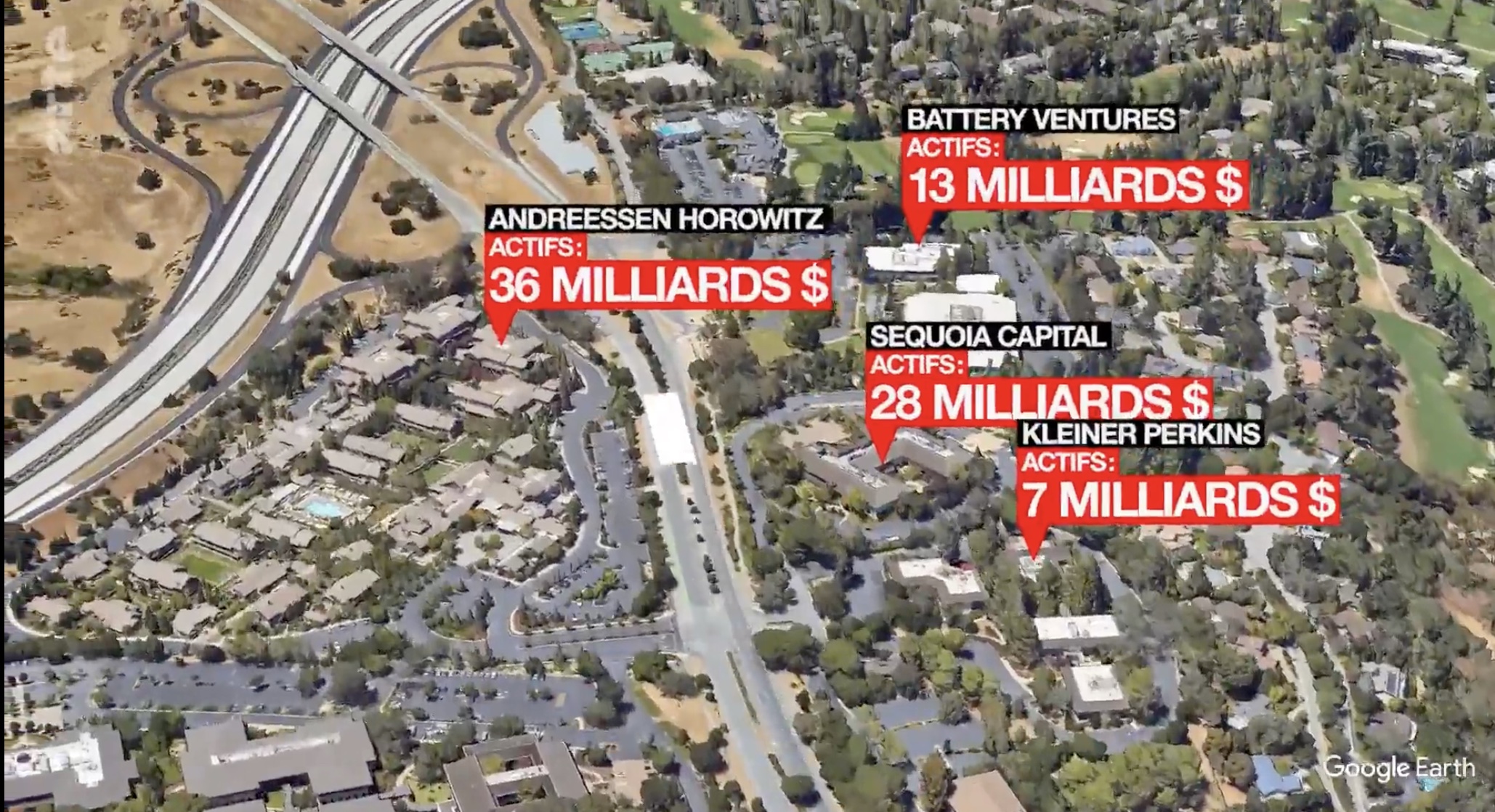
It’s also about Venture Capital and mythical San Hill Road
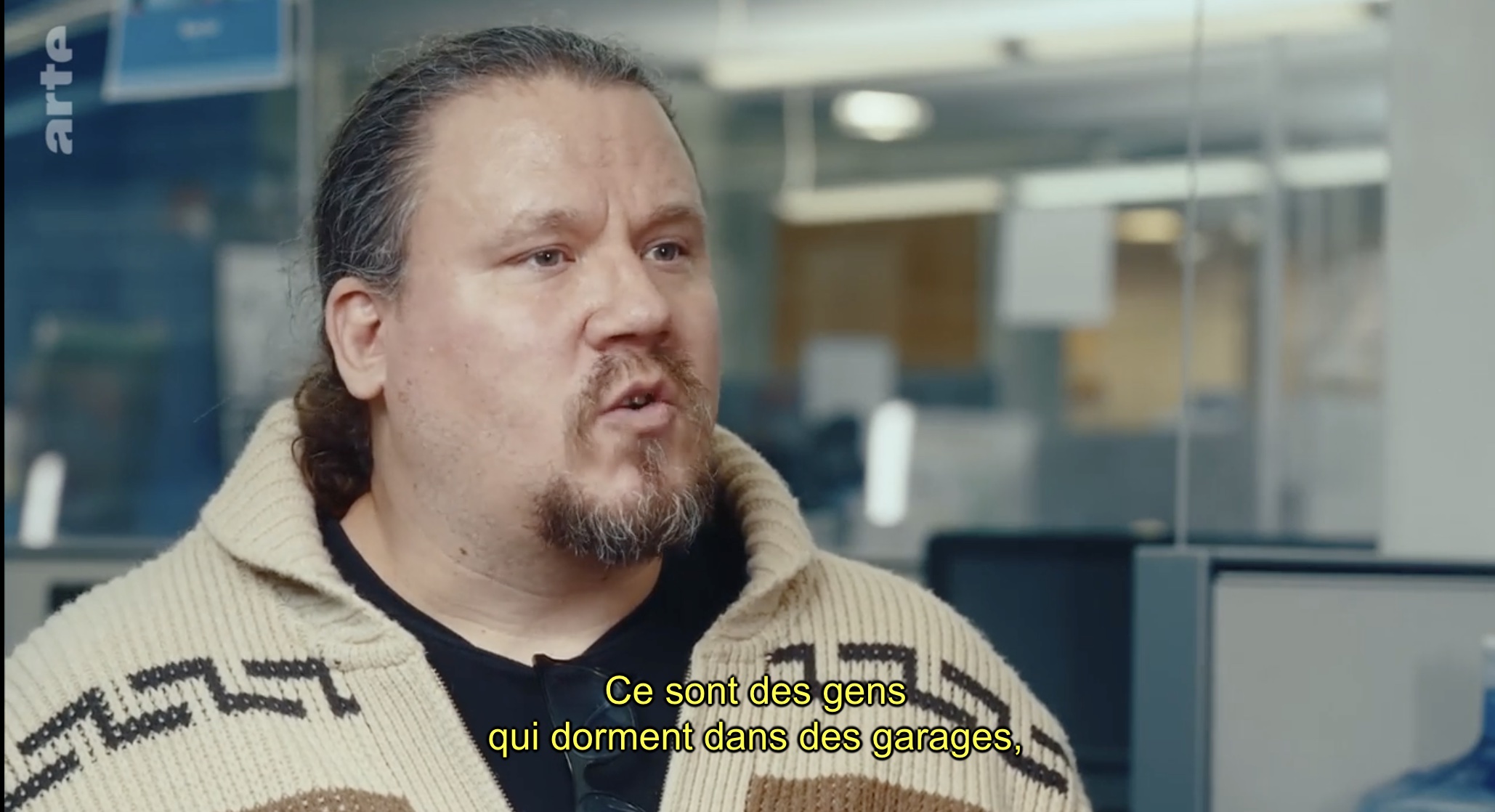
But the most touching episode remains the 6th on the wealth gap, “for one tech developer, there are six poor people who clean, serve in cafeterias, provide security, drive Google buses” and have the choice between driving 6 hours a day or sleeping in a tent or a camper van on the side of the road. The title is then telling, Silicon Fucking Valley.
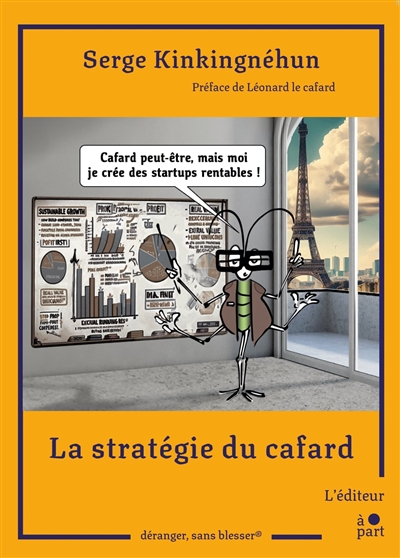
I regularly follow the publications of Serge Kinkingnéhun, whose strong statements are such as “I apply the properties of the cockroach to startups to make them invulnerable” so I read with delight his recent book La stratégie du cafard (The Cockroach’s strategy), which subtitle is also strong: “Cockroach perhaps, but I create profitable startups”
So why such a love for cockroaches (rather than unicorns)? The author refers to an article by Catarina Fake dating from September 2015: The Age of the Cockroach from which I take a brief extract: A Plague is coming to kill off the Unicorns. Inflated and unsustainable valuations, a shaky stock market, a weak China, and the aftermath of excessive enthusiasm are all pointing to the inevitable. Who will survive? As always, the less glamorous, but very hardy Cockroaches.
He could have cited Paul Graham who wrote on his blog in 2008: Fortunately the way to make a startup recession-proof is to do exactly what you should do anyway: run it as cheaply as possible. For years I’ve been telling founders that the surest route to success is to be the cockroaches of the corporate world. The immediate cause of death in a startup is always running out of money. So the cheaper your company is to operate, the harder it is to kill. And fortunately it has gotten very cheap to run a startup. A recession will if anything make it cheaper still. And related to the topict, the founder of AirBnB was proud to be treated as such by the founder of YCombinator: Surprisingly, Paul [graham] said, “If you can convince people to pay $40 for a $4 box of cereal, maybe you can get strangers to stay in other strangers’ homes.” He also liked that we were resilient, calling us “cockroaches.” In the midst of an investment nuclear winter, he believed only the cockroaches would survive, and apparently, we were one of them. More here.
Serge Kinkingnéhun dedicates his book to all entrepreneurs who want to remain free! adding Live Free or Die. Does he want to indicate that being a cockroach is a way of being happy because it is invulnerable? The author pertinently recalls a certain number of fundamentals of entrepreneurship. Its chapter 2 is entitled A startup is first and foremost a business [Page 20]. However, this is not exactly what Steve Blank explains here. Whether a startup is a business or a business in the making, there is a consensus on the necessary survival of the organization and that its main fuel is money, the use of which must be optimal.
Serge Kinkingnéhun gives a multitude of excellent advice such as the answer to the title of chapter three When to start your startup? [Page 103]: as late as possible, that is to say when cash flow requires the creation of a bank account. He explains How to sell without a product or service (Page 27]. He also explains How to find non-dilutive financing [Page 129] And he has numerous examples such as KFC, Free by Xavier Niel, MailChimp, CoolMiniOrNot (CMON) for what is the crowdfunding strategy of the latter.
I must not give the impression of an excessive fascination with cockroaches. Indeed ! The book remains very focused on a particular and very French situation; namely that the state through subsidies (multiple grants) and favorable taxation (the Research Tax Credit for example) allows businesses to survive. I’m not sure it promotes growth, even slow growth. Furthermore, the examples given are always fascinating but not necessarily exemplary. Cmon, Mailchimp, Free seem to have been possible because the founders had (had) an entrepreneurial activity which facilitated the launch of the new one. The world of food and/or mass distribution shows a very large proportion of unlisted companies as indicated on Wikipedia, companies which in their own way undoubtedly started like Serge Kinkingnéhun’s cockroaches without ever external funding but bank loans.
In reality, entrepreneurs are often cockroaches. In high-tech, there was more than just MailChimp. There was GoDaddy, Navision, or even more famous Oracle or Microsoft, companies which were able to grow their revenues without using (or very little) fundraising. There is no doubt that this is the strongest way to grow. I am not convinced that all of the world’s technology could have reached this stage without the particular model of venture capital, the limits of which the author clearly shows. Investors are impatient, sometimes incompetent. It is therefore better to know who you are dealing with and how.
But I remain cautious about the fact that inventiveness and frugality would be exclusive alternatives as promising as what venture capital has brought to the world of technology over the past fifty years. VC has a history and a reason for existing. It has excesses too. But I still think its existence stems from a need to find a way to launch a business before customer revenue is a possibility. Intel, Apple, Google were undoubtedly born from this constraint. Inventiveness and creativity have also been part of their history. I am therefore not convinced that we can systematically create quickly profitable startups (at least in high-tech).
(And on another sidenote which would deserve an article, I just like unicorns as little as I like cockcroaches, as they are the result of a deviation from the world of startup financing, by the arrival of exuberant actors who have forgotten or did not know the rules of financing of startups, based in fact on inventiveness and frugality… but that’s another subject. You can for example read How Venture Capitalists Are Deforming Capitalism)
Another important nuance: I am not an entrepreneur and Serge Kinkingnéhun is. There is probably neither a single typology of entrepreneurs as the author indicates. What is important is that the actions are in harmony with the personality, ambitions and intentions of the actors.
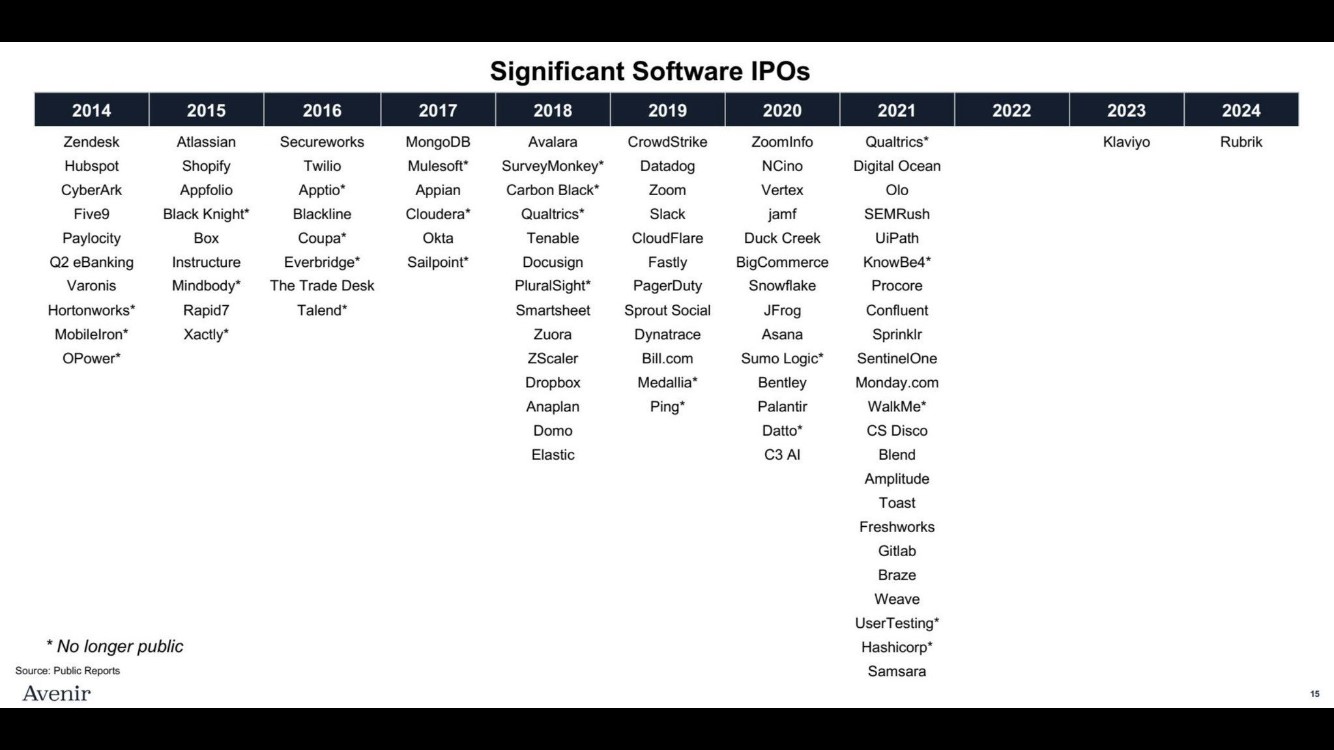
PS: In an article on LinkedIn, the excellent and funny Michael Jackson mentions the scarcity of IPOs in software in recent years.
The reasons for such scarcity have to do with startup funding and exit modes on markets such as Nasdaq. It would be interesting to check how many of them were cockroaches. I do not have the answer. More broadly, I noted that of the more than 900 startups whose capitalization table I recreated, only 6 had not raised funds from private investors.
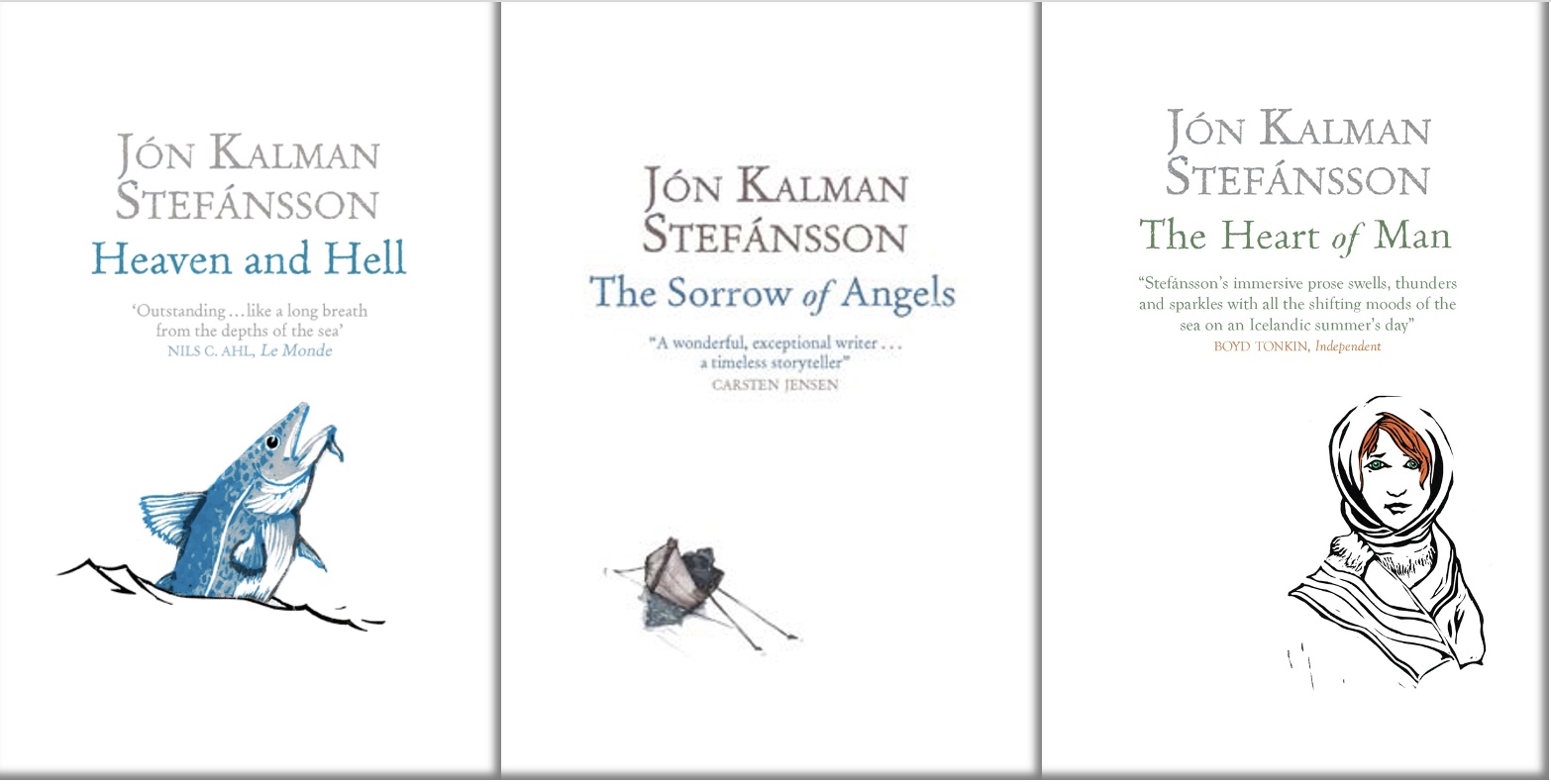
I have already written in a recent post all the happiness that the discovery of Jón Kalman Stefánsson and in particular his Romanesque Trilogy had brought me.
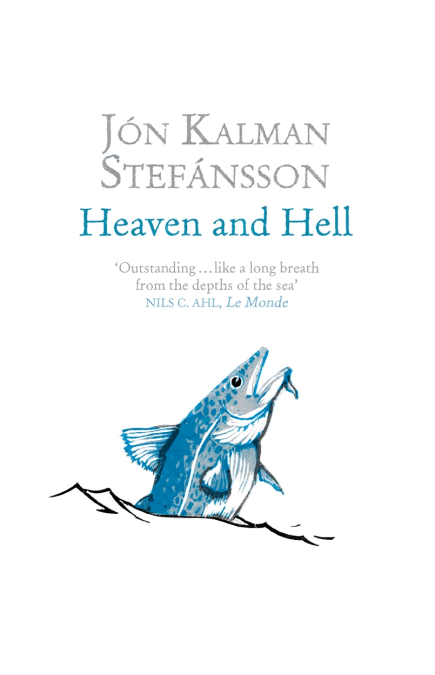
Himnaríki og helvíti (2007) / Heaven and Hell (MacLehose Press, 2010)
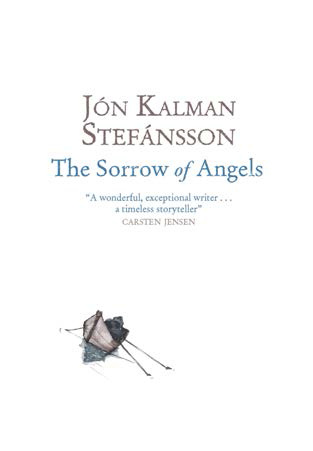
Harmur englanna (2009) / The Sorrow of Angels (MacLehose Press, 2013)
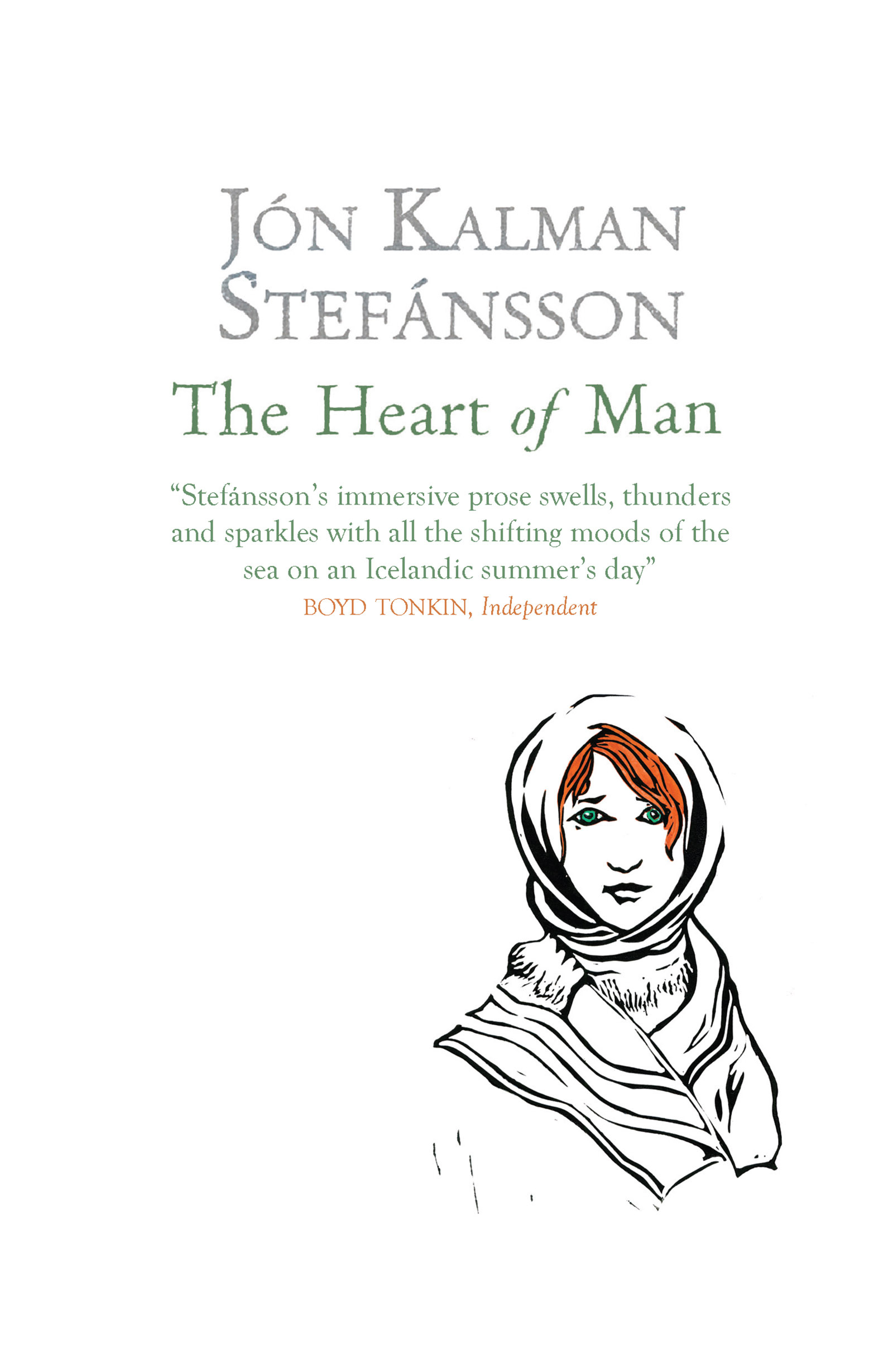
Hjarta mannsins (2011) / The Heart of Man (MacLehose Press, 2015)
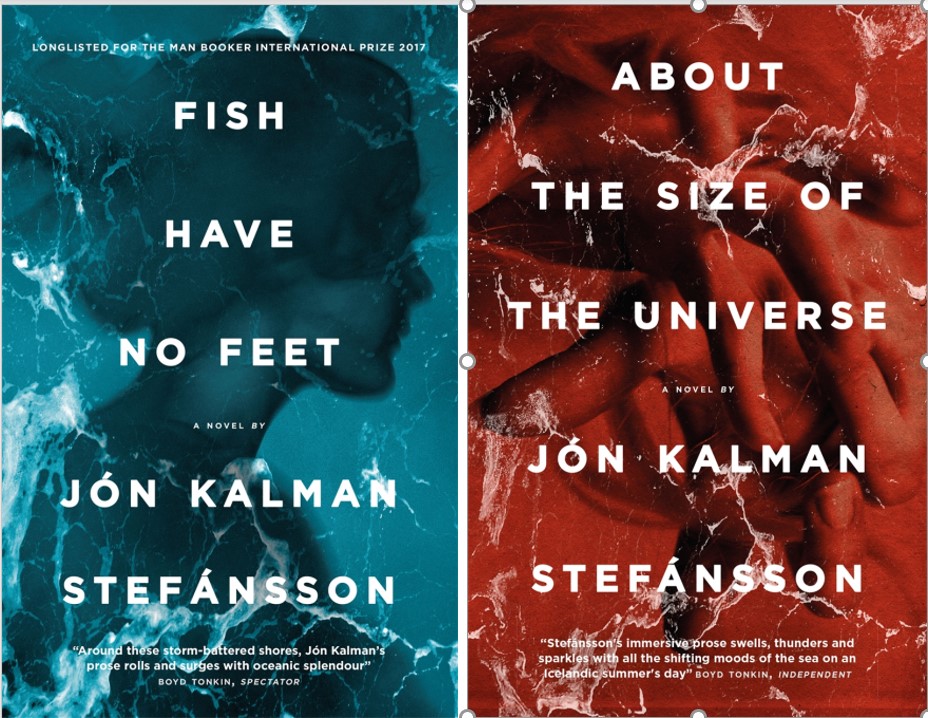
I am lucky to have enjoyed the same happiness with the equally magnificent Family Chronicle:
Fiskarnir hafa enga fætur (2013) / Fish Have No Feet (MacLehose Press, 25 August 2016)
Eitthvað á stærð við alheiminn: ættarsaga (2015) / About the Size of the Universe (MacLehose Press, 2019, translator Philip Roughton)
It’s difficult for me to talk about literature. A friend recently asked me what “explaining” meant, and after some exchanges, we arrived at “giving to see”, “making luminous”, “giving a particular perspective”, and obviously there can be an infinity of perspectives. We were talking about science and mathematics. Literature, novels, poetry explain often and much better than the human or even exact sciences… Stefánsson does.
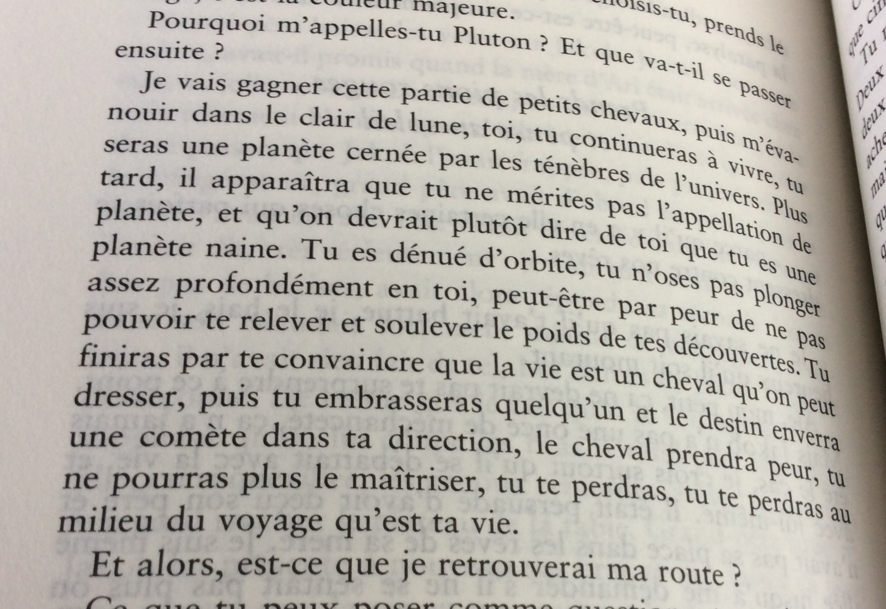
So here are two short extracts: Why do you call me Pluto? And what will happen next?
I will win this game of small horses, then disappear into the moonlight, you will continue to live, you will be a planet surrounded by the darkness of the universe. Later, it will appear that it does not deserve the name of planet; and that we should rather say of you that you are a dwarf planet. You are devoid of orbit, you do not dare to dive deep enough within yourself, perhaps for fear of not being able to get up and lift the weight of your discoveries. You will eventually convince yourself that life is a horse that can be trained, then you will kiss someone and destiny will send a comet in your direction, the horse will get scared, you will no longer be able to control it, you will get lost in the middle of the journey that is your life.
And then, will I find my way back?
This reminds me of a beautiful and terrible quote by Wilhelm Reich in Listen Little Man. Then there is this feminine side of the author. Not only in his themes, but also in his way of writing. There is no better argument, no better response to this hatred against the woke movement or of the loss of the masculinist power. It is by loving what is not like us that we love better and that we can lose or abandon our part of darkness, by developing or seeing better what is luminous.
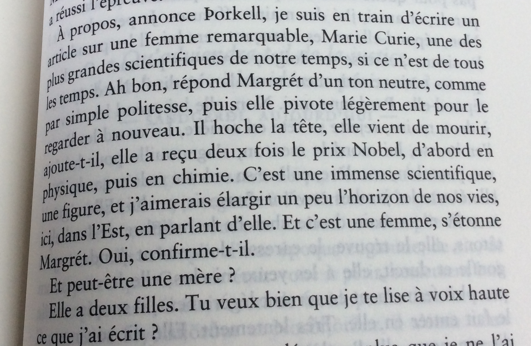
By the way, Þorkell announces, I am writing an article about a remarkable woman, Marie Curie, one of the greatest scientists of our time, if not all time. Oh good, Margrét replies in a neutral tone, as if out of simple politeness, then she turns slightly to look at him again. He nods, she has just died, he adds, she received the Nobel Prize twice, first in physics, then in chemistry. She is an immense scientist, a figure, and I would like to broaden the horizon of our lives a little; here in the East, talking about her. Is it a woman, Margrét is surprised. Yes, he confirms.
And maybe a mother?
She has two daughters.
And as I finished my other post with Cynthia Fleury, I will end this one with another discovery, that of the filmmaker Terence Davies, author among others Of Time and the City, Benediction and the very beautiful short film Passing Time.
I rarely write about literature, about subjects that have nothing to do with the world of startups. But sometimes, necessity and happiness prevail. In 2023, I discovered an admirable novelist: Jón Kalman Stefánsson.
His novel trilogy requires slow and attentive reading as the language is deep and poetic. Here are some examples through the chapter titles:
Heaven and Hell
We are nearly darkness
The Boy, the Sea, and the Loss of Paradise
Hell is not knowing if we are alive or dead
The Boy, The Village and the Profane trinity
The Sorrow of Angels
Our eyes are like raindrops
Some Words Are Shells in Time, And Within Them Are Perhaps Memories of You
Death brings no contentment
The Heart of Man
These are the stories we ought to tell
An old Arabic medical text says that the human heart is divided into two chambers, one called happiness, the other despair. What are we to believe?
Man’s heavenly string?
Life, that great musical, is neither sonorous nor fine-tuned by the Lord
That open wound in existence
This godforsaken world is habitable so long as you love me
What we miss most in existence
Where does death stop but in a kiss?
And here is a longer extract
There is nothing to add except that you have to dare to delve into a magnificent writing style. In fact Yes ! Stefansson is Iceland. And my last crush of this magnitude dates from around ten years ago, I had similarly immersed myself in three works by the philosopher Cynthia Fleury.
(with here a long interview translated in English)
Of course the title is misleading, there is no such thing as “the best”, but there is certainly a list of the videos about startups which struck me. Here it is:
Feature films and TV series
I begin with the top of the top, Something Ventured, a documentary I have watched so many times, at least once a year since I showed it to the EPFL students interested in the topic. The trailer is available below and I am not sure which part is best, the one about Sandy Lerner maybe, the co-founder of Cisco. Here is the trailer, you can buy or watch the movie quite easily online.
There are additional feature films or TV series about startups, but not that many. The best film might be The Social Network. The best series is probably The Playlist even if HBO’s Silicon Valley has become kind of the standard.
Short videos
Now when I thought about this short post, I was thinking of miraculous Stanford Ecorner: I could not find when it was launched and I had the feeling I knew about it since I began to be interested in technology entrepreneurship.
The first I remember of is Larry Pages’s tips for entrepreneurs, among them: Tip 2: There is a benefit from being real experts. Experience pays off. Tip 3: Have a healthy disregard for the impossible. Stretch your goals. Tip 4: It is OK to solve a hard problem. Solving hard problems is where you will get the biggest leverage. And I think all Page’s videos are great.
The definition of a startup by Steve Blank is a definitive reference and must watch. More of his videos on his blog or here
I thought Randy Komisar was also on eCorner but apparently not. Here are his great advice on “how to about entrepreneurship”:
Venture Capital is a time bomb by David Heinemeier Hansson is funny and nuances my bias in favor of venture capital. Worth remember when you take venture capital (if you need it and if you can!)
I think it is good to finish with another of my favorite ones, so tipycally Silicon Valley: Making Meaning by Guy Kawasaki:
I must admit having mixed feelings after finishing my reading of Fred Turner’s book. In my previous post, I tried to show why it is an important book and how the counterculture influnced the early days of Silicon Valley (together with different influences illustrated by Christophe Lécuyer in Making Silicon Valley (another post here).
Steward Brand with his Whole Earth Catalog had a major influence and many people did not know it. Even Steve Jobs in his famous speech at Stanford celebrated Steward Brand and probably many people discovered him then.
But what has been the influence of the counterculture and its impact after Steward Brand? This is where I am intrigued: Fred Turner does not seem to admit it, but the impact is disappointing…
Politically, the influencers moved towards a kind of techno-anarchist not to say libertarian philosophy and even to the far right of the political spectrum (Newt Gingrich). Let us not forget the proximity of Peter Thiel or Elon Musk to Donald Trump (despite the diner of titans). I am not sure what to believe of other people or institutions such as the MIT Media Lab of Nicholas Negroponte, the Santa Fe Institute or Esther Dyson.
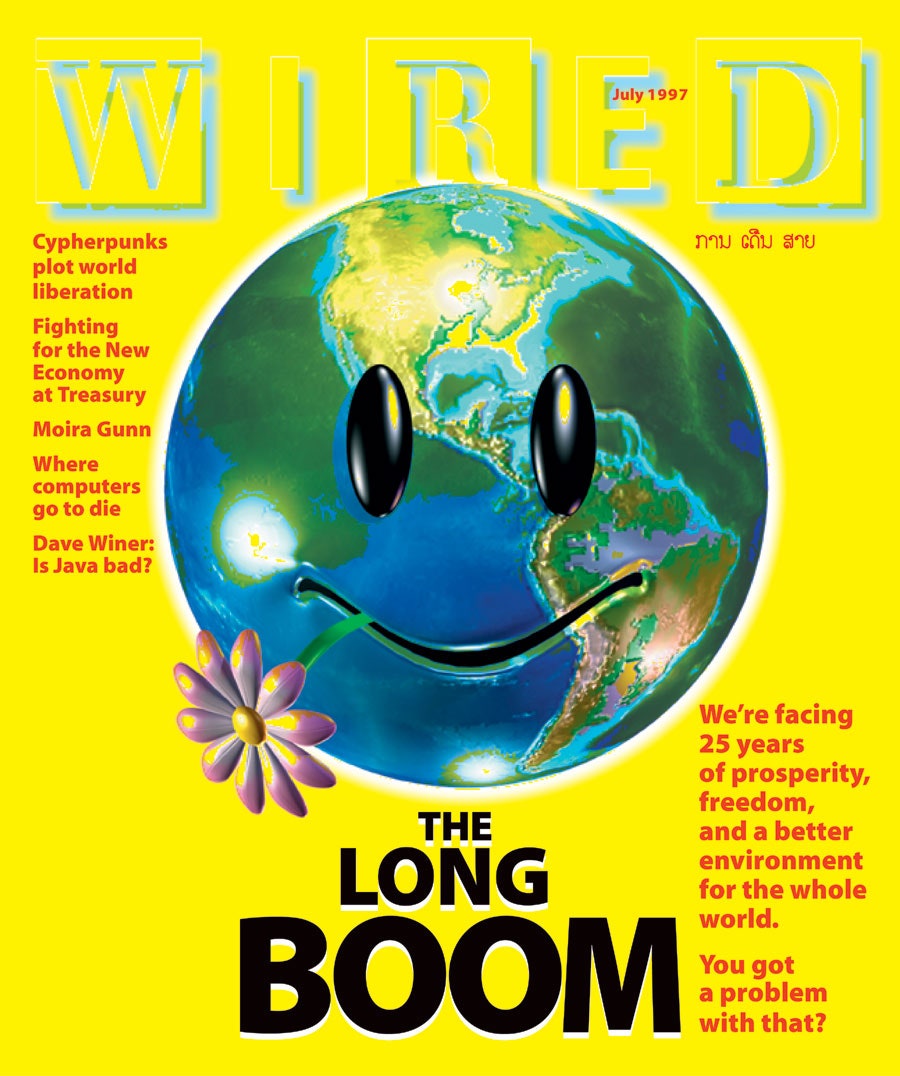
All this was apparently and symbolically represented by magazine Wired and its founder Louis Rossetto. As a prime symbol, the cover below seems to claim that Wired was the successor to the Whole Earth Catalog.
All these people and institutions seemed to have of the future not to say an ability in predicting it… but in the end what is the final output. If it is just Burning Man which Olivier Alexandre has perfectly described in his book La Tech, it is, yes, disappointing… how Burning Man ended up is in 2023 (see wikipedia) when I was finishing my book seems to be a strange coincidence…
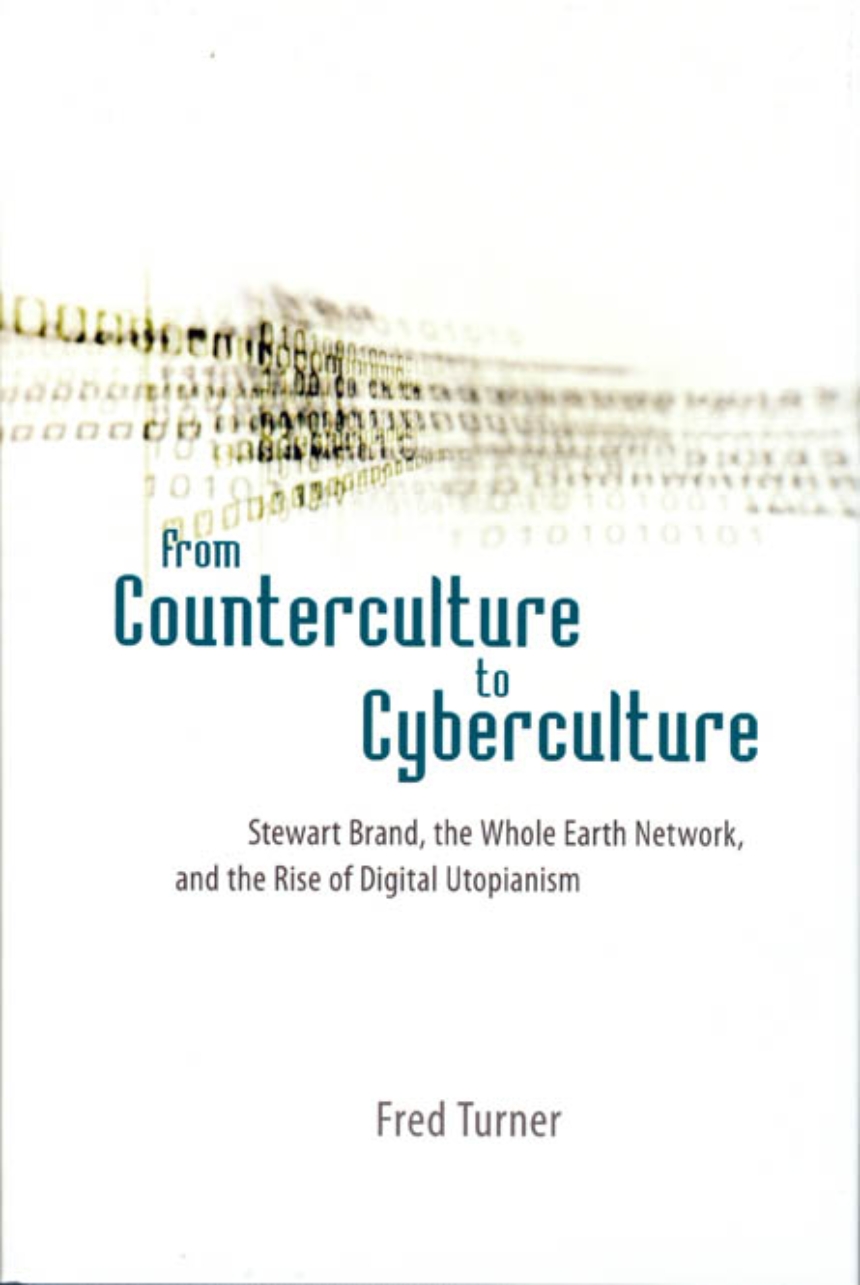
From Counterculture to Cyberculture is another recent reading of mine after Making Silicon Valley of a not so recent book. It is subtitled Stewart Brand, the Whole Earth Network, and the Rise of Digital Utopianism.
Here is a short extract of why the book is important: By the end of the 1960s, some elements of the counterculture, and particularly that segment of it that headed back to the land, had begun to explicitly embrace the systems visions circulating in the research world of the cold war. But how did those two worlds together? How did a social movement devoting to critiquing the technological bureaucracy of the cold war come to celebrate the socio-technical visions that animated that bureaucracy? And how is it that the communitarian ideals of the counterculture should have become melded to computers and computer networks in such a way that thirty years later, the Internet could appear to so many as an emblem of a youthful revolution reborn? [Page 39]
The Whole Earth Catalog
One explanation of this strange phenomenon is Stewart Brand and the Whole Earth Catalog:
Here are some more extracts: “In late 1967 [Stewart Brand and Lois Jennings] moved to Menlo Park where Brand began working at his friend Dick Raymond’s nonprofit educational foundation, the Portola Institute. Founded a year earlier, the Portola Institute housed and helped a variety influential Bay area organizations, including the Briarpatch Society, the Ortega Park Teachers Laboratory, the Farallones Institute, the Urban House, the Simple Living Project, and Big Rock Candy Mountain publishers, as well as its most visible production, the Whole Earth Catalog. As Theodore Roszak has suggested, Portola’s efforts were all designed “to scale down, democratize and humanize our hypertrophic technological society.” When Stewart Brand joined, much of Portola’s energy was directed towards providing computer education in the schools and developing simulation games for the classroom.
[…]
The Portola Institute served as a meeting ground for counterculturalists, academics, and technologists in large part because of its location. Within four blocks of its offices, one could find the office of the Free University – a polyglot self-education project that offered all sorts of courses, ranging from mathematics to encounter groups, usually taught in neighboring homes – and two off-center bookstores (Kepler’s and East-West). A little farther away was the Stanford Research Institute, where Dirk Raymond had worked for a number of years, and not far beyond that, Stanford University. In addition, many of Portola’s members represented multiple communities. Albrecht had worked at Control Data Corporation and brought with him advanced programming skills and links to the corporate world of computing, along with a commitment to empowering schoolchildren. Brand and Raymond both had extensive experience in the Bay area psychedelic scene. And Portola’s various projects kept its members in circulation: teachers, communards, computer programmers – all came through the offices at one time or another.” [Page 70]
An additional note states: “For a fascinating account of the intermingling of countercultural and technological communities in this area see What the Dormouse Said. How the 60s Counterculture shaped the Personal Computer by John Markoff, Viking Penguin 2005.” Turner is convincing in the description of the society turbulence, with the New Left focusing on civil rights whereas the New Communalists in a less organized, more anarchist vision of the world, neither being opposed to technology, but trying to scale down the impact of capitalism and cold war, Norbert Wiener, Marshall McLuhan and Buckminster Fuller being influential thinkers.
Turner concludes his chapters with these quotes : “Once while working with him on the catalog, I asked Mr. Brand if he would not carry out any of a various number of politically oriented underground newspapers. Upon reply, he told me that three of the first restrictions he made for the catalog were no art, no religion, no politics.” … then pointed out that Catalog offered all three : the art was fined art or craft; the religion, Eastern; the politics; libertarian: “From all the 128 pages of the Whole Earth catalog there emerges an unmentioned political viewpoint, the whole feeling of escapism which the catalog conveys is to me unfortunate.”
Brand responded with a defense of local action and of his personal experience : The capitalism question is interesting: I’ve yet to figure out what capitalism is, but if it’s what we’re doing, I dig it. Oppressed peoples: all I know is that I’ve been radicalized by working on the Catalog into far more personal involvement with politics than I had as an artist. My background is pure WASP, wife is American Indian. Work I did a few years ago with Indians convinced me that any guilt-based action toward anyone (personal or institutional) can only make a situation worse. Furthermore the arrogance of Mr. Advantage telling Mr. Disadvantage what to do with his life is sufficient case for rage. I ain’t black, nor poor nor very native to anyplace, not eager any longer to pretend that I am – such identification is good education, but not particularly a good position for being useful to others. I am interested in the Catalog format being used for all manners of markets – a black catalog, a Third World one, whatever, but to succeed I believe it must be done vy people who live there, not well-meaning outsiders. I’m for power to the people and responsibility to the people: responsibility is individual stuff. [Page 99]
And a little further a tough comment by Turner : Like P. T. Barnum, he had gathered the performers of his day – the commune dwellers, the artists, the researchers, the dome builders – into a single circus. And he himself had become both master and emblem of its many linked rings. [Page 101]
Taking the Whole Earth Digital
The next chapters covers the influence of the Whole Earth Catalog, outside the more or less closed circles of the famous Augmented Research Center (ARC) of Douglas Engelbart at the Stanford Research Institute (SRI) and the Palo Also Reserach Center (PARC) of Xerox, undoubtedly materialized in the no less famous Homebrew Computer Club. The cross-influences are multiple and described in detail by Fred Turner, in his chapter Taking the Whole Earth Digital.
Turner concludes his pages on the Rolling Stone article with this: In the pages of Rolling Stone, the local work of individual programmers and engineers became part of a global struggle for the transformation of the individual and the community. Here, as in the Whole Earth Catalog, small-scale information technologies promised to undermine bureaucracies and bring about both a more whole individual and a more flexible, playful social world. Even before minicomputers had become widely available, Steward brand had helped both their designers and their future users imagine them as “personal technologies”. [Page 118]
In the article, there is a mention of Hackers which ethics are described by Steven Levy, in his book Hackers, Heroes of the Computer Revolution (my next read ?). They include:
– All information should be free.
– Mistrust authority—promote decentralization.
Brand, not surprisingly, celebrates them : I think hackers… are the most interesting and body of intellectuals since the framers of the US constitution. No other group that I know of has set out to liberate a technology and succeeded. They nt only did so against the active disinterest of corporate America, their success forced corporate America to adopt their style in te end. In reorganizing the Information Age around the individual, via personal computers, the hackers may well have saved the Amerian economy. High tech is now something that mass consumers fo, rather than just have done to them… The quietest of the ’60s subcultures has emerged as the most innovative and most powerful – and most suspicious of power. [Page 138]
Turner does not hesitate to nuance Brand’s enthusiasm in the following lines, because once again the arrival of technology in everyday life has been a complex phenomenon in Silicon Valley. I am not even half way through Turner’s book. Maybe another post. Already a very intersting reading.
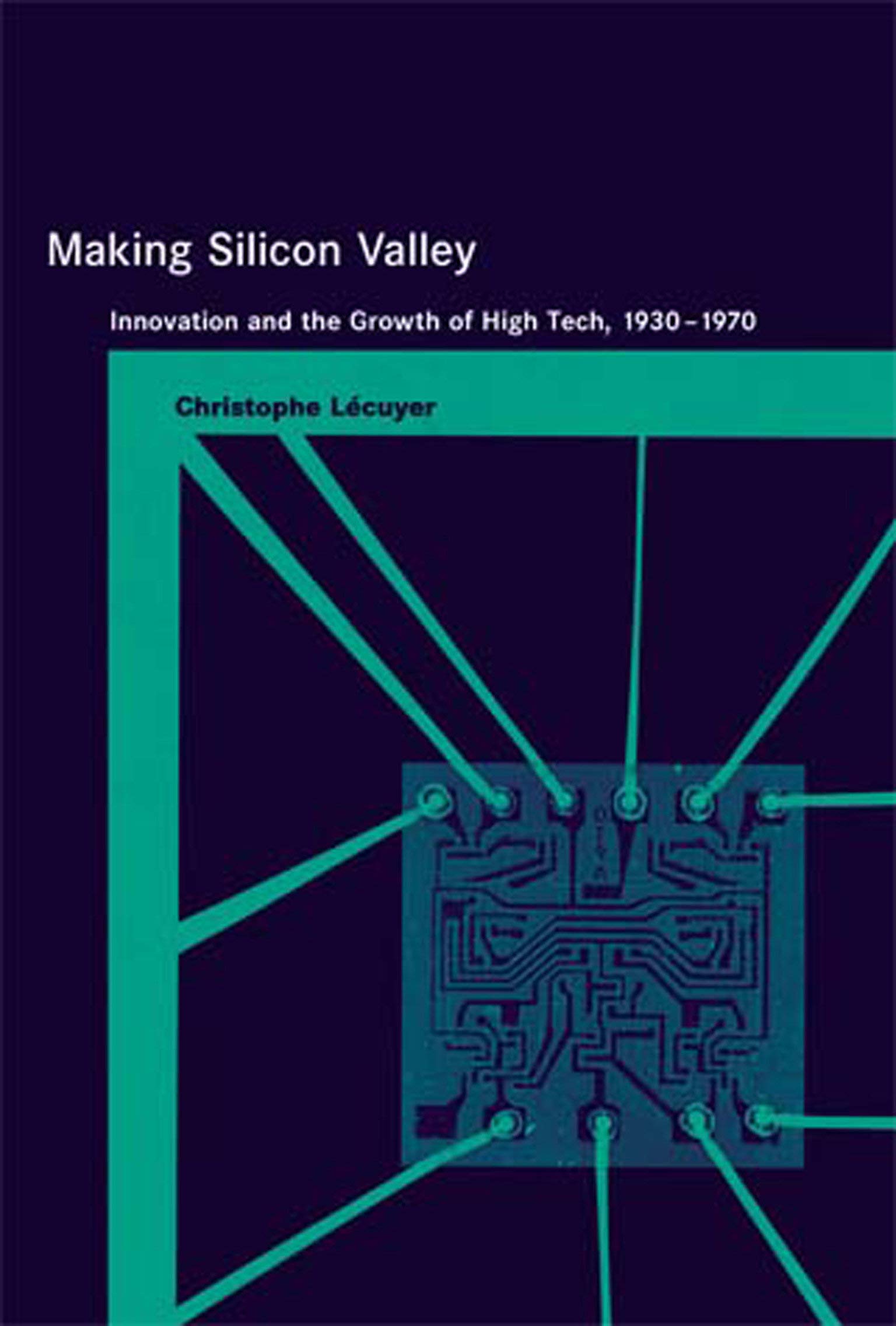
I had bought that book many years ago and had only read some parts of it. Because Olivier Alexandre (see my posts about his excellent book La Tech) had mentioned it as an excellent work, I finally read it. It is indeed excellent even if demanding and technical.
What is really interesting is what is not well-known about Silicon Valley:
there was technical activity in Silicon Valley before Fairchild. I always date the birth of Silicon Valley with the foundation of the first semiconductor startup in 1957. Lécuyer tells the history of lesser-known companies such as Litton Engineering Labs, Eimac (Eitel-McCullaugh) and Varian Associates. Strangely enough Lécuyer does not study Hewlett-Packard, probably because that company, founded in 1939, is really well-known. (Lécuyer is a historian and he focuses on publishing new knowledge);
most of that activity was linked to military activity, first telecommunications then guiding systems and radars. However Silicon Valley really grew when all these companies had to diversify with civilian applications in the early 60s;
there were as many social innovations as technical ones: in parallel to the development of klystrons, magnetrons, power tubes first and then transistors, planar transistors (“planar process, arguably the most important innovation in the twentieth-century technology” [page 297]), integrated circuits, there were a variety of management experiments, usually not hierarchic and quite egalitarian in decision making, freedom of communication to make the companies more efficient, and related to this there were financial incentives for employees (participation to profits, stock options);
Silicon Valley began to develop overseas very early: in 1965 already Fairchild had factories in Hong Kong and South Korea. The rationals were cost cutting and also fear of trade unions. The social innovations mentioned in the previous point were also linked to the fear of powerful trade unions…
as soon as 1961, Fairchild could not develop all the inventions made in-house. And in some case did not believe in their potential as Gordon Moore himself acknowledged about integrated circuits. Some of the Fairchild employees, including founders, decided to leave to explore these opportunities, sometimes also because they were not happy to be fully recognized and financially rewarded. The first startups were Rheem, Amelco and Signetics;
the previous point illustrates the difficulty of marketing (see my recent glossary): validating a market with only customers who do not see the value of a product is insufficient. You also have to be able to imagine what customers cannot imagine, such as advances in technology that will eventually make a new generation of products essential, which seem useless or unattractive at the time of analysis…
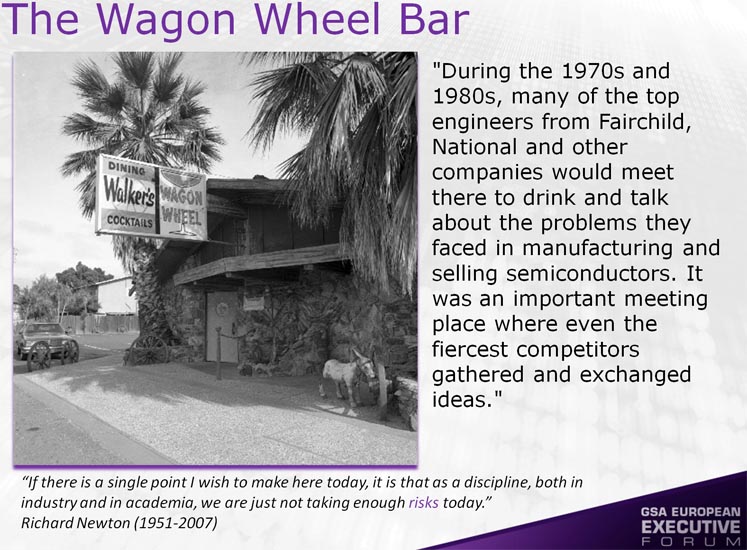
From an anecdotal point of view, Lécuyer mentions the “famous” Wagon Wheel Bar [Page 275]: “Bars also fostered the exchange of information among engineering groups. In the first half of the 1960s, engineers and managers at Fairchild and other Silicon corporations on the Peninsula had developed the habit of meeting after work at a local bar. (The Wagon Wheel Bar as a favorite.) At these bars, they would discuss the problems of teh day. Bars were also wheres sales and marketing men met with the manufacturing guys to discyuss order prices and delivery schedules. After leaving Farichild, many of these engineers returned to these bars and discuss the business with their former associates. A lot of information flowed over beer and hard liquor, to teh point that the management of many of the startups expressly forbid their engineers to go to the Wagon Wheel Bar and other bars. The end result of these daily interactions was that design techniques and solutions to particulary difficult process problems moved from firm to firm. As a result, teh MOS community on the Peninsula developed a repertoire of process “tricks” that were known only in the area. These tricks enabled them to solbve their won process problems and obtain good manufacturing yields. In contrast, MOS firms located outside of Northern Calfornia were not pluged into these networks and did not benefit from this shared knowledge. This put them at a distinct competitive disadvantage.”
In his conclusion, he mentions again the human side : “These men also developed a subculture characterized by its camaraderie, a strong democratic idelology, and genuine appreciation of ingenuity and innovation. […] These groups also brought their professional ideology and politicla ideals. The microwave and silicon communities both valued egalitarianism and viewed engineers as independant professionals. However the microwave and semiconductor communities differed in other ways: a substantial number of the microwave groups had socialist learnings and utopian ideals and longed for a society where the distinction between capital and labor would be abolished. In contrast, the semiconductor community was meritocratic and resolutely capitalistic.” [Page 296]
Lécuyer does not insist too much on individuals, even if he does not neglect the importance people such as Robert Noyce, Gordon Moore and others. He emphasizes more the importance of the collective. He does, however, mention lesser-known characters such as:
Robert Widlar : “Widlar drank and gave free rein to his irreverent and abnoxious self. Among his many pranks, he once brought a goat to mow national Semiconductor’s lawn. On another occasion, he destroyed the company’s paging system with firecrackers. He also threatened his co-workers with an axe and defied management as much as he could.” [page 269] or
Pierre Lamond“a tough French engineer that had made a name for himself by overseeing the production of the switching transistor for Control Data” [page 240]. Whatever that means, I can add a personal note because I met Pierre Lamond when he was a venture capitalist at Sequoia and his political positions are more in line with the world of the semiconductor than those of the microwaves!
Lécuyer thus explains a lot of what would come later. He also provides some new elements about why Silicon Valley has been so creative for years, decades, and maybe many to come. The conclusion is a masterpiece of synthesis and I could not avoid scanning it in pdf.