Category Archives: Innovation

The Lean Startup – Eric Ries

After reading Clayton Christensen, Geoffrey Moore and Steve Blank, I was expecting a lot from The Lean Startup by Eric Ries. I was disappointed. It could be that I did not read it well or too fast, but I was expecting much more. But instead of saying what I did not like, let me begin with the good points.
Just like the previous three authors, Ries shows that innovation may be totally counterintuitive: “My cofounders and I are determined to make new mistakes. We do everything wrong. We build a minimum viable product, an early product that is terrible, full of bugs and crash-your-computer-yes-really stability problems. Then we ship it to customers before it’s ready. And we charge money for it. After securing initial customers, we change the product constantly. […] We really had customers, often talked to them and did not do what they said.” [page 4]

On page 8, Eric Ries explains that the lean startup method helps entrepreneurs “under conditions of extreme uncertainty” with a “new kind of management” by “testing each element of their vision”, and “learn whether to pivot or persevere” using a “feedback loop”.

This is he Build-Measure-Learn process. He goes on by explaining why start-ups fail:
1- The first problem is the allure of a good plan. “Planning and forecasting are only accurate when based on a long, stable operating history and a relatively static environment. Startups have neither.”
2- The second problem is the “Just-do-it”. “This school believes that chaos is the answer. This does not work either. A startup must be managed”.
The main and most convincing lesson from Ries is that because start-ups face a lot of uncertainty, they should test, experiment, learn from the right or wrong hypotheses as early and as often as possible. They should use actionable metrics, split-test experiments, innovation accounting. He is also a big fan of Toyota lean manufacturing.

I loved his borrowing of Komisar’s Analogs and Antilogs. For the iPod, the Sony Walkman was an Analog (“people listen to music in a public place using earphones”) and Napster was an Antilog (“although people were willing to download music, they were not willing to pay for it”). [Page 83]

Ries further develops the MVP, Minimum Viable Product: “it is not the smallest product imaginable, but the fastest way to get through the Build-Measure-Learn feedback loop.” Apple’s original iPhone, Google’s first search engine, or even Dropbox Video Demo were such MVPs. More on Techcrunch [page 97]. He adds that MVP does not go without risks, including legal issues, competition, branding and morale of the team. He has a good point about intellectual property [page 110]: “In my opinion, […the] current patent law inhibits innovation and should be remedied as a matter of public policy.”

So why did I feel some frustration? There is probably the feeling Ries gives that his method is a science. [Page 3]: “Startup success can be engineered by following the right process, which means it can be learned, which means it can be taught.” [Page 148]: “Because of the scientific methodology that underlies the Lean Startup, there is often a misconception that it offers a rigid clinical formula for making pivot or persevere decisions. There is no way to remove the human element – vision, intuition, judgment – from the practice of entrepreneurship, nor that would be desirable”. I was probably expecting more recipes, as the ones Blnak gives in The Four Steps to the Epiphany.

So? Art or science? Ries explains on page 161 that pivot requires courage. “First, Vanity Metrics can allow to form false conclusions. […] Second, an unclear hypothesis makes it impossible to experience complete failure, […] Third, many entrepreneurs are afraid. Acknowledging failure can lead to dangerously low morale.” A few pages before (page 154), he writes that “failure is a prerequisite to learning”. Ries describes a systematic method, I am not sure it is a science, not even a process. Indeed, in his concluding chapter, as if he wanted to mitigate his previous arguments, he tends to agree: “the real goal of innovation: to learn that which is currently unknown” [page 275]. “Throughout our celebration of the Lean Startup movement, a note of caution is essential. We cannot afford to have our success breed a new pseudoscience around pivots, MVPs, and the like” [page 279]. This in no way diminishes the traditional entrepreneurial virtues; the primacy of vision, the willingness to take bold risks, and the courage required in the face of overwhelming odds” [page 278].

Let me mention here a video from Komisar. Together with Moore and Blank, he is among the ones who advise reading Ries’ book. I am less convinced than them about the necessity to read this book. I have now more questions than answers, but this may be a good sign! I have been more frustrated than enlightened by the anecdotes he gives or his use of the Toyota strategy. In na interview given to the Stanford Venture Technology program, Komisar talks about how to teach entrepreneurship. Listen to him!

To be fair, Eric Ries is helping a lot the entrepreneurship movement. I just discovered a new set of videos he is a part of, thanks to SpinkleLab.

Fred Destin had also a great post on his blog about the Lean Startup and you should probably read it too to build your own opinion. Lean is hard and (generally) good for you. Fred summaries Lean this way and he is right: “In the real world, most companies do too much development and spend too much money too early (usually to hit some pre-defined plan that is nothing more than a fantasy and / or is not where they need to go to succeed) and find themselves with an impossible task of raising money at uprounds around Series B. So founders get screwed and everyone ends up with a bad taste in their mouth. That’s fundamentally why early stage capital efficiency should matter to you, and why you should at least understand lean concepts.”

Let me finish with a recent interview given by Steve Blank in Finland:
I have devoted the last decade of my life and my “fourth career” to trying to prove that methods for improving entrepreneurial success can be taught. Entrepreneurship itself is more of a genetic phenomenon. Either you have the passion and drive to start something, or you don’t. I believe entrepreneurs are artists, and I’d like to quote George Bernard Shaw to illustrate:

“Some men see things as they are and ask why.
Others dream things that never were and ask why not.”

Over the last decade we assumed that once we found repeatable methodologies (Agile and Customer Development, Business Model Design) to build early stage ventures, entrepreneurship would become a “science,” and anyone could do it. I’m beginning to suspect this assumption may be wrong. It’s not that the tools are wrong. Where I think we have gone wrong is the belief that anyone can use these tools equally well.

When page-layout programs came out with the Macintosh in 1984, everyone thought it was going to be the end of graphic artists and designers. “Now everyone can do design,” was the mantra. Users quickly learned how hard it was do design well and again hired professionals. The same thing happened with the first bit-mapped word processors. We didn’t get more or better authors. Instead we ended up with poorly written documents that looked like ransom notes. Today’s equivalent is Apple’s “Garageband”. Not everyone who uses composition tools can actually write music that anyone wants to listen to.

It may be we can increase the number of founders and entrepreneurial employees, with better tools, more money, and greater education. But it’s more likely that until we truly understand how to teach creativity, their numbers are limited. Not everyone is an artist, after all.”
America and entrepreneurship

Nearly 3 years after my unusual post about Obama, here is a post slightly related. Before digging into the topic, I have to admit I have a huge respect for the American president. Even after watching George Clooney’s The Ides of March and the disappointment expressed by many people, I am intrigued and fascinated by his track record. I should add for the anecdote that I was in Washington in October 2009 when he was award the Nobel Peace Prize and in Silicon Valley in September 2011 when he pronounced his recent speech to the Congress. I also quite liked the Titan Dinner.

The White House recently published TAKING ACTION, BUILDING CONFIDENCE and the second initiative is about entrepreneurship. It is worth reading these dense 6 pages and among other things, it is striking to notice that the USA, “the most entrepreneurial nation on earth” [page 17] is extremely worried about an “increasingly unfavorable environment” and a “fallen optimism”. For these reasons, the report suggests 12 initiatives to “help spur renewed entrepreneurship”. (They are listed at the bottow on this post)

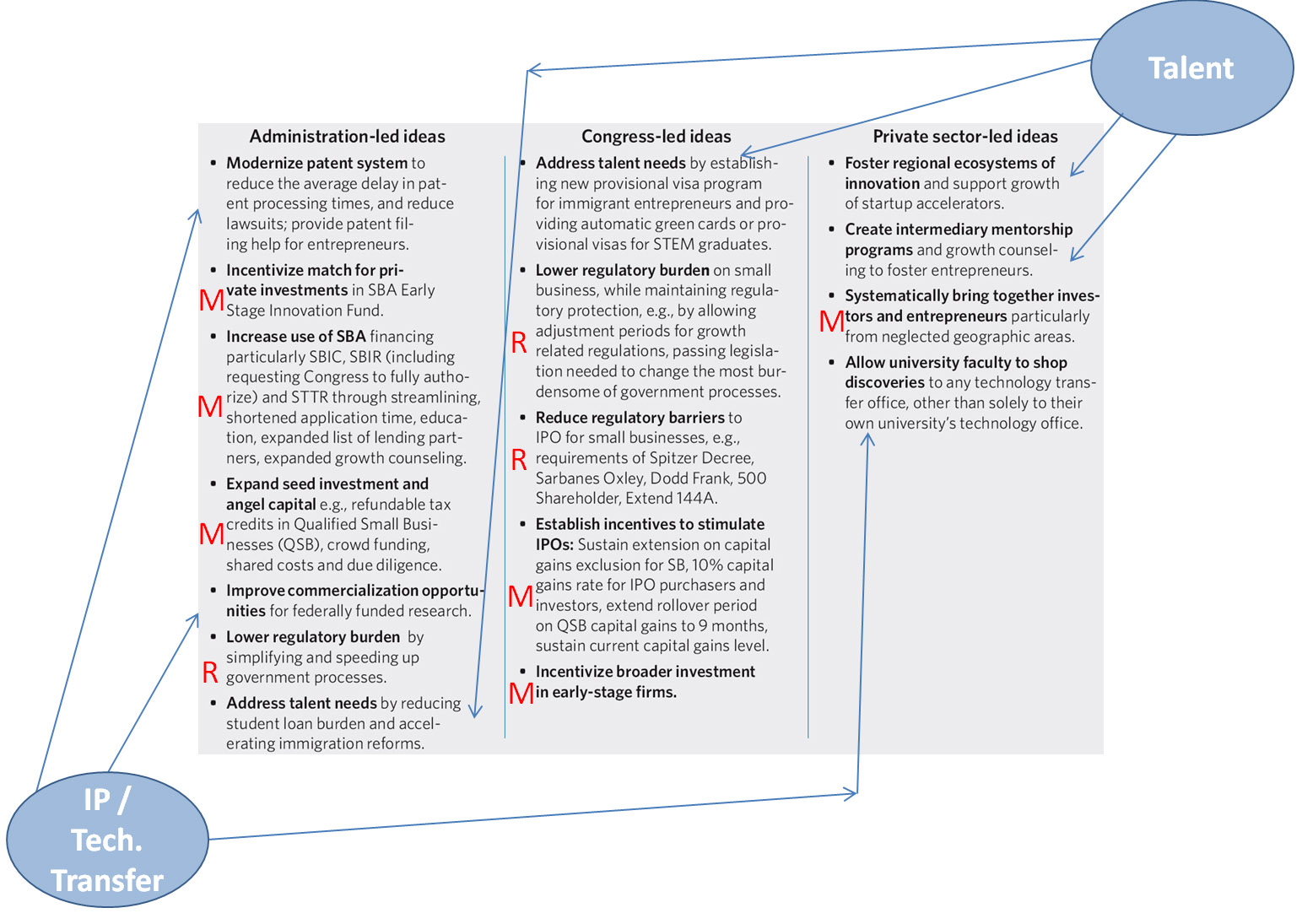
Here is my simplistic vision of the proposals:
– a few are about lowering the barriers, i.e. “changing the Rules”, what I tagged with an “R” below.
– a few more are about enabling more money and investment towards start-ups, tagged with an “M”.
These are classical measures, important and necessary.

What I found very interesting are the other ones:
– three are about Intellectual Property and Technology Transfer, a sign that the patent system might be in trouble
– even more interesting, the last three are about the People, the Talent. They mention the Immigrants and the Mentors.

These are great advice, that we should also look at very seriously in Europe!


Click on the picture to enlarge

Win the Global Battle for Talent
Some of the most iconic American companies were started by immigrant entrepreneurs or the children of immigrant entrepreneurs. Today, however, many of the foreign students completing a STEM degree at a U.S. graduate school return to their home countries and begin competing against American workers. A significant majority of the Jobs Council calls upon Congress to pass reforms aimed directly at allowing the most promising foreign-born entrepreneurs to remain in or relocate to the U.S.

Reduce Regulatory Barriers and Provide Financial Incentives for Firms to Go Public
Lowering the barriers to and cost of IPOs is critical to accessing financing at the later stages of a high growth firms’ expansion. A significant majority of the Jobs Council recommends amending Sarbanes-Oxley and “rightsizing” the effects of the Spitzer Decree and the Fair Disclosure Act to lessen the burdens on high growth entrepreneurial companies.

Enhance Access to Capital for Early Stage Startups as well as Later Stage Growth Companies
The challenging economic environment and skittish investment climate has resulted in investors generally becoming more risk-adverse, and this in turn has deprived many high-growth entrepreneurial companies of the capital they need to expand. The Jobs Council recommends enhancing the economic incentives for investors, so they are more willing to risk their capital in entrepreneurial companies.

Make it Easier for Entrepreneurs to Get Patent-Related Answers Faster
There are concerns among many entrepreneurs that, as written, the recently passed Patent Reform Act advantages large companies, and disadvantages young entrepreneurial companies. The Jobs Council recommends taking specific steps to ensure the ideas from young companies are handled appropriately.

Streamline SBA Financing Access, so More High -Growth Companies Get the Capital they Need to Grow
The SBA has provided early funding for a range of iconic American companies. The Jobs Council recommends that the Administration streamline and shorten application processing with published turnaround times, increase the number of full time employees who perform a training or compliance function, expand the overall list of lending partners, and push Congress to fully authorize SBIR and STTR funding for the long term, rather than for short term re-authorizations.

Expand Seed/Angel Capital
The Jobs Council recommends that the Administration clarify that experienced and active seed and angel investors should not be subject to the regulations that were designed to protect inexperienced investors. We also propose that smaller investors be allowed to use “crowd funding” platforms to invest small amounts in early stage companies.

Make Small Business Administration Funding Easier to Access
The SBA has provided early funding for a range of iconic American companies, including Apple, Costco, and Staples. The Jobs Council recommends that the Administration streamline and shorten application processing with published turnaround times, increase the number of full time employees who perform a training or compliance function, expand the overall list of lending partners, and push Congress to fully authorize SBIR and STTR funding for the long term, rather than for short term re-authorizations.

Enhance Commercialization of Federally Funded Research
The government continues to play a crucial role in investing in the basic research that enables America to be the launchpad for new industries. The Jobs Council recommends that the Administration do more to build bridges between researchers and entrepreneurs, so more breakthrough ideas can move out of the labs and into the commercialization phase.

Address Talent Needs by Reducing Student Loan Burden and Accelerating Immigration Reforms
A large number of recent graduates who aspire to work for a start-up or form a new company decide against it because of the pressing burden to repay their student loans. The Jobs Council recommends that the Administration promote Income-Based Repayment Student Loan Programs for the owners or employees of new, entrepreneurial companies. Additionally, we recommend that the Administration speed up the process for making visa decisions so that talented, foreign-born entrepreneurs can form or join startups in the United States.

Foster Regional Ecosystems of Innovation and Support Growth of Startup Accelerators
There is a significant opportunity to build stronger entrepreneurial ecosystems in regions across the country – and customize each to capitalize on their unique advantages. To that end, the Jobs Council recommends that the private sector support the growth of startup accelerators in at least 30 cities. Private entities should also invest in at least 50 new incubators nationwide, and big corporations should link with startups to advise entrepreneurial companies during their nascent stages.

Expand Programs to Mentor Entrepreneurs
Research consistently shows that a key element of successful enterprises is active mentorship relationships. Yet, if young companies do not have the benefit of being part of an accelerator, they often struggle to find effective mentors to coach them through the challenging, early stages of starting a company. Therefore, the Jobs Council recommends leveraging existing private sector networks to create, expand and strengthen mentorship programs at all levels.

Allow University Faculty to Shop Discoveries to Any Technology Transfer Office
America’s universities have produced many of the great breakthroughs that have led to new industries and jobs. But too often, research that could find market success lingers in university labs. The Jobs Council recommends allowing research that is funded with federal dollars to be presented to any university technology transfer office (not just the one where the research has taken place).

High-tech start-ups: the new star system.

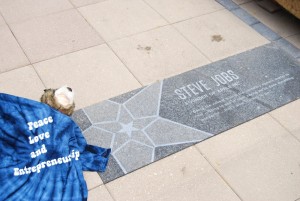
America loves its heroes! Two recent events seem to show that after Hollywood’s Walk of Fame and the Hall of Fames in sport, high-tech entrepreneurship is creating its own star system:

– it began with Boston’s Kendall Square. See for example the Xconomy article: Entrepreneur Walk of Fame Opens in Kendall Square: Gates, Jobs, Kapor, Hewlett, Packard, Swanson, and Edison are Inaugural Inductees.
– it was followed by Stanford recent Engineering Heroes project. This one is a project only with a very long list of more than 60 nominees.

Well you could build your own list. I think Boston missed Robert Noyce. Stanford will have to decide on its initial winners. The value of such lists is obviously the role model effect it should induce.

Red Herring: the End!

This is my final post on the old Red Herring magazines I had collected from a friend. It has been fun to read what people thought 10-15 years ago. You can have a look at them through my Red Herring tag.

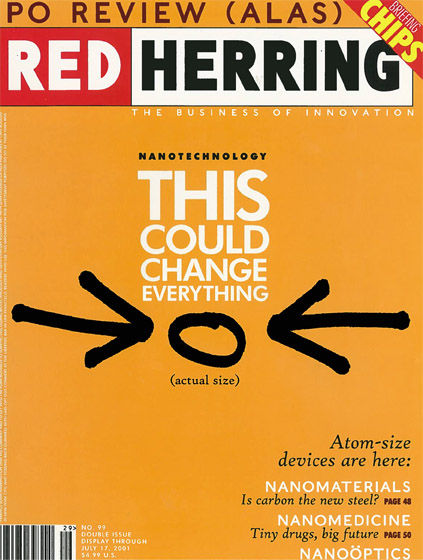
The most striking “mistake” was clearly linked to the difficutly in predicting the future. Just have a look at the cover page of July 2001.

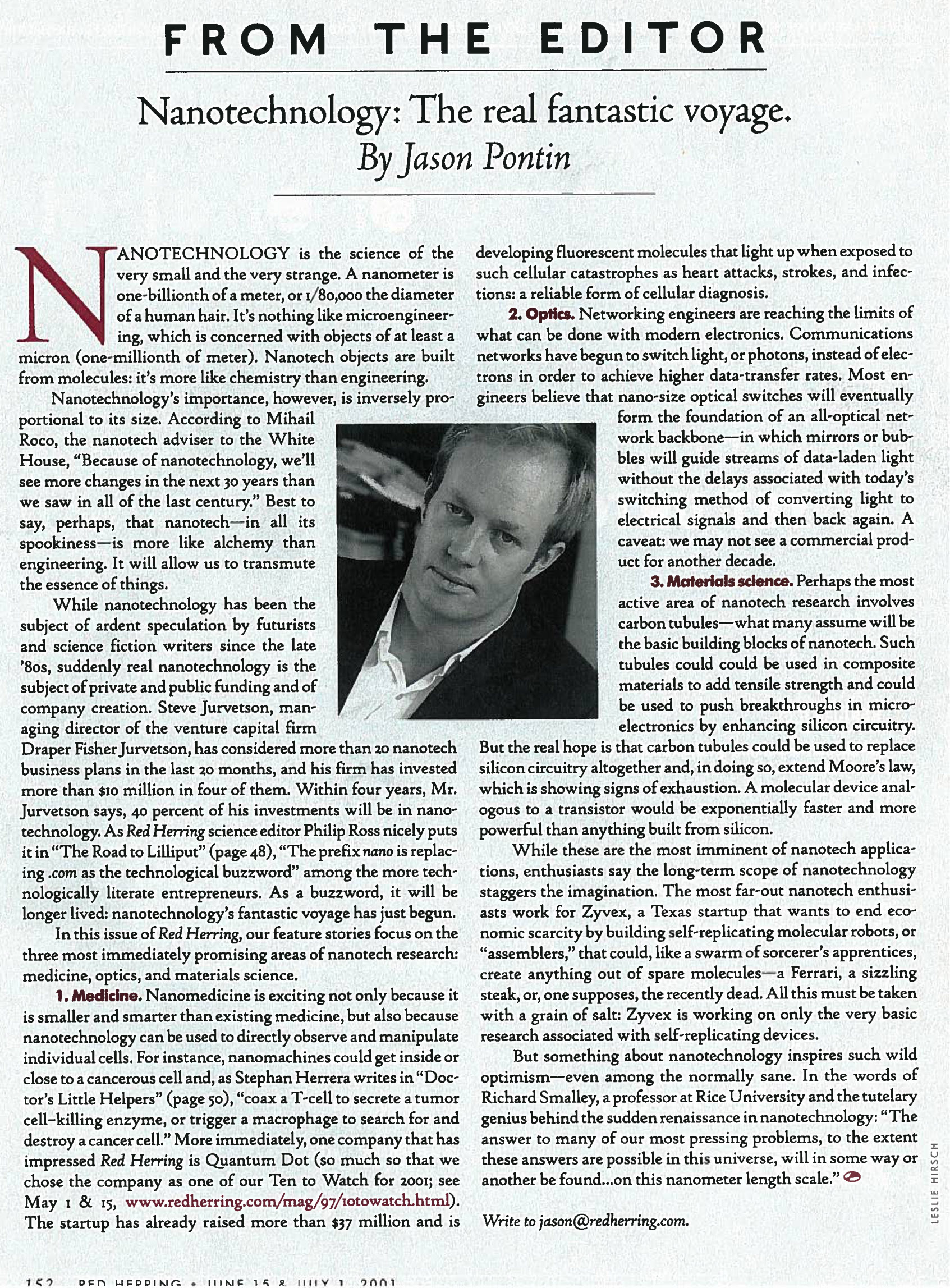
I am not sure nanotechnologies have changed the world and 10 years is eternity. At least by start-up metrics. Medicine, optics and materials science as mentioned by Jason Pontin below may not have experienced breaktroughs from nanotechnologies.

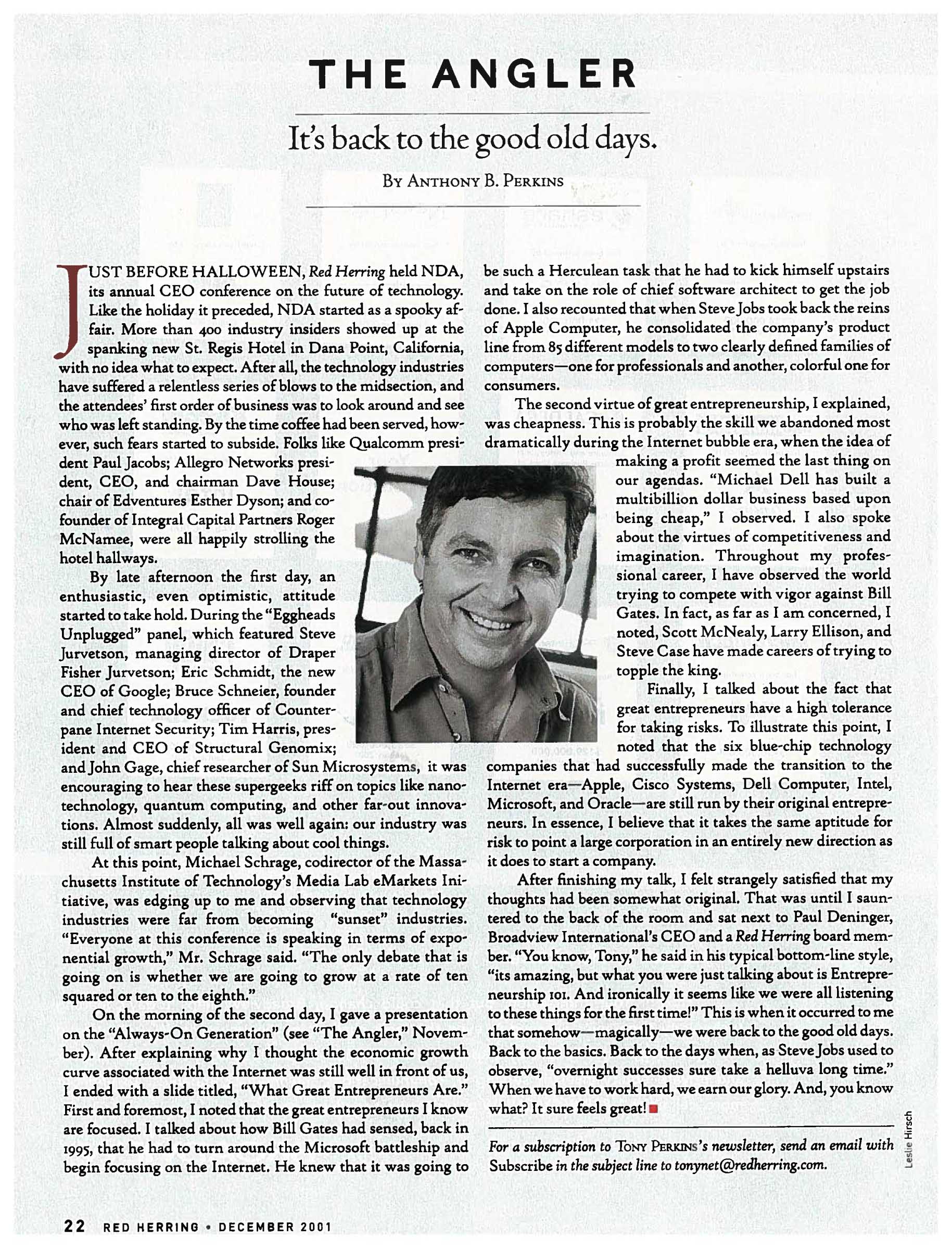
But honestly, what I liked the most was Anthony Perkins’ contribution in December 2001. “Its back to the good old days”.

So let just me expand why I liked it (by putting in bold fonts what I liked). Here is the text again:

***********************
Just before halloween, Red Herring held NDA, its annual CEO conference on the future of technology. Like the holiday it preceded, NDA started as a spooky affair. More than 400 industry insiders showed up at the spanking new St. Regis Hotel in Dana Point, California, with no idea what to expect. After all, the technology industries have suffered a relentless series of blows to the midsection, and the attendees’ first order of business was to look around and see who was left standing. By the time coffee had been served, however, such fears started to subside. Folks like Qualcomm president Paul Jacobs; Allegro Networks president, CEO, and chairman Dave House; chair of Edventures Esther Dyson; and cofounder of Integral Capital Partners Roger McNamee, were all happily strolling the hotel hallways.

By late afternoon the first day, an enthusiastic, even optimistic, attitude started to take hold. During the “Eggheads Unplugged” panel, which featured Steve Jurvetson, managing director of Draper Fisher Jurvetson; Eric Schmidt, the new CEO of Google; Bruce Schneier, founder and chief technology officer of Counterpane Internet Security; Tim Harris, president and CEO of Structural Genomix; and John Gage, chief researcher of Sun Microsystems, it was encouraging to hear these supergeeks riff on topics like nanotechnology, quantum computing, and other far-out innovations. [1] Almost suddenly, all was well again: our industry was still full of smart people talking about cool things.

At this point, Michael Schrage, codirector of the Massachusetts Institute of Technology’s Media Lab eMarkets Initiative, was edging up to me and observing that technology industries were far from becoming “sunset” industries. “Everyone at this conference is speaking in terms of exponential growth,” Mr. Schrage said. “The only debate that is going on is whether we are going to grow at a rate of ten squared or ten to the eighth.” [2]

On the morning of the second day, I gave a presentation on the “Always-On Generation”. After explaining why I thought the economic growth curve associated with the Internet was still well in front of us, I ended with a slide titled, “What Great Entrepreneurs Are.” [3] First and foremost, I noted that the great entrepreneurs I know are focused. I talked about how Bill Gates had sensed, back in 1995, that he had to turn around the Microsoft battleship and begin focusing on the Internet. He knew that it was going to be such a Herculean task that he had to kick himself upstairs and take on the role of chief software architect to get the job done. I also recounted that when Steve Jobs took back the reins of Apple Computer, he consolidated the company’s product line from 85 different models to two clearly defined families of computers–one for professionals and another, colorful one for consumers.

The second virtue of great entrepreneurship, I explained, was cheapness. This is probably the skill we abandoned most dramatically during the Internet bubble era, when the idea of making a profit seemed the last thing on our agendas. “Michael Dell has built a multibillion dollar business based upon being cheap,” I observed. I also spoke about the virtues of competitiveness and imagination. Throughout my professional career, I have observed the world trying to compete with vigor against Bill Gates. In fact, as far as I am concerned, I noted, Scott McNealy, Larry Ellison, and Steve Case have made careers of trying to topple the king.

Finally, I talked about the fact that great entrepreneurs have a high tolerance for taking risks. To illustrate this point, I noted that the six blue-chip technology companies that had successfully made the transition to the Internet era–Apple, Cisco Systems, Dell Computer, Intel, Microsoft, and Oracle–are still run by their original entrepreneurs. In essence, I believe that it takes the same aptitude for risk to point a large corporation in an entirely new direction as it does to start a company.

After finishing my talk, I felt strangely satisfied that my thoughts had been somewhat original. That was until I sauntered to the back of the room and sat next to Paul Deninger, Broadview International’s CEO and a Red Herring board member. “You know, Tony,” he said in his typical bottom-line style, “its amazing, but what you were just talking about is Entrepreneurship 101. And ironically it seems like we were all listening to these things for the first time!” This is when it occurred to me that somehow–magically–we were back to the good old days. Back to the basics. Back to the days when, as Steve Jobs used to observe, “overnight successes sure take a helluva long time.” When we have to work hard, we earn our glory. And, you know what? It sure feels great!
***********************

So here are my comments:

[1]: you need to be imaginative, nanotechnologies, quantum computing, and elsewhere in the 2001 issues, I read about Nanotechnologies again (including fullerene, gallium nitride) and nanotech start-ups (Nitronex, Zyvex, not to forget Nanosys; I am not sure where they are), Europe irising (in biotech. Really?), Robotics, including artificial intelligence, face analysis and recognition. Coming! We need to dream, do not get me wrong. But RH missed Google (just as I did) and probably the Web2.0.

[2] The only debate that is going on is whether we are going to grow at a rate of ten squared or ten to the eighth.” Well, aren’t we in a recession?. Too easy now that we know.

[3] But the piece I like the most is the back to basics, entrepreneurship 101: focus, competitiveness and imagination, cheapness, high tolerance for taking risks. This is what great entrepreneurs are about. Jobs, Gates, Ellison back then. Brin and Page today.

RIP RH!

How Aart has poisoned the EDA start-up ecosystem

You know I have a special interest in EDA. One of the influential bloggers, John Cooley, on his DeepChip site gives a video crash course on a start-up ecosystem, how the companies are valued, why VCs invest or not. Clear and simple and sadly true, and funny video at the same time.

The title is provocative and unfair. Aart (de Geus) has not poisoned anything, but the industry he is in may be in trouble.

Why companies fail

Again, I found an interesting article in an old Red Herring, dated October 1999. It is entitled the Anatomy of Failure and more importantly, it was written by Geoffrey Moore.


There is not much to say about Moore (if you know him) but he is an absolute much read. In the innovation landscape, he can be placed between Bill Davidow’s concept of Whole Product (pdf) (Moore worked at MDV as a venture partner) and Steve Blank’s concept of Customer Developement. (I will come back soon on Blank and his book The Four Steps to the Epiphany).

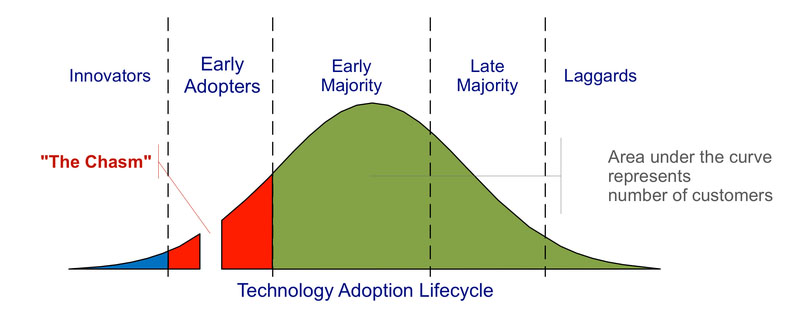
In 1999, Moore used his concepts of Chasm and Tornado to explain why companies failed and here are his four main reasons:

1- The Slow Fail: Traditional management (accountability to the plan) does not work. Early markets are unpredictable and require a lot of flexibility.

2- The Chasm Trap: If early enthusiats may buy your initial product, you will need a much more complete product (The Whole Product) to satisfy the early majority. If not, you will be trapped in the chasm.

3- The Tornado Dive: if you are lucky enough to have created the “Killer App”, you may not face the chasm, but an antichasm: the inability to deliver a huge demand and manage your hypergrowth. A dream becoming a nightmare.

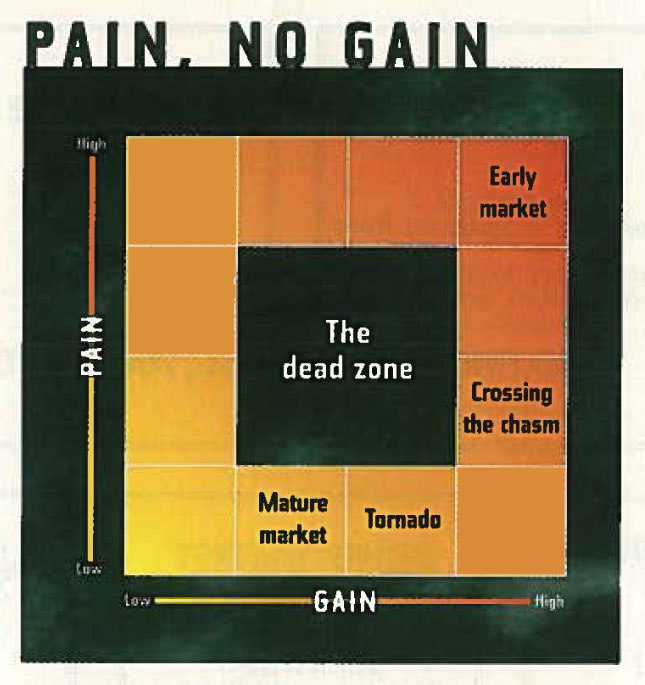
4- The Dead Zone: The previous grid shows an area which you may find moving from emerging market to crossing the chasm and finding the tornado. The pain and gain are decent but experience shows you will never reach mature markets, the place for the living deads.

In conclusion, Moore shows optimism and mentions the Full Circle: if you find soon that you are failing (“Fail Fast”), you can react (not follow the plan) and avoid the dead zone to either cross the chasm and/or enter the tornado. Then you may succeed. I scanned the full article, in case some of you would like it. Just email me.

PS (2021): Apparently the link with the pdf on the Whole Product is broken. Here is a video of Bill Davidow that might be the same event.

Prepare for dramatic Internet company wreckage.

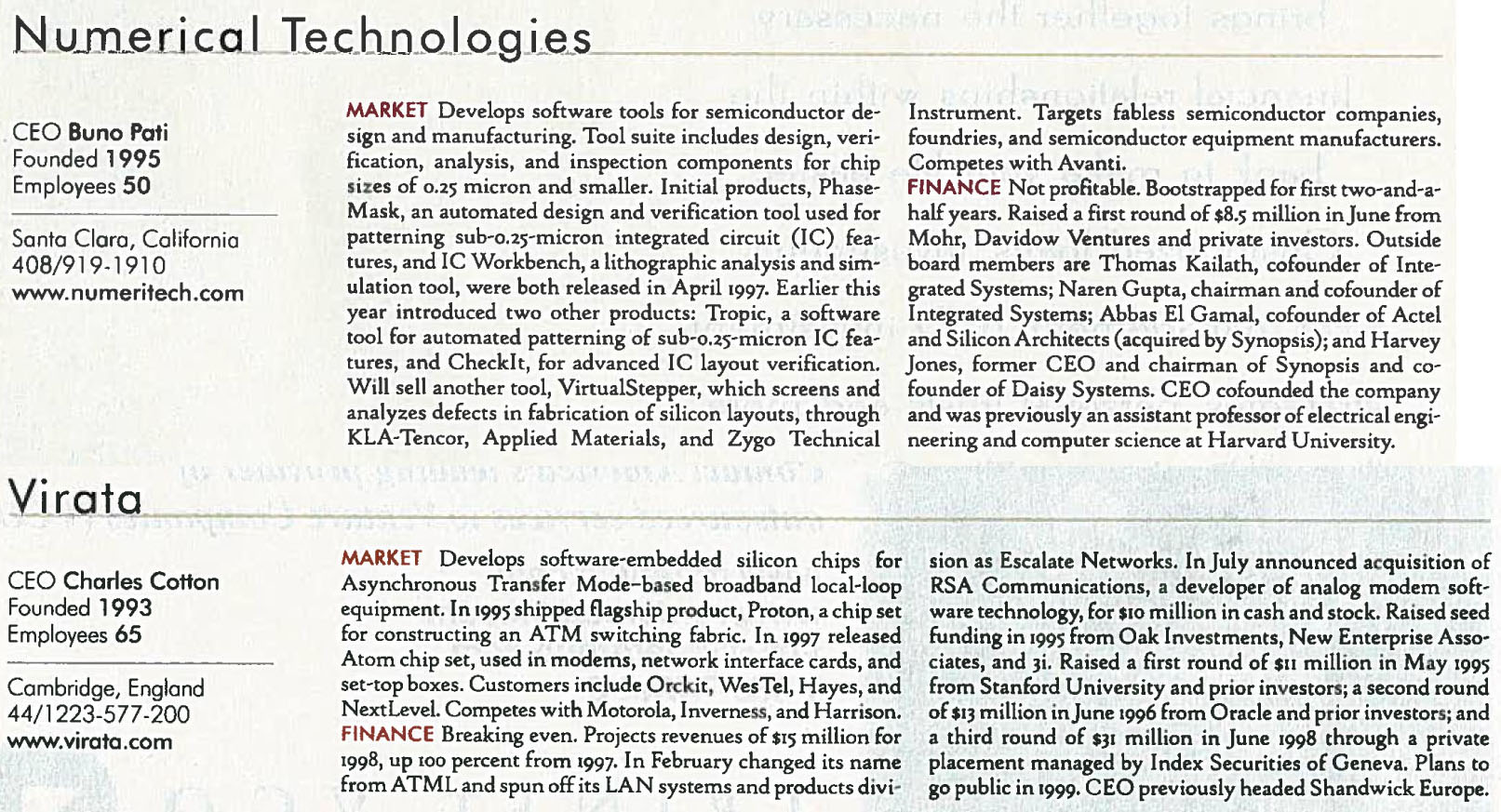
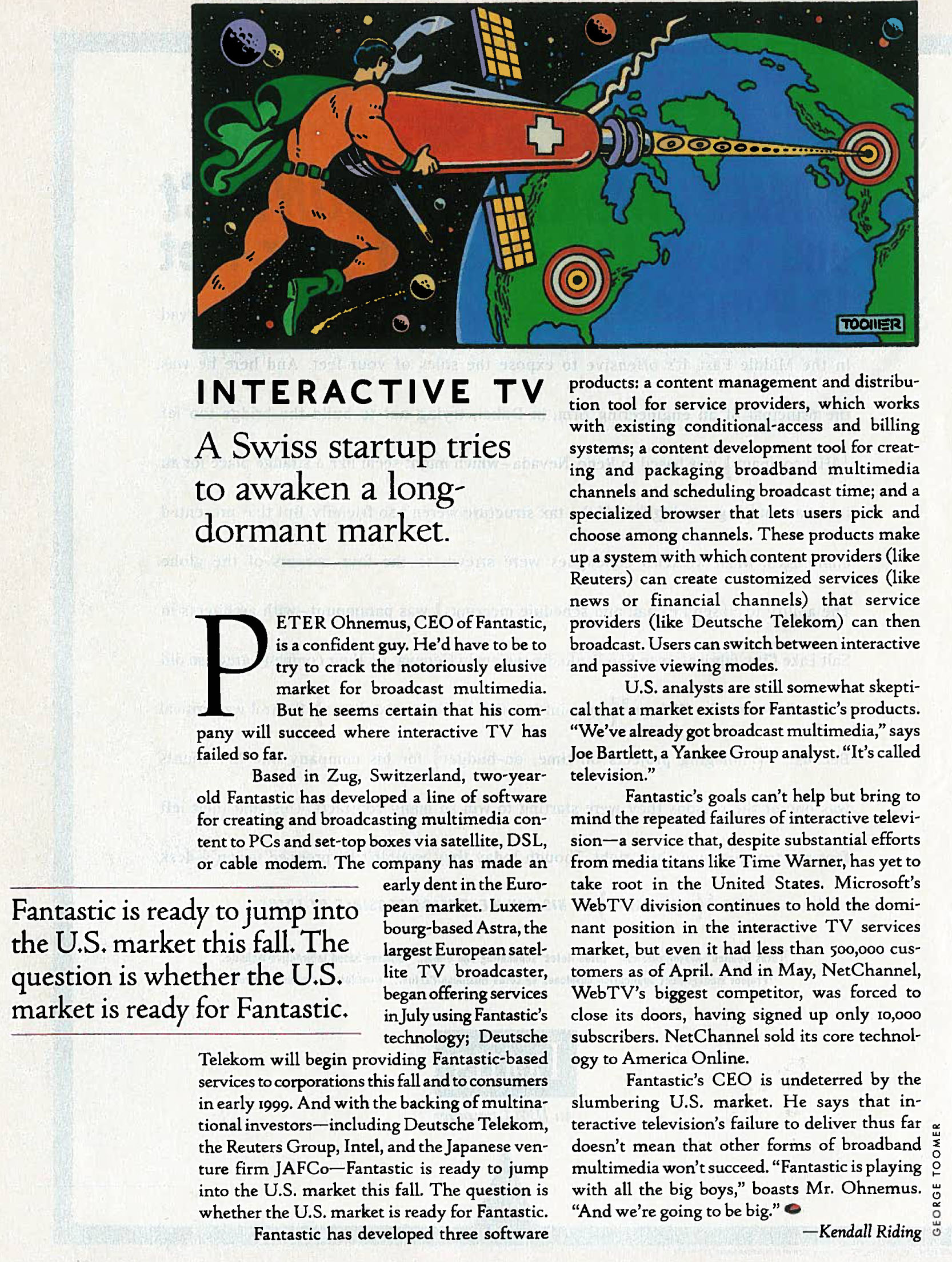
Another fo my recent reading from old Red gerring magazines. The analysis and predictions are great and provide good lessons for our days… In the same feature, October 98, I found small articles about companies we backed at Index. These three companies went public later on… so a small additional piece for nostalgia.

Prepare for dramatic Internet company wreckage.
By Anthony B. Perkins
ONE 0F THE surest reality checks in the technology business is a visit with Don Valentine of Sequoia Capital. Mr. Valentine’s seed money and sound advice have been instrumental in many of Silicon Valley’s greatest success stories, including Apple, 3Com, Cisco, and Yahoo. He, along with Netscape founder Jim Clark, was the first to proclaim in our pages, back in 1994, that Internet was indeed the information highway, and not just a “TV with a pizza box sitting on top” (see “Don Valentine’s Next Big Bet Is on C-Cube Microsystems,” May 1994 page 58). We recently prodded the curmudgeonly Mr. Valentine to tell us how he thinks the Internet market will play out. His insights are instructive.

First he notes that, like the microchip and PC markets, the Internet market grew organically rather than because it solved any obvious problem that was important to a large group of people who had a lot of money. Mr. Valentine recounts being at Fairchild Semiconductor when he and future Intel founder Bob Noyce marveled at the invention of the microchip but at the same time wondered what it was good for. The early days at Apple were much the same. “I remember wondering what people were going to do with the Apple II. There was no answer!” Mr. Valentine declares. In contrast, the networking boom was about solving big, important problems for corporations. “When Cisco came along, it was addressing an environment desperately in need of a solution,” he explains.

From a venture capital perspective, Mr. Valentine believes that it is better to invest in markets clamoring for new products than in creating new markets. “In the two previous eras—microchips and PCs—lots of companies went over a cliff,” he says. “Uniquely in the networking world, there are almost no busts.” Extending his logic, Mr. Valentine foresees what we have been predicting for a couple of years now that the Internet space will suffer dramatic company wreckage as well. Another veteran VC, Jim Breyer of Accel Partners, concurs with this analysis: “Ninety percent of the Internet companies that exist today will eventually go out of business.” And Mary Meeker of Morgan Stanley Dean Witter says that roughly 75 percent of the Internet companies that went public in the past four years are now trading below their initial public offering prices.

According to Mr. Valentine, part of the overfunding of these markets-in-creation can be attributed to the infamous herd mentality within the VC community. “We financed 6o disk drive companies because each venture firm wanted to have a disk drive investment in its portfolio,” he tells us. “The reason we have so many search engines is that Yahoo got visible. Lots of VCs didn’t have one of those. So they created an Infoseek or an Excite or whatever, and jumped on the back of the train. We are making the same mistake in the Internet era that we made in the PC era. Just think about the environment. There is no application in which the Internet solves a problem. What does the Interne do so far? It sort of reminds me of the Apple computer in 1978. It doesn’t do anything.”

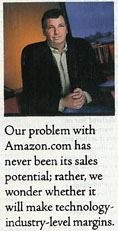
Mr. Valentine feels certain about one aspect of the Internet: that it represents the most efficient marketplace for goods and services on the planet. “Never before has the consumer had all the cards dealt face up where he can make choices and decisions knowing all the facts,” he says. “In traditional marketplaces, consumers have always had to deal with confusion, arcane language, and obfuscation. Buying something is often a hassle. Insurance is a great example of this; dealing with car salesmen is another. Now consumers are being put in a position in which they have phenomenal access to whatever they want.” This may seem of obvious value to businesses—especially when you look at the revenue trajectory of an Amazon.com or contemplate the 10 million’s worth of computer equipment that Michael Dell is selling online every day— but the only thing that is really obvious is the value to the consumer. We ask the same question that the salty Mr. Valentine does: “How do you make money in this perfect marketplace?” Our problem with Arnazon.com has never been its sales potential; rather, we wonder whether it will make technology-industry-level margins.

I threw Mr. Valentine’s comments out for discussion at dinner last night with Broadview CEO Paul Deninger and Red Herring editor Jason Pontin, inciting a lively debate. From Mr. Deninger’s perspective, Amazon.com may well be the exception, not the rule. “Look, Jeff Bezos at the right place at the right time with the right product,” he said. “But for every Amazon.com, there will be 20 flameouts.” His main point was that “e-commerce is a new way of conducting commerce electronically, but not necessarily a new industry.” Jason piped in with his theory that the disaggregation effect of the Internet “creates room for re-aggregation.” (By this time we had gone through our fourth bottle of wine.) And I believe Jason is quite right. Now that portals have better organized the Web, and Amazon.com has shown everyone how to conduct Internet commerce successfully, it’s time for the rest of the world to jump into the game. Instead of relying on Yahoo and the major portals to organize your experience, you will build your home page with links into the “miniportals” representing your specific interests. Eventually, all major product and service distributors will go online and fend off startups like Arnazon.com that are eyeing their lunch.

One defender of the miniportal revolution is Jim Moloshok, senior vice president of Warner Brothers Online. At our recent Herring on Hollywood conference in Santa Monica, California, Mr. Moloshok au but declared war on Sillcon Valley’s search-engine geeks. He warned Hollywood’s studio producers and new-media types that they are in danger of losing control of their online destinies if they don’t stop giving away their valuable television-, film-, and music-related content to Internet companies starved for programming, and that they should start demanding better licensing terms. “Entertainment companies are mortgaging their online future,” said Mr. Moloshok. “They’re giving away their content in exchange for exposure. But the entertainment companies are basically underwriting these Internet companies by throwing away their intellectual currency.” All this debate left me agreeing with Mr. Valentine’s basic premise: the Internet is still a market-in-creation. Although we have our arms around the idea that it represents a vast and efficient distribution channel and will provide a stream for investment news and entertainment content, its real value has yet to come into focus. And as we grope along this trail, we will continue to see fledgling companies like Broadcast.com and GeoCities go public. But we’ll have to wait a while to sec which cars stay on the road and which ones fly off the cliff.
[For Tony Perkins’s free weekly newsletter, send an email with subscribe in the suhject line to tonynet@redherring.com.]

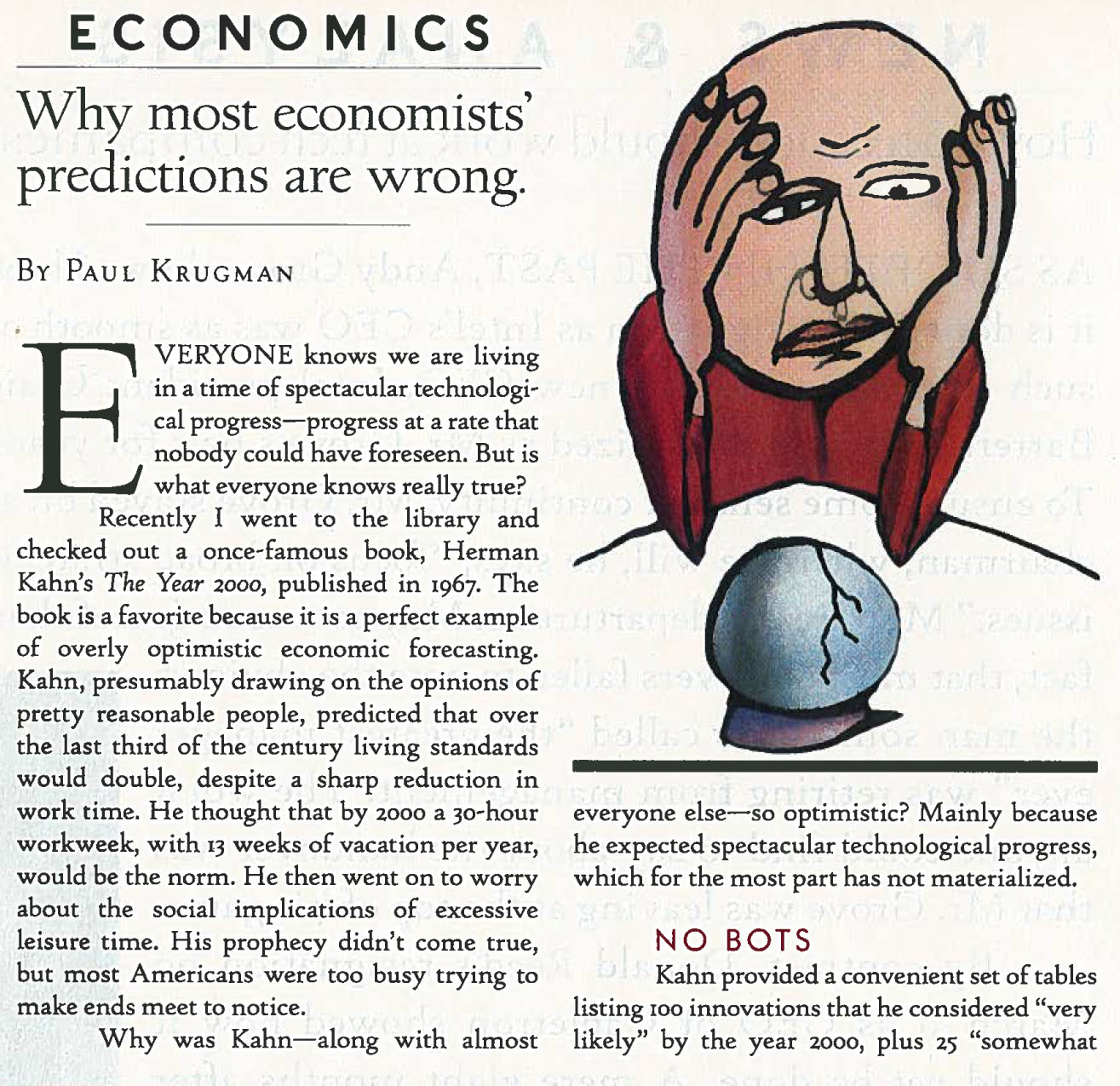
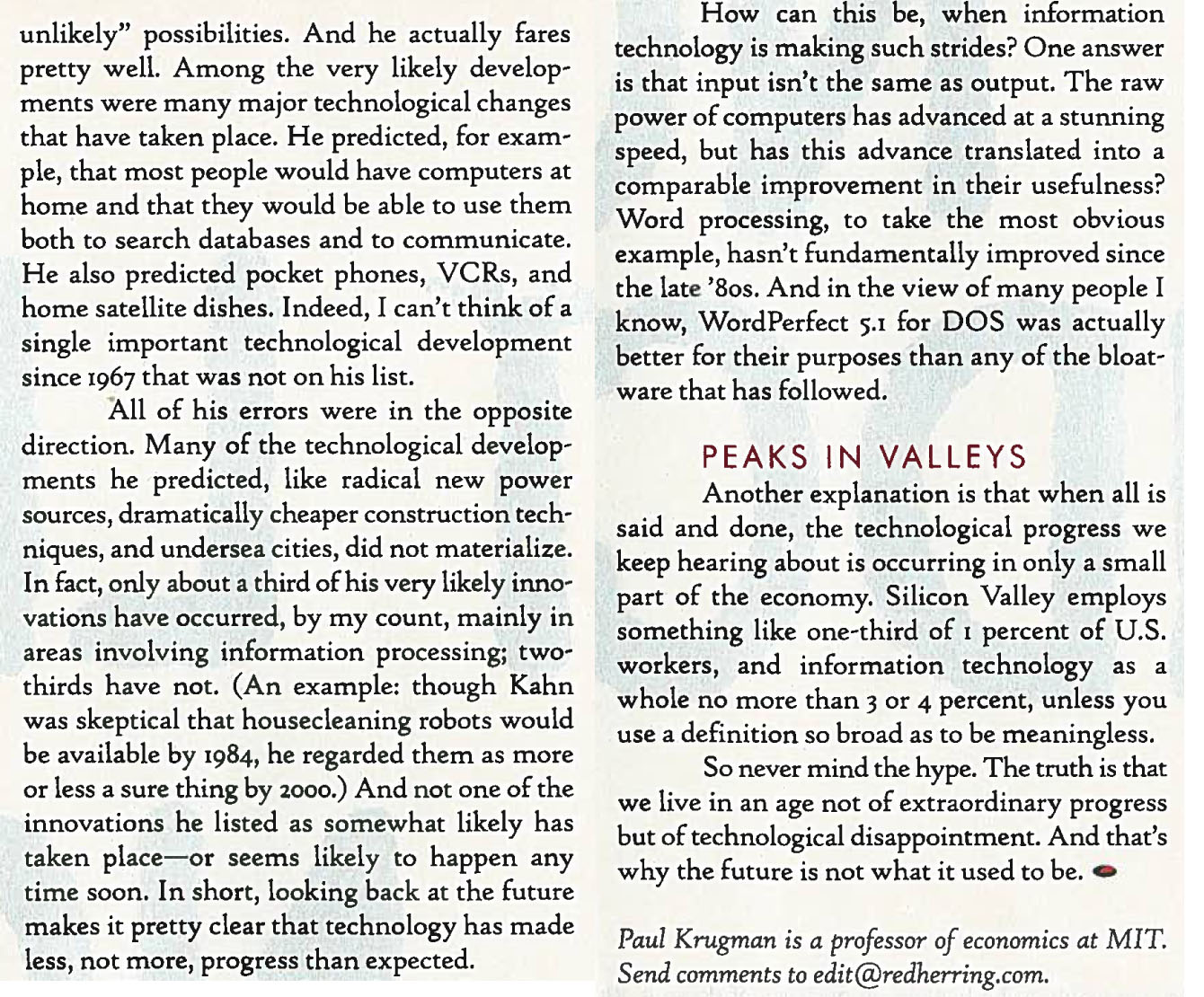
Why most economists’ predictions are wrong

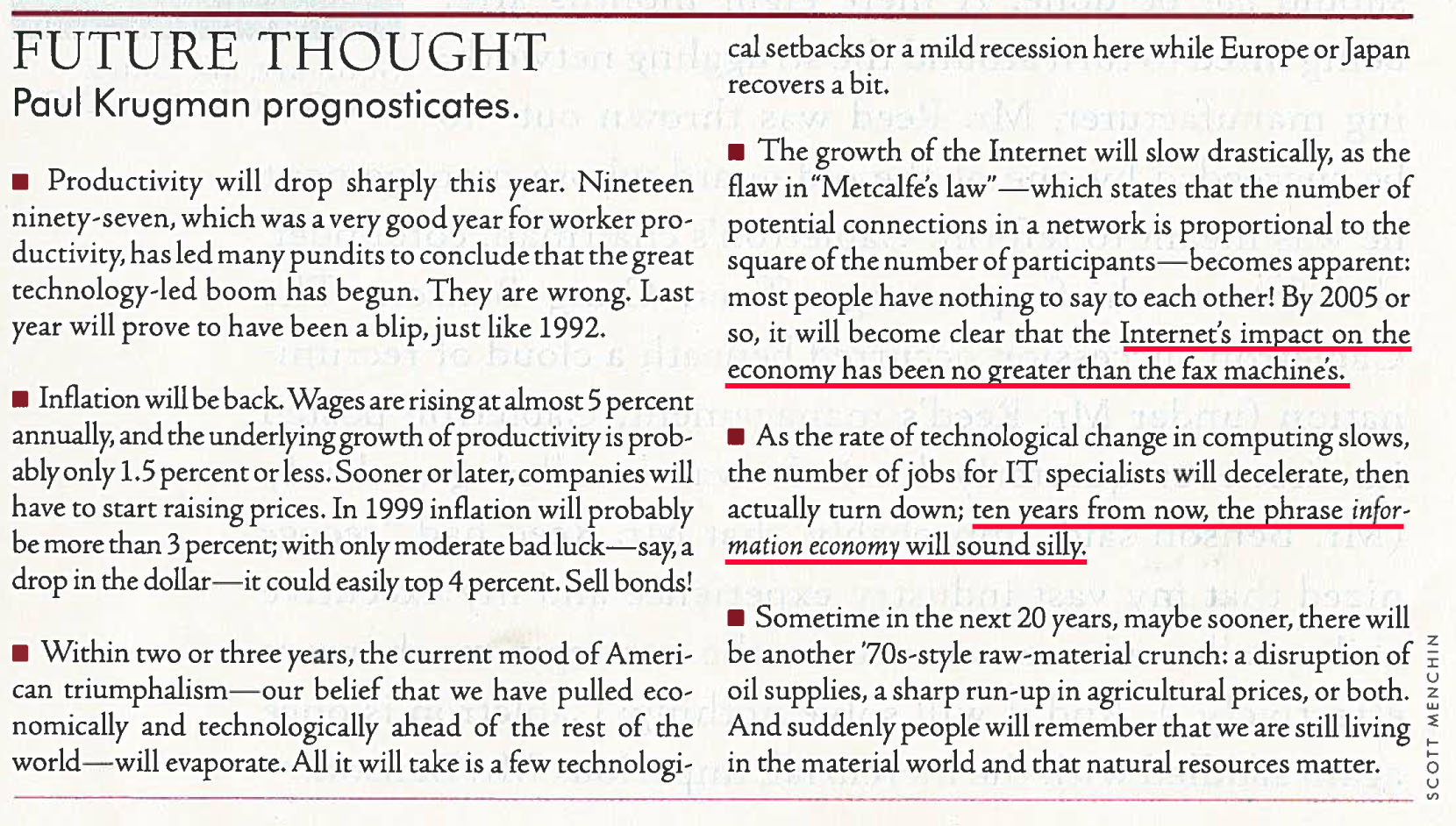
In the continuation of my reading of old Red Herring magazines, here is a very interesting article from June 1998. It is even funny in its wise comments and surprising mistakes. But first read what he says about the difficulty in predicting. It reminds me an old post on Peter Thiel, Technology = Salvation.

Yes sometimes, “The truth is that we live in an age not of extraordinary progress but of technological disappointment. And that’s why the future is not what it used to be.”

But then what about his predictions and in particular the ones I marked in red…

The challenge of growth (2/3): Google

Following my post, yesterday, about Greiner’s paperEvolution and Revolution as Organizations Grow“, here are some data about Google. Well you know that Google is my favorite case study. I read and heard a few things recently which are related to the topic of growth and that I found interesting.

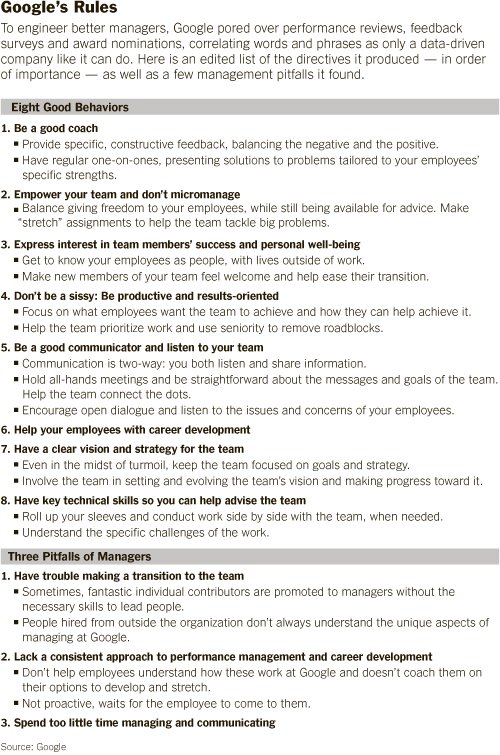
There is first the fact that Google employees generally say how impressive is the management of growth in hiring. The process is thorough with many phone and face to face interviews, assessing the quality of the future employee and her ability to work in teams. Then there is the process of managing teams which has been published under the code name Oxygen. (Thanks to Corine for mentioning it 🙂 ).

You can learn more about the project from Google Project Oxygen: Rules for good management or Google’s Project Oxygen.

What is really impressive (if true!) is that Google continues to maintain the start-up culture it had from its early days. In the early days, Brin and Page were interviewing all new hires. Google was also famous for giving math tests such as this one (extracted from the GLAT – Google Labs Aptitude Test). And finally, just as with Apple, people work in small teams (the famous “One pizza should feed the team”.) And this helps in keeping a start-up culture with not much hierarchy.

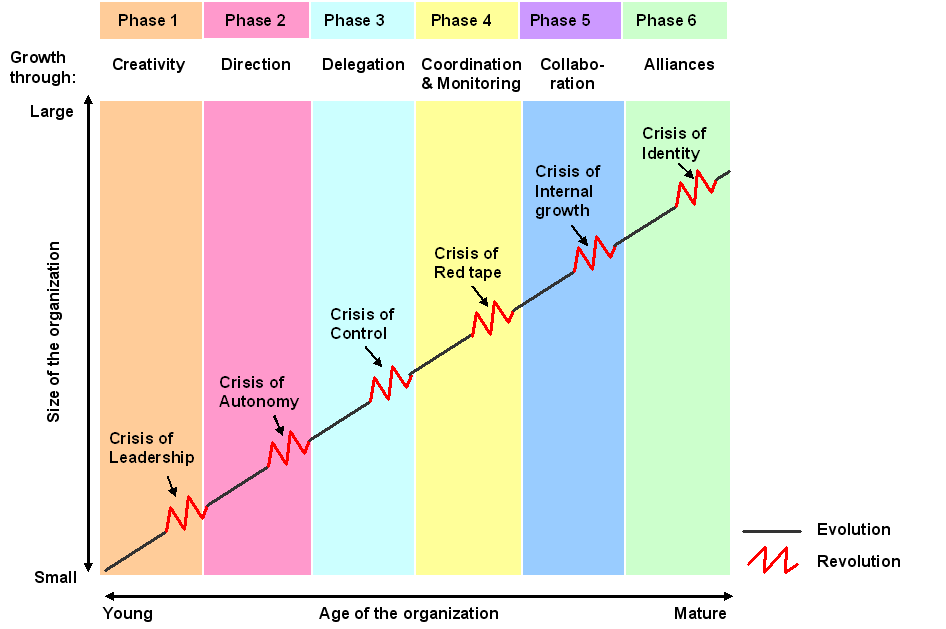
As a simple conclusion, Google tries to stay creative (following Greiner’s model).

Next and final part: some notes on the WEF report, Global Entrepreneurship and Successful Growth Strategies of Early-Stage Companies.

The challenge of growth (1/3): Greiner

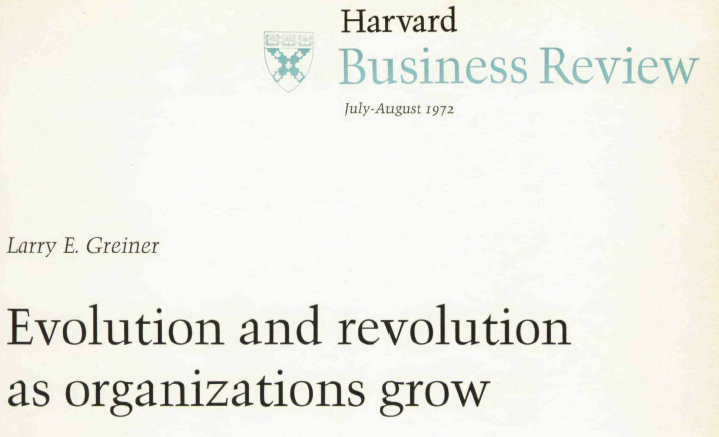
Growth of start-ups is probably their biggest challenge. As you may imagine given my interest for the company, I will focus on Google in a future post, but first let me mention an article mentioned to me by my colleague Jean-Philippe M.-F. (thanks 🙂 ): Evolution and Revolution as Organizations Grow, by Larry E. Greiner. As the author writes, it is a quite generic article: “In one sense, I hope that many readers will react to my model by calling it obvious and natural for depicting the growth of an organization. To me this type of reaction is a useful test of the model’s validity.”

What is interesting for me is the first phase of company growth, called Creativity. If your start-up is in that phase or if your are helping such a one, then it should have the following features (quoted from Greiner)

– The company’s founders are usually technically or entrepreneurially oriented, and they disdain management activities; their physical and mental energies are absorbed entirely in making and selling a new product.
– Communication among employees is frequent and informal.
– Long hours of work are rewarded by modest salaries and the promise of ownership benefits.
– Control of activities comes from immediate marketplace feedback: the management acts as the customers react.

and a crisis will arise at some point, called the leadership crisis:

“As the company grows, larger production runs require knowledge about the efficiencies of manufacturing. Increased numbers of employees cannot be managed exclusively through informal communication; new employees are not motivated by an intense dedication to the product or organization. Additional capital must be secured, and new accounting procedures are needed for financial control.

Thus the founders find themselves burdened with unwanted management responsibilities. So they long for the “good old days”‘ still trying to act as they did in the past. And conflicts between the harried leaders grow more intense.

At this point a crisis of leadership occurs, which is the onset of the first revolution. Who is to lead the company out of confusion and solve the managerial problems confronting it? Quite obviously, a strong manager is needed who has the necessary knowledge and skill to introduce new business techniques. But this is easier said than done. The founders often hate to step aside even though they are probably temperamentally unsuited to be managers. So here is the first critical development choice–to locate and install a strong business manager who is acceptable to the founders and who can pull the organization together.”

More in Greiner’s paper and then my post on Google in the near future.