Category Archives: Must watch or read

HBO’s Silicon Valley: the End. Or is it?

HBO had its final (eighth) episode of Silicon Valley. Apparently it was succesful enough for the channel to decide about a second season. I laughed again even if I would not claim the series is great. However extreme, the anecdotes in the series look realistic enough though.

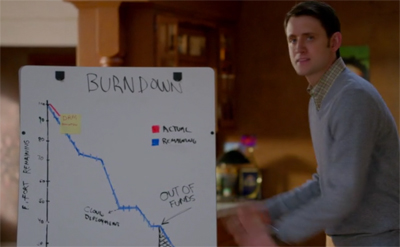
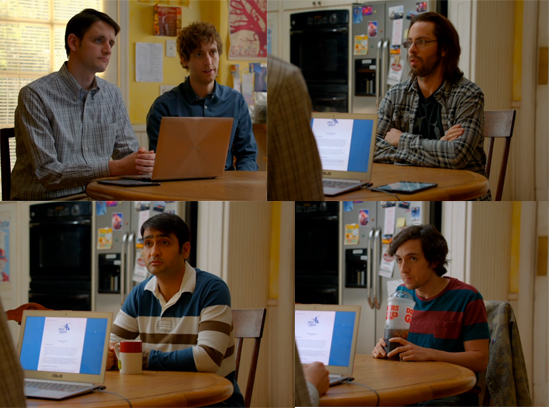
SV8-1
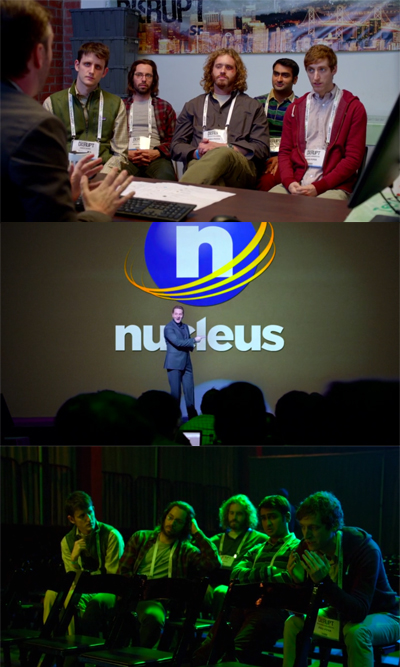
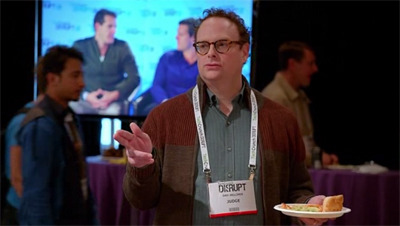
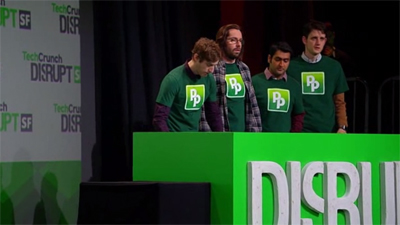
The team looks first extatic and after the presentation by their competitor, less so… “Look at me, look at me , look at me. We’ve got a great name, we’ve got a great team, we’ve got a great logo and we’ve got… a great name. Now we just need an idea. Let’s pivot, let’s pivot.”
Will this be sufficient? Not sure when you listen to what happens next:
“Look at them, all full of hope. They just got $20M in series A at a $280M valuation.” It might be time to join them…
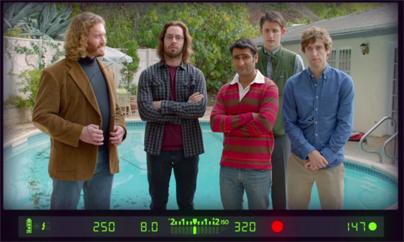
SV8-2
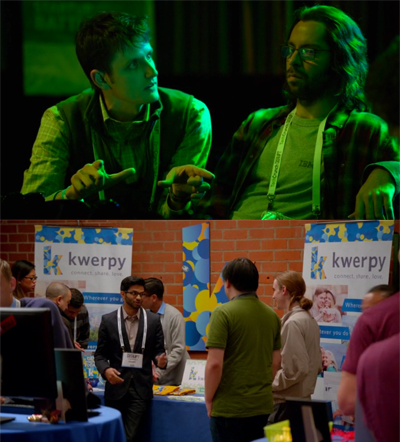
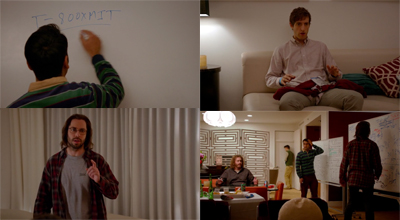
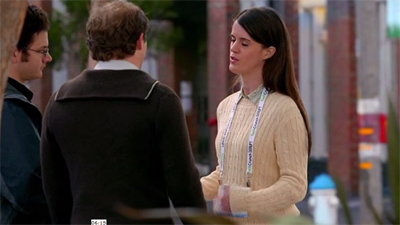
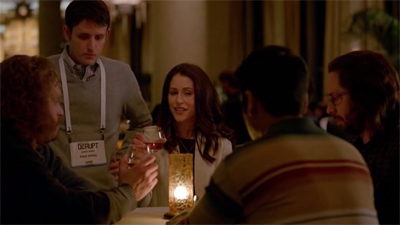
…except if brainstorming is not too late. I will not tell you how new ideas came, but it was geeky, nerdy…
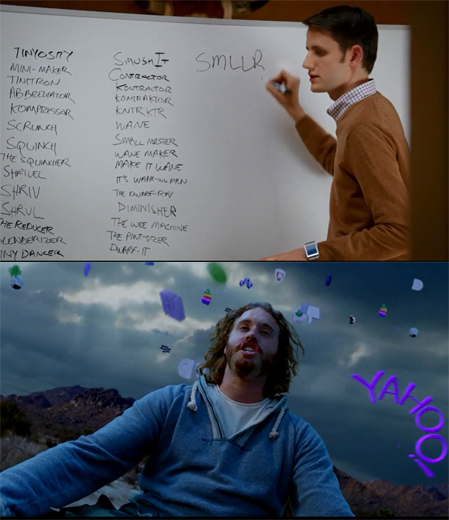
SV8-3
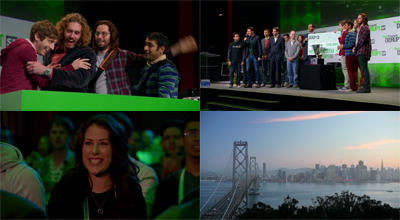
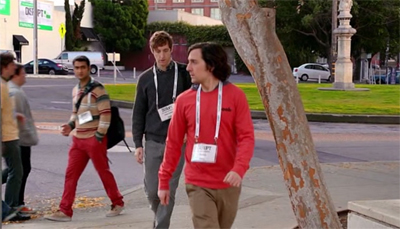
…but apparently successful. Everyone looks happy. And this is America. In fact this is one of the first images showing the Bay Area. Nothing else did really prove it was shot in SV.
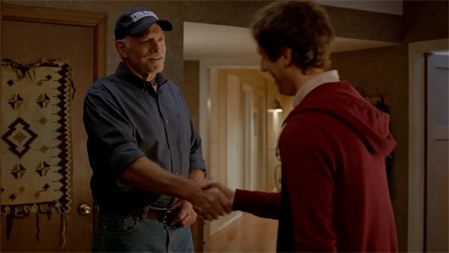
SV8-4a
A conclusion to the series. A sad one as I learnt from a video I posted in an earlier article…
SV8-5

PS: in addition to my posts about the series (tag: HBO), you may be interested in:
– the HBO web pages: Silicon Valley
– the Wikipedia link: Silicon Valley (TV series)

Horowitz’ The Hard Thing About Hard Things: there is no recipe but courage

I began my previous blog about Horowitz’ The Hard Thing About Hard Things by quoting the first page. I will begin here with his final page:

“Hard things are hard because there are no easy answers or recipes. They are hard because your emotions are at odds with your logic. They are hard because you don’t know the answer and you cannot ask for help without showing weakness. When I first became a CEO, I genuinely thought that I was the only one struggling. Whenever I spoke to other CEOs, they all seemed like they had everything under control. Their businesses were always going “fantastic” and their experience was inevitably “amazing”. But as I watched my peers’ fantastic, amazing businesses go bankrupt and sell for cheap, I realized I was probably not the only one struggling.” […] “Embrace your weirdness, your background, your instinct. If the keys are not there, they do not exist.”[Page 275]

thehardthing

Again the book is not an easy read. It is more advice about processes than anything else, so you may not enjoy the book if you do not need to apply it now. If you are not an ambitious entrepreneur who needs to scale his venture, reading the book may not be useful. Still it is a great book. Let me give you a couple of examples.

“Figuring out the right product is the innovator’s job, not the customer’s job. The customer only knows what she thinks she wants based on her experience with the current product. The innovator can take into account everything that’s possible, but often must go against what she knows to be true. As a result, innovation requires a combination of knowledge, skill, and courage. Sometimes only the founder has the courage to ignore the data.” [Page 50]

Funnily enough, Horowitz quotes Thiel. (By the way, quotes on the back page supporting Horowitz’s book are from Page, Zuckerberg, Costolo and Thiel…) “I don’t believe in statistics, I believe in calculus”. And his advice “when things fall apart” are
– Don’t put it all on your shoulders.
– This is not checkers, this is motherfuckin’ chess.
– Play long enough and you might get lucky.
– Don’t take it personally.
– Remember that this is what separates the women from the girls.
I summarize his advice from pages 64 to 93 as when things fall apart, face the truth and tell the truth. Tell the truth to your employees, tell the truth to your future ex-colleagues, tell the truth to your friends and more importantly, tell the truth to yourself.

I understand now why Andreessen-Horowitz is seen as a firm which has put in place tons of processes. Horowitz describes many tasks founders should be utmost careful about. Taking care of people, first. He also describes how you can do mistakes by trying to do good. Just one example: “our hockey stick [the shape of the revenue graph over the quarter] was so bad that one quarter we booked 90% of our new bookings on the last day of the quarter. […] I designed an incentive to closed deals in the first two months. […] As a result, the next quarter was more linear and slightly smaller… deals just moved from the third month to the first two months of the following quarter.”

Other interesting examples are about smart people and bad employees. “Sometimes, you will have a player that’s so good that you hold the bus for him, but only him.” And senior (old) people: “When the head of engineering gets promoted from within, she often succeeds. When the head of sales gets promoted from within, she almost always fails”. [Page 172] Horowitz explains also there is not one rule, it is company-dependent. Andreessen favors giving titles easily, Zuckerberg has opposite views.

“Perhaps the most important thing that I learnt as an entrepreneur was to focus on what I needed to get right and stop worrying about all the things that I did wrong or might go wrong.” [Page 200] Again focus on the strengths, not the weaknesses.

Ones and Twos

Horowitz quotes Collins’ “Good to Great”. “Internal candidates dramatically outperform external candidates.” And then adds that “Collins does not explain why internal candidates sometimes fail as well”. There are “two core skills for running an organization: First, knowing what to do. Second, getting the company to do what you know. While being a great CEO requires both skills, most CEOs tend to be more comfortable with one or the other. I call managers who are happier setting the direction of the company Ones and those who more enjoy making the company perform at the highest level Twos.” When they are not competent at both, “Ones end up in chaos and Twos fail to pivot when necessary.” [Pages 214, 216]

jobs-campbell-grove

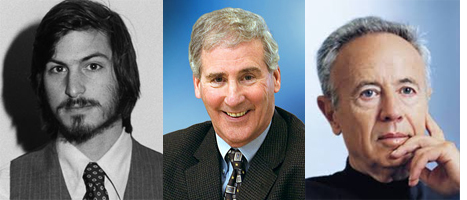
Horowitz shows that great CEOs need vision like Steve Jobs had, competence in implementing like Andy Grove had, and ambition like Bill Campbell. One of Horowitz favorites references is indeed Andy Grove and his “High output Management.” Horowitz shows how much respect is has for Jobs and Campbell, but the systematic processes remain his favorite, therefore Grove.

Wartime/peacetime

Horowitz also strongly believes that “life is struggle” (quoting Karl Marx) and that CEOs have to be ready to be both peacetime CEOs (when a company has a large advantage over competition in a growing market – Eric Schmid at Google until Page took over) and wartime CEOs (companies facing existential threats – Grove at Intel when they switched from memories to microprocessors or Jobs at Apple when he came back).

“Be aware that management books tend to be written by management consultants who study successful companies during their times of peace. As a result, the books describe the methods of peacetime CEOs. In fact, other than the books written by Andy Grove, I don’t know of any management books that teach you how to manage in wartime like Steve Jobs or Andy Grove.” [Page 228]

Horowitz hates the idea that founders should be replaced, that companies need professional CEOs who know how to scale companies or who “should be the number-one salesperson.” CEOs define the Strategy (“The story and the strategy are the same thing.”) and do Decision making (“with speed and quality”).

You may like the “Freaky Friday Management Technique” [Page 252] and “Should You Sell Your Company?” [Page 257] but let me finish with some of his final thoughts: “First technical founders are the best people to run technology companies”. […] “Second, it is incredibly difficult for technical founders to learn to become CEOs while building companies.” [Page 268] Which is why VCs should help these founders becoming CEOs, by helping them acquire the skill set as well as building a network.

Finally if you wonder why Andreessen-Horowitz web-site is www.a16z.com, you just have to count the number of letters in the name between the a and the z…

HBO’s Silicon Valley – Episode 6: of Humans and Machines

You will discover about the genius of people
HBO6-1
and machines
HBO6-2

and then might have to decide if you prefer the autism of machines
HBO6-3
HBO6-5
or the craziness of people
HBO6-4
HBO6-6

Clearly the authors of HBO’s Silicon Valley do not have a great fascination for any of them, as you may discover through the TechCrunch interview they participated in…

The Hard Thing About Hard Things – Ben Horowitz

“Every time I read a management or self-help book, I find myself saying, “That’s fine, but that wasn’t really the hard thing about the situation.” The hard thing isn’t setting a big, hairy, audacious goal. The hard thing is laying people off when you miss the big goal. The hard thing isn’t hiring great people. The hard thing is when those “great people” develop a sense of entitlement and start demanding unreasonable things. The hard thing isn’t setting up an organizational chart. The hard thing is getting people to communicate within the organization that you just designed. The hard thing isn’t dreaming big. The hard thing is waking up in the middle of the night in a cold sweat when the dream turns into a nightmare.

The problem with these books is that they attempt to provide a recipe for challenges that have no recipes. There’s no recipe for really complicated, dynamic situations. There’s no recipe for building a high-tech company; there’s no recipe for making a series of hit songs; there’s no recipe for playing NFL quarterback; there’s no recipe for running for president; and there’s no recipe for motivating teams when your business has gone to crap. That’s the hard thing about hard things— there is no formula for dealing with them.”

This is how begins The Hard Thing About Hard Things by Ben Horowitz [see page ix]. After a first chapter about his experience in start-ups (Netscape, LoudCloud), Horowitz gives advice to entrepreneurs. And it is not business school-like advice indeed.

thehardthing

Marc: “Do you know the best thing about startups?
Ben: “What?
Marc: “You only ever experience two emotions: euphoria, and terror. And I find that lack of sleep enhances them both.

[Page 21]

Marc is Andreessen, the founder of Netscape, with whom he co-founded VC firm Andreessen Horowitz (a16z.com) in 2009.

“People often ask me how we’ve managed to work efficiently across three companies over eighteen years. Most business relationships either become too tense to tolerate or not tense enough to be productive after a while. Either people challenge each other to the point where they don’t like each other or they become complacent about each other’s feedback and not longer benefit from the relationship. With Marc and me, even after eighteen years, he upsets me almost every day by finding something wrong with my thinking, and I do the same for hi. It works.” [Page 14]

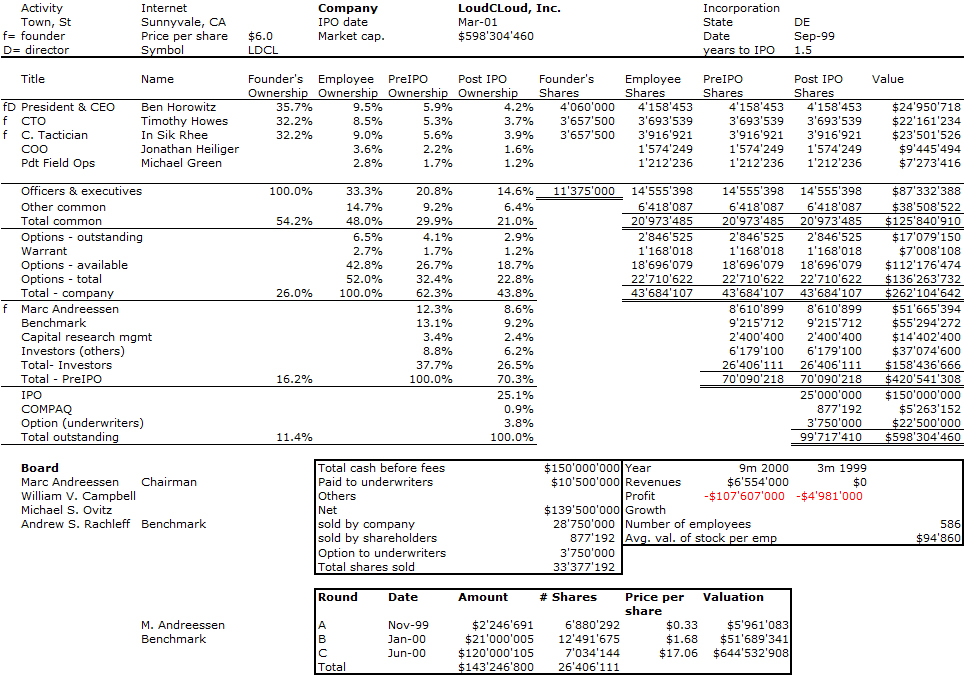
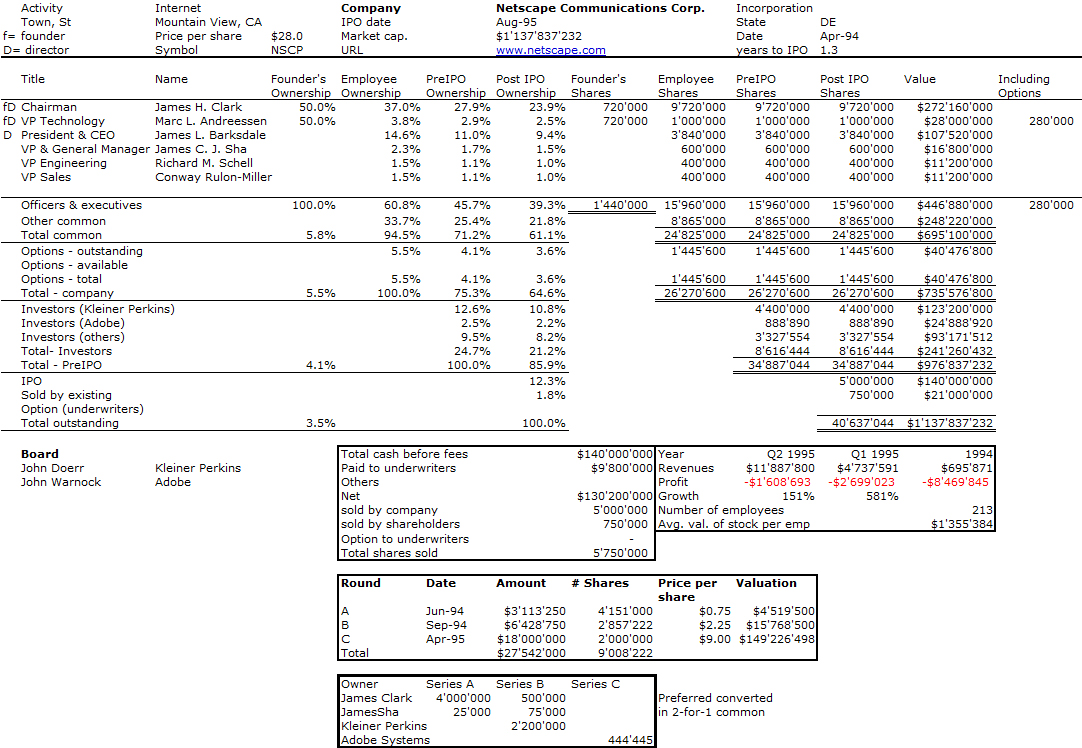
I plan to come back with comments about this book when I am finished, but let just me finish for now with my usual start-up cap. tables. here Netscape and LoudCloud.

captable-loudcloud
Click on picture to enlarge

captable-nscp
Click on picture to enlarge

HBO’s Silicon Valley – Episode 5: after Banksy, Chuy

I could not imagine I would make a link between my posts on Street Art and the ones about Silicon Valley. But here is the missing link: in episode 5, you will know more about Chuy
HBO5-StreetArt-PP2
and how our heroes decide to use a street artist for their logo. The result I cannot really show full size but here are extracts of the first attempts.
HBO5-StreetArt-PP3
Here is the final logo.
HBO5-StreetArt-PP-final

And you can enlarge by clicking for the x-rated attempts. Not difficult to find who might pay $500k for the work. Not their best friends….
HBO5-StreetArt-PP1
click here or on picture to enlarge – xrated

All this comes from the fact that when pp was thought of as a logo for PiedPiper, Erlich explodes:
“Lower case. Are you serious?
Twitter, lower case t
Google, lower case g
Facebook, lower case f
every f… company in the Valley has lower case.
Why? because it’s safe.
We are not going to do that…”

Now of course, there are also serious people in the series, talking about burn rate…
HBO5-BurnRate
and process…
HBO5-Process

HBO’s Silicon Valley – Episode 4

I think SV is funnier and funnier and I disagree with people who wrote that the best jokes were in episode 1. Well, I am probably not the same age as they are… 🙁 Whatever, you see s… people dropping names like here:
HBO4-Names2
click to enlarge

Do you recognize the signatures? And then you see our founder struggling with his vision…
HBO4-CEOVision
… to beautiful Monica. He is really a great actor. I think! 🙁
HBO4-CEOVision2

I knew in my previous life about consultants who go on the beach. Here are developers who go on the roof, the “Unassigned.”
HBO4-Unassigned

But everything seems to be the best in the best of possible worlds.
HBO4-PPTeam

HBO’s Silicon Valley – Articles of Incorporation (Episode 3)

When a name can be an issue… Is PiedPiper a good name for a company? Well. Not if there is another company with the same name.

HBO3-PiedPiperNames

Whatever, PiedPiper has its garage too!

HBO3-Garage1

So when you need a name, either you brainstorm in different ways…
HBO3-DreamingAName
… or you learn about negotiation
HBO3-GotADeal

Apparently HBO likes Silicon Valley enough: they already agreed to produce season 2!

HBO’s Silicon Valley – The Cap. Table (Episode 2)

I just saw that the 8 episodes of SV would be 1- Minimum Viable Product, 2- The Cap Table; 3- Articles of Incorporation; 4- Fiduciary Duties; 5- Signaling Risk; 6- Third Party Insourcing; 7- Proof of Concept; 8- Optimal Tip-to-Tip Efficiency. In episode 2, our hero has to give equity. A typicial start-up dilemma. Richard Hendricks is the founder. He is backed by Erlich Bachmann, « owner of the incubator ». He has three developers, Bertram Gilfoyle, Dinesh Chugtai, Nelson “Big Head” Bighetti. Jared Dunn has left Houli to help and write the business plan so that Peter Gregory, a billionaire venture capitalist (who is also paying students to drop out from school…) will invest $200k for 5% of the company. (Richard has declined a $10M offer for his algorithm…) Where we see that Friendship and Business do not often go along…

In order to negotiate his equity, here is a quote of the nerd talking to the business guy:
“While you were busy minoring in gender studies and singing a cappella at Sarah Lawrence, I was giving crude access to NSA servers, I was one click away from starting a second Iranian revolution,
– I actually went to Vassar
– I provide cross-eye scripting, I monitor for ddos attacks, emergency database rollbacks and faulty transactions. It’s not magic, it’s talent and sweat!”

(I am really not sure of the technical terms…)

SV2-2
Richard Hendricks & Jared Dunn interviewing the 3 developers, Bertram Gilfoyle, Dinesh Chugtai, Nelson “Big Head” Bighetti

SV2-3
Peter Gregory and his assistant

HBO meets Silicon Valley – episode 1

I already posted about Silicon Valley’s trailer. Here are a few pictures and one quote… Enjoy!

SV1

SV3

SV2

– “That’s weird, they always travel in groups of 5, these programmers. There is always a tall skinny white guy, a short skinny asian guy, a fat guy with a ponny tail, some guy with crazy facial hair, and then an east indian guy. It’s as if they trade guys until they have the right group.
– You clearly have a great understanding of humanity.”

SV4-sma