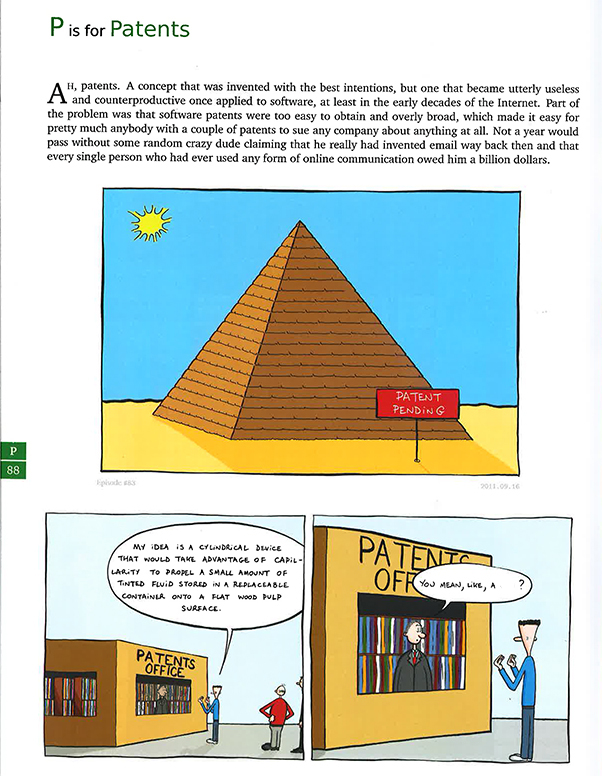
My final post about Goomics deals with Manu Cornet’s views on Patents. They are not that different from mine: I copied his view below (I hope he does not mind this limited copyright infringement) whereas you can read my slideshare contribution. You may also try to guess what invention Cornet’s is referring to and what is the Australian patent I use in my class. It was granted and then revoked, shoudl you be interested to know about it…
Monthly Archives: December 2018
Goomics by Manu Cornet (Part II)
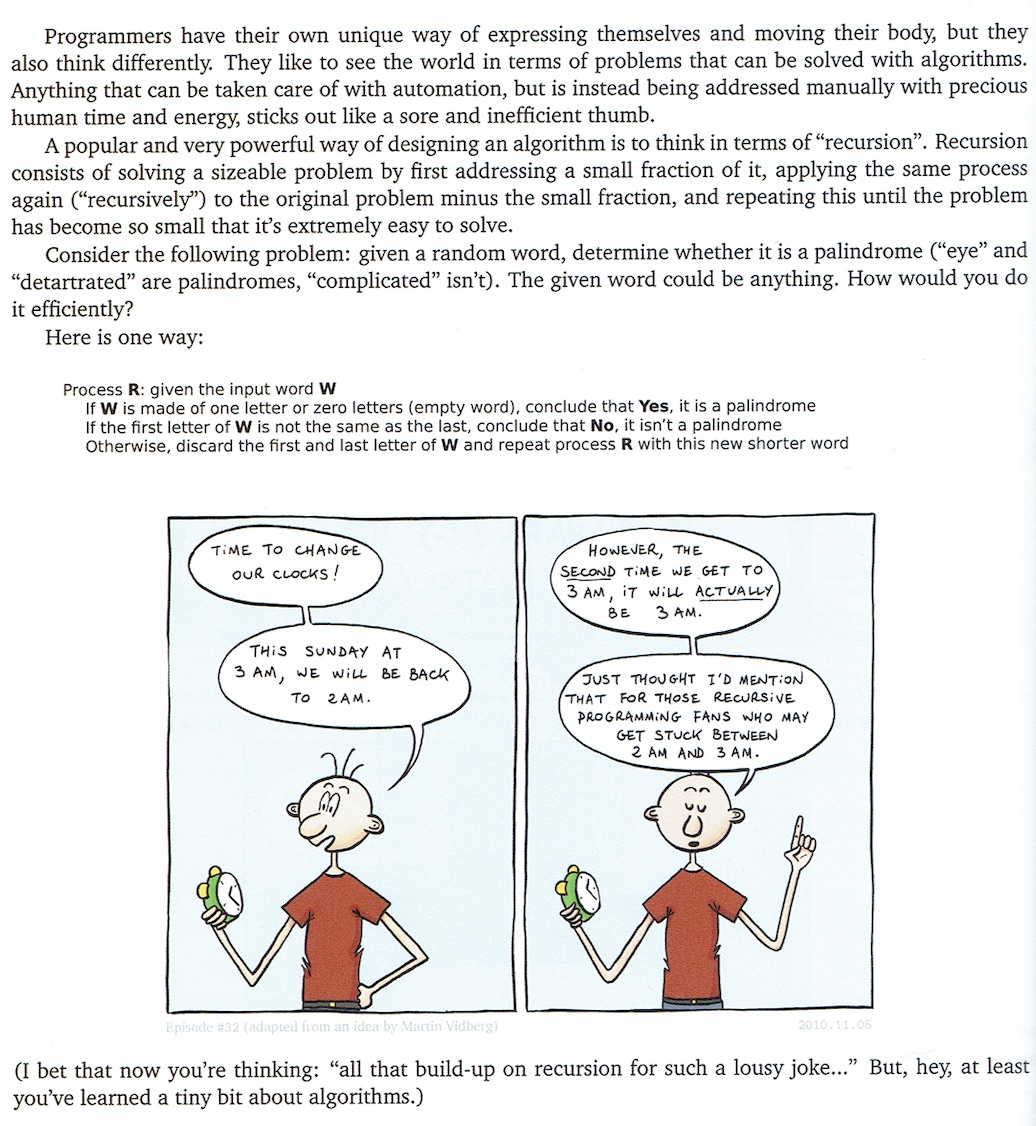
I’ve reached letter O of Goomics by Manu Cornet. (you can see my previous post about the book here). My favorite piece is at letter N for Nerds. I hope this author will not complain about my copying it here…
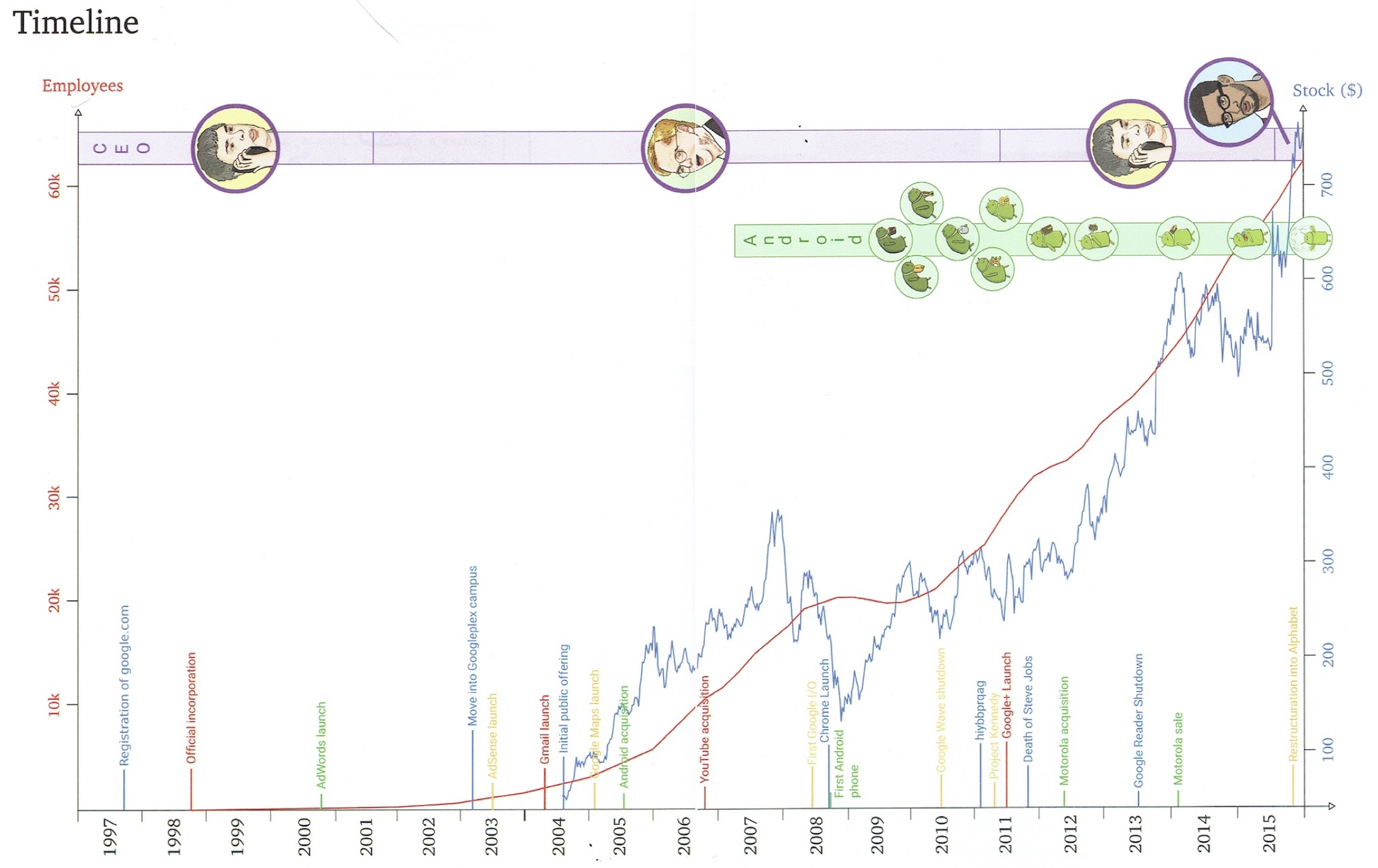
I agree with the author. That much for lousy jokes, but I love it. And a more serious one, the amazing growth of Google with its 4 CEOs.
Thanks a lot for the author for new contribution about Google.
A New Yorker article about 2 Google developers : The Friendship That Made Google Huge
The New Yorker just published a beautiful article abotu two google developers. The Friendship That Made Google Huge is subtitled Coding together at the same computer, Jeff Dean and Sanjay Ghemawat changed the course of the company—and the Internet.

The company’s top coders seem like two halves of a single mind.
Illustration by David Plunkert
Here are some extracts:
Sanjay Ghemawat, [is] a quiet thirty-three-year-old M.I.T. graduate with thick eyebrows and black hair graying at the temples. Sanjay had joined the company only a few months earlier, in December. He’d followed a colleague of his—a rangy, energetic thirty-one-year-old named Jeff Dean—from Digital Equipment Corporation. Jeff had left D.E.C. ten months before Sanjay. They were unusually close, and preferred to write code jointly. In the war room, Jeff rolled his chair over to Sanjay’s desk, leaving his own empty. Sanjay worked the keyboard while Jeff reclined beside him, correcting and cajoling like a producer in a news anchor’s ear.
[…]
Today, Google’s engineers exist in a Great Chain of Being that begins at Level 1. At the bottom are the I.T. support staff. Level 2s are fresh out of college; Level 3s often have master’s degrees. Getting to Level 4 takes several years, or a Ph.D. Most progression stops at Level 5. Level 6 engineers—the top ten per cent—are so capable that they could be said to be the reason a project succeeds; Level 7s are Level 6s with a long track record. Principal Engineers, the Level 8s, are associated with a major product or piece of infrastructure. Distinguished Engineers, the Level 9s, are spoken of with reverence. To become a Google Fellow, a Level 10, is to win an honor that will follow you for life. Google Fellows are usually the world’s leading experts in their fields. Jeff and Sanjay are Google Senior Fellows—the company’s first and only Level 11s.
And more about dual creativity. Quite fascinating!
It took Monet and Renoir, working side by side in the summer of 1869, to develop the style that became Impressionism; during the six-year collaboration that gave rise to Cubism, Pablo Picasso and Georges Braque would often sign only the backs of their canvases, to obscure which of them had completed each painting.
[…]
In “Powers of Two: Finding the Essence of Innovation in Creative Pairs,” the writer Joshua Wolf Shenk quotes from a 1971 interview in which John Lennon explained that either he or Paul McCartney would “write the good bit, the part that was easy, like ‘I read the news today’ or whatever it was.” One of them would get stuck until the other arrived—then, Lennon said, “I would sing half, and he would be inspired to write the next bit and vice versa.”
[…]
François Jacob, who, with Jacques Monod, pioneered the study of gene regulation, noted that by the mid-twentieth century most research in the growing field of molecular biology was the result of twosomes.
You should read the article…
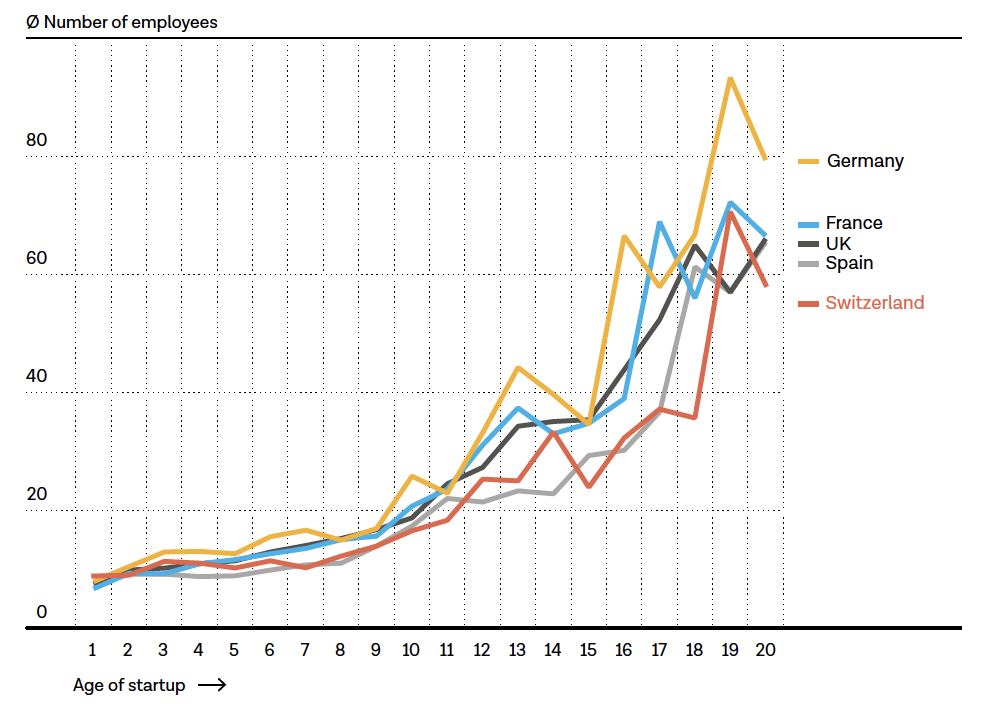
Swiss Startups : new analyzes, without real surprise …
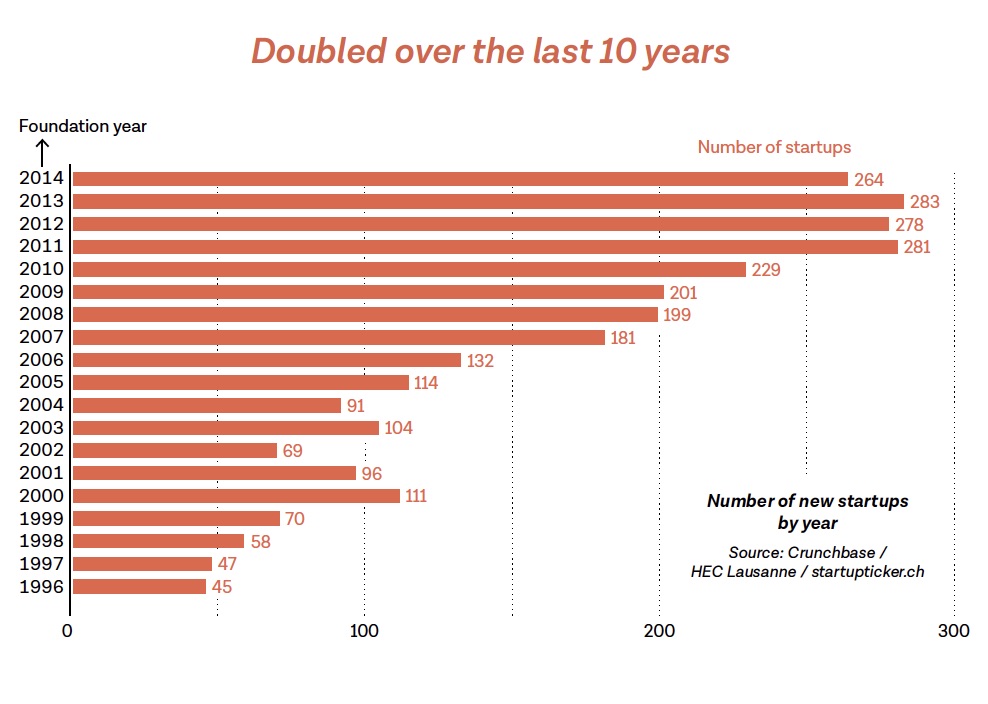
A new and interesting report on Swiss startups has just been published by Startupticker, the Swiss Startup Radar.

It shows a fairly new information, the number of startup created a year, about 300,
Interesting testimonials also:
Is it due to the much-cited conditions? (Page 80)
No, Switzerland’s regulatory and fiscal framework is first-rate. But I identify two deficits in the support services available in Switzerland: first, there is a lack of contact points for entrepreneurs in the low and no-tech sectors, and, second, we tend to address young people.
More money is one thing, but is it spent differently? Page 89)
In Switzerland, I observe a strong focus on the survival rate. Startups are encouraged if they have collateral, such as patents, and take a cautious course. As a result, eight out of 10 startups from ETH Zurich are still active five years after their foundation. In Israel, on the other hand, more attention is paid to the economic impact. What matters when assessing a project is the prospect of growth and the creation of new jobs.
The awareness that investing in startups can lead to losses is undoubtedly more pronounced in Israel. This is particularly evident in the financing of very young projects. In Switzerland, seed rounds are worked on with thick business plans, PowerPoint presentations and sales projections. In Israel, this paper war has been largely dispensed with. The business angels and VCs accept that there can be no absolute security in the high-tech segment.
In an article by Techcrunch, 30 European startup CEOs call for better stock option policies, we also talk about the gaps in the framework conditions in Switzerland:
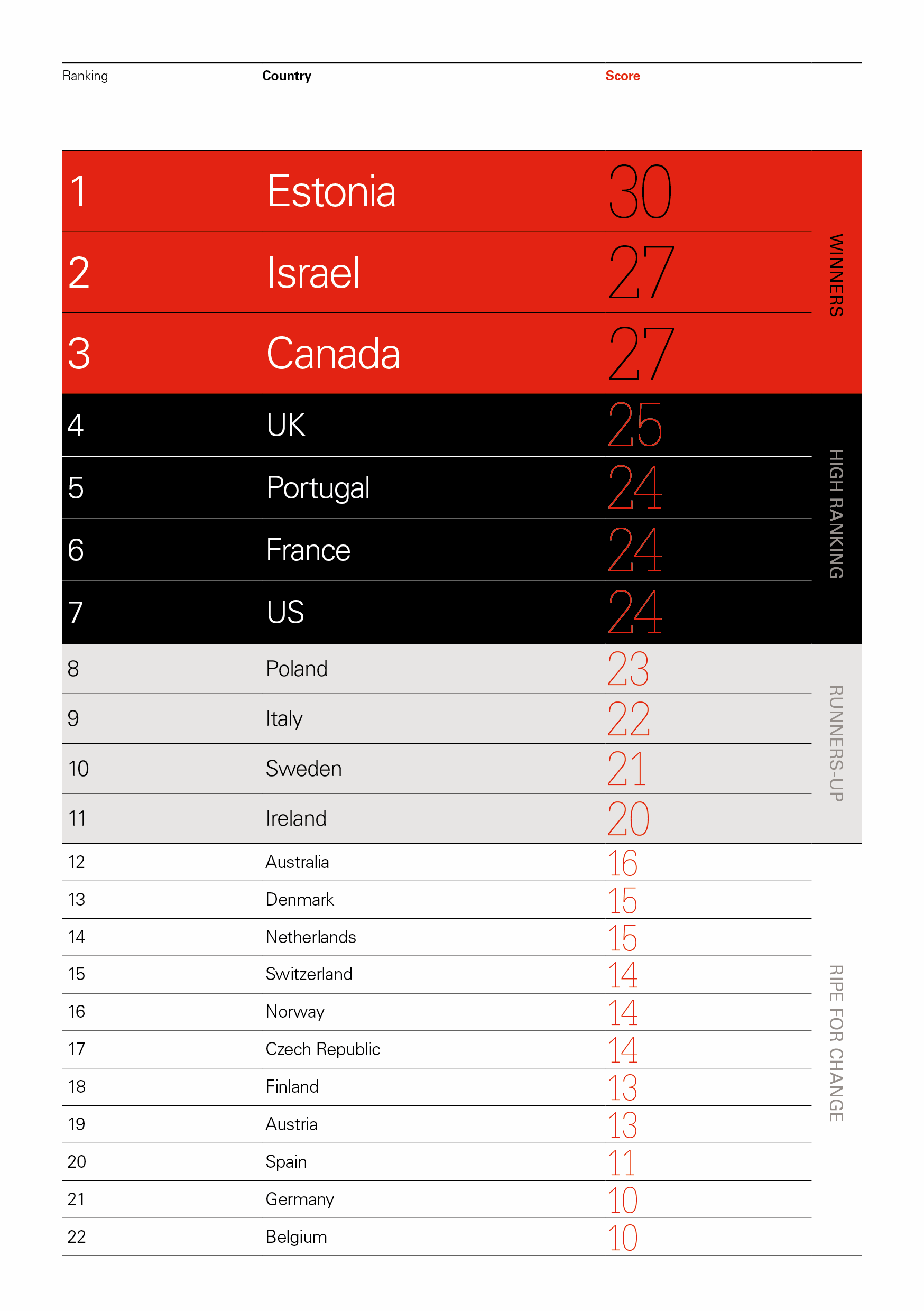
with the following recommendations:
1. Create a stock option scheme that is open to as many startups and employees as possible, offering favourable treatment in terms of regulation and taxation. Design a scheme based on existing models in the UK, Estonia or France to avoid further fragmentation and complexity.
2. Allow startups to issue stock options with non-voting rights, to avoid the burden of having to consult large numbers of minority shareholders.
3. Defer employee taxation to the point of sale of shares, when employees receive cash benefit for the first time.
4. Allow startups to issue stock options based on an accepted ‘fair market valuation’, which removes tax uncertainty.
5. Apply capital gains (or better) tax rates to employee share sales.
6. Reduce or remove corporate taxes associated with the use of stock options.