Category Archives: Must watch or read

An Ode to Disorder

Too much organization harms Innovation

nouveleco.jpg

These are the title and subtitle of a brilliant paper (inFrench only) by Julien Tarby in the Nouvel Economiste dated June 5, 2008. His article echoes my worries about innovation in Europe. His analysis is really interesting. Among other examples, he quotes:

Samuel Kortum et Josh Lerner: 1 euro invested in venture capital has a 10x return over 1 euro spent in the traditional R&D of companies

Pascal Picq, a paleo-anthropologue, who develops the evolution theory applied to the enterprise: start-ups which adapt to survive are Darwinian. “Unfortunately the French education system remains Lamarckian, and considers that organizations improve in a development scheme (administration, big companies). It is the country of the planned projects (planes, trains) and not of disuptions. This culture of the norm does not tolerate variability, trial and error and it induces the development of the [existing] fields of excellence and not the creation of new fields.”

If you read French, and because it is free, you shoud run and download it!

Spain has a passion for Innovation

I had the pleasure to be interviewed on the book “Start-Up” by Doris Obermair. The text is available in Spanish as well as in English in the magazine If… La Revista de Innovation : Más pasión y sueños, menos infraestructura y experiencia (english version)

if.gif

and the video (in English) is available on the web site Infonomia.

infonomia.gif

Finally, I will attend the Ifest conference on July 10-11 to talk about the topic of my book. Because of the diversity of the attendants, I think it will be a great event.

ifest.gif

Founders at Work

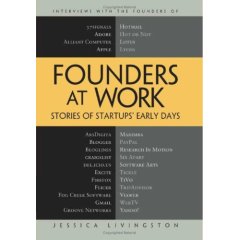
Another great book, so great I decide to write this post even if I have not finished reading it: Jessica Livingston in Founders at Work has interviewed 32 entrepreneurs about their story. The lessons are convincing, fascinating. Without asking for copyright, I copy here some quotes. The book is just a pleasure to read even if sometimes the Q&A are too specific about the start-up, but I assume it is part of the exercise. A Must-Read.
foundersatwork.jpg

Paul Buchheit, creator of Gmail about Risk Taking

As I say, for people, it depends on their situation if they can take that risk of joining a startup or moving to a new city if they don’t live in the right place. For me, I was actually single at the time, I didn’t have a mortgage, so the idea of joining a little startup that may well be destroyed was just like, “That will be fun.” Because I kind of thought, “Even if Google doesn’t make it, it will be educational and I’ll learn something.” Honestly, I was pretty sure AltaVista was going to destroy Google.

Mike Ramsay, founder of Tivo about Silicon Valley

I was curious to see what’s the attitude of a typical startup in Scotland compared to here. I found that they are just culturally a whole lot more conservative and cautious. And somewhat lacking in self-confidence. You come over here and . . . I had a meeting recently with a couple of early 20-year-olds who have decided to drop out of Stanford because they got bored, and they are trying to raise money to fund their startup. They believe they can do it, and nothing’s going to hold them back. They have confidence, they have that spirit, which I think is great and is probably unique to this part of the world. Being part of that for so long, for me, has been very invigorating.

Joshua Schachter, founder of del.icio.us about implementing

But the guy who says, “I have a great idea and I’m looking for other people to implement it,” I’m wary of—frequently because I think the process of idea-making relies on executing and failing or succeeding at the ideas, so that you can actually become better at coming up with ideas.

and about VCs

In general, I found VCs to be significantly politer than the folks I worked with. The worst they did was not call me back. I’d never hear from them again. Brad Feld does a nice blog talking about how the VC process works. He says they never call you back to say no—they don’t want to close the door in case they want to open it again, but they don’t want to actually give you a response. Very few VCs actually said, “Sorry, we’re not interested.”

Craig Newmark, founder of craiglist on the definition of start-up

“in the conventional sense, we were never a startup. In the conventional sense, a startup is a company, maybe with great ideas, that becomes a serious corporation. It usually takes serious investment, has a strategy, and they want to make a lot of money.”

PS : June 2024. I published a post about foudners and remembered the notes I used with my students at the time. here they are 16 years later…

Founders at Work - May08

The DNA of Innovation

John Hennessy

They are not many, those who can talk about innovation as well as John Hennessy, President of Stanford University, start-up founder such as MIPS and Atheros, board member of Cisco and Google. He is also a world-renowned specialist in computer science.

In a recent column of the Stanford Magazine, “the DNA of Innovation”, he mentions the three ingredients that are central of a spirit of innovation:

people, a diverse mix of talents and approaches

an environment that promotes risk-taking and innovative thinking

a university must be adept at transferring knowledge to organizations that have the ability to convert that knowledge into something with broader impact.

The full article is worth reading. I also scanned it in pdf format.

Stanford and Start-Up

soe1.gif

Is there anything nicer than being interviewed by your Alma Mater. The Stanford School of Engineering asked me why I wrote “Start-Up” and for whom. You will find it on the Stanford SOE web site. I tried to explain that the book is not (only) about the innovation infrastructure which failed in Europe but (mostly) about the need to encourage young individuals in taking more risks. A debate about nature and culture which I develop at length in the book.

Nurturing Science-based Ventures

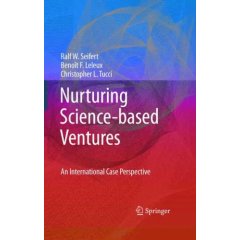
Nurturing Science-based Ventures – An International Case Perspective by Seifert, Ralf W., Leleux, Benoît F., Tucci, Christopher L.

nsbv.jpg

A new book about start-ups has recently been published and it is mainly centered on Swiss (including EPFL) ventures. The authors do indeed have a strong knowledge of this environment as they are faculties from IMD or EPFL. What is unique with this book is that it does not describe success stories only, but also failures or not famous firms. Indeed failures are often better lessons than successes. You do not always know why you succeed and it may be easier to understand a failure. The authors have built their book as a process and describe in detail the development of start-ups; they begin with the opportunity recognition (chapter 1), they follow with writing a business plan (chapter2), financing a start-up (chapter 3), growing a company (chapter 4) to finally harvesting value creation (chapter 5). The final chapter is dedicated to corporate entrepreneurship (“Intra-preneurship”). I have not read it yet (it is more than 700 pages!) but the numerous case studies (more than 20) look rich and detailed. It is not the first book on the subject but it might be the first one with such a focus on European start-ups.

Taking Risks

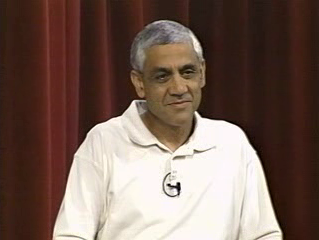
The Stanford Venture Technology Program is one of the best source of info I know about start-ups. In one of their recent newsletter, they mention a video of Vinod Khosla (a co-founder of Sun Microsystems and former venture capitalist with Kleiner Perkins). STVP summarizes his views as follows:

khosla.jpg

“Launching a start-up is not a rational act. And Vinod Khosla, a partner in Kleiner, Perkins, Caufield & Byers and former Sun Microsystems CEO, believes that success only comes from those who are foolish enough to think unreasonably. Entrepreneurs need to stretch themselves beyond convention and constraint to reach something extraordinary.”

The Art of the Start

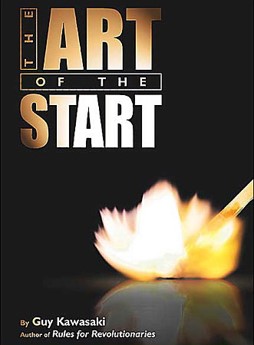
The Art of the Start is a great book because it inspires. Guy Kawasaki, the author, does tell you how to build a convincing vision, a convincing pitch. It is not about writing a 40-page business plan. It is about the “value of making meaning” which may induce making money. The book is clear, simple and once you have read it, you will not see things the same way… go, run and buy it!

A brief quote from the book which illustrates why start-ups are important.

“Innovation often originates outside existing organizations, in part because successful organizations acquire a commitment to the status quo and a resistance to ideas that might change it” – Nathan Rosenberg.

The Man Behind the Microchip

The Man Behind the Microchip is one of the best biographies about technology and entrepreneurship. This book is a pleasure to read from beginning to end. It is full of important facts about Silicon Valley, its history and its development.

I will just quote Robert Noyce, the hero of this book, founder of Fairchild and Intel:

Look around who the heroes are. They aren’t lawyers, nor are they even so much the financiers. They’re the guys who start companies

and also author Leslie Berlin adds:

Noyce testified against an industrial policy managed by the Federal government. He referred to his own experience with Apple to strengthen his argument: “If I was not capable of identifying the future champions of technology, how could we believe that the government could do better?”

This a must-read book for anyone interested in start-ups and high tech.