Monthly Archives: September 2018

Why did Aaron Swartz die?

As a follow-up of my previous post Aaron Swartz – The Idealist, here are a few additional notes from this very moving and intelligent book.
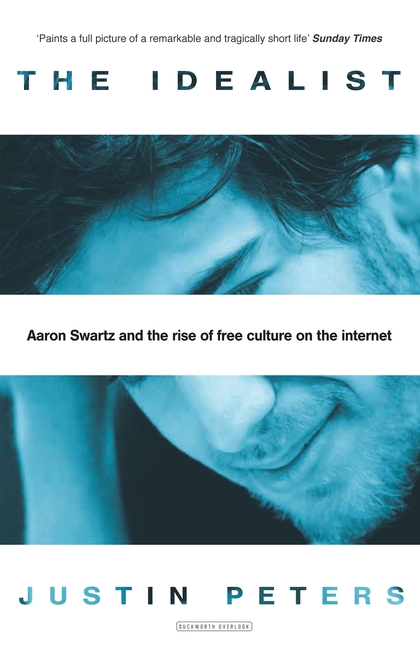
So why did he die? You must read the book. But here is a sentence close to the end [page 268]: “Swartz saw things differently, and, indeed, devoted much of his life to the notion that the only way that the world ever improved was by allowing people to open things up. This notion […] is Swartz’s legacy. It is also his challenge to the world he left behind.”

Corporations continue to deploy law and rhetoric to combat the situational ethics of unauthorized downloading, to argue that copyright is a zero-sum game. Conflicts recur. The actors may change, but the script remains the same. [Page 271]

A surprising argument is against Apple and Steve Jobs: Swartz depicted Apple as “a ruthless, authoritarian organization” that flouted labor standards and Jobs himself as a martinet who insisted on controlling every aspect of the user experience. His megalomania manifested in Apple’s portable music players: sterile white rectangles that could be neither opened nor modified by the end user. “Jobs couldn’t abide people opening things”. [Page 267]

A stronger quote taken from Swartz’s blog: Since power over human beings is shown in making them do what they would rather not do, the man who is actuated by love of power is more apt to inflict pain than to permit pleasure. If you ask your boss for leave of absence from the office on some legitimate occasion, his love of power will derive more satisfaction from a refusal than from a consent. If you require a building permit, the petty official concerned will obviously get more pleasure from saying «No» than from saying «Yes». It is this sort of thing which makes the love of power such a dangerous motive. — Bertrand Russell [Page 254]

Peters would like to have a balanced view of the situation: Property holders are but one party to the social contract. That is supposed to govern our polity, and their interests are not the only ones that matter. There is a middle ground between functionally eternal copyright and wholesale anarcho-syndicalism. [Page 268]
What Is Innovation?

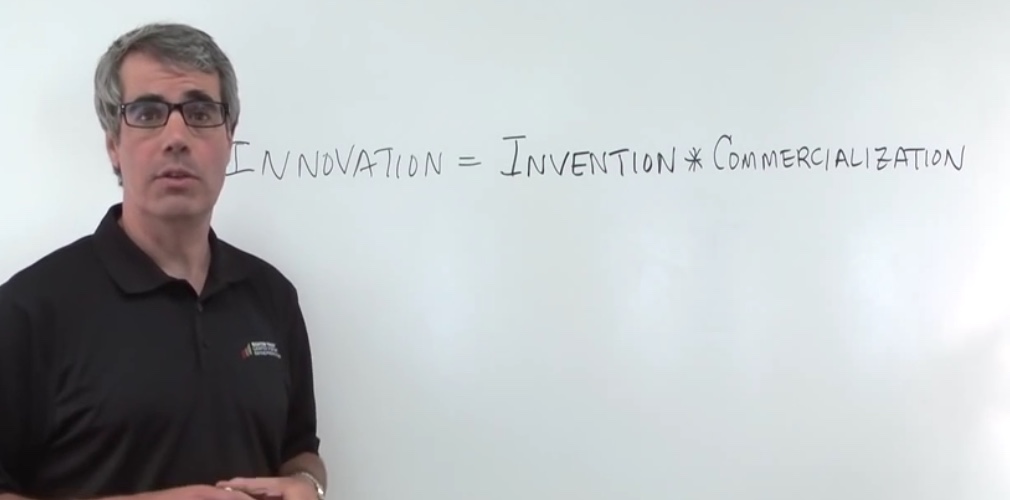
So what is innovation? I had already addressed the question in 2015 in Invention, Entrepreneurship and Innovation. My colleague Federico gave me a few days ago another definition of Innovation from MIT’s Bill Aulet.

Innovation = Invention ∗ Commercialization

You will find the video here.

And here some extracts:

So could it have been “Innovation equals invention?” No, often people mistake these two things for the same thing. They are not. Innovation is something that generates value for the world. It makes something faster, better, cheaper. It gives someone some great satisfaction. An invention is an idea, a technology, a patent. In and of itself, it does not generate value. So these two are not the same thing. And sometimes you see them interchange. And that’s not correct.

So innovation equals invention times commercialization. And when we look at this equation of innovation, something of value, it requires a new idea. And then, it requires someone or some organization that is going to commercialize that idea and to make it a value to the world. So it’s important to understand that an idea by itself is not valuable. Ideas are cheap. Is the commercialization when combined with it that makes them extraordinarily valuable. So while sometimes when I used to say invention plus commercialization, in fact, it’s times.

It’s a product because if I don’t have one, then it’s zero. Then, I have no innovation. If I have no new idea, I can’t commercialize anything. Therefore, it’s zero. If I have an invention and no commercialization, I have no innovation as well. So it’s actually a product. It’s, in fact, the commercialization aspect of it that’s very, very difficult.

If you look at the most innovative company in the world today, which I would argue is Apple, the underlying inventions that created Apple, great innovations starting with the Mac, did not come from themselves. It actually came from Xerox PARC. It was windows, icon, mouse, pointer. That invention, they commercialized to create innovation, which created terrific value in the marketplace and for their customers and for themselves, their investors as well. Likewise after that, you look again that the invention for the underlying and enabling idea, technology from the iPod was MP3, which did not come from Apple, again. That came from Fraunhofer. But what Apple was terrific at was commercialization to create innovation and, again, to create great value for their customers and their shareholders. So this definition of innovation we found very, very helpful to make clear that innovation is a combination of a new idea, a new technology. But then, it has to be commercialized and mapped to some customer in the real world where it will generate value.

Thanks Federico 🙂

Google is 20 years old

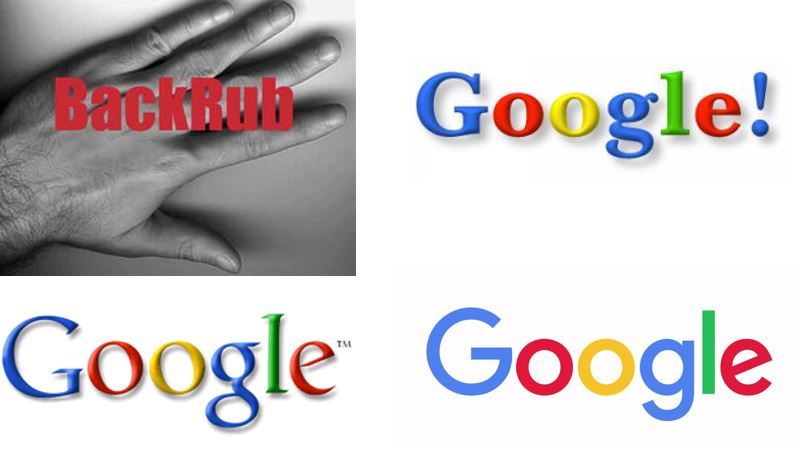
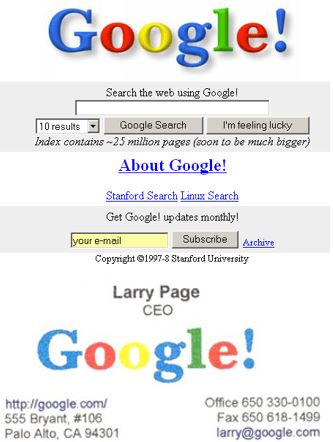
Google was incorporated in California on September 4, 1998 so the company is just 20 years old today. The technology is older, it was called BackRub initially (in 1996) and was an internal web site at Stanford University, google.stanford.edu and in September 1997, google.com was registered as an independant web site. You can see below some historic images

and the various logos.

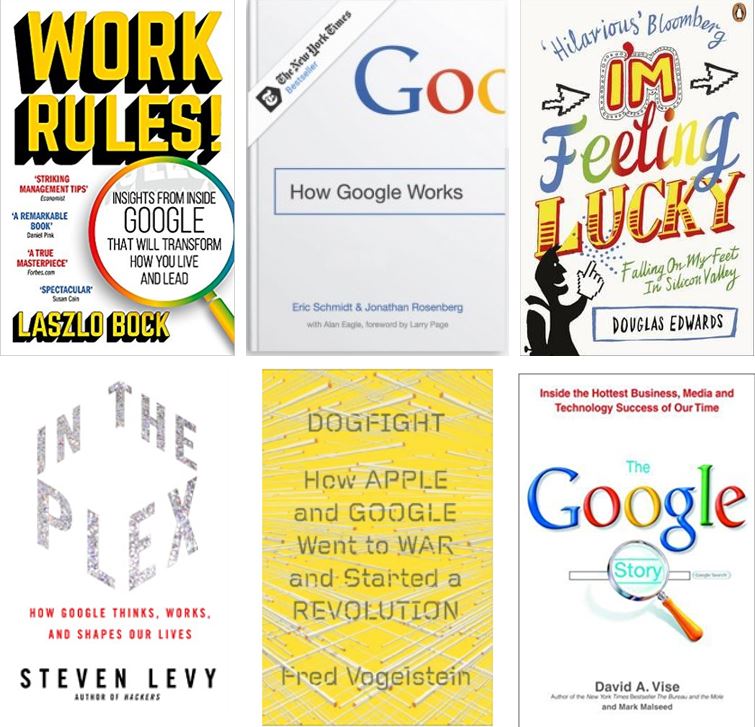
There’ve been many books about Google, some of them are great. I blogged about most of them, Work Rules! a few weeks ago, In The Plex in mid 2015, How Google Works in late 2014, Dogfight in early 2014, I’m Feeling Lucky in 2012. Indeed I blogged a lot about the company as you may see from the Google tag.

If Fairchild was the emblematic Silicon Valley company, founded in the 50s, it was followed by Intel in the 60s, Apple, in the 70s, the 80s have seen Cisco and Sun Microsystems, and Google symbolizes the 90s (Yahoo might be forgotten soon). Facebook belongs to the 2000s, the 2010 decade is still open I think. But the lessons learnt from the years of Google are just unique. The technology, the product, the startup growth, the teams have just changed the way we look at business for good and sometimes bad….