Category Archives: Must watch or read

In the company of Giants

I had read In the Company of Giants in 1997 just before becoming a venture capitalist. Then when I began to read again about entrepreneurs, I just could not find it anymore and had to buy it through the reseller network of Amazon. It is as interesting as my previous posts (Once You’re Lucky, Betting it All, Founders at Work).
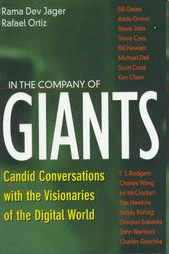
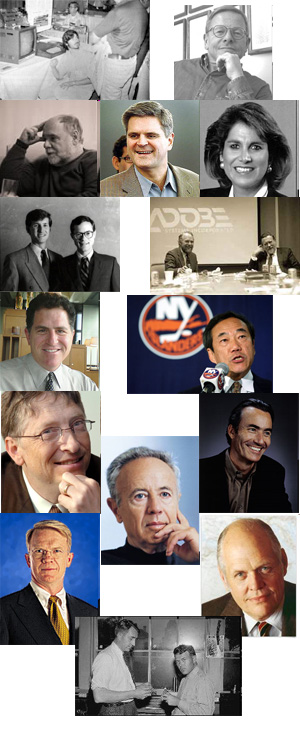
I will let you link the names and quotes with the pictures if you have time!

Steve Jobs: “In the early days, we were just trying to hire people that knew more than we did about anything and that wasn’t hard because we didn’t know a lot. Then your perspectives are changing monthly as you learn more. People have to be able to change.”

T. J. Rodgers (Cypress Semiconductor): “the standard entrepreneurial answer is frustration. You see a company running poorly, you see that it could be a whole better. Intel and AMD were arrogant. If you think about it, any billion dollar company, that has so much money to spend on R&D should be unassailable. But the large companies routinely cannot crunch little companies so something’s got to be wrong.”

Gordon Eubanks (Symantec): “What makes a company successful is people, process, product, and passion. You must have great people and product and passion balanced by process.”

Steve Case (AOL): “Do something you really love, you are passionate about. Take a long-term view, be really patient. There are going to be bumps on the road.”

Scott Cook (Intuit): “People [customers] won’t tell you what they want. Often they can’t verbalize it because they don’t understand things they’ve not seen. You must understand fundamental motivations and attitudes.”

Sandy Kurtzig (ASK): “I did not see it as incredible risk. Many entrepreneurs would tell you why it was obvious to do what they did. When you have nothing, you have nothing to lose. That’s why so few entrepreneurs can do it a second time. Even Jim Clark did not really start Netscape or Jobs did not really start Pixar. They funded it. You need other people to be hungry… Believe in yourself, surround yourself with good people, be willing to make mistakes, don’t get wrapped up in your success. You are still the same person you were when you started.”

John Warnock and Charles Geschke (Adobe): “Actually there was the very first business plan, then there was the second business plan, and then the third business plan; we never actually wrote the third business plan.”

Michael Dell: “It did not seem risky to leave school because I was already earning obscene amounts. The worst thing that could happen is I would return to school. The greater risk was to stay at school.”

Charles Wang (Computer Associates): “Managing is not just telling people what to do, but it is leading by doing. Know your strengths and weaknesses and complement yourself. Be realistic and objective. Surround yourself with great people.”

Bill Gates: “It’s mostly about hiring great people. We are [in 1997] 18,000 people and still the key constraint is bringing in great people. We naively thought there were guys who could tell us we weren’t doing things the best way.”

Andy Grove: “I can’t look at a startup as an end result. A startup to me is a means to achieve an end.”

Trip Hawkins (Electronic Arts): “You don’t have an objective, rational process. You need a certain amount of confidence. There are many things that you don’t know will go wrong. If you knew in advance all the things that could go wrong, as a rational person, you wouldn’t go into business in the first place.”

Ed McCracken (Silicon Graphics): “My venture capital friends tell me that many of the ideas they’re seeing for new businesses are coming from people under 26 years old.”

Ken Olsen: “Business school’s goal today is to teach people to become entrepreneurs. I think it’s a serious mistake. You learn first how to be a team member, then a leader.”

Bill Hewlett: “It was 1939 and it was no time to start a company. It was probably the supreme optimism of youth.” and “It’s not all due to luck, but certainly a large percentage of success is. We were in the right place at the right time. We were lucky and we had wonderful teachers and mentors. HP didn’t start in a vacuum.”
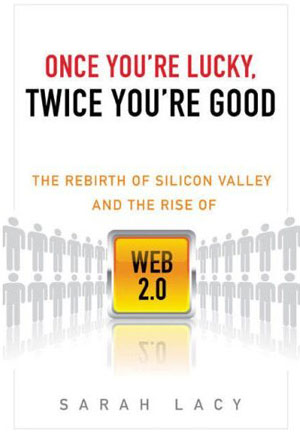
Once you’re lucky, Twice you’re good.

This is the third book I report on this blog about entrepreneurs. In fact it is the fourth if I include Inside Steve’s Brain (but this one is about a single entrepreneur). The two previous ones were interviews of many, i.e. Betting it all and Founders at Work. The beauty (and at same time weakness) of Once you’re lucky, Twice you’re good is that is is about web2.0. Is this new step in the Internet development a speculative bubble or a speculative revolution. It is probably too early to say even if author Tracy Lacy (appearing in another post) is quite convinced it is a revolution.

lacy_book_web.jpg

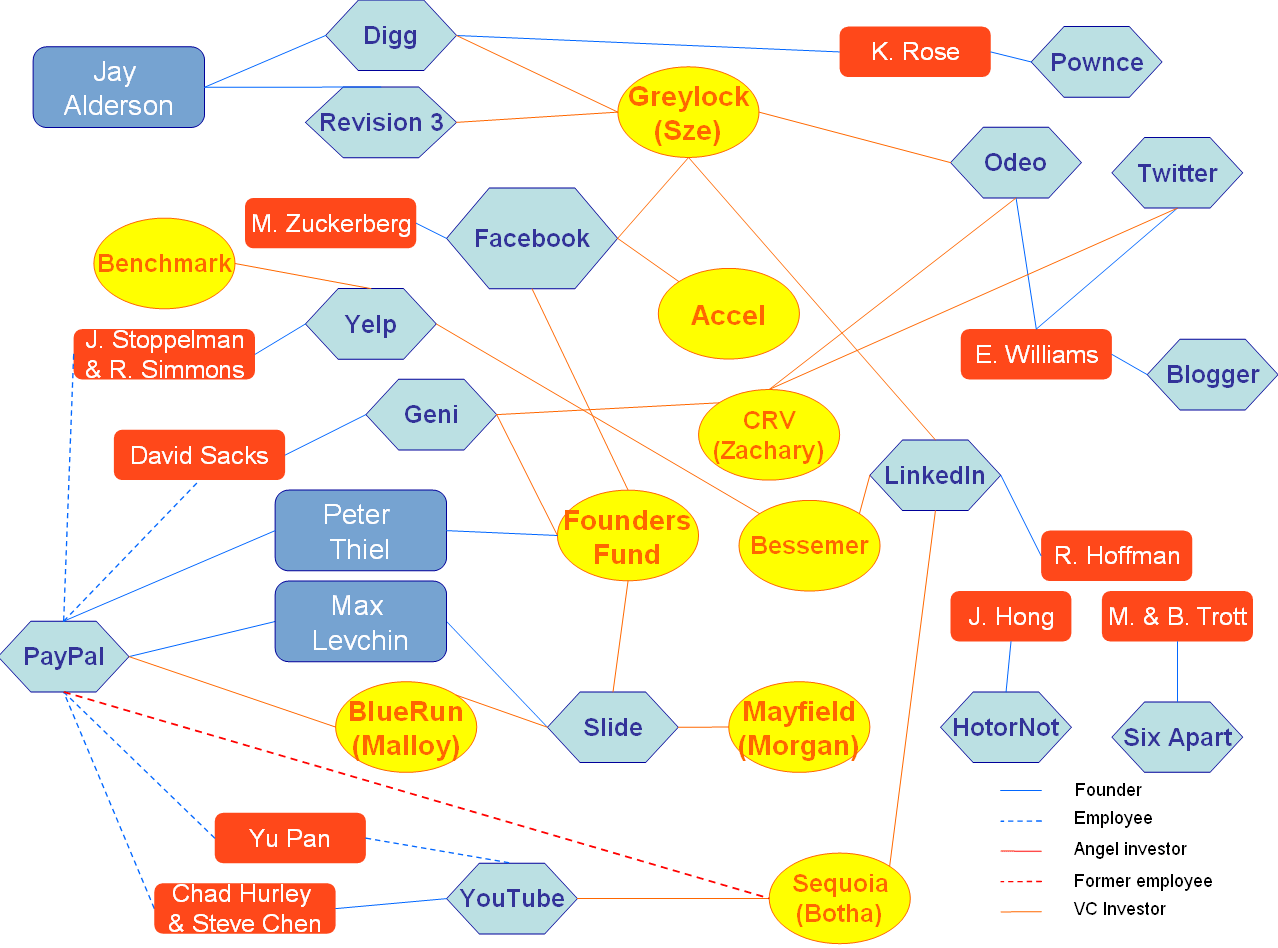
It is a beautiful book because it shows once again the richness of individual connections. I have done below my illustration of it. Paypal and its founders appear to be at the center of this network. Fairchild had such a similar situation at the beginning of Silicon Valley in the sixties, Apple, Sun, Cisco thereafter.

webnetwork.gif

Another interesting element is about investors. There has been a popular idea that web2.0 was not funded by venture capitalists anymore because the web2.0 business angels who were web1.0 entrepreneurs had learnt their lesson. The situation is more complex as the web2.0 financing shows. Greylock, CRV, Accel but also Benchmark and Sequoia are vey active. Finally, it shows again and again what entrepreneurs are: passionate, driven individuals and I can only advise reading the epilogue about Levchin’s childhood. Quite fascinating…

web20funding.gif
Source: Crunchbase and companies’ web sites.

Betting It All

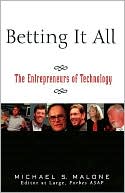
After reading Founders at Work by Jessica Livingston, I dived into an older book by Michael Malone. It has the same concept, i.e. interviews of 16 famous technology entrepreneurs. And it is worth reading.

bettingitall.JPG

It is full of great lessons so let me quote a few:

Larry Ellison about uncertainty:

When everyone said a relational database would never be commercially viable, the reckless guy said “maybe everyone’s wrong – maybe I will take a chance with my career and with my cash.” It’s not a rational process.Larry Ellison again about entrepreneurs: “I saw outside managers brought into a lot of companies who then made things dramatically worse. I think I was the best person for the job, I knew the company better than anyone else. I knew the technology, the products and the markets. My heroes are people who do not follow convention. It’s difficult to innovate when you are like anybody else.“T. J. Rodgers about Silicon Valley: “One of the things that Silicon Valley successful is companies think just about wanting to succeed. It is also a meritocracy. What makes us so special and different is no Java code or biotechnology, it is that we’re truly capitalists. About Europe and Japan: We’re moving at light speed relative to the Japanese, who probably still have a committee working on the problem and the Europeans, who are trying to work it out politically. ”

Tom Siebel about luck: “If you look at the core of many success stories, it’s not great visionaries, not great technology, not great entrepreneurs, it’s pretty bright people who found themselves in the right place at the right time and managed not to foul up the opportunity.”

Gordon Moore about Silicon Valley. “I really measure the thing that’s become Silicon Valley from Shockley in 1956. There were earlier technology companies – Hewlett Packard and Varian – but they were more like established companies on the East Coast. Shockley introduced some instability in the system. ”

If you want to learn more, read it…

Next should be “Once you’re lucky…” and “In the Company of Giants

Is Silicon Valley in trouble?

A scary video interview about Silicon Valley and I can not fully disagree: the IT industry is maturing so innnovation may be less relevant than it has been.The VC industry is in trouble though it will not admit it. Risk taking is disappearing. “Engineers are gun shy of start-ups”. What a terrible message.

Of course, there is hope: this is not new… Silicon Valley Fever is a 1984 book which already described the troubles start-ups and engineers could experience. People always claimed there were too few deals for too much money.

Whatever, enjoy and comment if you wish…

PS: thanks to Andre M.  for drawing this video to my attention!

The Trouble With…

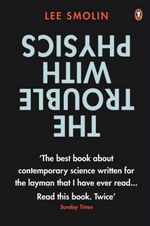
I just finished reading The Trouble With Physics by Lee Smolin. It is a GREAT book. Now what has this to do with innovation and start-ups? Well I see a link:  In my book I refer to Thomas Kuhn, the author of the “structure of scientific revolutions”. Indeed Innovation and Research have similarities in the way they progress. The specific topic he focuses on is the lack of progress in physics. Don’t we have a similar issue with innovation? I also quoted Pitch Johnson, one of the grandfathers of venture capital who wrote: “Democracy works best when there is this kind of turbulence in the society, when those not well-off have a chance to climb the economic ladder by using brains, energy and skills to create new markets or serve existing markets better then their old competitors.”

thetroublewith.jpg

Smolin considers Science needs two ingredients: ethics and imagination. If the established science and scientists prevent the emergence of young people and new ideas, there might be a crisis. It is what he analyses brilliantly in his book. (By the way, his book tells much more, it is a really great book). When Silicon Valley people such as Joe Costello and Richard Newton claimed that Silicon Valley needs to take more risks and that greed is more important than ethics, I see similarities…

Win, Win, Win

I discovered yesterday the new 2008 Academic Ranking of World Universities done by the Institute of Higher Education, Shanghai Jiao Tong University (IHE-SJTU). Again the USA has the lion share: 8 in the top 10 and 17 in the top 20. Only the UK (Cambridge and Oxford) and Japan (Tokyo) enter the list. You can assess the ranking in more details with the full 500 ranking if you wish.

When I published “Start-Up”, I had a conversation with Christophe Alix, a journalist at Libération who told me that I forgot one thing in my explanations of the US superiority in innovation, i.e. the huge budget of the Pentagon. I certainly do not disagree and address the issue further below with a book I am just reading:

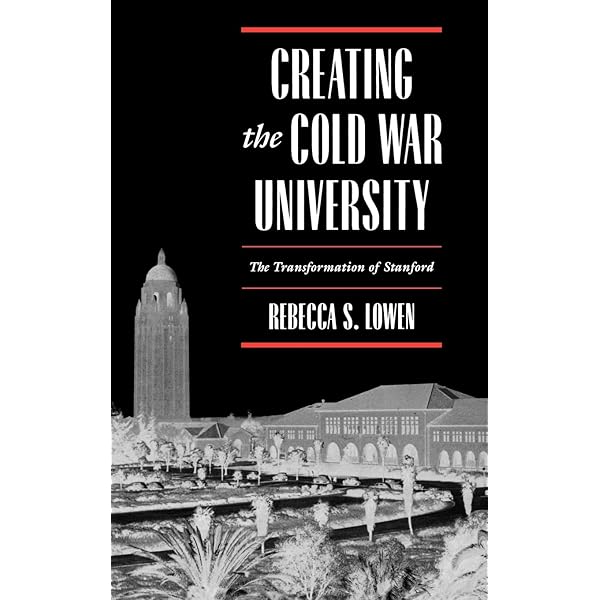
“Creating the Cold War University- The Transformation of Stanford” by Rebecca S. Lowen is an interesting book about how Stanford became wealthy in the 50’s and the 60’s thanks to federal money and industry contracts. Frederick Terman, often credited as being the father of Silicon Valley, called it a “Win-Win-Win” situation. The government funded basic and applied research (the difference between the two was often fuzzy) to develop military applications during the Cold War, the industry developed the products from the results of the research (and did not always have to directly fund the research), and companies like H-P, Varian, GE benefited greatly the effort. Finally Stanford became wealthy as well as excellent in research (which it was not in the 30’s).

Lowen explains that “by 1960, the federal government was spending close to $1B for academic research and university-affiliated research centers, 79 percent of which went to just twenty universities, including Stanford, Berkeley, Caltech, MIT, Harvard and the University of Michigan” (page147). In the Shanghai ranking, Harvard is #1, Stanford is #2, Berkeley is #3, MIT is #5, Caltech is #6 and Michigan #18 only.

Money definitely helps. I had however reacted against Alix’ argument as military money can not explain by itself the entrepreneurial spirit that Boston and Silicon Valley developed. Caltech and its JPL laboratory never reached the same start-up activity. But the quality of universities and their wealth is an extremely strong ingredient for successful technology clusters.

Inside Steve’s Brain

Inside Steve’s Brain

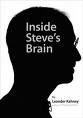
The book by Leander Kahney is interesting as it shows how Steve Jobs is unique in the high-tech world. Let me just mention a single example: “But unlike a lot of people in product marketing those days who would go out and do customer testing, asking people what they wanted, Steve didn’t believe in that. He said ‘How can I possibly ask someone what a graphics-based computer ought to be when they have no idea what a graphics-based computer is? No one has ever seen one before’.” …and… “Like Henry Ford once said: ‘If I’d asked my customers what they wanted, they’d have said a faster horse’. ” (pages 63-64).

If you like this, you’ll enjoy the book. Thanks to Jacques for recommending it.

An Ode to Disorder

Too much organization harms Innovation

nouveleco.jpg

These are the title and subtitle of a brilliant paper (inFrench only) by Julien Tarby in the Nouvel Economiste dated June 5, 2008. His article echoes my worries about innovation in Europe. His analysis is really interesting. Among other examples, he quotes:

Samuel Kortum et Josh Lerner: 1 euro invested in venture capital has a 10x return over 1 euro spent in the traditional R&D of companies

Pascal Picq, a paleo-anthropologue, who develops the evolution theory applied to the enterprise: start-ups which adapt to survive are Darwinian. “Unfortunately the French education system remains Lamarckian, and considers that organizations improve in a development scheme (administration, big companies). It is the country of the planned projects (planes, trains) and not of disuptions. This culture of the norm does not tolerate variability, trial and error and it induces the development of the [existing] fields of excellence and not the creation of new fields.”

If you read French, and because it is free, you shoud run and download it!

Spain has a passion for Innovation

I had the pleasure to be interviewed on the book “Start-Up” by Doris Obermair. The text is available in Spanish as well as in English in the magazine If… La Revista de Innovation : Más pasión y sueños, menos infraestructura y experiencia (english version)

if.gif

and the video (in English) is available on the web site Infonomia.

infonomia.gif

Finally, I will attend the Ifest conference on July 10-11 to talk about the topic of my book. Because of the diversity of the attendants, I think it will be a great event.

ifest.gif