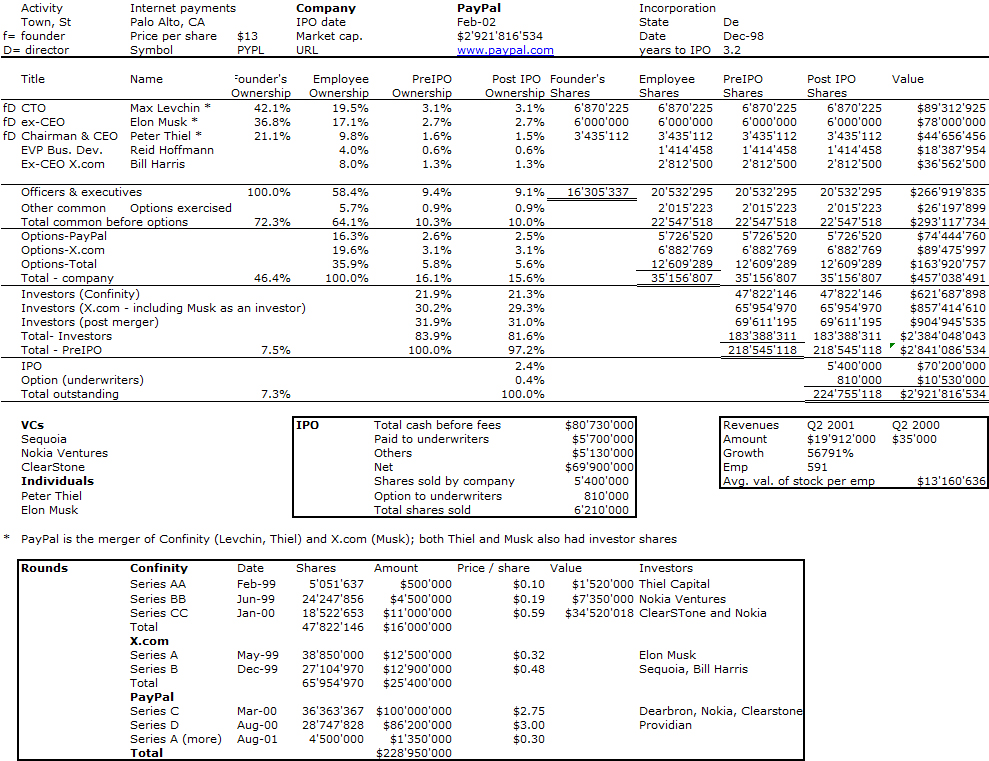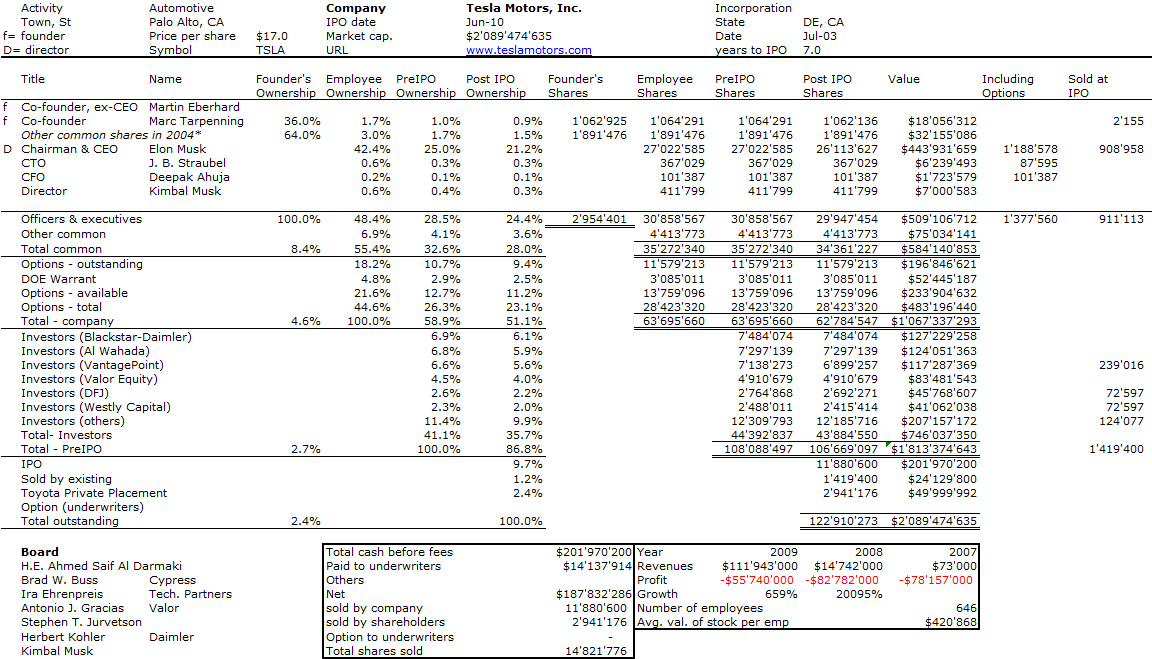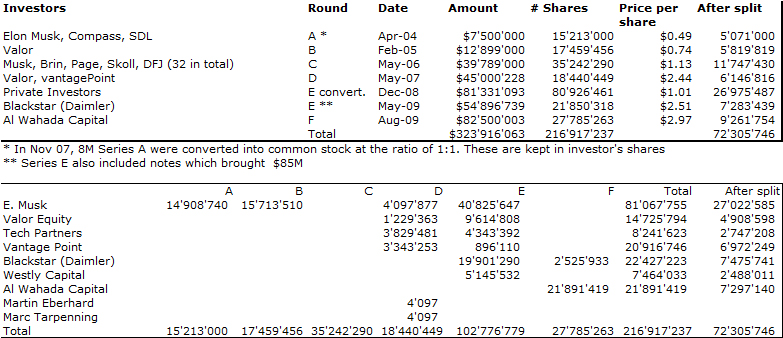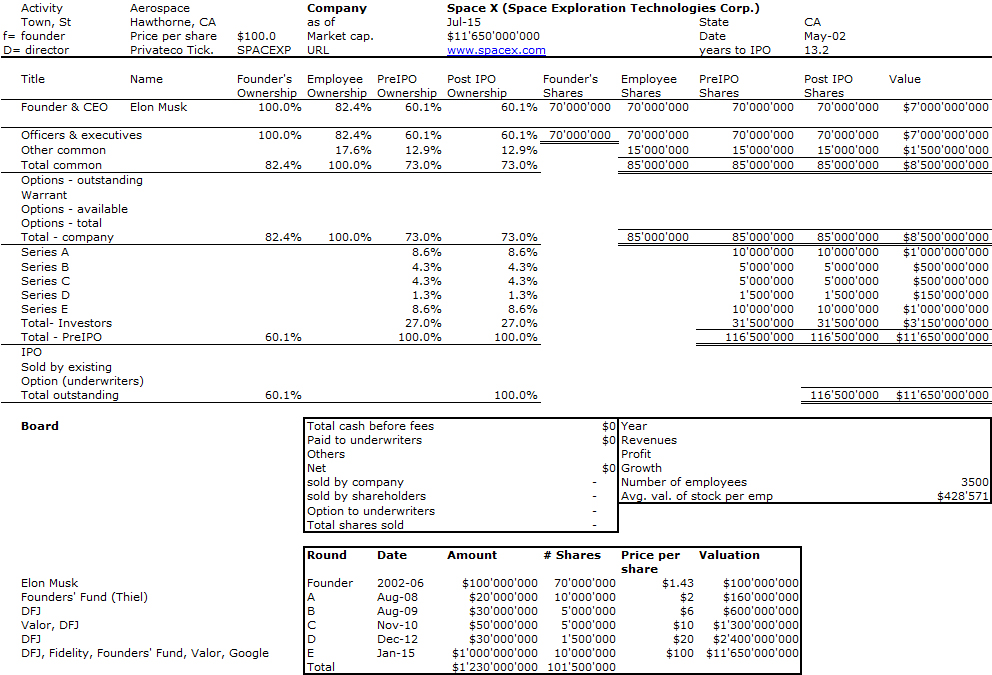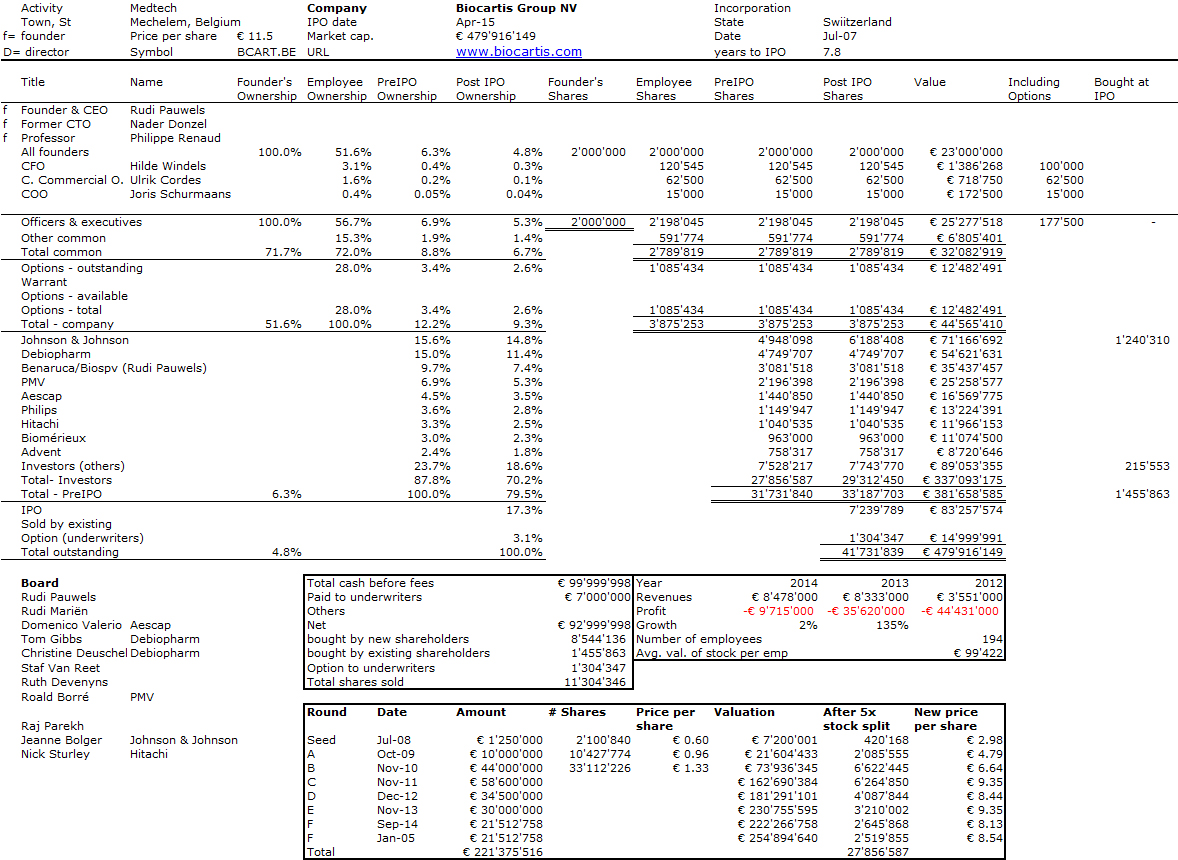
This blog contains original articles as well as articles from the book "Start-Up", by Hervé Lebret, which exists both in English and French. It is available on Amazon as well as in electronic versions. To buy it, click here.

Posts Tagged ‘Entrepreneur’

Morten Lund at St Gallen’s symposium

Tuesday, May 18th, 2010 Comment »

Do you know Morten Lund? You just need to know he was a early investor in Skype.

He was recently in St Gallen, you can  watch his talk or read the interview below. Nothing really new, but quite interesting. Thanks to Jordi, for the link :-)
Jordi apparently read it on the new platform Inno-Swiss

All that follows are Morten’s words, not mine…

Here is a pretty good interview from the programme (with my comments):

Speaking of “the entrepreneur” is always tricky, as there is no clear-cut definition. One way of approaching this problem is to ask entrepreneurs themselves what they think entrepreneurship is all about. Let us hear first from the serial entrepreneur Morten Lund (DK) who covers this year’s topic in a most comprehensive way. He is young, he is famous for having invested very early in the VoIP service Skype, he learnt the ups and downs of entrepreneurship the hard way and he is realistic about the outcome of entrepreneurial endeavours – even those of the St. Gallen Symposium.

Morten Lund, there are a lot of investment opportunities out there right now. You, as an entrepreneur, must enjoy yourself a lot.

I am bankrupt at the moment (I was when I did the interview), so I cannot do a lot, but then, on the other hand, I can help other people start mind-blowing businesses. In a downturn like this, most entrepreneurs move in the opposite direction to the cycle. When everything collapsed two years ago, a lot of people where investing in start-ups they did not know anything about. (Including myself)

How this?

The clever guys, they cashed in two and a half years ago ( I know quite some) and they are now buying up like crazy from all the bankrupt guys (idiots) like me. For real start-ups, like what I have been doing in technology, this time is, of course, amazing. The reason is that this technology is now mature. Both from the consumer side, as people are using computers all the time and they buy a lot online, and from the technology side, where it has become so easy to develop a website or a web service or to rent servers.

For instance, you have the world’s biggest infrastructure at Amazon which you can just tap into with no set-up fee. So those two components, the e-side and the consumer side, work now and the developers and infrastructure are amazing, and then combine this with the fact that you can actually get developers because they have been fired and are much more realistic salary price-wise – that is all together probably the biggest opportunity in technology history.

What is your part in this game?

Imagine how we would have gone to the cattle market a hundred years ago and seen that perfect cow that gives milk, delivers some good babies and lots of meat you can eat. These are all the processes in the game in which I have been for over 15 years, creating companies, and through trial and error, finding those perfect cows that actually deliver (Christian and Assen – dont be offended :) . And now, the technology and the people who want to buy and use it have combined in a way that suits someone like me perfectly. And that is, of course, a dream.

Is it the right time for entrepreneurs? Are they agents of change?

An agent of change for me is more somebody who is standing outside and wants to label people like me. But it is impossible to put a label on me. I am not a consultant, I am not an investor, I am not even an entrepreneur, I am many things in one.

So what are you?

I am mostly a guy facilitating a trampoline. I am the guy who dares to jump the crazy jumps on the trampoline and that people try out like a trampoline. I am facilitating a catapult. The best you can do now is to launch start-ups with good people, but you do have to have simply amazing, crazy, smart, good, cool, nice people, because these kinds of people can challenge SAP in one of their niches. But they have to be amazingly smart, hard working, into their stuff and vibrant. And they have to complement each other perfectly. Then, with added luck, it is possible.

What are the ingredients of entrepreneurial success?

Entrepreneurs are executing a vision and turning it into reality. You need a lot of skills in that process – accounting skills, sales skills, people skills, science skills, presentation skills and so on. The entrepreneur closes his eyes and lowers his hands, then uses all he has himself and reaches out to the world for the best of the competences to make it happen.

He has to be smart and trustworthy and socially strong enough to make his thing take off. How many times have you drawn your small ideas on a piece of paper for your friend but they never became reality. It is the entrepreneur who has the (mental) capital to get the idea off the piece of paper and into sales.

It is about skills, but it is also about luck, is it not?

In my world everybody knows that you have to work superhard (and be disciplined like hell). But then remember, there are global opportunities with technologies and the internet, but there is also global competition.

There will be another two hundred start-ups, some in the same market as you, so you also have to be lucky to break through or to find the right people or to chose the right strategy or to find the first client and adapt all of those things as you go along. You always have to acknowledge luck as part of your entrepreneurial success.

And sometime you fail.

That is why I am apparently so interesting. A lot of people tried what I tried, they have been categorised either as geniuses or losers. If you are one of those people in history who actually dares to talk about the fact that you failed, it seems very strange. And Ooh! If you are honest and talk about failure, that seems to be very new.

Do we need more of a failure culture?

Maybe we do have to be more realistic. So when we have an entrepreneur symposium at St. Gallen, we could also have a failure symposium because failure is much, much more likely than success if you are an entrepreneur. But you do not want to talk about it. I mean, eight out of ten seminars fail. It is very important for you to have the courage to say “I will”, “I can”, “I dare to do this”, but also “I can and dare and see that I can fail”. Then you become really strong.

But is the entrepreneur as an individual not massively overrated?

Again, you want to put a label on it, you want to categorise people. There are very few one-man brands in the world. Michael Jackson did it. (But)Everybody would acknowledge that he needed the band to create the music. In entrepreneurship, as well, you have the initial guy who starts something or who finds the team. But entrepreneurship is much more about team work and group effort.

There is a saying that true entrepreneurs are long-term oriented. But your entrepreneurial career does not reflect that in any way.

I would love to have a long-lasting business that I could keep forever (EVEBREAD = Everlasting Bread and is my dream of a such company). I would love to have this green tech company that purifies water of which I would be the proud owner forever. I think we all would love that. But with entrepreneurship you really have to remember that the entrepreneur can take the idea off a table and turn it into some kind of sales or product. The big corporations will then be so happy to buy this when it works, because they know how to make a critical thing huge. That is why they have a big corporation.

They do not believe they can be innovative at the same level, so they want to buy as soon as an entrepreneur has started. And they are much better at the managing game when you get to a certain level. So I get in quick, get out quick, it is true. Because it pretty often happens that you cannot say no if somebody wants to buy your stuff. The entrepreneurs in charge can get a lot of money, and most of the entrepreneurs, me especially, will take this money and do more of what they did before, meaning turning ideas into reality.

In your opinion, what is the best political and social context for entrepreneurship?

Put crudely, the best model for entrepreneurship in history is the model of American society, because it has created the Gates, the Carnegies and most of the biggest companies we know in a very short time. The Americans can beat anyone and every start-up because they always have the best start-ups and the most successful (financial eco-system until now). Talking about the best social model or political climate for entrepreneurship, I think we have been pretty lucky in the Scandinavian countries, but I doubt whether it is sustainable. (China and India will eat us alive :)

You have to be hungry to be a successful entrepreneur. You have to want to prove to the world, especially coming from small countries like Switzerland (and Denmark), that you can do it. The Nordic model makes people too demanding, they are not hungry any more (dinner is served for free no matter how stupid you behave). That is unfortunate, because I love to live here. Denmark is facing some real shit now. It will be very difficult to keep up all these crazy standards of social living.

Are entrepreneurs role models?

Yes, because we think that entrepreneurship is something we want (have) to do. But we forget that being an entrepreneur can mean failure. Successful entrepreneurs are role models, but seven out of ten entrepreneurs are not role models because they fail.

Interview: Johannes Berchtold

40th St. Gallen Symposium

A Swiss in Silicon Valley

Tuesday, March 16th, 2010 Comment »

Here is my fifth contribution to Créateurs, the Geneva newsletter, where I have been asked to write short articles about famous success stories. After Synopsys, women and high-tech entrepreneurship, Adobe and Genentech, here is an short article about a Swiss founder in Silicon Valley.

Do you know Edouard Bugnion? I am not sure that Switzerland knows about its child, who grew up in Geneva and Neuchâtel before graduating from ETHZ (Zürich) in 1994 and moving to California where he obtained his MS from the University of Stanford in 1996. Yet he is the co-founder of VMware and Nuova Systems, two recent success stories from Silicon Valley.


Edouard Bugnion with the author in the middle of « cubicles » at Nuova in May 2006 (Picture: Mehdi Aminian).

As I was preparing a short trip to San Francisco, I had been advised to meet this Swiss citizen that I had never heard of. The meeting was planned in his office which we found thanks to a quickly printed logo posted on his door: Nuova Systems. The place was gigantic for a start-up which was less than one-year old. But Nuova was hiring fast. I should add that Cisco would soon invest $50M in the start-up. Why so much money? Because the founders of Nuova were exceptional: Mario Mazzola had just left Cisco and had also been the founder of Crescendo, the first start-up acquired by Cisco (in 1991). Edouard was one of the five co-founders of VMware in 1998, which was bought in 2004 by BMC for $625M. VMware was so successful with its virtualization tools that BMC gave back its independence to the company which is today quoted on Nasdaq (its market capitalization was above $10B at the end of 2009) and has more than 6’000 employees and $1.8B in sales. Nuova has been acquired by Cisco in 2008 for $600M.

When I told my surprise in front such a big office space, Edouard told me the story that when VMware had grown to a workforce which forced the company to move, the company proposed to lease its old offices to a small new start-up. Its founders looked at the place and declined: “Too small!” The start-up was unknown and its founders were very young people. Edouard was as surprised then as I was when we met. Was it ambition? Was it arrogance? The start-up was Google and its two founders, Page and Brin, were, without any doubt, visionaries


Nuova’s front door logo in May 2006.

Edouard might be qualified as a school dropout. Even with his diplomas from ETHZ and Stanford, he quit the Stanford PhD program in 1998 to launch VMware with his professor. With $20M of venture-capital, they could grow the company until its acquisition six years later. In 2000, he gave an interview to SwissInfo. With 120 employees, VMware was only two years old. “In Switzerland, young entrepreneurs do not dare dreaming about such a scenario. If you have a good idea, you can find a few million and your product can reach the market for better or worse.” Such is the quote from the author of the interview, Pierre Godet, who, then, says his concern about this brain drain. Bugnion is more optimistic: “Swiss people in Silicon Valley develop a very unique experience, as well as a network. Then, most of them come back to Switzerland at some point in their professional life.” It is one of the theses in my book. It may be a good idea to go and work in the Bay Area, a region where anything is fast, very fast, where ambition can be expressed and where failure is tolerated. I hope that someday, Edouard will come back to Switzerland to tell his story himself and share his experience and know-how…

A123, Boston and Atlas

Friday, February 26th, 2010 Comment »

I just met this morning Fred Destin in the beautiful Rolex Learning Center at EPFL. We both have a passion for entrepreneurs and architecture!

Fred told me he liked my equity tables and pies (check skype, mysql, Kelkoo, Synopsys, Genentech, Adobe, or the general one.

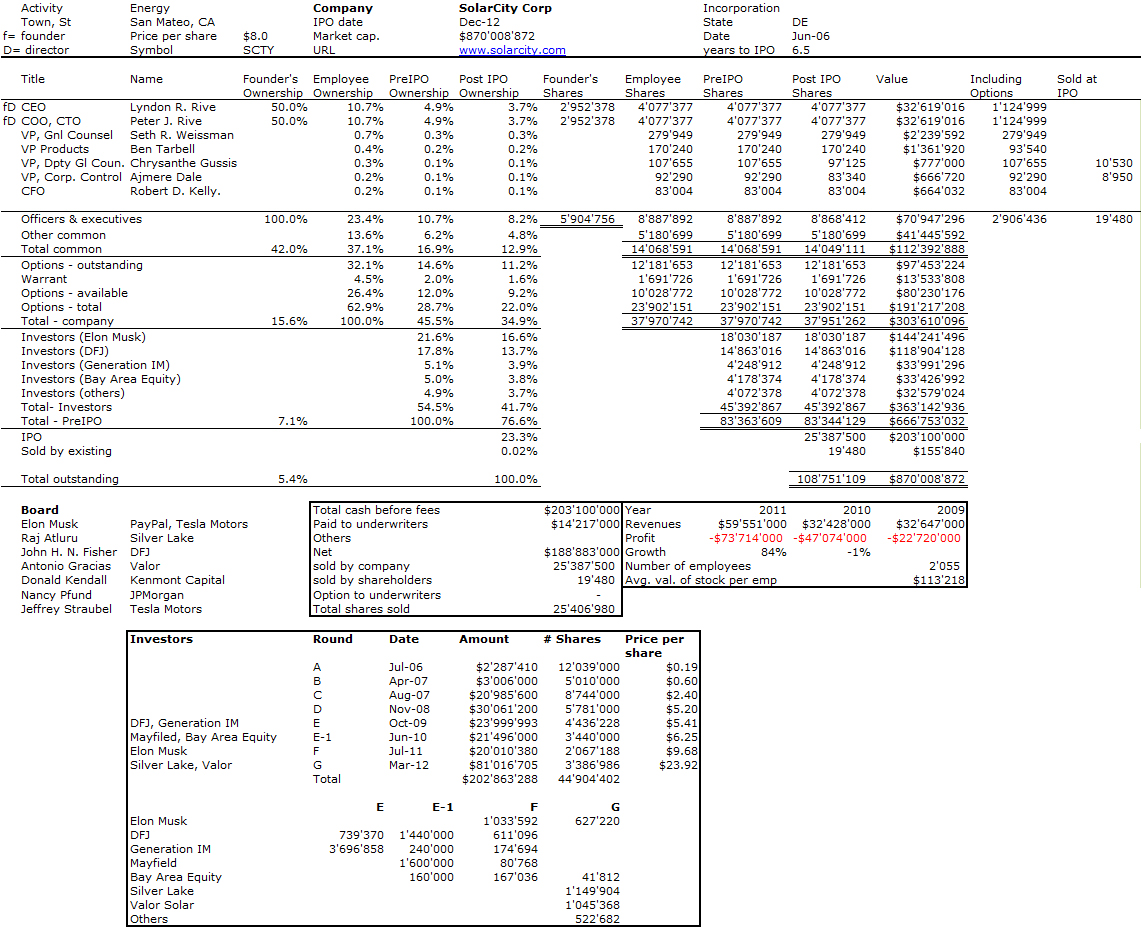
So as a small gift to Fred who is moving to the Atlas office in Boston this summer, here is the equity case of A123 Systems, an MIT spin-off which went public last September.

I am aware the pictures are not very nice but you can enlarge them and ask me for the excel file…

Lessons from entrepreneurs: not intuitive!

Tuesday, February 23rd, 2010 Comment »

One of my favorite entrepreneurial web site, the Stanford Technology Ventures Program, just published its new batch of short videos.

The lessons are quite interesting as I found them not intuitive and quite uncommon:
- you do not have to work too much
- you should do what you love
- there are not rules.

So here is the first one: Great Ideas Derive from Well-Rested Minds. “Being a workaholic is no guarantee of success. David Heinemeier Hansson points out that 37signals’ main product, Basecamp, was created on 10 hours a week of development for a total of six months. When you’re overworked, you can’t think creatively.”

What about next: Do What You Like to Get Where You Want. “John Melo, CEO of Amyris Biotechnologies, enjoyed building oscilloscopes, circuits and transistors – and yet he was a college dropout. In this clip, Melo comments on his non-linear career path and how his passion, personal interest, and sense of independence have propelled him from one episodic position to another. He states that he first looked for opportunities to do the things he loved to do, and then focused on the places he wanted to be.”

Finally, Entrepreneurs Have No Rules. It also says: “Never give up the title of CEO… In many cases, it is the founder who is able to provide the vision to effectively direct product development.”

Are VCs arrogant?

Thursday, January 28th, 2010 1 Comment »

This was the question asked by Fred Destin in his blog post last December: The Arrogant VC: A View From the Trenches

I am interested in the topic because I see more and more entrepreneurs who just do not want to face VCs. I think it is a mistake as you may not find adequate resources for your ventures, but it is a real debate.

Destin puts in bold the following arguments:
- behaved in a rude and disrespectful manner
- absence of feedback loop
- lack of empathy
- VCs tend to string along entrepreneurs forever
- vague on their decision and engagement process
- the entrepreneur comes away feeling like he was played
- seeing everything through the lens of money
- out of touch with the reality of entrepreneurs
- VCs really don’t take any personal risk but expect everyone else to…
- dubious practices
and as a conclusion Choose your VC’s with care. Good ones transform your business, bad ones wreck it

I have read this many times, seen it sometimes but not so often. So let me add my piece, taken from my readings. You will find on this blog accounts of books I really recommend, such as Founders at Work, Betting it All, In the Company of Giants. I just extracted comments on investors from these books. I think they are more balanced and as Destin wrote, choose your VCs with care. Here they are:

- Great as long as all goes well.
- Learn about them and their lack of transparency
- Best motivation is not to need investors
- Know people and speak their language
- You can’t live with them, you can’t live without them
- Avoid it if you can
- VCs are politer than others, they rarely say no…
- Bad behaviors on all sides, “We’re interested in you guys because of your management team; we think you’re fantastic … Two weeks later they pull me into the office—before even the first board meeting—and say, “We want to replace you as CEO.”
- When company became popular, VCs knocked at the door
- Move from the ego, “me” to the company, “we”, the shareholders
- Met 43… and a lengthy process; Then once you’ve received a term sheet, then the VCs get interested, and then acquirers get interested. They all told me $18 million wasn’t interesting. And I’d say, “But most people will tell you $50 million, and you know they’re lying. I’m already discounting it because I’m a venture guy just like you are.” And they’d say, “Yeah, but $18 million just isn’t interesting.” So I changed my spreadsheet to say $50 million. And they said, “OK, that’s pretty interesting.”
- We’re also overly paranoid because the first thing we did when we started the company was talk to a bunch of entrepreneurs who told us, “Don’t tell anyone what you are doing. VCs are sharks.” Meanwhile, you hear from the VCs, “You’re too paranoid.” So it’s hard to find the right balance and be human, because you don’t know who’s genuine and who’s not.
- Within venture capital, you don’t want to manage what they call the “living dead.” Their rules of thumb were: typically one out of ten companies is a really big hit; roughly three out of ten go belly up pretty quickly, and you get rid of them. The other five to six are what they call the “living dead.” They grow nicely, organically, but don’t generate spectacular returns, and they take management time and energy.
- The venture capitalists at least in those days, had a terrible track record of bringing people in and then throwing the entrepreneur out.
- We didn’t take any salaries. but we held off on the VCs. We wanted the discipline. Not being paid and having uncertainty of having no safety net is a great motivator.
- It serves an enormous service in the business, in financing companies, in providing leadership, and connections. But we did not need their money or the leadership.
- I learnt something about raising money. They need us as much as we need them.
- I tried to get venture capital money, to no avail. What people don’t understand is that innovation is the hardest thing in the world to fund. I was 28 years old and this was before it was good to be a 28-year-old entrepreneur.
- In the old days, venture capitalists helped a company a lot. They were mentors. Many just bring money today.
- [To raise money,] go with the best venture capitalists and give them more equity. I’ll take a worse deal from Kleiner. They have people like John Doerr. You can’t put into words what that makes.
- We did a lot of market research, studied the customer, understood the problems. We couldn’t even get second meetings [with venture capitalists]. We had no industry experience and at the time VCs did not invest in consumer products.
- I did not have any venture capitalist which was good news and bad news. I could make every mistake, it was my neck, and probably no VC would have given me money: I was a woman, it was software at the time software had no value.
- In 83, I used the board to get some experienced business people. We got Dave Marquardt, a venture capitalist who bought 5% of the company for $1M.
- The downside to venture guys is that they sometimes think they know more than they do about what’s best for your company. They don’t want to admit when they make mistakes

Start-Up, the book: a visual summary

Wednesday, December 16th, 2009 2 Comments »

Start-Up, what we may still learn from Silicon Valley is two years old. I still make presentations of it and I hope to share my passion about this world.

By clicking on the picture below, you can download an extensive presentation inspired from others made in places such as Paris, Barcelona, Stockholm, Marseille, Antwerpen, Geneva… It’s never easy to follow slides without any comment, but I hope you will enjoy some of them… have fun and contact me if they are not clear!

Women and High-Tech Entrepreneurship.

Thursday, September 24th, 2009 4 Comments »

Here is my third contribution to Créateurs, the Geneva newsletter, where I have been asked to write short articles about famous success stories. After Adobe and Genentech, here are some thoughts about women and high-tech entrepreneurship.

Women Entrepreneurs? Carol Bartz, Sandy Kurtzig…

… but also Ann Winblad, Catarina Fake, Kim Polese, Candice Carpenter, Mena Trott.
The list may go on but would not be much longer. Why so few women in high-tech entrepreneurship? And even worse, why are they so little known? The answer is simple: the situation is just an illustration of their position in science, in high-level positions in companies or in society more generally. A few anecdotes will show however that they have nothing to prove their male counterparts.

Sandy Kurtzig is a school dropout. She stopped the PhD program she was following at Stanford University and joined General Electric. She discovered there that computer science must help in improving manufacturing (such as in inventory management or logistics) and left again to found Ask Computer in 1972 with $2’000 from her own savings. “No venture capitalist would have given me money in the beginning. First software was seen of no value and then I was a woman.” She declined an acquisition offer from Hewlett-Packard in 1976 and in 1981 Ask Computer went public on Nasdaq. (The reader should remember that Apple had gone public in December 1980 and Logitech was founded in January 1981.) When she left Ask in 1989, the company had $189M in sales. Her advice to entrepreneurs? Believe in yourself, hire the right people and share success. Do not be afraid of making mistakes.

Carol Bartz also began her career in a big company: 3M is the inventor of the famous post-it. She heard there: “you are a woman, what are you doing here?” She left the company when he understood she would not be promoted because she was a woman. A few years later, she moved to Silicon Valley. “Even in this region, being a woman is belonging to a minority.” Her comment will not prevent her from becoming CEO of Autodesk in 1992. (Autodesk is the world leader for 3D software for architecture and mechanical design with $2B in sales in 2008.) That same year, in 1992, she was diagnosed with cancer. She will have chemotherapy while managing her company. She succeeded twice. “With private life and work, you do not have time to wonder if you are all right or not.” Work was a distraction and the leadership she showed was a strong motivation for her colleagues.

She is also fighting for the position of women in science: “I sincerely believe that women are dissuaded [from doing science]. They are told it is not important. Another female entrepreneur, Ann Winblad adds: “The daughter of a friend of mine is worried about appearing too nerdy if she invests in science. However some of the successful women – myself, Carol Bartz – all of us were math whizzes and we really had fun teenage lives as well as adult lives and have been very successful. The problem is that we need role models like Steve Jobs with this inspirational product, the iPod. Something is getting lost in the message because not many say I want to be like them.”

In January 2009, Carol Bartz became Yahoo’s CEO. The task may not be easy. Should we listen to Caratina Fake, founder of Flickr: « There is a lot of institutionalized sexism working against women in business and I think that people aren’t even aware that it’s there. » This post is unfortunately too short to celebrate women as entrepreneurs- Those who succeeded had to be exceptional and those who try also, without any doubt. The barriers entrepreneurs face are amplified for women. I will just conclude by copying the poet in saying that, in the start-up world maybe “Women are the Future of Men”.

To know more:
Carol Bartz in “Betting It All” by Michael Malone (Wiley, 2002).
Sandy Kurtzig in “In the Company of Giants” by R. Dev Jager and R. Ortiz (McGraw Hill, 1997)

Next article: A European in Silicon Valley, Aart de Geus.

The Art of Selling

Friday, August 21st, 2009 Comment »

I have never be good at sales. I am not sure why, but it requires either qualities or experience I do not have. Selling the book Start-Up was a good example! So when I had to organize a workshop on sales, I checked a few things including the following videos which I found interesting. Some are GREAT!

Steve Blank Engineers and Founders: The First Sales Team

Frank Levison Real Sales and Customers in Business

Just in case you missed the point: Businesses Must Have Customers

Dan Spinger Negotiating with Customers and Clients

Guy Kawasaki Seed the Clouds and Watch the Sales Grow

Randy Komisar Exploring New Sales and Marketing Channels

Tina Seelig Classroom Experiments in Entrepreneurship

Last but not least, even if not really politically correct

Bob Parson Build 3 Mega Million $$$ businesses

The Anatomy of an Entrepreneur

Friday, July 31st, 2009 Comment »

A new report has been published thanks to the Kauffman foundation. The study, entitled “The Anatomy of an Entrepreneur,” led by co-authors Vivek Wadhwa, Raj Aggarwal, Krisztina “Z” Holly, and Alex Salkever gives very interesting features about the background and motivations of entrepreneurs.

The paper can be found on the Kauffman foundation web site and here are some key lessons:

- founders are generally well-educated, middle class; they have a family and experience. So this kills a little the school drop-out, young, nerdy entrepreneur…

They do not always or often think about becoming an entrepreneur early in their life:

Another interesting element is about role model or mentor:

Now, when the study focuses on young entrepreneurs, the view is slightly different:

It is where the Yahoo, Google founders come in the picture probably.

Finally, there are many serial entrepreneurs. I am a little surprised because I am not sure succesful entrepreneurs are necessarily serial entrepreneurs. In any this would not contradict the findings and this is interesting:

If there is one thing I want to add, it is about the definition of “founder” that the authors have used:

a “founder” was “an early employee, who typically joined the company in its first year, before the company developed its products and perfected its business model.”

Depending on how many of these founders were employees rather than entrepreneurs may have an impact on the data which are provided here. A well-funded VC-backed company may attract in its first year very experienced people who are not necessarily entrepreneurs. But this being said, all this is of real interest.

Bob Swanson & Herbert Boyer: Genentech

Thursday, June 11th, 2009 7 Comments »

Here is my second contribution to Créateurs, the Geneva newsletter, where I have been asked to write short articles about famous success stories. I began last quarter with Adobe and its founders John Warnock and Charles Geschke, here is now Bob Swanson, Herbert Boyer, founders of Genentech.

Bob Swanson and Herbert Boyer: Genentech

In the start-up world, biotechnologies do not seem to belong to the same world: they seem to always be reserved to high-caliber scientists not to say Nobel prize winners that investors would back with their money. So… where is the entrepreneur?

The story about the Genentech beginnings is probably the best illustration that a visionary entrepreneur is also necessary in biotechnologies. Much more than just a start-up, it is an entire industry that Bob Swanson founded.

The legend says that Bob Swanson, a 29-year old venture capitalist, met Herbert Boyer, a professor at the University of California in San Francisco (UCSF). The money of Bob and the ideas of Herbert made possible the creation of Genentech in 1976, followed by its IPO in 1980. The story deserves however a little more attention. Bob Swanson was not really an investor. He is an entrepreneur. he has been hired by Kleiner and Perkins (KP) who had understood that the real value of a venture capital firm is to create company and not only to fund them. They understood this after the success of Tandem and Jimmy Treybig whom they financed from day 1 in 1974. (See KP first fund).

Bob Swanson is fascinated by the potential of biology and genetics. (He has a BS in chemistry from MIT and an MBA). After helping KP for one their portfolio company, he leaves the fund to dedicate himself to his new passion. He meets many professors in the Bay Area but all of them explain him that their work is about science, leading edge science for sure and very far from commercial applications.

Herbert Boyer is not a typical professor. Together with Stanley Cohen, he is the inventor of a patented technology, which was not common in the academic world of the seventies. Known as the Cohen-Boyer patent, it describes how to manipulate the DNA and it is so fundamental that any new technology in the field needs to use this patent, which means obtaining a license on the technology and paying royalties to its owners, Stanford University and UCSF. In total, more than $250M was generated in royalties over 20 years.

The beginnings of Genentech are a combination of history and legend. Swanson calls Boyer who tells him he is very busy but he agrees on a 10-minute talk on a Friday afternoon. Swanson is obsessed about one single thing: the applications of research. Boyer replies that there is certainly some potential but it will require another 10 years of research. “Why, why, why?” Swanson does not stop saying to the point that Boyer finally concludes “why not? May be it can be faster.” The 10-minute talk has become a 3-hour discussion. Genentech is born, at least in two minds full of beer!

They still have to convince the skeptics. Among them, the potential investors. A week later, Tom Perkins meets with the two men and he remembers: “the technical risks were huge. I was very skeptical. I did not know anything in biology.” Kleiner is however very impressed by the energy of Swanson and the expertise of Boyer. He decides to try, step by step in order to diminish the risks and minimize the initial investment. Kleiner invests $100’000 which will last nine months.

The rest is History. Genentech synthesizes insulin in 1978 and growth hormone in 1979. Genentech also raised $10M with private investors before going public on Nasdaq in 1980. For the first time, a biotech company goes public with no revenue and its first product is not approved yet (it will be in 1985 only). In 1990, Roche and Genentech will sign a strategic partnership which makes the Swiss company its major shareholder. In 2009, Roche acquired all the remaining shares of Genentech.

Swanson was not an investor, but a visionary entrepreneur. Boyer was not a professor in his ivory tower. They were also lucky to have the best of mentors, Tom Kleiner. A lot of energy and passion, great ideas, some money. It is an almost accidental meeting which is responsible for the growth of a industry worth tens of billions of dollars.

Icing on the cake, the Genentech capitalization table at its IPO:

Pour en savoir plus:

Internet Archive:
http://www.archive.org/search.php?query=genentech

The Genentech web site:
http://www.gene.com

Next quarter: Women entrepreneurs, Carol Batz and Sandy Kurtzig