Category Archives: Must watch or read

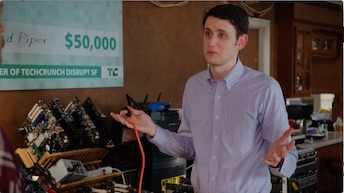
HBO’s Silicon Valley – Episode 16: billionarizing and 3 commas

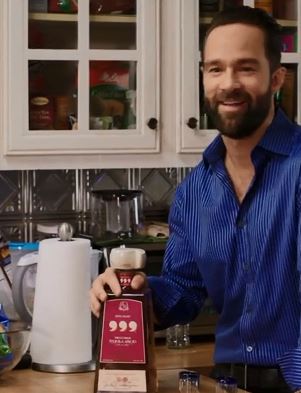
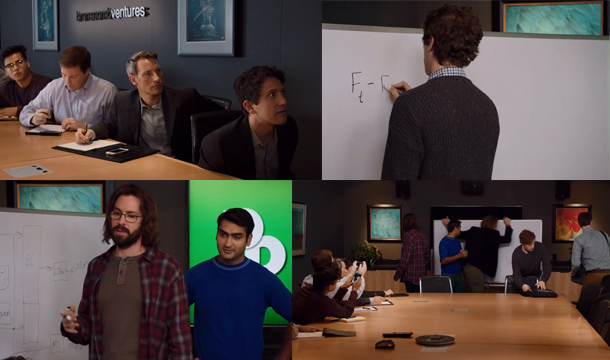
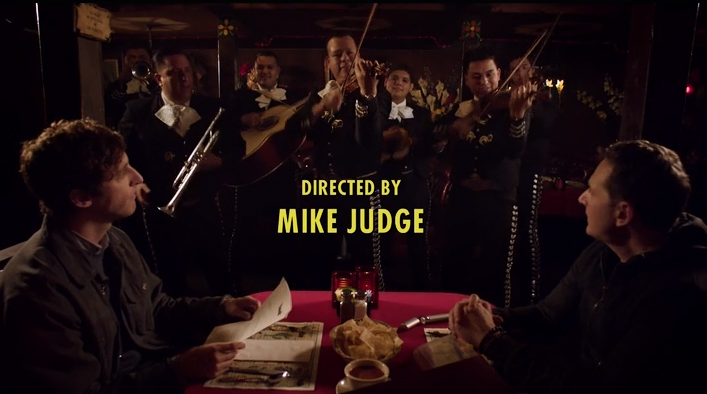
There are expressions I did not know from Silicon Valley, like billionarizing and 3 commas…

Sv02-E08-1

But Silicon Valley is still the same politically-correct place where smoking is not a good idea, at least in front of colleagues, and where the s… and f*** words are forbidden are least in front of kids.

SV02-E08-6

Silicon Valley remains Nerdland, with its unique vocabulary. “Since a negative of a negative is a positive, stealing from a thief is OK, it’s the additive inverse property.”

Peter Thiel – Zero to One (part 2)

I just finished Zero to One and here are a few more comments, less about entrepreneurship than about social issues. Whatever the reputation of Thiel in Silicon Valley as a possible Libertarian, there were a couple of topics he addresses very convincingly. He is not a pure Contrarian. He disagrees with mainstream fashion in a very serious manner. Here are a couple of examples:

thi22_3

– The machine will not replace humankind
Yes computers have made impressive progress in the recent decades, but not to the point of replacing mankind. He shows very convincingly through the cases of Paypal and Palantir [pages 144-148] that computers cannot solve automatically tough issues but are only (excellent and critical) complements to human beings. Even the Google experiment of recognizing cats “seems impressive – until you remember that an average four-year-old can do it flawlessly” [page 143]. He finishes his chapter about Man and Machine this way: “But even if strong AI is a real possibility rather than an imponderable mystery, it won’t happen anytime soon: replacement by computers is a worry for the 22nd century. Indefinite fears about the far future shouldn’t stop us from making definite plans today. Luddites claim that we shouldn’t build the computers that might replace people someday; crazed futurists argue that we should. These two positions are mutually exclusive but they are not exhaustive: there is room in between for sane people to build a vastly better world in the decades ahead. As we find new ways to use computers, they won’t just get better at the kinds of things people already do: they’ll help us to do what was previously unimaginable” [pages 150-151]. You will not be surprised I prefer this to Kurweil views.

– Greentech was a bubble and it was obvious from day 1.
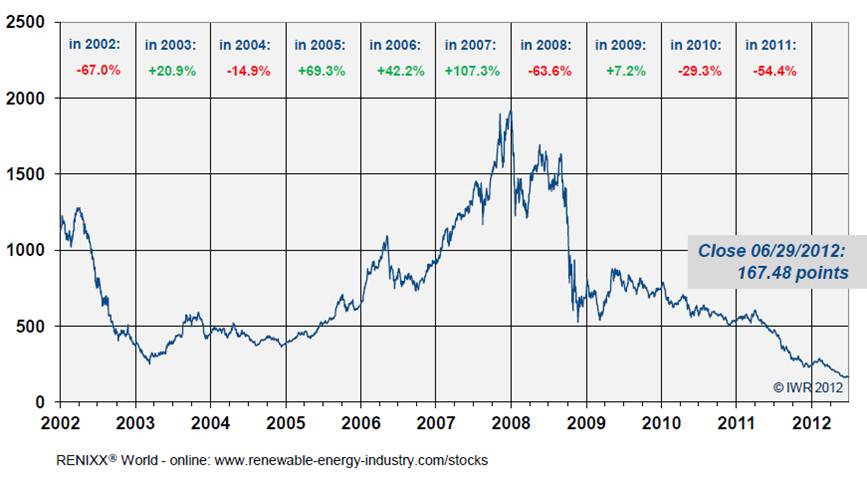
I was always puzzled with greentech/cleantech. Why are people so excited about the promise to solve an important problem when we do not have any solution. Thiel is far tougher. First he shows the obvious: it was a bubble.

renixx

Then he analyzes this industry through his “zero to one” arguments.
“Most cleantech companies crashed because they neglected one or more of the seven questions that every business must answer:
– Engineering: can you create a breakthrough technology instead of incremental improvements?
– Timing: is now the right time to start your particular business?
– Monopoly: are you starting with a big share of a small market?
– People: do you have the right team?
– Distribution: do you have a way to not just create but deliver your product?
– Durability: will your market position be defensible 10 and 20 years into the future?
– Secret: have you identified a unique opportunity that others don’t see?
If you do not have answers to these questions, you’ll run into lots of “bad luck” and your business will fail. If you nail all seven, you’ll master fortune and succeed. Even getting five or six correct might work. But the striking thing about the cleantech bubble was that people were starting companies with zero good answers – and that meant hoping for a miracle”
[page 154]. What’s next? Fintech?

Peter Thiel – Zero to One

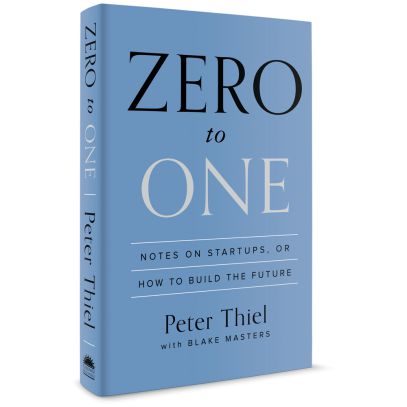
I am reading Thiel‘s Zero to One. And after a compilation of his class notes last year, here are a few more comments. His book is as good as his notes but some readers may be puzzled. It’s not a book about how to build start-ups. (For this read Horowitz or Blank) “This book offers no formula for success. The paradox of teaching entrepreneurship is that such a formula necessarily cannot exist; because every innovation is new and unique, no authority can prescribe in concrete terms how to be innovative. Indeed, the single most powerful pattern I have noticed is that successful people find value in unexpected places, and they do this by thinking about business from first principles instead of formulas.” [Page 2]
thi22_3

Thiel is a strong believer in exceptional achievements, in innovation just like in art or science. “The entrepreneurs who stuck with Silicon Valley learned four big lessons from the dot-com crash that still guide business thinking today:
1. Make incremental advances
2. Stay lean and flexible
3. Improve on the competition
4. Focus on products, not sales.
These lessons have become dogma in the startup world. (…) And yet the opposite principles are probably more correct:
1. It is better to risk boldness than trivaility
2. A bad plan is better than no plan
3. Competitive markets destroy profits
4. Sales matters just as much as product.

[Pages 20-21]

There is one point where I disagree with Thiel. Though I tend to be convinced by his argument that monopoly is good and competition is bad – read Thiel with care for the subtlety of his arguments – I do not think he is right when he writes [page 33]: “Monopolies drive progress because the promise of years or even decades of monopoly profits provides a powerful incentive to innovate”. I prefer Levine and Boldrin. Now I do believe that established players are displaced by new players – not competitors – who innovate when the champions who have become dinosaurs stop being creative.

Thiel does not believe in luck. “You are not a lottery ticket” and I agree that you can minimize uncertainty by carefully planning and probably by adapting too. He still quotes [page 59] Buffett who considers himself “a member of the lucky sperm club and a winner of the ovarian lottery”. He also quotes Bezos with his “incredible planetary alignment” (which has not much to do with luck either). According to Thiel. success is never accidental.

I also like his piece about founders: “Bad decisions made early on – if you choose the wrong partners or hire the wrong people, for example – are very hard to correct after they are made. It may take a crisis on the order of bankruptcy before anybody will even try to correct them. As a founder your first job is to get the first things right, because you cannot build a great company on a flawed foundation. When you start something, the first and most crucial decision you make is whom to start it with. Choosing a co-founder is like getting married, and founder conflict is just as ugly as divorce. Optimism abounds at the start of every relationship. It’s unromantic to think soberly about what could go wrong, so people don’t. But if the founders develop irreconcilable differences, the company becomes the victim.” [page 108]

I will finish for now with sales: “In engineering a solution either works or fails. [Sales is different]. This strikes engineers as trivial if not fundamentally dishonest. They know they own jobs are hard so when they look at salespeople laughing on the phone with a customer or going to two-hour lunches, they suspect that no real work is being done. If anything, people overestimate the relative difficulty of science and engineering, because the challenges of those fields are obvious. What nerds miss is that it takes hard work to makes sales look easy. Sales is hidden. All salesmen are actors: their priority is persuasion, not sincerity. That’s why the word “salesman” can be a slur and the used car dealer is our archetype of shadiness. But we react negatively to awkward, obvious salesmen – that is, the bad ones. There’s a wide range of sales ability: there are many gradations between novices, experts and masters. […] Like acting, sales works best when hidden. This explains why almost everyone whose job involves distribution – whether they’re in sales, marketing, or advertising – has a job title that has nothing to do with those things: account executive, bus. dev, but also investment banker, politician. There’s a reason for these re-descriptions: none of us wants to be reminded when we’re being sold. […] The engineer’s grail is a product great enough that “it sells itself”. But anyone who would actually say this about a real product must be lying: either he’s delusional (lying to himself) or he’s selling something (and thereby contradicting himself). […] It’s better to think of distribution as something essential to the design of your product. If you’ve invented something new but you haven’t invented an effective way to sell it, you have a bad business – no matter how good the product.” [Pages 128-130] And if you do not like it said this way, watch HBO’s Silicon Valley episode 15… I may come with more comments when I am finished with this great book.

HBO’s Silicon Valley – Episode 15: it’s about business, stupid!

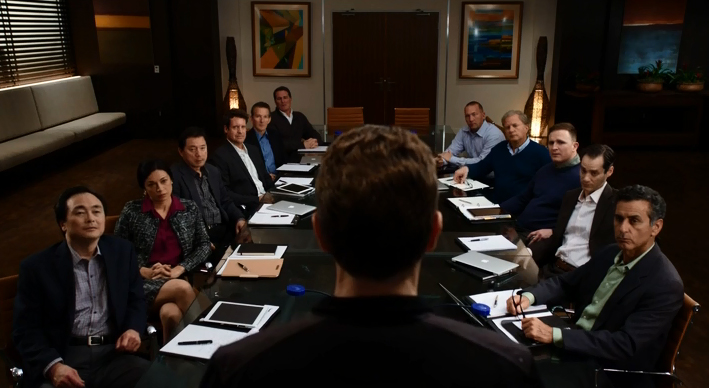
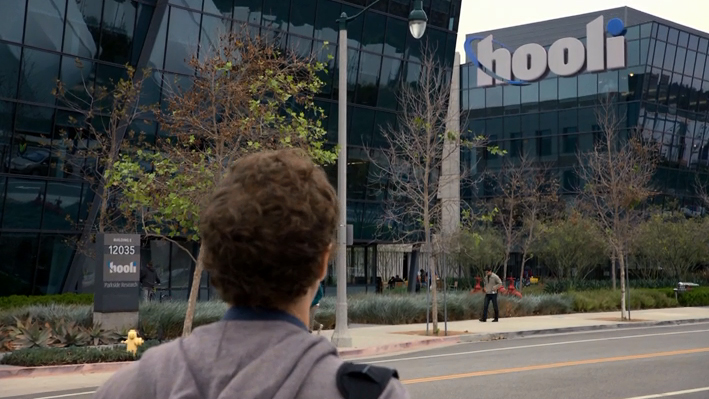
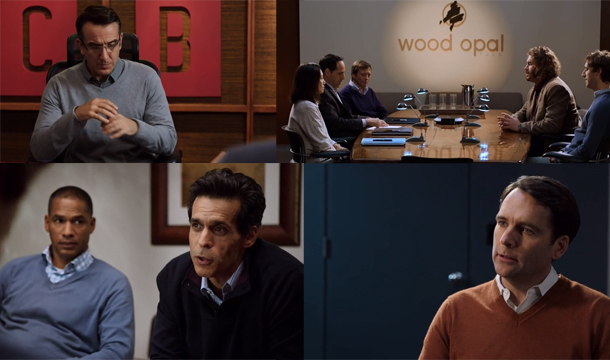
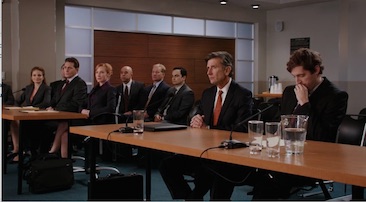
I could have quoted Peter Thiel with his “it’s customer stupid!” but I will be back soon with Thiel. You will learn also about it in episode 15. You will also (re)discover some of Silicon Valley bad habits: “Gentlemen of the Hooli board… and Lady”
SV02-E07-1
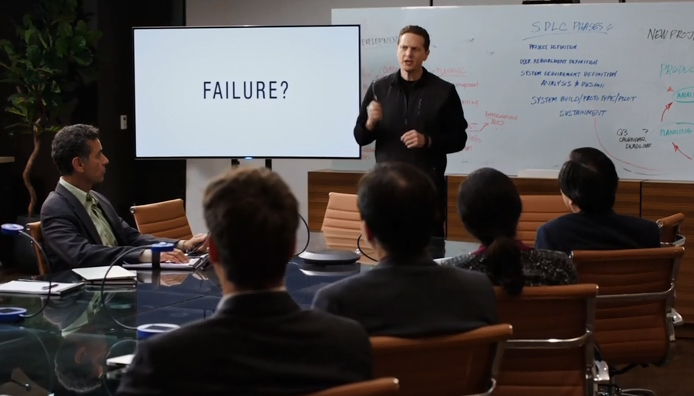
and learn again about failure.
SV02-E07-2
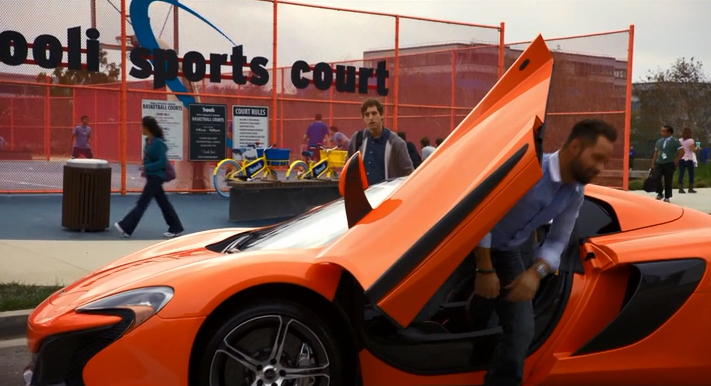
In Silicon Valley, “failure is pre-greatness”. You will also learn about former billionaires and the kind of car doors they have or do not.

The only think I need to add: competition is heating up dangerously.

HBO’s Silicon Valley – episode 14 : David vs. Goliath, not a myth in Silicon Valley…

The war is near. Its about Hooli’s Nucleus vs. Pied Piper’s compression technology. And big companies with huge resources do not necessarily deliver even if they are scary.
SV02-E06-A

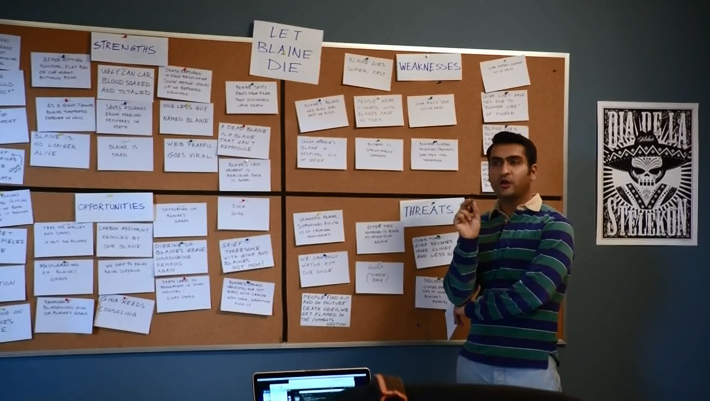
Still our heroes are building their business. They do their SWOT analysis…
SV02-E06-B

Well all activities can have unplanned…
SV02-E06-C

and nasty consequences… A third soldier between David and Goliath?
SV02-E06-D

HBO’s Silicon Valley – episode 12 : Building a Company

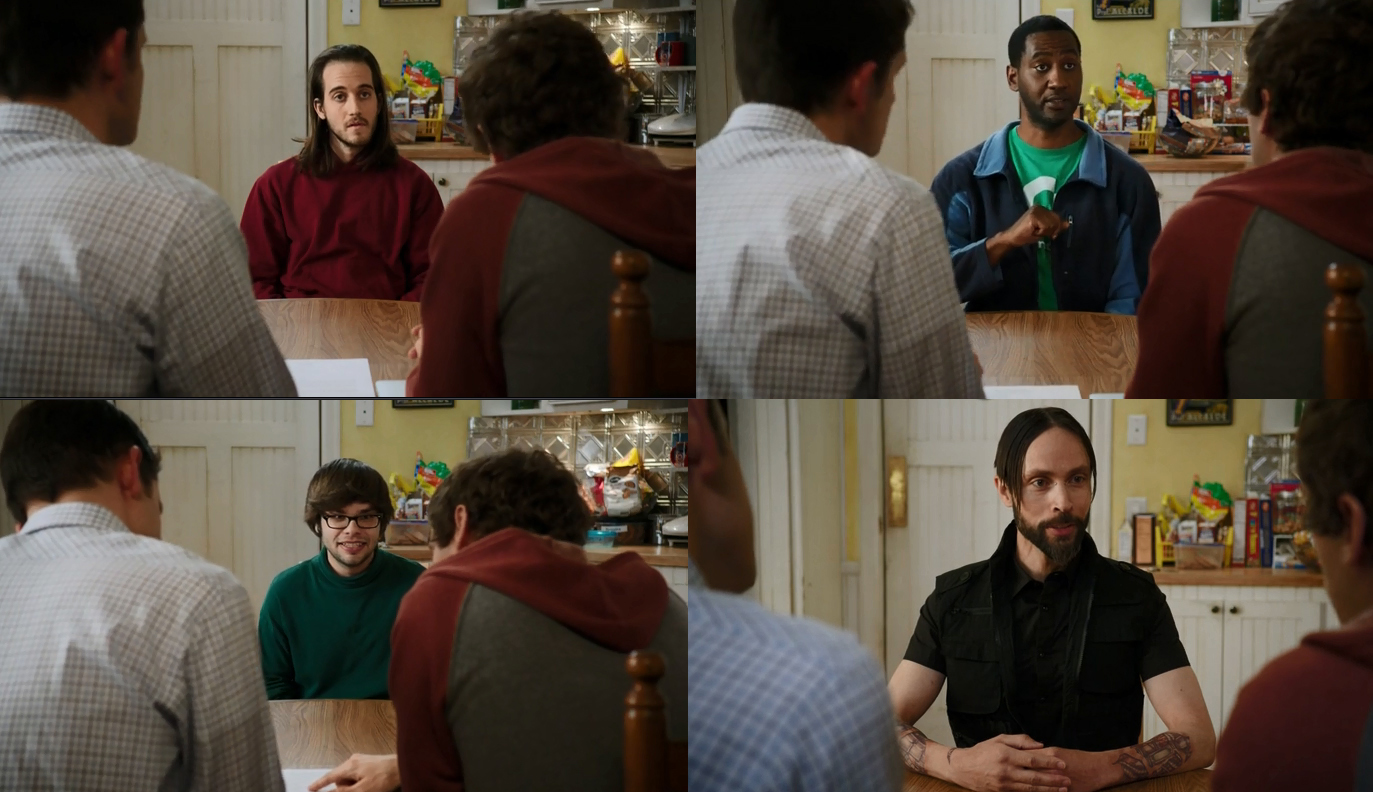
Now that they have money, our heroes need to spend it. Will they follow the “team” structure of Episode 1 when hiring: “There is always a tall skinny white guy, a short skinny asian guy, a fat guy with a ponny tail, some guy with crazy facial hair, and then an east indian guy.” Unclear from who they interviewed…
SV2-04-Hiring

While PiedPiper hires, Hooli strategizes and everyone knows in Silicon Valley that merit comes 1st…
SV2-04-Strategize

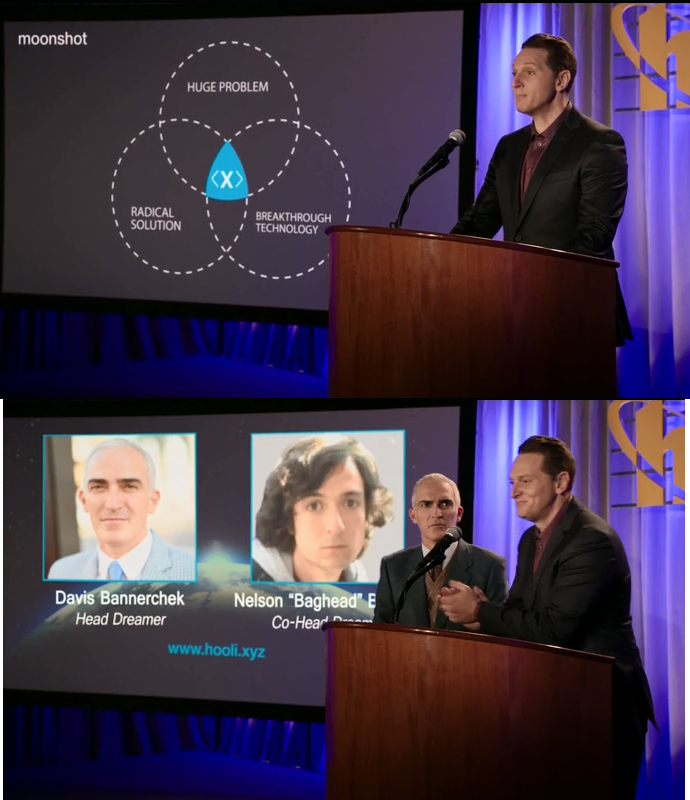
You will also learn about the 3-comma club! And the importance of solving team tensions.
SV2-04-team

HBO’s Silicon Valley – episode 11: should you sell or should you die – or neither?

I have to admit episode 10 was full of s…- I have never seen a VC stealing ideas neither a major corporation suing a start-up. Whatever SV is fun. So when you have the choice between sell or die, should you choose?
SV02-03-sellordie

or maybe do neither.
SV02-03-orneither

– “You should pursue your dream, not for profit, not for valuation or material wealth but for the good of humanity”.
– “Easy to say when you are a billionaire”
– “Billionaires are people too.”
Here SV uses the strange real episode from Tom Perkins.
SV02-03-butdream

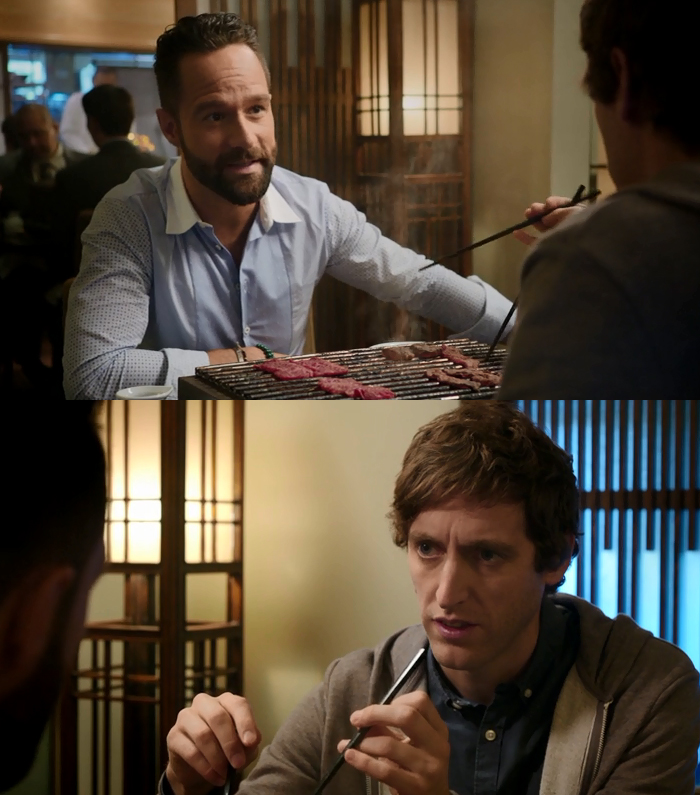
“Do not do what you should do. Do what you want!”
(But our hero is not very gifted with Japanese food, or is he stressed?).
SV02-03japanesefood2

Let us listen (in fact read here!) Monica: “Every successful company can look back at a defining moment early on where they would have died, had it not been for the courage and the tenacity and maybe the insanity of one visionary person who put it all on the line, even though it seemed like a huge mistake at the time, a moment where all the metrics and the numbers did not mean anything; it was all about the emotion, it was about belief, rational or irrational and I think, I hope, that I was just like that.”
SV02-03-monica

War is preparing though!
SV02-03-thisiswar

HBO’s Silicon Valley – episode 10: don’t spend the money when you do not have it (yet)

There is something well-known and little known at the same time in the start-up world: a deal is never guaranteed until the money is on your bank account. Our heroes will learn it the hard way. Now they are less arrogrant with the VCs…

SV02-02 VCint

but then what about being stolen ideas during due diligence…

SV02-02 VCduedil

and what about the cost of IP litigation. I will let you discover it…

SV02-02-endt

When Samwer was not Samwer yet but was writing a book – way before Rocket Internet and its clones

I did not know much of the background of the Samwer brothers beyond the names associated with them: Alando, Jamba, the European Founders Fund, Zalando and Rocket Internet. So I was surprised to be mentioned (thanks Kevin!) a book by Oliver, one of three brothers, America’s Most Successful Startups.

America's Most Successful Startups: a thesis by Oliver Samwer and Max Finger (1998)

Even if now more than 15 years old, it is a good book at least from the first 30 pages I have read so far. It reminds me the advice from Steve Blank. Just one example about founders: “The first thing you have to make sure when you put tagether a team of founders is that all founders share the same vision and the same values. The group can be heterogeneous, but the founders cannot have a different vision or a different set of values, because they will probably be partners for many, many years. You absolutely need to make sure that the goals of the founders are all aligned. Each of the founder has to be very sensitive what each of the other founders’ objectives are. You have to recognize these and try to incorporate them, because otherwise you will have people from day one heading in fundamentally different directions. Only if you get a team of really great people together, who share the same vision, and work together well as a team, you will create a very strong foundation for the company. Because everything in the company originates from the founding team and will grow out of that”. [Page 30]

Additionnally, concerning their roles: “Fourthly, depending on the business model, a high-tech company should typically have at least three key people: It should have a market visionary, someone who understands the market, the customer and the problem the customer has. It also has to have a product or technology visionary, who understands the product and technology and how it might be applied, but does not necessarily understand all the problems that the market has. And it needs a business execution person, because the idea itself if worth zero. It is the execution of the idea.” [Page 31]

Another interesting comment about Equity sharing: “Last but not least, the founders should hold equal stakes in the company so that they are in every respect equal partners. No matter who the idea bad and who contributed what in the founding process, the founders should split the company equally among them. Otherwise some founders will feellike second-rate founders, which produces a flaw from the very beginning and which might have a strong negative effect on the way.” [Page 31]

Samwer
Marc, Oliver and Alexander Samwer

Finally, I also liked their point of view on what you should do when at school: “Also, you need to try actively to get an educational background and experience that supports the venture. This really has to be an active approach. You have to put yourself in a position where you get involved in startups, you have to go to the places where entrepreneurs are, you have to go to places where you can get inspired, you have to meet people of similar spirits and build a network. In school you might participate in the business plan competition, take the classes where you will write a business plan, and take the entrepreneurial track at business school. That is where the people who want to do it are. […] Through such activities you will be meeting partners and ideas incidentally.”