Category Archives: Must watch or read

Boulevard of Broken Dreams

A colleague of mine (thanks Jean-Jacques) recently mentioned to me this book by Josh Lerner, which full title is Boulevard of Broken Dreams: Why Public Efforts to Boost Entrepreneurship and Venture Capital Have Failed–and What to Do About It. I was all the more interested that Lerner is the author of many academic papers on high-tech entrepreneurship, and particularly of one about serial entrepreneurs: “Performance Persistence in Entrepreneurship” [pdf format here] with Paul Gompers, Anna Kovner, and David Scharfstein, Journal of Financial Economics, 62 (2007), 731-764. I will come back in the future on this topic which I am currently studying.
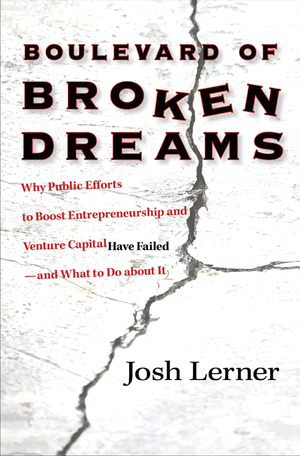
So what should we do about the public efforts is what Lerner is trying to help us with and his answer shows how challenging the topic is. What is beautiful about the author (my personal point of view) is that he likes history (just like me). Just like Steve Jobs! Just read again what I posted about Jobs on mentors; “You can’t really understand what is going on now unless you understand what came before”.

Lerner’s initial chapter is “A Look Backwards” He shows how entrepreneurs and investors benefited and suffered from each other in the 70s and 80s, including the excess of speculative bubbles, the PC burst of the 80s for example. He also shows how important public support was in the very early days through the funding of research (mostly the cold war militaries) and the legal actions to ease venture capital (SBIRs, Erisa Acts) so that he does not really agree with Rodgers (founder of Cypress) who wanted government out of Silicon Valley (page 32) so that he claims that “The Public sector did play a key role in shaping the evolution of Silicon Valley” (page 35).

Then, in the following chapters he shows how complex it is to find facts: “consistent information on venture-backed firms that were acquired or went out of business doesn’t exist” (page 59) which means that quantitative analysis is rare. And remember he is a respected academic, so he knows! What he tried to do then, is to show some of the obvious mistakes: incompetence in allocating public resources (page 73), capture, that is use of subsidies by the wrong groups (page 80), by “organizations that are mandated to help entrepreneurs” (page 83). “Seven of the incubators gave less than 50% of funding in cash to incubated firms” (just one example from Australia, page 84) or the SBIR program which has exhausted its usefulness (page 85).

So his advice is:
– enhancing the entrepreneurial culture (page 90) [through the right laws, the access to technologies, tax incentives and training],
– increasing the venture market’s attractiveness (page 100) [through allowing partnerships, creating local markets, accessing human capital abroad],
– avoiding common mistakes: timing [be patient], sizing [not too small, not too large], flexibility [learn by doing], create the right incentives [and here it is a complex situation as perverse effects from good ideas often occur] and evaluate [which does not happen often enough].
Indeed, his introduction (pages 12 and following ones) summarized it all: you need rules, experience, time, incentives and assessment. But with all his experience and knowledge about high-tech entrepreneurship, Lerner is very humble with the lessons: the topic is really complicated, all these advice have to be implemented together and it is really their careful interconnections which will make an ecosystem lively or not. Then it is my personal conclusion that such favorable conditions will be useful if entrepreneurs use them intelligently. So the reason why all this fails has many roots…

I cannot finish this post without comparing it to my book. It is indeed very similar in its conclusions with slightly different facts and figures. So you would learn complementary and consistent things by reading both! My thesis is we need an entrepreneurial culture and access to people from Silicon Valley who have the experience. Everything else is necessary but not sufficient.

There will never be another Silicon Valley

Well who am I to predict the future? In fact I do not know but I really doubt it. Famous bloggers have mentioned the topic again recently. In Techcrunch it was Can Russia Build A Silicon Valley? by Vivek Wadhwa. And in the Equity Kicker, it was Building an ecosystem to rival Silicon Valley by Nic Brisbourne. I reacted to both in the following way:

What a topic! Clearly something which has been around for… at least 35 years (I mean how to replicate SV). The fact that we still discuss it shows how complex it is. It has been my main concern in the last years and for the beauty of the debate (that’s what blogs are about, right?) let me play the devil’s advocate fully. At an extreme, I do not think there will ever be another Silicon Valley. For example, Kenney claims in his book on SV it requires 5 basic ingredients: universities of high caliber (Stanford and Berkeley in SV), a strong investor base, service providers, high-tech professionals (who accept to leave their big companies for start-ups so from Intel, Cisco, Apple, MSFT, even Google now to the next wave) and last but not least an entrepreneurial culture. All this is not easy to gather. But even worse, SV was probably an accident, a monster which was never successfully replicated. Saxenian showed in Regional Advantage how even the Boston area failed and the fact that Paul Graham moved ycombinator fully out of Boston to SV is just another sign. In Europe, Sophia Antipolis was a first experience … in 1972 so? So you need a rare combination of ingredients in the recipe and hope the oven is at the right temperature for a long, long time. Now I am playing devil’s advocate so things are not so bad. As a positive reaction, let me add my own analysis: I am not sure governments are good at innovation, they are good at stimulating research. The US federal govt has put billions through DARPA, NIH, DOE, etc, and this obviously helped Stanford, Berkeley to be the best universities worldwide (see the rankings) and the Internet to be created. Long term investment in infrastructure is what gvts are good at (education, research, transport…) Then, yes, bridges with SV are critical. It is exactly how Israel, Taiwan, then India and China have been successful with their diasporas. Countries should invite back the experienced migrants. When he has time, Brin should help Russia or Levchin Ukraine, or even Grove Hungary etc… I am less sure tax credits, admin, legal tools have been so useful in the 50’s, 60’s and 70’s when SV was its in early days. As a conclusion, it is and will remain for a while a great topic.

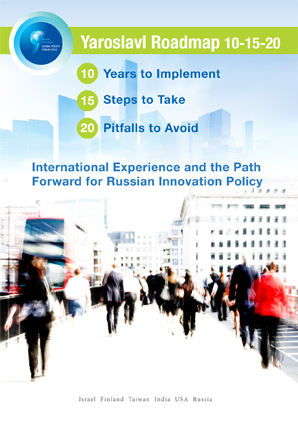
Of course, my reaction was not as important as the source of the posts: Russia wants to be more innovative and commissioned a report to assess experiments of innovation ecosystems. The result is the following report: Yaroslavl Roadmap 10-15-20 (pdf format.)

There isn’t anything really new in this report, at least for innovation experts. But it is a very good synthesis of what the USA, Israel, Finland, India, and Taiwan have tried, be successful in, but also in what they failed.  The historical summaries are great and full of good lessons. I had the feeling the authors put too much emphasis on infrastructure vs. culture. It is my own bias again! They mention culture a lot, but they may be aware also that it’s the most difficult thing to create… If you like the topic, you should certainly download and read the pdf, and build your own opinion.

iPad vs. Kindle

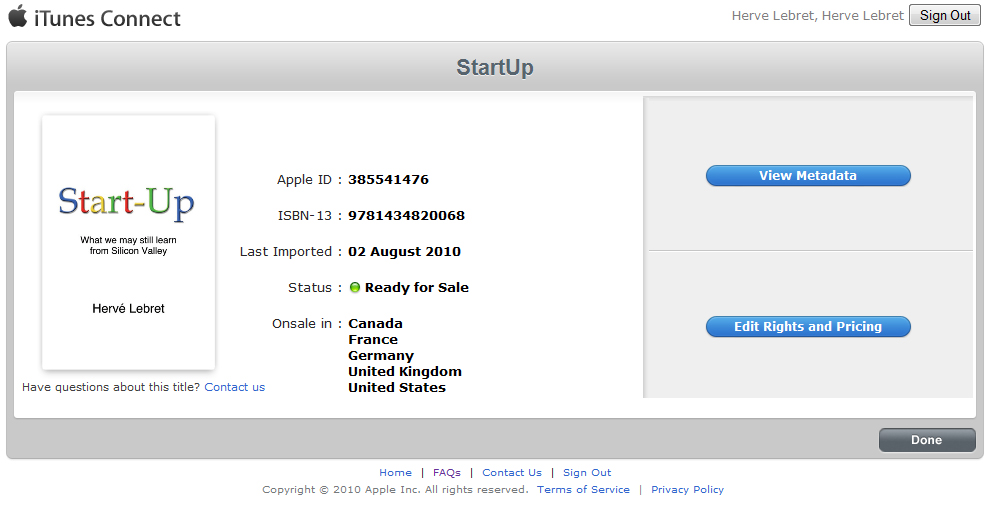
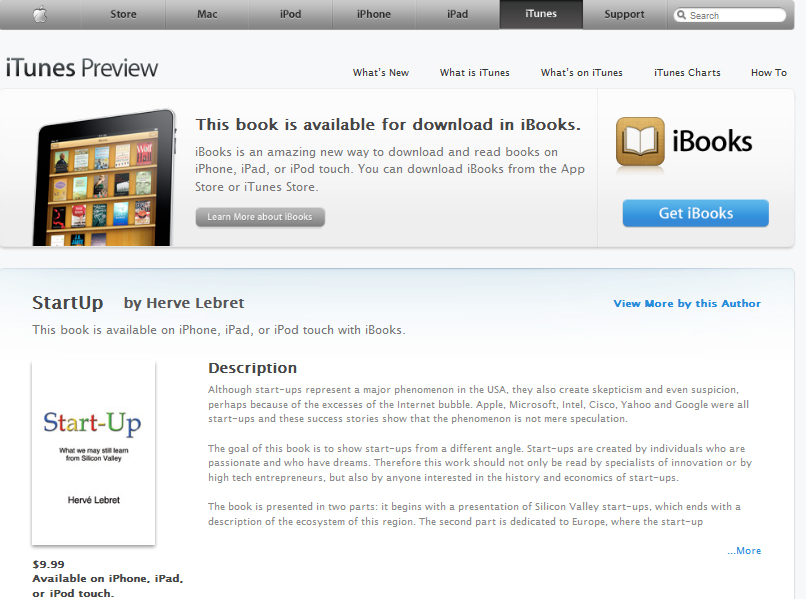
As I just mentioned in my previous post, I converted the English version of the book Start-Up to the Amazon Kindle and Apple iPad/iPhone formats. I will describe here what I faced as challenges and output.

The Amazon Kindle first.

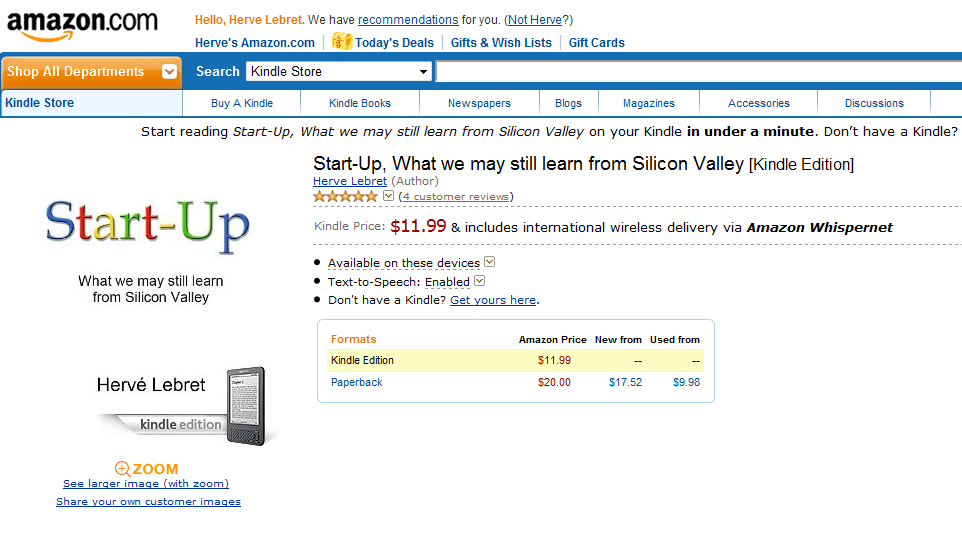
It was relatively easy to do the job. I just add to save my Word version of the book into an HTML file. Well, almost. First, the table of content did not have direct hyperlinks, which I had to build. And at the end, it was not really a meta-table of contents so that you can click on the links (on the iPad version of the Kindle) but there is no real table of content. Second, the tables of data were just awful, so I had to convert them to JPG pictures. Then I just had to become a member of the Amazon DTP platform, fill in my details and upload the file. Their validation was fast and the Kindle version is available since late July. As I wrote in my previous post, the main weakness I saw is that on the iPad version of the Kindle, I could not enlarge the pictures (whereas I can do it with an iBook). Other weaknesses: the table of content is not good; and the chapter titles are small. Finally, I still do not know why they sell it for $11.99 when I asked for $9.99.

Now the Apple ibookstore. This was much more challenging!

Preparing an ebook is not as simple as I thought. In my simplistic views of electronic books, I thought that PDF would be an ideal format. I was naïve! If you want to read ebooks on a laptop, Adobe Digital Editions (http://www.adobe.com/products/digitaleditions) as well as Calibre (see below) provide a good reader for your laptop.

Now Apple was tougher. First I had no clue if I should become a developer or a content provider (http://www.apple.com/itunes/content-providers). Fortunately enough, being a content provider is good enough and free! Once you are registered as content provider you just have to let Apple validate your file. Well one minute! To become a content provider, I had to download iTunes Producer which works on Apple computers only!

Then you have to do much more work than with Amazon! First they want a EPUB format. You need to create such a file from the same HTML file required from Amazon (you can use Calibre, www.calibre-ebook.com) and you need to validate it with epubcheck (code.google.com/p/epubcheck). I had many bugs and had to use an epub editor. Sigil was good (code.google.com/p/sigil). But I still had to do some hand work and I would quantify it as a few days of work of editing whereas Amazon only asked me about a day.

Finally, Apple annouces it takes them up to 10 business days to do the quality control and it is about what it took. I do not have a Kindle so I cannot judge the result. There were a few buyers but I did not get any feedback yet. I have an iPad with the Kindle reader so I could check the results as I said previously. The experience was better with iBooks but better than I feared on the Kindle platform provided for the iPad.

Finally, the iBook seems to be available through the USA, Canada, UK, Germany and France only and apparently the countries which have agreements with those. Switzerland is not part of the group so I would not be able to buy it from home… too bad for Swiss residents!

Start-Up on iPad-iPhone and Kindle

It’s done! I just made the book Start-Up available on both platforms, the Apple iBookstore for iPad and iPhone and the Amazon Kindle. I also checked bother versions so let me share with you a few things from the experience.

The process with Apple was the most painful (more in my next post). Is it because they have a higher quality control? I am not sure. The main difference is that you can click on the pictures with Apple whereas on the Kindle, I could not find a way to enlarge them. It is a weakness in my case given the amount of data in the tables. I also noticed I did not master well the tables of content for the Kindle…

There is also a small mystery, a mistake I may have made: both versions should sell at $9.99 but Amazon sells it at $11.99 and I have no clue of the reason why!

More about the experience of publishing an eBook in my next post!

The crisis and the American model

I seldom do it this way. I will not translate my French post about a personal analysis of the crisis and the American model. A crisis which is much more general than the financial and economic crisis. It is also a crisis of creativity, invention and innovation at least in Europe. So we look at the USA for a model and solutions. This creates tensions. Many of my friends and colleagues disagree with my fascination for the USA, which by the way, is limited to a very small number of things!

So I give a few directions including a previous post on the book by Lee Smolin, The Trouble with Physics. Go to French or if you do not, at least go and watch No One Knows About Persian Cats. Where’s the link? I think our crisis is about individuals and society, the inability of the university, of the school, of the family, of the society in general to let people express their dreams, their self-confidence, their creativity and their inventiveness. The pressure is so high that (self-)censorhsip and fraud prevail sometimes.

You may think I am out of my mind. So let me finish with the way I finished my book by quoting Wilhelm Reich from “Listen, Little Man”. A small essay by the number of pages, a big one in the impact it creates. “I want to tell you something, Little Man; you lost the meaning of what is best inside yourself. You strangled it. You kill it wherever you find it inside others, inside your children, inside your wife, inside your husband, inside your father and inside your mother. You are little and you want to remain little.” The Little Man, it’s you, it’s me. The Little Man is afraid, he only dreams of normality; it is inside all of us. We hide under the umbrella of authority and do not see our freedom anymore. Nothing comes without effort, without risk, without failure sometimes. “You look for happiness, but you prefer security, even at the cost of your spinal cord, even at the cost of your life”.

I am quite convinced that our crisis at least in Europe is about self-confidence, trust, creativity, inventiveness and innovation. It has not much to do with the technology, the economy and a lot to do with how individuals can grow in the society. If you followed me until now, thanks! Please, please, react!

Lessons from entrepreneurs: not intuitive!

One of my favorite entrepreneurial web site, the Stanford Technology Ventures Program, just published its new batch of short videos.

The lessons are quite interesting as I found them not intuitive and quite uncommon:
– you do not have to work too much
– you should do what you love
– there are not rules.

So here is the first one: Great Ideas Derive from Well-Rested Minds. “Being a workaholic is no guarantee of success. David Heinemeier Hansson points out that 37signals’ main product, Basecamp, was created on 10 hours a week of development for a total of six months. When you’re overworked, you can’t think creatively.”

What about next: Do What You Like to Get Where You Want. “John Melo, CEO of Amyris Biotechnologies, enjoyed building oscilloscopes, circuits and transistors – and yet he was a college dropout. In this clip, Melo comments on his non-linear career path and how his passion, personal interest, and sense of independence have propelled him from one episodic position to another. He states that he first looked for opportunities to do the things he loved to do, and then focused on the places he wanted to be.”

Finally, Entrepreneurs Have No Rules. It also says: “Never give up the title of CEO… In many cases, it is the founder who is able to provide the vision to effectively direct product development.”

Venture ideas

I usually do not mention my activity at EPFL in this blog, but here is an exception. This week, I organized with venturelab the 10th edition of ventureideas, a conference where we invite entrepreneurs to share their experience. All the venture ideas @ EPFL can be found with the link on the name.

This week we had Rich Riley, Senior VP, Yahoo and Paul Sevinç, founder of Doodle and their talks can be viewed below. I am very proud of these events and of all the guests we had in the past. Let me just give you a few names:
– Pierre Chappaz, founder of Kelkoo
– Eric Favre, inventor of Nespresso
– Aart de Geus, founder and CEO of Synopsys
– Daniel Rosselat, founder of Paleo
– Marc Burki, founder of Swissquote
– Neil Rimer, GP of Index Ventures…

The Art of Selling

I have never be good at sales. I am not sure why, but it requires either qualities or experience I do not have. Selling the book Start-Up was a good example! So when I had to organize a workshop on sales, I checked a few things including the following videos which I found interesting. Some are GREAT!

Steve Blank Engineers and Founders: The First Sales Team

Frank Levison Real Sales and Customers in Business

Just in case you missed the point: Businesses Must Have Customers

Dan Spinger: Negotiating with Customers and Clients

Guy Kawasaki Seed the Clouds and Watch the Sales Grow

Randy Komisar Exploring New Sales and Marketing Channels

Tina Seelig Classroom Experiments in Entrepreneurship

Last but not least, even if not really politically correct

Bob Parson : Build 3 Mega Million $$$ businesses

Belgium and Start-Ups

After Finland, Sweden, here comes Belgium. A recent study has been published: “Le financement des spin-offs universitaires en Belgique” by Fabrice Pirnay (HEC-ULg) & Sarah Van Cauwenbergh (CeFiP) – May 2009. It is about spin-offs from universities in the French and Dutch-speaking parts of belgium. I am not sure it is available online though.

Because it is not a marketing tool, it may not make everyone happy as it shows once again that there are weaknesses in our innovation systems and that we are also far behind the USA. I participated to a workshop to discuss the study and the lessons I want to remember are that if we want to favor growth, we need ambition, i.e. high quality teams, resources and an international strategy. Because tehre is a chicken and egg issue between money and people, I remain convinced that international exposure is a good initial bet, I mean sending people abroad as well as inviting people to come where we live. We also need mot role models, mentors so that we should use our diaspora and our alumni.

Now instead of going any further in a complex analysis, here are the advice of an unusual roel model: Jacques Brel. My colleague Bernard Surlemont (qui m’avait invité à ce workshop) showed me this great document where the Belgian singer talks about passion, fear of failing and work vs. talent. They are in French only…

Passion

Fear

Work

The Ultimate Cure, a great novel

Not only is The Ultimate Cure a good novel which describes the start-up life, the venture capitalists and what it costs to be an entrepreneur (and it reminds me of Po Bronson’s The First $20 Million Is Always The Hardest) but it is also a great novel, about human nature and what drives us in life. Here it reminds me of Swiss rising star, Martin Suter and his psychological thrillers. Most importantly, it is a great pleasure to read.

Author Peter Harboe-Schmidt has done a really nice “oeuvre”. Here is just a small piece:

“Take your start-up as an example. Why did you do it? If you analyzed the pros and cons for doing a start-up, you’d probably never do it. But your gut feeling pushed you on, knowing that you would get something very valuable out of it. Am I right?”
Martin speculated on why he was so drawn to a world that at times could appear to be no more than sheer madness. Like a world parallel to real life with many of the same attributes, just much more intense and fast-moving. People trying to realize a dream in a world of unpredictability and unknowns, working crazy hours, sacrificing their personal lives, rushing along with all those other technology based start-ups. Medical devices, Internet search engines, telecommunications, nanotechnologies and all the rest competing for the same thing: Money. To make the realization clock tick a little faster.
“Funny you should say that,” Martin finally said. “I’ve always thought of this start-up as a no-brainer.I never tried to justify it in any way.”