You should watch again this marvelous video:
This was my first post on this blog in 2007: Steve Jobs at Stanford University in 2005

You should watch again this marvelous video:
This was my first post on this blog in 2007: Steve Jobs at Stanford University in 2005
I just read the chapters related to venture capital in the book The Masters of Private Equity and Venture Capital. These are the chapters 7 to 11 built from interviews of:
– Garth Saloner, Stanford Professor
– Bill Draper, founder of Draper Richards and of Sutter Hill
– Richard Kramlich, founder of NEA
– Steven Lazarus, founder of ARCH Venture Partners
– Pitch Johnson, founder of Asset Management Company
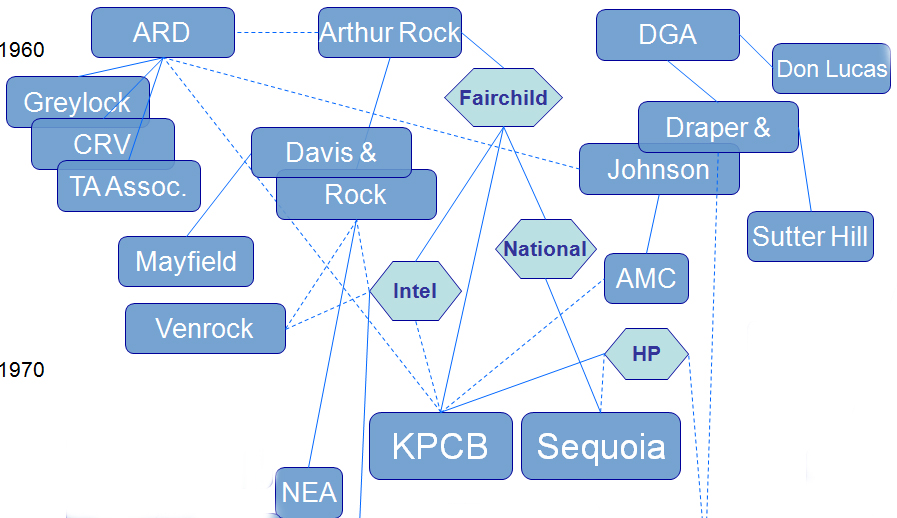
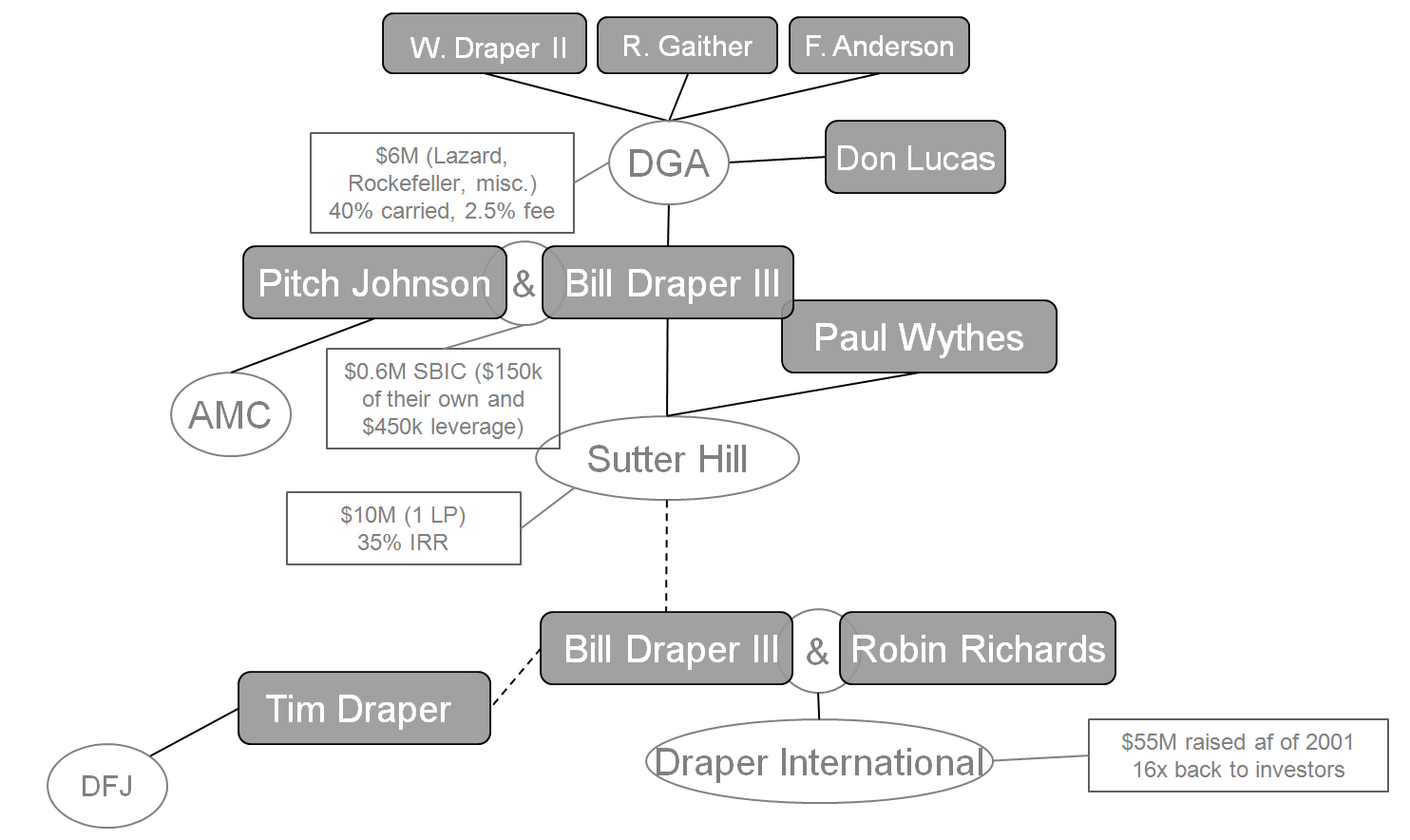
You may not know their names but Draper, Kramlich and Johnson are famous “grandfathers” of Silicon Valley venture capital. You may remember them if you read my chapter on the history of venture capital and the graph below shows how instrumental they were:
I have to admit my favorite chapter was about Pitch Johnson. (So if you are bored with my lengthy post at some point, jump to the Johnson chapter before quitting!) I had been in contact with him in the past when he sent me a great poster about the early history of the west coast VC. I had also quoted Johnson in my book; I quite liked what he had to say about entrepreneurship: “Entrepreneurs are the revolutionaries of our time.” And he had added: “Democracy works best when there is this kind of turbulence in the society, when those not well-off have a chance to climb the economic ladder by using brains, energy and skills to create new markets or serve existing markets better than their old competitors”

So is VC an art or a science? It is certainly not the only topic of this book but all contributors give their views on the question (and on a few other issues I will also mention).
Chapter 7 – Garth Saloner – The Entrepreneur and the Venture Capitalist
Saloner, a Stanford professor, gives an overview of what VC was and is about. He begins to say that VC is not what it was: “Rich and reliable returns no longer seem quite so dependable” (p. 143) so that VCs “Move toward a more conservative mix in their investment portfolios” because of “stressful market conditions”.
One of the sections of his chapter is called “Tough to predict”. “A VC cannot tell which of the many opportunities that cross the desk will be a 30 bagger”. [A 30x multiple] … “And it can be nearly as difficult to predict which will return zero. These uncertainties drive the typical venture investor toward a home-run model.”
A third topic he studies follows another section title: “Whose side are you on anyway?” He answers by stating that the VC has a responsibility towards its LPs. “The typical VC has every incentive to play long ball while many entrepreneurs will be simply happy to see their product come to market. And therefore the VC may be more aggressive.” The disparity in perspective is rooted in two aspects:
– the preferred stock structure which may induce fast exits if success does not seem to appear,
– the time and money, which gives an incentive to shut down if the time effort is too high.
“But even the success does not eliminate this tension: the entrepreneur may prefer a longer time horizon,” VCs need liquidity. The author is not sure that Bill Gates, Steve Jobs, Michael Dell or Larry Ellison would have been given the opportunity with venture capitalists in control of the board room.
In conclusion the final section is called: a successful, if uneasy, marriage.
Chapter 8 – Bill Draper – Pioneer Investing
Bill Draper is indeed a pioneer of Venture Capital. You may read more about him on another post of mine, The Startup Game.
“Venture investors put their money into technologies that have not yet come to fruition, untested business ideas, undeveloped markets, and often entrepreneurs with virtually no track record. It is a pioneering from of investment.”
One of the sections here is “Seeing into the future”. “It is not a simple formula. Experiences become lessons, lessons become practices, and practices help us to succeed or fail.” … “It is essential to be quick footed, connected and on top of the latest technological changes in order to succeed.” … “The face of genius changes all the time.” Draper clearly explains the difficulty of the VC activity which makes it (according to my understanding of his views) more an art than a science.
Draper also talks about returns and money making: “Instead of worrying about their carry – in other words, their share of the profits, and fretting about the increase in value of their portfolio, some venture capitalists were more concerned about their fees, or the amount of money that they charged based on the funds under management. The rise of the megafunds and the Wall Street transaction mentality inevitably increased the competitive pressure on everyone.” … “The last thing they want to do is share deals, that is unfortunate because cooperation brings more talent to the table.” There is a nostalgia of the good old days, that have suffered from greediness.
But Draper is an optimist: “Skype was still in the idea phase, but it promised to be an amazing breakthrough. Zennstrom and Friis epitomize what it means to be a disruptive innovator.” … “Society would not be as advanced, interconnected and civilized as it is today were it not for the scores of talented venture capitalists who provided the platform for brilliant and passionate entrepreneurs to develop and nurture their world-changing ideas and innovative technologies.”
Chapter 9 – Richard Kramlich – Change for the Better
Kramlich is more on the science side (again according to my understanding). Let me quote him: “Some changes can be anticipated and planned for. Others are as surprising as a satellite that becomes space junk.” … “Our ability to anticipate, manage, respond to and capitalize on change has been an essential ingredient of our ability to grow into a firm that over our 32-year life span has helped 165 companies make initial stock sales.” … “We spend a considerable time managing change.” NEA has industry teams with experts such as a Nobel Laureate. “VCs are savvy risk takers, able to adapt to changing markets, they nurture creative ideas that might become huge successes. They know that sometimes they will fail completely.”
He also sees different approaches: “Some people are natural agents of change” … “Jim Clark is one of the rarest examples who operates almost exclusively on instinct.” … “A fast-change artist.”
He also added about Metcalfe, founder of 3com: “I had a difficult time telling if this was genius or folly”
And he concludes with “At NEA, [we] have developed some fairly sophisticated tools to avoid the dead ends. What are the holes where the incumbents are not playing? We have applied this sort of thinking to solar power, and have invested in 15 companies. But I am not sure their investments in the solar industry have been stellar… He also discusses greed (he claims NEA only takes 1% management fee vs. 2% on average) and the megafunds (he claims he can put in action billion-dollar funds in order to invest in companies such as Tele Atlas)
Kramlich definitely insists on systematic analysis, expertise and processes even if he recognizes intuition, art and guts play a role for others.
Chapter 10 – Steven Lazarus – Beyond the Ivory Tower
The roots of ARCH Venture Partners are unusual as Lazarus funds began in a university framework, which is why the author of the book summarizes this chapter with the comment “It is possible to systematically commercialize the research from university laboratories”
Lazarus is more humble. He describes ARCH as “an experiment designed to help commercialize laboratory research.” … “Systematically rummaging through university labs.” but he adds: “We made plenty of mistakes.” … “The techniques that have been so helpful to me might be helpful to anyone trying to manage an enterprise that embraces risk in order to grow companies and turn a profit.” … “The scouts also needed to be good judges of talent.” … “We launched ARCH as a technology incubator but the most successful investment turned out to be a company that had nothing to do with technology.”
One of the sections is “Facing the risks”. “We were identifying science literally at the site of inception. We faced three risks: technology, market and financing.” (Surprisingly he does not mention the people or team risks.)
Lazarus is also on the science side of venture capital but when you read between the lines, you may see some of the artistic features.
Chapter 11 – Pitch Johnson – Fostering Innovation
As I said above, this was my favorite chapter. “The crucial decisions must be made on the basis of inadequate information.” … “Back an entrepreneur without knowing if the idea is powerful, the market big enough and the management strong enough.” [About Amgen in which he invested] “The company must control variables, be able to replicate results, learn from mistakes, and incorporate new information. Beyond that, there was the human factor.”
“I have learnt the tools and techniques, the importance of working with the best people, perhaps the single most vital ingredient of success, I have learnt the pitfalls to avoid. With a lot of lessons over time, one has a good chance of backing the right people with the right ideas in the right markets.” … “The art of our business is to select only the best people with the strongest ideas. The people with drive, the ones who can execute, who can work with others.”
He has also a funny and critical (for him) anecdote: “As I rose in the ranks [of the company he first worked for], I was eligible for stock options. I got 42 shares. The founders each owned hundreds of thousands, I decided I needed to do something else.”
He also has quite a unique model of venture capital: he decided to quit VC and run his own money, more like a business angel. The main advantages: “Not the same time horizon. The luxury of patience.” He also criticizes some abuses: “VC has become a big money management business. AMC is just $60M. But since 2007, VC is back to basics: starting companies, find people, with breakthrough ideas. Whereas in the dot-com, it was quick-hitting with no intention of really innovating.” As an example, he claims he was an investor in Boole and Babbage for 30 years !!
“Many styles of entrepreneurs work. What counts is matching the right CEO with the particulars of the challenges facing a company. Informal or hierarchical styles, both work.” (He compared Tandem to Teradyne as examples of both styles.)
Art or Science? Clearly a lot of art, a lot of technique and know-how too. Clearly not an industry, but more a craft. And as we all known, craftsmen are just in-between artists and scientists.
They Made It! by Angelika Blendstrup is another book made of interviews of Silicon Valley actors. I had talked in the past about In the company of Giants, Once You’re Lucky, Betting it All, Founders at Work, but this one as a different angle.

The focus is about immigrants as the subtitle indicates: “How Chinese, French, German, Indian, Iranian, Israeli and other foreign born entrepreneurs contributed to high tech innovation in the Silicon Valley, the US and Overseas.” And the lessons are quite interesting.
The author summarizes on page 260 some characteristics of the people interviewed:
– High intelligence, often coupled with a great educational background
– A willingness to work hard, focus, determination and perseverance
– A vision for success in their professional careers and personal lives
– Curiosity and passion
– Love of family and a dedication to supporting it
– An often uncanny insight into themselves and others
– Belief in themselves
– Openness to emotional and intellectual growth
– A tolerance for, even a love of, risk and the ability to (quickly) recover from failure
– An appetite to collaborate
– Humility
– A desire to give back to society
I was particularly stricken by stories of people who moved and left everything behind. There is an element in entrepreneurship that someone told me this morning about: entrepreneurs know that they may lose everything (house, family) and they might not been afraid of such risks, sometimes because they have experienced it already and they know they can recover from it. This explains the passion, the dedication, and the ability to try.
Interviews after interview, you read about values, leadership, and openness to diversity, breaking barriers. I may not have learnt many new things but I liked the book very much, maybe just for the reason that it is another great illustration of what Silicon Valley values are and why immigrants have been so critical to the region.
Final detail, I did a simple analysis of origins of people interviewed:
France: 7
Israel: 5
India: 5
China: 3
Taiwan: 2
Iran: 2
Germany: 2
ROW: 5
Interesting to notice that France is highest despite it is not known for its entrepreneurship culture…
Although I had mentioned him in previous posts such as The Art of Selling and his Views on Entrepreneurship, I had never read Steve Blank’s until now. I just finished reading The Four Steps to the Epiphany and I must just say it is a great book.
I will explain into some details his theory but the main reason I love this book is how he explains why founders are critical in all the decisions of the early phases of a start-up. Not the usual “hire business people”, but “learn and become an expert until you reach your limits”. I should immediately add that it is not an easy book to read and certainly mostly useful to people in the process of launching a start-up or developing new products. His web site steveblank.com is also very informative, you will find tons of slides of his teachings on the web and I particularly recommend the list of books he suggests reading.

Steve Blank is famous worldwide (mea culpa for not mentioning him more before) for his theory on the Customer Developement. Whereas we all know that the high-tech world is not about technology (no it’s not; ideas and technologies are far from sufficient to explain this world), we have a tendency to focus on products (much more important than technologies) and markets (business vs. technology). But Steve Blank explains how products can be an illusion (if never sold to customers) and how markets can be extremely dangerous if not well understood; whereas what counts are the users of products, the people which make markets, i.e. the customers. He explains how important it is to interact with potential customers in an iterative manner (bottom-up) even before designing and developing the product, then while developing them and be careful about a top-bottom-only analysis of the markets.
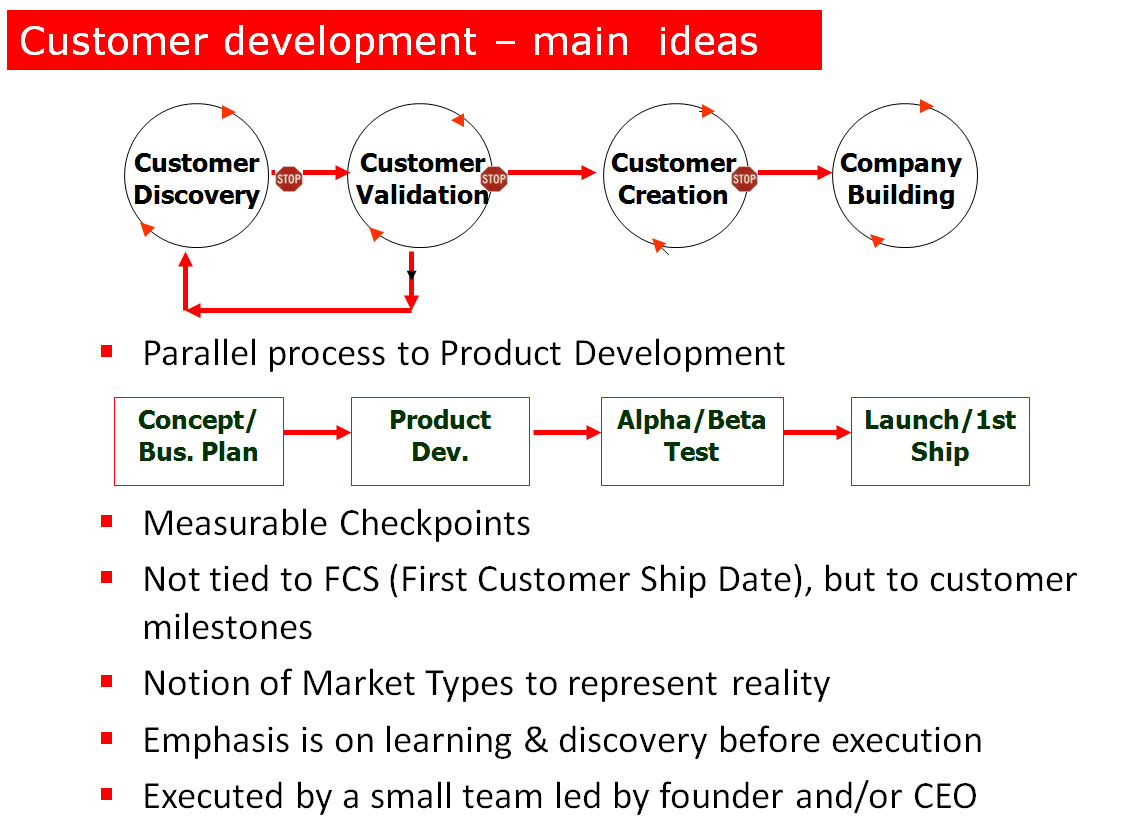
This is one of his famous slides where he explains that Product Development in isolation is deathly and should be done in parallel with Customer Developement only. Start-ups do not need teams in Marketing, Sales or Business Development, but only two teams, in Product Development and Customer Development, each headed by one of the Founder(s)/CEO. Below is another detailed description of this process (also available online). Then when they become large, they can switch to the traditional models.
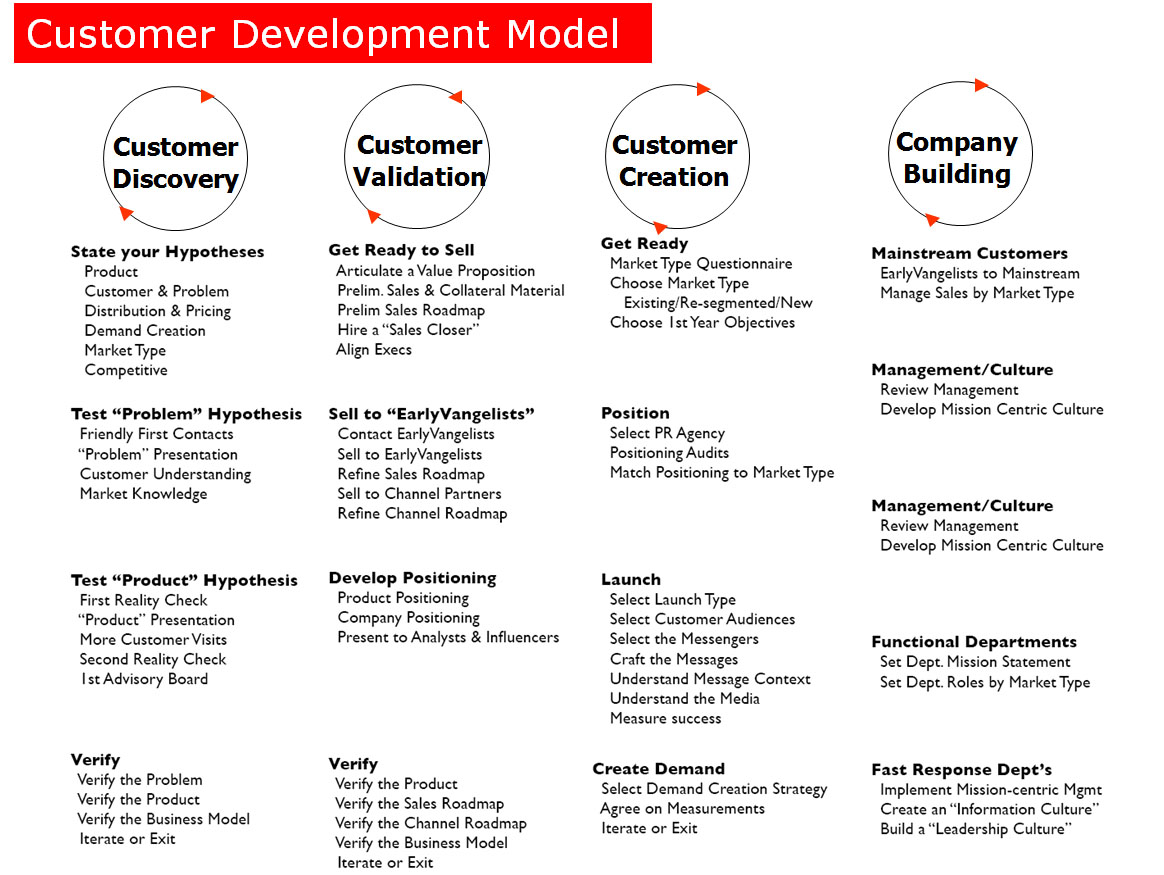
You should absolutely read this if you are in a start-up mode. This may help you avoid many (possibly deathly) mistakes.
Before coming back to my favorite topics and as a conclusion to a rainy summer, let me mention two artistic projects where the Internet, new technologies (and the fact they are cheaper, easier and as the same time high quality tools) have a huge impact. But more importantly, these are beautiful projects with a lot of creativity.
I discovered the first one last week. Playing For Change is a magnificent way of revisiting music charts and connecting people. Click on the picture and discover the new versions of famous songs. My favorite is probably #40, Redemption Song, but I did not have enough time to listen to all of them.

With a similar inspiration, David Lynch [in fact his son] has travelled through America for his Interview Project. Short videos describe the USA in as convincing a way as any economic or sociologic analysis.
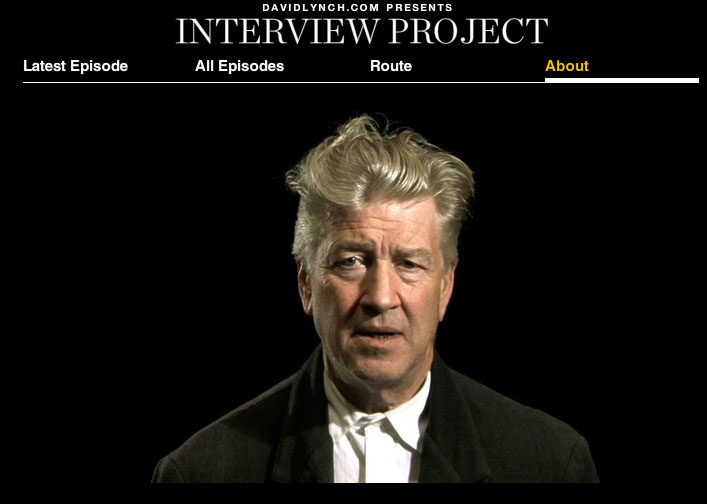
I hope you will take the time to try and hopefully enjoy as much as I did.
Do not ask me why this book is entitled The Monk and the Riddle as I will let you discover it if you decide to read this “old” book (a more than 10 year-old great piece of Silicon Valley description). Its subtitle is clear though: The Education of a Silicon Valley Entrepreneur.
Not all agree on the fact it is a great book as you may find at the end of this post, from the comment by the Red Herring in 2000. Still, I loved reading this book and let me explain why. Randy Komisar, today a partner at Kleiner Perkins and former enrtepreneur, has written a book about passion and inspiration. He does not tell you how to do your start-up (but he tells you how not to do it). He also explains also very well what Silicon Valley is, the locus of risk taking, where failure is tolerated, where a start-up is more a romantic act than a financial endeavour. “Business isn’t primarily a financial institution. It’s a creative institution. Like painting and sculpting.” [page 55] Here are a more few extracts I scanned from Google Books.
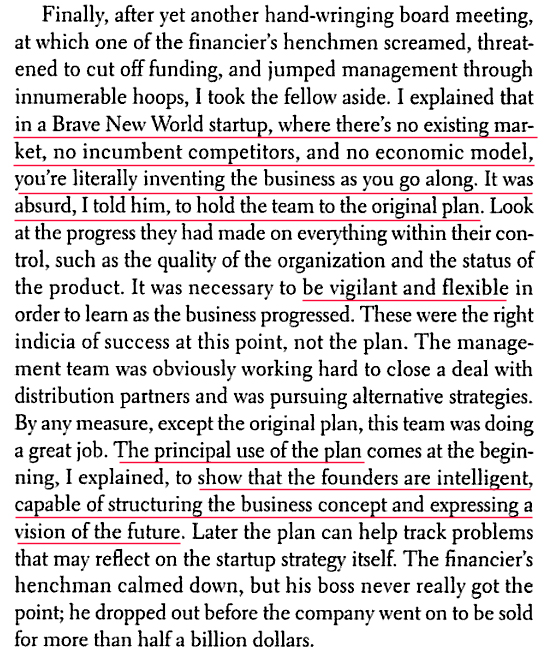
First Mr. Komisar explains that an entrepreneur is a flexible visionary and why the business plan does not have to be strictly followed (or should not always be) [page 37]:
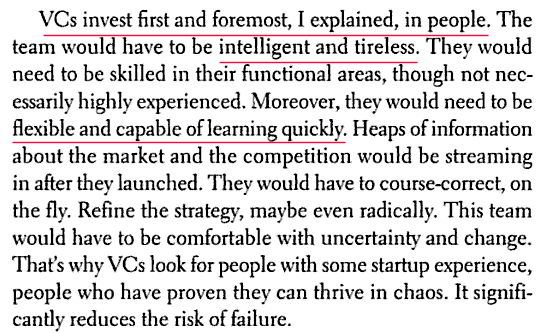
Of course, venture capitalists look for such people [page 38]:
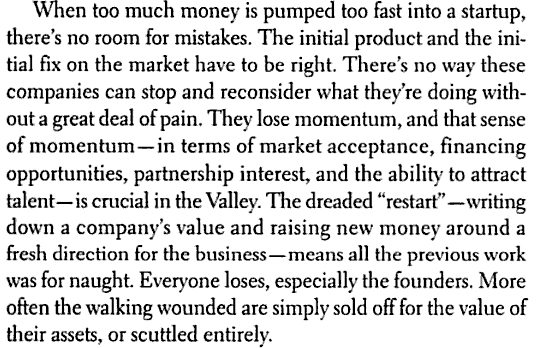
But there is a danger with VCs: the down round which is the consequence of failed momentum [page 52]:
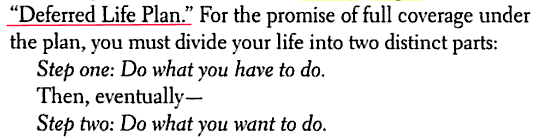
Mr. Komisar gives much more than basic advice. Even if he admits he may not have followed these when he was younger, he understands now how important they are. His book his about the meaning of life where he defines the Deferred Life Plan (that should not be followed) [page 65]:
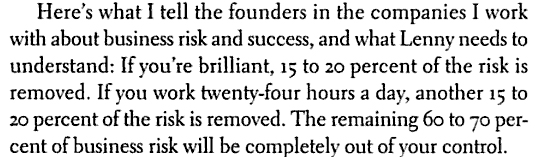
He therefore considers that personal risks are more important than business risks [page 154]:
Personal risks include:
– the risk of working with people you don’t respect,
– the risk of working for a company whose values are inconsistent with your own;
– the risk of compromising what’s important;
– the risk of doing something you don’t care about; and
– the risk of doing something that fails to express – or even contradicts –who you are.
And there is the most dangerous risk of all – the risk of spending your life not doing what you want on the bet you can buy yourself the freedom to do it later.
[… page 156…]
If your life were to end suddenly and unexpectedly tomorrow, would you be able to say you’ve been doing what you truly care about today?
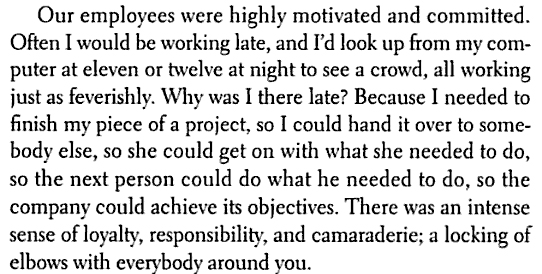
He also explains why Hard Work is a critical and necessary value of Silicon Valley [page 125]:
But People and Culture remain the most important elements [page 128]:
Another interesting concept is the fact that start-ups need 3 CEOS [page 128]:
But nothing replaces Vision [page 144]:
When I wrote above that Silicon Valley is about tolerance to failure [page 150]:
Obviously it means even success should be mitigated [page 151]:
I really advise you to read this great book, not only for the Riddle but also for the nice, funny and sad story of Lenny and Allison. Enjoy!
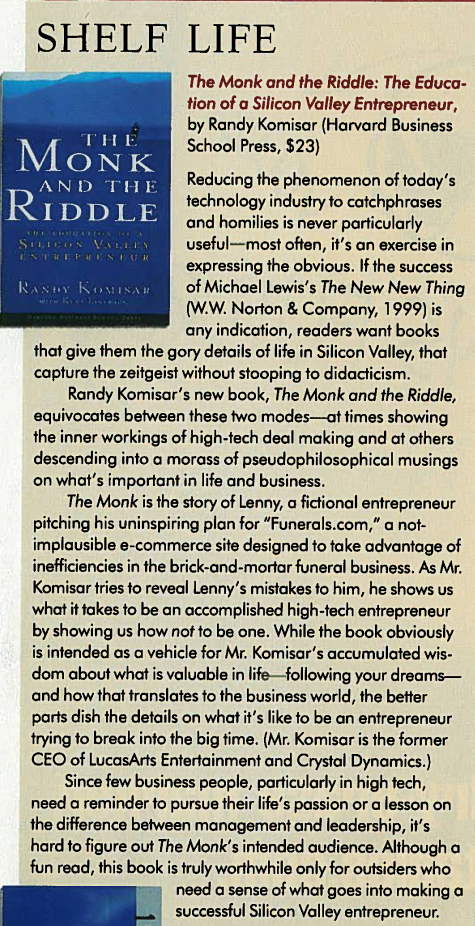
Here is what the Red Herring published. The analysis is not wrong, but even 10 years later, I am not sure Silicon Valley is so well understood as the RH thought…
As I wrote in my previous post on a few Indian tech start-ups, I just read The Startup Game by Bill Draper. In general, that kind of books is of average quality, this one is much above the average, though this is just my personal feeling. I like what is written and here my summary.
Bill Draper is one of the fathers of venture capital and belongs to a interesting genealogy. His father was a grandfather of VC and his son is currenlty an active investor
More in the chapters of my book about venture capital!
Draper’s book begins with Buck’s, one of the famous meeting places of Silicon Valley (SV). SV is known as an open environment, where people meet easily, and public places such as bars and restaurants have become famous for this. There was the Wagon Wheel Bar, there is Buck’s or Il Fornaio and a few more.
He also mentions -page 5- another famous component of the SV legend, the Garage. He explains how he missed Yahoo even if he visited their famous trailer donated by Stanford when “Yahoo was space-intensive”, a place “legendarily littered with overheating terminals, pizza boxes, dirty clothing and golf clubs”.

Clockwise: HP, Yahoo, Google and Apple garages.
Of course, if his book was about anecdotes only, Draper would be of small interest. He gives also many lessons. For example:
– Hire managers “ambitious enough to help…. Adventurous enough to take a flyer on an almost untested vision of the future.” – Page 8.
– “Don’t invest money you can’t afford to lose.” An important lesson about venture capital (Page 12)
– Again on what is venture capital, when he planned an investment in real estate in Hawai, a Rockefeller partner had him fly in NY: “We don’t need you to put our money in real estate and then collect a fee and a carry, to add insult to injury. We became a partner in DGA because you told us you were going to invest in technology and honest-to-god entrepreneurs. It would have been far and away the best investment DGA could have made… although I cannot disagree with his main point that we should have focused on opportunities in our own neighborhood.” (Page 27)
– On what is a good venture capitalist (page 30):
– On the venture capital model (page 41), when he asked about his son’s first six investments: “dead, dying, bankrupt, probably won’t make it, and not so good”
Uh-oh I said to myself. And what about the sixth investment, Tim?” I asked, trying to sound upbeat.
He looked up and paused. “Home run!”.
And he adds later, “a young man can succeed in venture capital with a small amount of money, a willingness to sift through a lot of chaff to get to the wheat, a tolerance for risk, and a reasonably good calibration of the potential of various entrepreneurs. It is also evident that luck plays a part, but the old adage comes to mind: the harder one works, the luckier one gets.”
– On the entrepreneurs (page 54): “[Arthur] Rock feels that the most important ingredient in any company is the brains, guts and vision of the leader. If the product turns out to be wrong, the visionary leader will come up with a new one. If the market shrinks, the leader will stir the whole team toward another one.”
– Then page 55: “the entrepreneurs with the lowest risk of failure are those who know their field intimately.” Then senior managers of a successful company backed by the same VC are second in importamce, then again those with the ability to recognize their own limits and agree that they can be replaced.
– On entrepreneurs and investors (page 64) , he nearly copies Don Valentine (see below). “A fifty-fifty attitude: VCs put all the money, entrepreneurs all the blood, sweat and tears.”
– Another legend of SV (and I think it is true) “SV is the home of the handshake. Your word is your bond – or you’re in trouble.” (page 99).
– Could there be something changed in the SV culture? I mean too much finance people and financial engineering? Draper mentions investors should keep their shares in a company (chapter 7, page 173), at least if they believe in the future growth potential of the company value. But when in it comes to Skype acquisition by eBay (page 188), Draper sold his stock at $45.21 through some complex combination of puts and calls in less than a week after the closing of the deal. When Skype was bought, eBay’s share was $44.96… Six months later, eBay was trading at $33 a share.
Finally, the top 10 avoidable mistakes by entrepreneurs (page 75) :
He concludes with his vision of opportunities for the future (page 224):
– The quantum computer
– Synthetic life form
– Decode and reprogram information systems of biology
– Life science in general (diagnostics, therapeutics, medical devices, healthcare IT)
– Voice and storage will be free
– Small nuclear power plants (sic)
– Changes in transportation
In a simple conclusion; a good book where you will learn some good lessons from Silicon Valley and elsewhere (i did not mention Draper spent 10 years with the UN and then created the first VC firm in India, through Draper International).
Note: Don Valentine said about entrepreneurs and investors: “When people come as a team (usually it is three or four people and typically heavyweight on engineering), it is a complex process. But I think all of us have seen it in the earlier days, times when I can remember saying, “Well, look, we’ll put up all the money, you put up all the blood, sweat and tears and we’ll split the company”, this with the founders. Then if we have to hire more people, we’ll all come down evenly, it will be kind of a 50/50 arrangement. Well, as this bubble got bigger and bigger, you know, they were coming and saying, “Well, you know, we’ll give you, for all the money, 5 percent, 10 percent of the deal.” And, you know, that it’s a supply and demand thing. It’s gone back the other way now. But, in starting with a team, it’s a typical thing to say, well, somewhere 40 to 60 percent, to divide it now. If they’ve got the best thing since sliced bread and you think they have it and they think they have it, you know, then you’ll probably lose the deal because one of these guys will grab it.” Transcript of oral panel – the Pioneers of Venture Capital – September 2002
Following my two previous posts on the challenge of growth through Greiner and Google, here is my final contribution thanks a recent WEF report: Global Entrepreneurship and Successful Growth Strategies of Early-Stage Companies
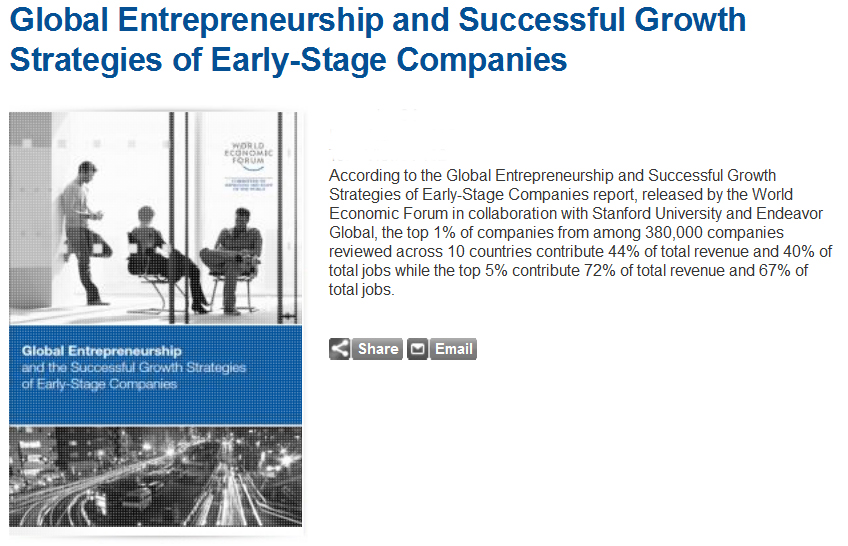
It is a 380-page rich analysis of what it takes to grow and the ecosystem of high-growth companies. I will soon give a few data points on venture capital compiled by the authors, btu I want to focus here on the challenge of growth. Section 2 of the report (The Early-Stage Entrepreneurial Company Journey) focuses on growth accelerators and different growth challenges as well as dark moments and the main lessons from entrepreneurship.
On the growth accelerators (pages 37-38), market opportunity comes first but HR and organization is not too far behind. For the growth challenges (pages 37 and 42), HR is far ahead with market opportunity really behind. Dark moments (pages 37 and 42): it is much more balanced with financing 1st, markets and environement both second, top management 4th.
What is really inresting in the report are less the statistics than the summaries of the inetrviews and let me extract quotes on the dark moments and main lessons on entrepreneurship. they do remind me reading the books Founders at Work, Betting It All and In the Company of Giants. I hope you will appreciate tham as much as I liked putting them here!
Dark moments
There were times I went to bed thinking ‘game’s up’ and when you wake up you find it is not. The many systems challenges in our early years created some very stressful Saturday afternoons that were at times particularly dark moments.” (Betfair)
We thought we were invincible […]. But we didn’t know what was coming and that we were going to face serious trouble[…] All our glory and credibility disappeared. On top of that, my partner left the business. Many of our people in the US left. The company was declared ‘almost irrelevant’ [..]. But we decided we didn’t want to let the company go. I wanted to turn the company around, and the board supported me in that. So we made a number of key moves. (Business Objects)
We needed to convince people that the Internet was a real market. Many potential distributors thought that the Internet was a research network and had no commercial potential. Thus, convincing people to be our first distributors in 1993 to 1994 was by far the biggest challenge. (CheckPoint)
The core issue was a failure to properly plan for the hyper-growth of the site. […] As long as the site was functioning, it was easy to ignore the engineering team’s pleas that the site was running on Band-Aids™ and fumes. […] Unfortunately, those pleas were discounted by members of the senior team until it was too late.” (eBay)
The general worst moments are as you’re running out of cash […] and there’s no term sheet yet […] that was a periodic dark day as I call it. That would come somewhat predictably, but it always and nevertheless hung heavily in the back of my mind. It was one of the few things that could interrupt my sleep. (eSilicon)
There was one particular time in our history, and that was back in the very earliest days of the company when we were still based in New Mexico. One of our first customers was MITS, which was acquired by another company, they stopped paying us and we basically had no income for a year. We were just barely able to hang on, and after that I had a rule that we always had to have enough cash on hand to be able to operate for a full year, even if nobody paid us.
“The first decade it was IBM that almost killed us. I mean they were a great ‘angel’ in a way, but they also almost killed us a few times. We were in a situation long before Windows where we were totally at the behest of IBM. And IBM could have crushed us on many occasions. They had huge demands on us and sucked our resources. We were basically a low cost, outsourced programming sweatshop for IBM. They paid us very little and the only thing we really got from them that turned out to be very lucrative was the right to sell the DOS operating system to other companies. IBM was a large company and we were a small company and every new code release would have to circulate around to all these different divisions, and it was very difficult to keep our technical people motivated to serve the beast, as it were. When we launched Windows, IBM had a competing project, which they were working on with us called OS/2. Previously, IBM had always set the standards. We would provide the technology and their brand recognition and clout in the industry were what really set the standards. When we launched Windows 3.0, that was the first time that we really went out and did it without IBM. We had made an internal decision before that, that whether IBM was with us or not, we were going to launch Windows 3.0. The day before the launch, IBM reluctantly decided to endorse Windows.” (Microsoft)
There were maybe two dark moments. Because it was difficult to get financing, we decided to bootstrap the company as much as we could with our own money and develop the service. That was a challenging period. That was in the spring and summer of 2003. As we started to incur costs in the software developers, we started to run out of money. Some people internal to this project maybe did not believe it would happen. That was one big challenge. (Skype)
“The first dark moment occurred in the summer of 2002. We were running out of money, struggling with a new product and having difficulty penetrating any major customer. We were about to be saved from our misery through an acquisition by our largest competitor, but then they walked away from a definitive acquisition agreement after two months of diligence, during which they had learned all of our secrets and dirty laundry. We could easily have let this situation destroy us, but instead, we took it as a slap-in-the-face and redoubled our efforts and commitment to success. Our founders took this slap personally, and within a year, they had delivered a breakthrough product that was much better than our competitors’ products and allowed us to penetrate Cisco and other key customers. (Netlogic)
“Every company has dark days. In a young company there’s a huge amount of uncertainty. One dark day occurred in the first quarter after we went public. I’m off on a Friday with my wife and my aunt and uncle, and we’re up in Point Reyes –there was no email. So I called into my voicemail, and we had just got notified by one of our customers that they were cancelling a US$ 375,000 development project. We were going to miss our first quarter public. The rest of the day, I’m living in a silent movie. They’re all talking to each other, but I have no idea what’s going on. I’m sitting there spinning in my own mind. I have a knot in my stomach. I am calling into the office every 15 minutes, but there is no news. I came into the office on a Monday morning, after having some time to reflect on it. I said, ‘Well, first we ought to try to go back up to this company that cancelled us and see if we can get them to give us US$ 100,000’. We did a lot of things that quarter, and we figured it out. It was a very dark period. Bad news travels fast and everybody knew we were just hosed. There was no way to fully make it up, and it was awful.” (Veritas Software)
Lessons from entrepreneurship
1. The three Ps are important: Persevere, as you will have many setbacks; be professional in everything you do; and be passionate.
2. Being able to overcome problems is a pivotal skill: After you overcome each problem, you will feel good because you know you are on the right end of that problem and that some other company
will have to handle it.
3. The most undervalued commodity in an entrepreneurial venture is time: You must get things done in a time-efficient way and with minimal distraction.
4. When you get lucky, two things are essential: (a) quickly take advantage of it; and (b) don’t kid yourself it was not luck. Be brutally honest with yourself.”
(Betfair)
1. “The famous lesson from Jim Robbins’ book, Good to Great: ‘Confront the brutal facts but never lose faith in the positive outcome’. This is essential to come through victorious from difficult periods.
2. “Have a clear concept of value and innovation: We started with a great innovative concept that was easy to explain to our customers and we created a brand new market.
3 “Follow a proven entrepreneurial model: a) attract venture capital and have options available for employees to participate in its financial success, b) go global as early as possible, c) find the better market for going public.
4. “Encourage a culture of passion: Adapt quickly to changing circumstances and always be clear about the growth drivers. Cascade goals all the way down in the organization and measure or monitor. Communicate [goals] heavily to your team, so they can lead their own teams.
5. “Take advantage of a global talent pool: it completely changes the fabric of an organization and creates new opportunities.”
(Business Objects)
1.Key leaders in an organization need to be extremely flexible with the ability to get into a completely new field and build a team and strategy to handle it.
2. You never stop being an entrepreneur. At every step you need to build a working and stable infrastructure, and yet still challenge yourself with shaking things up and finding the next new opportunities.
3. In order to succeed, you need an innovative product, a growing marketplace and a great team of people. It is impossible to succeed without the right people, but the other factors are critical to successful growth.
“Whenever you do something, try to do it in the best possible way. If it works, you will establish a precedent that will last for many years. So try to do the right things in the right way the first time.”
(CheckPoint)
One of the things I found really rewarding while working in Silicon Valley is that risk is not only accepted – it’s encouraged. There are tons of experiments going on there all the time. Risk is, in part, how work gets done there. For me, failure only happens when you don’t learn from your experiences. […] Being an entrepreneur is a tough occupation – you have to believe in what you’re doing, even when others are pointing out all the reasons why your idea won’t work. You have to develop a higher risk tolerance and be ready to find the lesson in each idea that doesn’t work.
(eBay)
Point number one is about the motivation for entrepreneurs. On a risk-adjusted present-value basis, no rational person would ever be an entrepreneur if they did it just for the money. Most young entrepreneurs go into this thinking it’s a quick route to the gravy train. And in fact it’s not. It’s more about creativity and self-actualization than it is about compensation.
“Point number two is about having the right venture capital behind you. I encourage people to seek senior partners who hold central power in the VC firm and will be your long-term funding champion.
“Point number three is about the people. A great product or technology misapplied in the market cannot be recovered by a bad management team. But a great management team can take a B product and win by making the right chess moves at the right time.
“Point number four is our three S’s: speed, simplicity and self-confidence. Winning requires speed. Speediness is achieved through simplicity (non-bureaucracy and non-territorialism). Self-confident people feel good about their position in the company and deliver speedy solutions without behaving bureaucratically. A CEO has to ensure that the three S’s are engrained into the company culture.”
(eSilicon)
“One of the key things is that you have to be in the right place at the right time. This isn’t a question of luck. It means that you have to recognize the opportunity early, and go after it with incredible focus and commitment before anyone else does. […]. You also have to be willing to take risks and make mistakes. Nobody should have to worry about being penalized for trying something new and not having it work out. The key is to learn the right lessons from mistakes so you can continue to move forward.”
“Hire the best people you can. One of Microsoft’s strengths was it innovated that way. It spent a lot of time at universities, before that was fashionable, to seek out talent. They hired for high IQs first, and then figured out a way to organize them and make them productive.”
(Microsoft)
1. “Think big and think global. Think differently. And even if people around you don’t believe it, if you really think you have something, you need to believe in your gut feeling and go for it.
2. If you want to go anywhere in life, if you want to pursue your dreams, you have to take risks. Risks involve failures. You cannot be afraid of failure if you want to pursue your dreams.
3. Entrepreneurship is a lifestyle. It is about what defines you. It is about a passion to change and build things. When you look at it this way, it is also about having fun.
4. Once you get going, stay very focused on getting the right people.”
(Skype)
1. “Think beyond the possible and then back off to reality. Just sit down with a piece of paper and look at what you’ve got. I really believe in a very simple SWOT analysis. Then plan, plan, plan. And then adjust.
2. Hire the best people when you can afford it. A great idea can come from anyone in the company.
3. Be prepared to make mistakes and keep innovating.
4. Customer pull is a hundred times more important than a technology push, but nothing is more important than a great engineer.”
(Arm Holdings)
“The first lesson is, don’t start a company just because you want to make money. You start a company because you believe in your idea and are passionate about it. Also, the idea has to be practical, be implementable and solve some real user problem. Then wealth creation will be a by-product.
Second, you should get off the ego trip. Associate yourself with the right people to complement you. Don’t think, just because you are an entrepreneur and the founder, you should be the CEO. You may or may not be CEO material. To succeed, use your strengths rather than assuming you’re strong in every area.
Another important lesson is that you’ve got to attract good people. You can do it if you have a convincing idea that is really attractive. If you don’t have the right idea, or if you’re not passionate enough about it, you can’t attract the right people. You can’t do it alone. Not any one person will have all the expertise.”
(Brocade)
“Personally, I would recommend that any founder and entrepreneur not initiate a venture on one’s own. In my view, the fact that we had a founding team of three – and later four – meant that we could share the psychological load and stress that a fast-growing company brings. While good friends, we largely had independent social lives so we could ‘switch off’ the company from time to time.
(Iona)
The most important lesson is cliché. In technology, the intelligence, creativity, motivation and teamwork of the people ultimately determines the level of success. Providing an environment that attracts, keeps and motivates top employees is an absolute requirement.
(Netlogic)
1. “The most important thing I learned from Silicon Spice is that no matter how sexy or exciting your idea may look, if you want increase your chances for success, then you must actively engage with potential customers early on. They may not become your ultimate customer, but they certainly will teach you about the product and its features and functionality very early on. I would say that’s one of the most critical things to do, even if you have to make a sweetheart deal with them to get their engagement.
2. As an entrepreneur, you have to have the DNA in you to not give up. I could have easily given up on Silicon Spice and moved on to do something else. This drive to succeed at any cost is part of every successful entrepreneur I have worked with. You have to figure out whatever it takes to make a success of the company.
3. The biggest thing I learned from Intel and that I have carried with me since is there is a discipline about focus and execution. You have to focus on very crisply defined deliverables. You can’t just clutter people with 100 things. You have to distil them down to one or two. However, you have to be very careful. You can’t dump all of Intel’s culture into a start-up, either. But there are elements of the Intel culture that, when brought in a suitable manner, can help a start-up become far more efficient and successful.”
(SiliconSpice)
“Number one: The most important thing is the right product, in the right market, at the right time.
“Number two: The greatest flaw that the entrepreneurial character has is that they get excited about their own ideas and they start filtering with a confirmation bias. What you want to do is open all portals to new information.
“Number three: One of the hardest things for me is this very profound ambiguity you experience. You have a vision of what you want to do, who you are and what defines you, but along the way, you have to do all these opportunistic and pragmatic things, which draw you in different directions and you just never see that original vision. You have to be able to do things that betray that original vision for the good reasons along the way. Sometimes you have to just abandon it and move onto the next thing because it’s the better thing to do. For me, that turned out to be a very hard thing to do.
“Number four: If you don’t listen to your board, you may or may not get fired. But if you listen to your board and investors, you’re guaranteed to get fired. I believe you have to take leadership. And if I sit and think about the business 24 by seven, and when you run a company – it’s the only thing in your life, it’s 24 by 7 – guys that show up once a month or quarter, and kind of flirt with this thing, are simply not qualified to have a better opinion. And investors who buy your stock and sell it ten minutes later, are even less qualified to have a better opinion – although that doesn’t prevent them from having opinions. You have to do what you believe is the right thing for the company and you have to put your job on the line to do it sometimes, and that’s just part of what it is. Sometimes you win, sometimes you lose.”
(Veritas Sofwtare)
Following the digital edition of the English version of Start-Up (Kindle, iPad) last summer, I just did the same for the French version. More details on the page which lists all published versions in paper (English, French, Russian and maybe Italian soon) as well as digital ones.
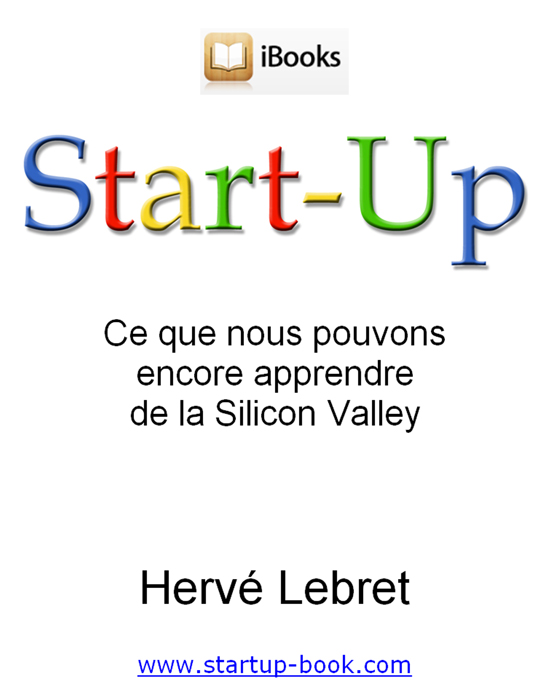
I was wrong about the difficulty in producing an iBook for Apple. Thanks to an EPFL colleague, I learnt I did not have to use complex editors such as Calibre (and then do a lot of manual corrections). I just imported my Word file into Pages eand then converted it in the ePub format. It then took Apple 8 days to validate the content.
Julia Watson works with Oedb.org, where was just published the article “60 Great Books to Spur Your Entrepreneurial Spirit”

I love to read books as you all know and I read some of the 60s (like Founders at Work or Startup Nation). they probably forgot a few (mine!, just kidding) but this looks very good. Thanks Julia 🙂