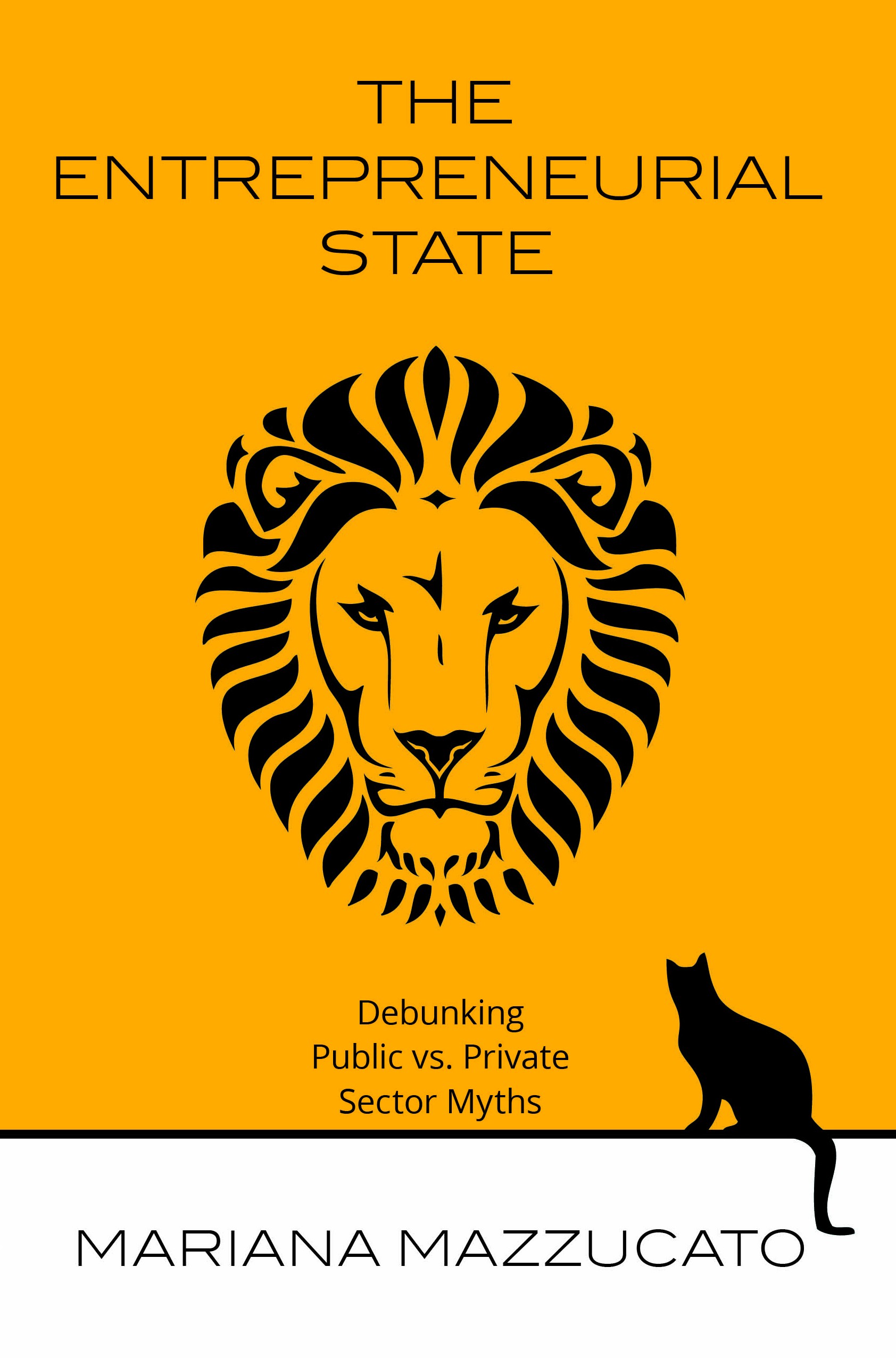
Mazzacuto’s Entrepreneurial State is I think an important book. The author claims we have been unfair with the role in innovation of government and the public sector in general, which has provided funds for most not to say all R&D (Pharma, IT, Space). I share the blame as I am a strong supporter of start-ups, venture capital, Silicon Valley being the ultimate model. And the idea that the State should just provide the basics (education, research, infrastructure) and let the private sector innovate may have been a big mistake (of mine included). I will not take the blame on the second argument as I always shared with the author the idea that tax breaks and tax evasion makes the judgment even more unfair. Finally, the private sector is very risk averse so that there is less innovation (not only venture capital but corporate R&D, compared to the past when corporate R&D labs at IBM, Bell or Xerox were big or when VCs really contributed to innovation in semiconductor, computers and biotech in the 60s and 70s)
Let me now quote Mariana Mazzacuto following her book linearly. You can also listen to her when she gave a talk at TedX.
While innovation is not the State’s main role, illustrating its potential innovative and dynamic character – its historical ability, in some countries, to play an entrepreneurial role in society is perhaps the most effective way to defend its existence. (Page 1.)
Entrepreneurship is not (just) about start-ups, venture capital and “garage tinkerers”. It is about the willingness and ability of economic agents to take on risk and real Knightian* uncertainty, what is genuinely unknown. (Page 2.) Note: *Knightian uncertainty relates to the “immeasurable“ risk, i.e. a risk that cannot be calculated.
Even during a boom most firms and banks (would) prefer to fund low-risk incremental innovations, waiting for the State to make its mark in more radical areas. (Page 7.) Examples are provided from the pharmaceutical industry – where the most revolutionary new drugs are produced mainly with public, not private funds. (Page 10.)
Apple must pay tax not only because it is the right thing to do, but because it is the epicenter of a company that requires the public purse to be large and risk-taking enough to continue making the investments that entrepreneurs like Jobs will later capitalize on. (Page 11) Precisely because State investments are uncertain, there is a high risk that they will fail. But when they are successful, it is naive and dangerous to allow all the rewards to be privatized. (Page 12)
Chapter 1 – (The Innovation Crisis)
The emphasis on the State as an entrepreneurial agent is not of course meant to deny the existence of private sector entrepreneurship activity, from the role of young new companies in providing the dynamism behind new sectors (e.g. Google) to the importance source of funding from private sources like venture capital. The key problem is that this is the only story that is usually told. (Page 20)
It is naive to expect venture capital to lead in the early and most risky stage of any new economic sector today** (such as clean technology). In biotechnology, nanotechnology and the Internet, venture capital arrived 15-20 years after the most important investments were made by public sector funds. (Page 23) The State has been behind most technological revolutions and periods of long-term growth. This is why an “entrepreneurial” state is needed to engage in risk taking and the creation of a new vision. Note: ** Well maybe not in the 50s to the 70s, certainly in the last 10 years.
Big R&D labs have been closing and the R of the R&D spend has also been falling. A recent MIT study (1) claims that the current absence in the US of corporate labs like Xerox PARC (which produced the graphical user interface technology that led to both Apple’s and Windows’ operating systems) and Bell Labs – both highly co-financed by government agency budgets – is one of the reasons why the US innovation machine is under threat. (Page 24) Rodrik (2004) states that the problem is not in which types of tools (R&D, tax credits vs. subsidies) or which types of sectors to choose (steel vs. software), but how policy can foster self-discovery processes, which foster creativity and innovation – the need to foster exploration trial and error (and this is the core tenet of the “evolutionary theory of economic change” in chapter 2) References
[1] MIT 2013. Innovation Economic Report, web.mit.edu/press/images/documents/pie-report.pdf
[2] Rodrik, 2004. Industrial Policy for the 21st century. CEPR Discussion Paper 4767
Chapter 2 – Technology, Innovation and Growth.
Progressive redistribution policies are fundamental, but they do not cause growth. Bringing together the lessons of Keynes and Schumpeter can make this happen. (Page 31) Solow discovered that 90 per cent of variation in economic output was not explained by capital and labor, he called the residual “technical change”. (Page 33)
An “evolutionary theory” explains this as a constant process of differentiation among firms, based on their ability to innovate. Selection does not always lead to “survival of the fittest” both due to the effects of increasing returns and also to the effects of policies. Selection dynamics in products markets and financial markets may be at odds.
Innovation is firm specific and highly uncertain. It is not the quantity of R&D, but how it is distributed throughout an economy. The old view that R&D can be modeled as a lottery where a certain amount will create a certain probability of successful innovation is criticized because in fact innovation would be an example of a true Knightian uncertainty, which cannot be modeled with a normal (or nay other) probability distribution. (Page 35 – the Black Swan again)
Systems of innovation are defined as the “network of institutions in the public and private sector whose activities and interactions initiate, import, modify and diffuse new technology”. (Equilibrium theory cannot work; rather than using incremental calculus from Newtonian physics, mathematics from biology are used, which can explicitly take into account heterogeneity, and the possibility of path dependency and multiple equilibria.) (Page 36) The perspective is neither micro nor macro, but meso. The causation between basic science, to large scale R&D, to applications to diffusing innovation is not linear, but full of feedback loops. One must be able to recognize serendipity and uncertainty that characterizes the innovation process. […] Using Japan as an example, “the contributions of the development state in Japan cannot be understood in abstraction from the growth of companies such as Toyota, Sony or Hitachi aside from the Japanese State’s public support for industry”. (Page 38)
Regional systems of innovation focus on the cultural geographical, and institutional proximity that creates and facilitate transactions between different socioeconomic actors, including local administrations, unions and family-owned companies… The State does this by rallying existing innovation networks or by facilitating the development of new ones that bring together a diverse group of stakeholders. But a rich system of innovation is not sufficient. The State must develop strategies for technological advance.
Mazzacuto finishes Chapter 2 with 6 myths about innovation I totally agree with!
Myth 1: Innovation is about R&D. “It is fundamental to identify the company-specific conditions that must be present to allow spending on R&D to positively affect growth.”
Myth 2: Small is Beautiful. “There is confusion between size and growth.” What is important is the “role of young high-growth firms. Many small firms are not high-growth. […] Most of the impact is from age.” “Targeting assistance to SMES through grants, soft loans and tax breaks will necessarily involve a high degree of waste. While this waste is a necessary gamble in the innovation process,” it should be targeted on high growth and not SMEs, i.e. support “young companies that have already demonstrated ambition”.
Myth 3: Venture Capital is Risk-Loving. “Risk capital is scarce in the seed stage; it is concentrated in areas of high-growth potential, low technological complexity and low capital intensity.” […] “The short-term bias is damaging to the scientific exploration process which requires longer-term horizon and tolerance to failure.” “Rewards to VC have been disproportional to risks taken”, but Mazzacuto also recognizes that “Venture capital has succeeded more in the US when it provided not only committed finance, but managerial expertise.” Finally “The progressive commercialization of science seems to be unproductive”.
Myth 4: Patents. “The rise in patents does not reflect a rise in innovation”. [I will not come back here on the topic, read again Against Intellectual Monopoly]
Myth 5: Europe’s problem is all about Commercialization. “If the US is better at innovation, it isn’t because university-industry links are better (they aren’t) or because US universities produce more spinouts (they don’t). It simply reflects more research being done in more institutions, which generate better technical skills in the workforce. US funding is split between research in universities and early stage technology development in firms. Europe has a weaker system of scientific research and weaker and less innovative companies.”
Myth 6: Business Requires Less Tax. “The R&D tax credit system does not hold firms accountable as whether they have conducted new innovation that would not otherwise have taken place, or simply pursued routine forms of product development.” “As Keynes emphasized, business investment is a function of the gut instinct of investors about future growth prospects.” This is impacted not by tax break, but by the quality of the science base, education, credit system and human capital. “It is important for innovation policy to resist the appeal of tax measures of different kinds”.
More will follow when I have read chapters 3 and followings. Now I need to share some of my concerns, first by quoting again:
“Entrepreneurship by the State can take on many forms. Four examples: DARPA, SBIR, the Orphan Drug Act, Nanotechnology. (…) Apple is far from the “market” example it is often used to depict. It is a company that not only received early stage finance from the government (through the SBIC program) but also “ingeniously” made use of publicly funded technology*** to create “smart” products.” (Pages 10-11) Note: *** Internet, GPS, Touch screen, Siri.
“Many of the most innovative young companies in the US were funded not by private venture capital but by public venture capital, such as that provided by the Small Business Innovation Research (SBIR) program.” (Page 20)
My concerns are that
– research is not innovation & the transfer is where entrepreneurship occurs so that investing in research is not innovating or even being entrepreneurial. This is at least my experience in the field.
– SBIR real impact unclear
– Green and nano-tech impact also unclear
But I have not finished reading yet…
Movies may become a better way to communicate about start-ups & entrepreneurship than books or blogs. It’s something Neil Rimer had told me when I published my book. It is true there has been a number of new features in fiction (The Social Network, Jobs) and non-fiction (SomethingVentured) recently without a need to mention old stuff such as Triumph of the Nerds Silicon Valley Pirates and special events on television such as PBS.
Startup Kids belong to this new trend and it is an interesting (and fun) document. You may watch the trailer here and I will quote a few entrepreneurs thereafter. The document had been mentioned to me by colleagues (merci Corine ) who showed it to me, including the very good blog article of Sébastien Flury: The Startup Kids – a film that any wannabe founder should watch! (whom title I used, nice Sébastien 🙂 )
What’s entrepreneurship?
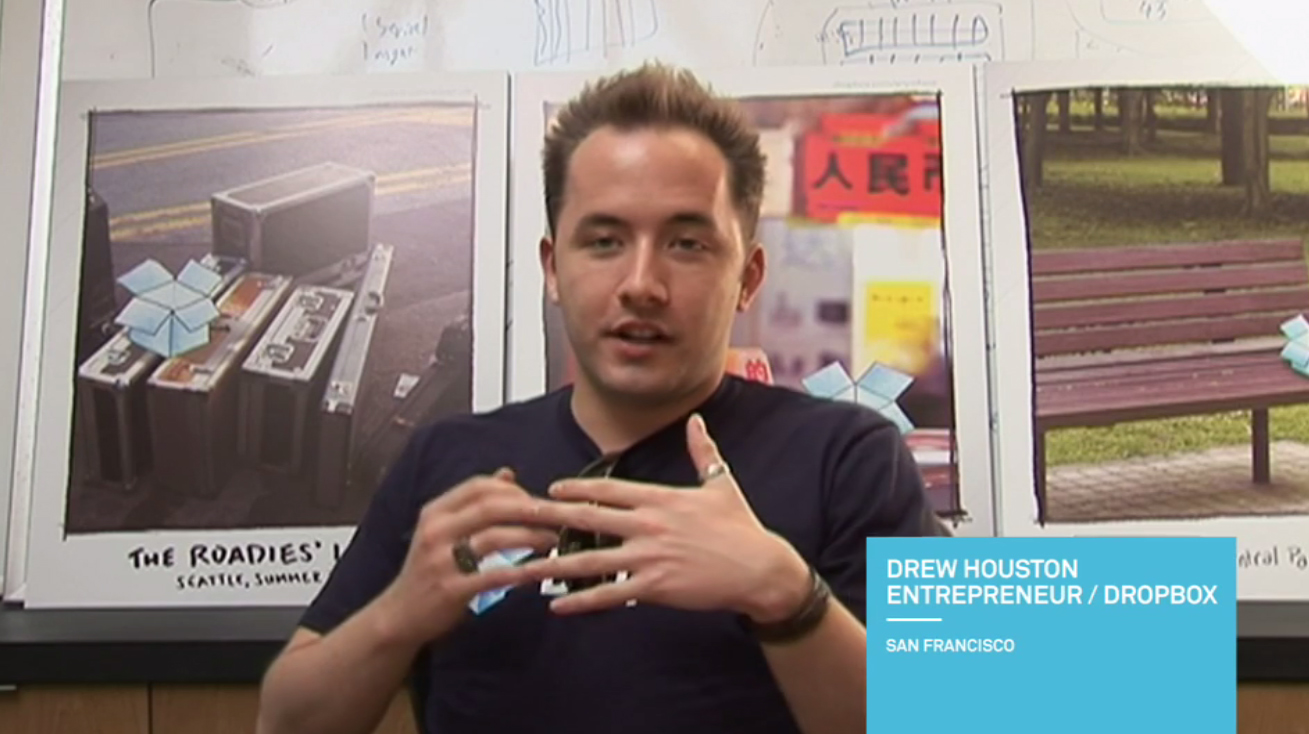
Drew Houston, Dropbox: “It’s like jumping out of a cliff and having to build your own parachute”
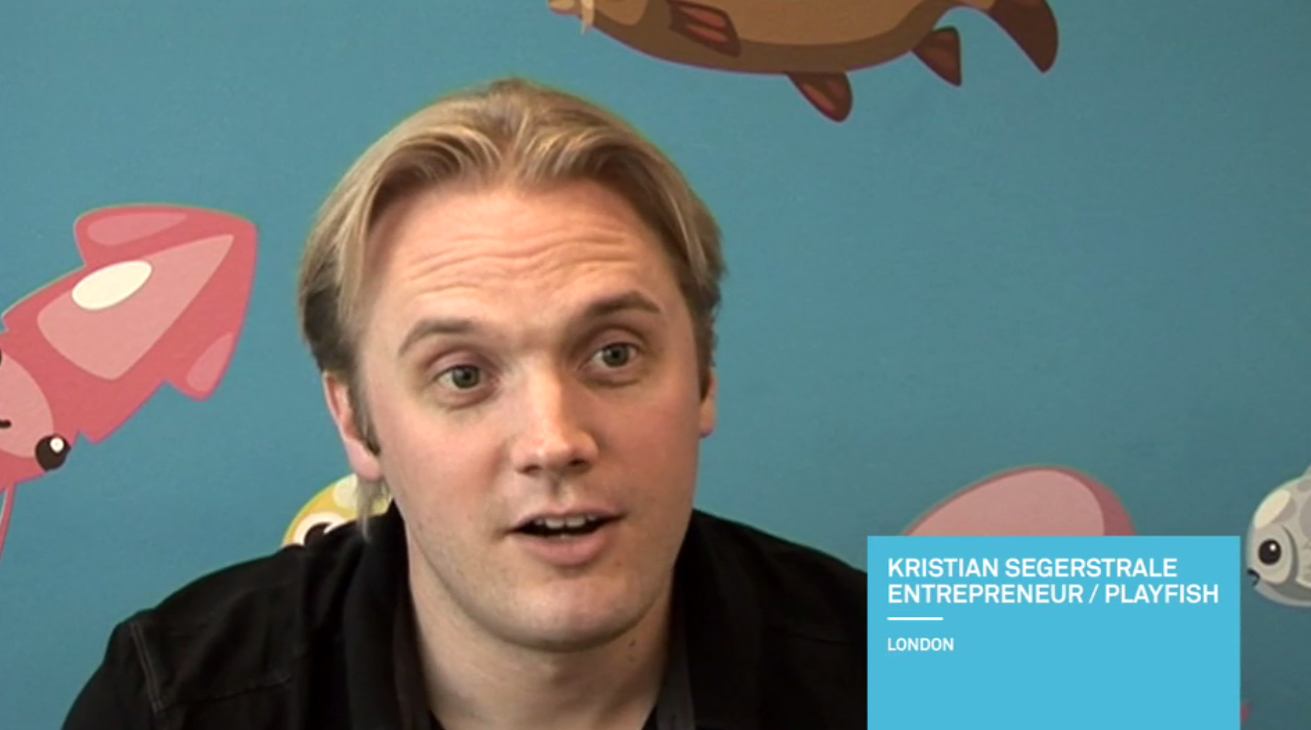
Kristian Segerstrale, Playfish: “An entrepreneur is a person who dares to have a dream that not many people have and even more important dares to chase it, put their money where their mouth is and their time and their career and dares to take the risk to going out there to realize that vision.”
Alexandre Ljung, SoundCloud (from Sweden and based in Berlin and San Francisco): “I did not have the typical entrepreneur background, […] but in hindsight I was very focused on projects so I was very entrepreneurial but not in a business sense.”
In European Founders at Work, his co-founder Eric Wahlforss states “I think we could have easily done this in one year faster if we would have been a little bit more bold and thinking a little bit more in terms of scale early on. We started out very small, had almost no money at all, and a very small team. I think we could have been bolder. […] and running with a bigger vision from the start.” And then “Do it.” It’s the best decision I’ve ever done in my whole life. […] And I was studying engineering as well, and I had one hundred classmates. And I know that almost zero of them actually went on to start a company, which is kind of crazy because I know a lot of them have good ideas. But none of them quite felt that they were able to pull it off.
Luck is an important topic in the movie
Segerstrale again: “Successful start-ups need a lot of things, they need a great idea, they need a great team, they need to be there at the right time, they need the right level of funding, and they need a lot of luck.”
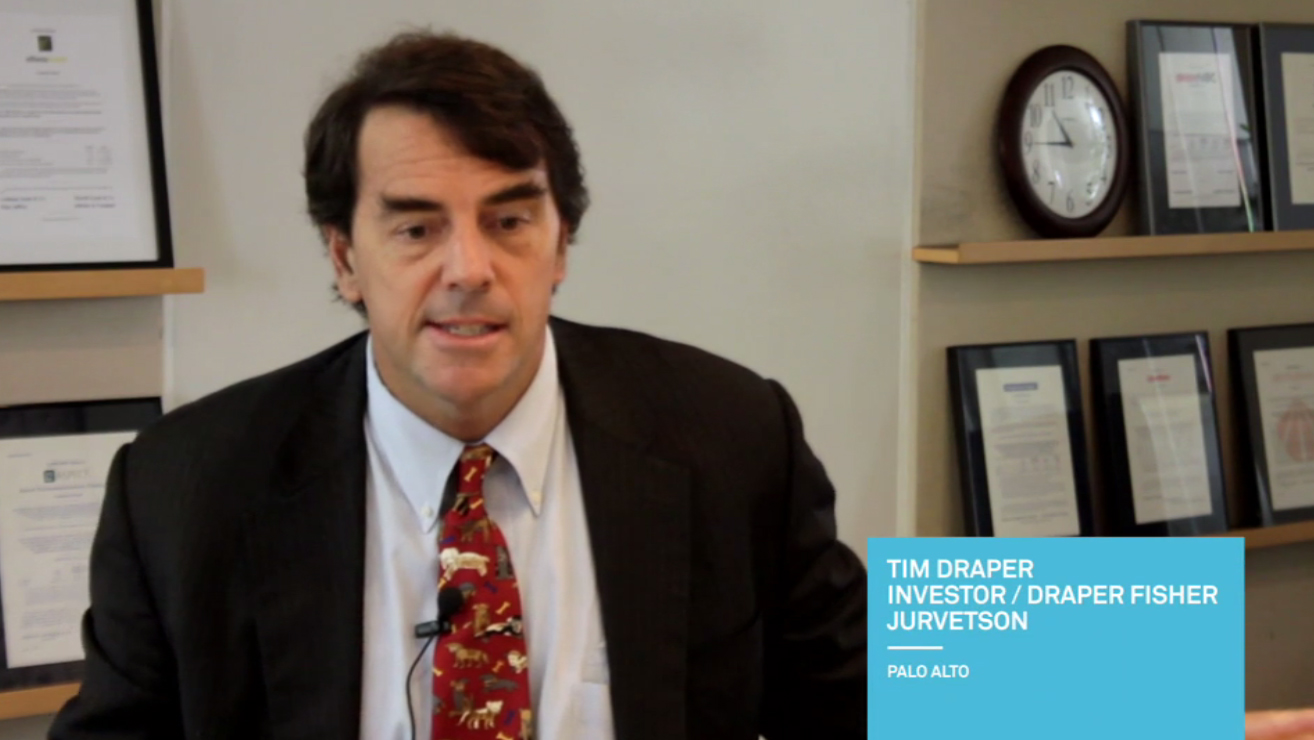
Tim Draper, founder and investor, DFJ: “There is a lot of luck in the success of all the companies which have succeeded. You need a lot of luck, there were 25 search engines funded before Google was funded. There was Friendster and LinkedIn and MySpace and about 50 others before facebook became the big winner in that area.” [And it was the same with computer companies in the 80s!]
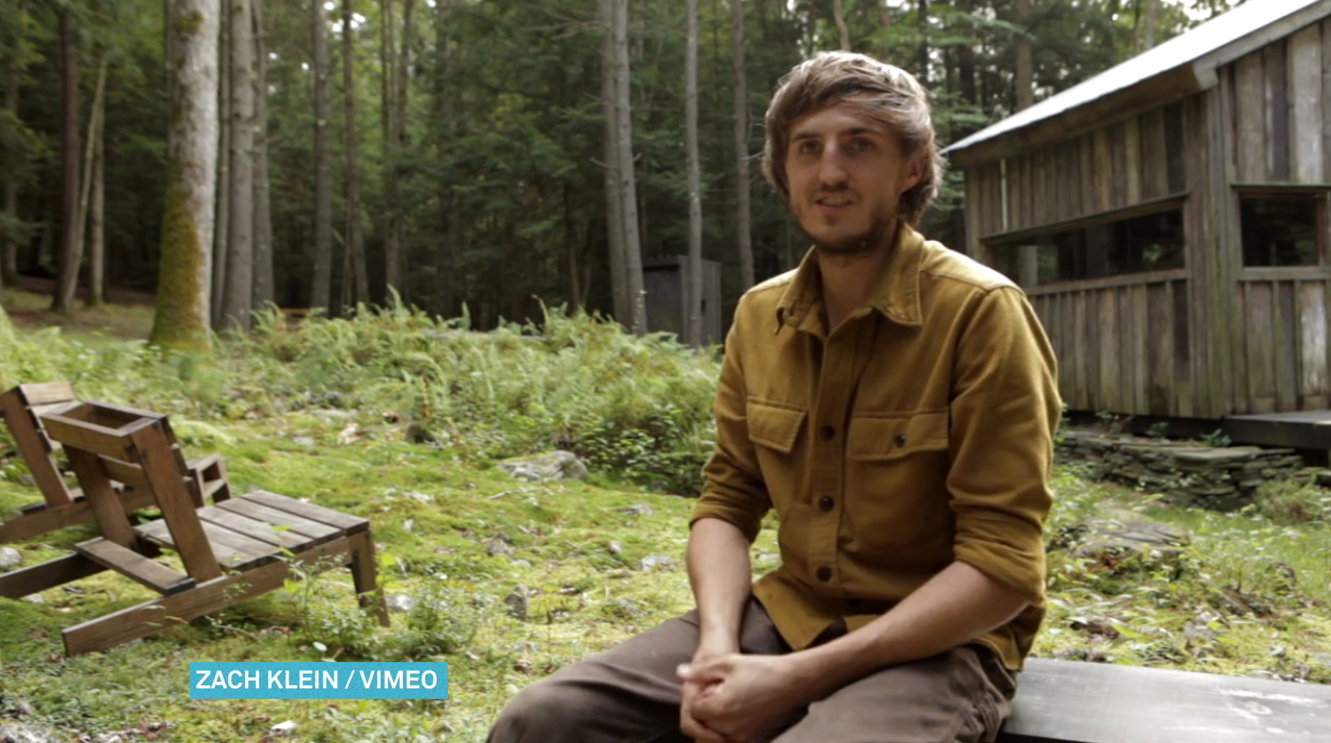
Finally do not miss Zach Klein (founder of Vimeo) in his beautiful wood cabin which reminds me of Thoreau’s Walden.
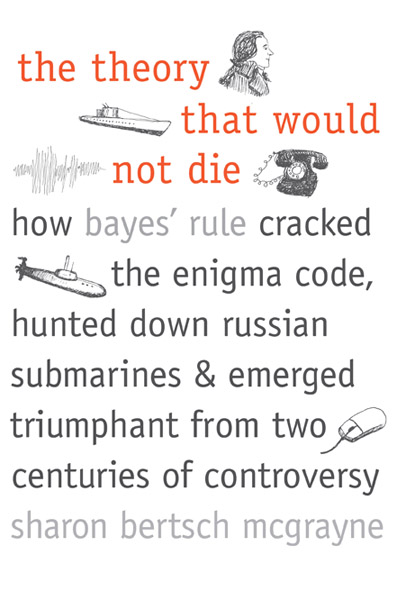
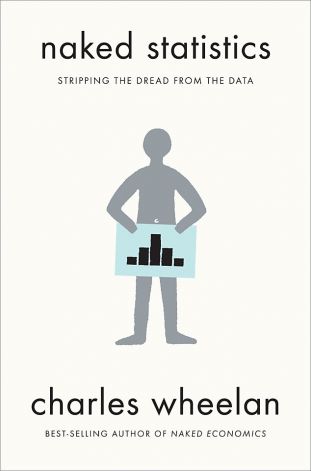
It is the third book I read about statistics in a short while and it is probably the strangest. After my dear Taleb and his Black Swan, after the more classical Naked Statistics, here is the history of the Bayesian statistics.
If you do not know about Bayes, let me just add that I like the beautiful and symmetric formula: [According to wikipedia] For proposition A and evidence B, P(A|B) P(B) = P(B|A) P(A) P(A), the prior, is the initial degree of belief in A. P(A|B), the posterior, is the degree of belief having accounted for B. the quotient P(B|A)/P(B) represents the support B provides for A.
Another way of explaining it mathematically is Bayes’ theorem gives the relationship between the probabilities of A and B, P(A) and P(B), and the conditional probabilities of A given B and B given A, P(A|B) and P(B|A).
I was never really comfortable with its applications. I was probably wrong again, given all what I learnt after reading Sharon Bertsch McGrayne’s rich book. But I also understood why I was never comfortable: for three centuries, there’s been a quasi-religious war between Bayesians and Frequentists on how to use probabilities. Are these linked to big, frequent numbers only or can they be applied for rare events? What is the probability of a rare event which may never occur or maybe just once?
[Let me give you a personal example: I am interested in serial entrepreneurship, and did and still do tons of statistics on Stanford-related companies. I have more than 5’000 entrepreneurs, and more than 1’000 are serial. I have results showing that serial entrepeneurs are not on average better than one-time, using frequency and classical methods. But now I should think about using:
P(Success|Serial) = P(Serial|Sucess) P(Success) / P(Serial)
I am not sure what will come out, but I should try!].
If you want a good summary of the book, read the review by Andrew I. Daleby (pdf). McGrayne illustrates the “recent” history of statistics and probabilities through famous (Laplace) and less famous (Bayes) scientists, through famous (the Enigma machine and Alan Turing) and less famous (lost nuclear bombs) stories and it is a fascinating book. I am not convinced it is great at explaining the science, but the story telling is great. Indeed, it may not be about science at all. But about belief as is mentioned in the book: Swinburne inserted personal opinions into both the prior hunch and the supposedly objective data of Bayes’ theorem to conclude that God was more than 50% likely to exist; later Swinburne would figure the probability of Jesus’ resurrection at “something like 97 percent” [Page 177]. It obviously reminded me of Einstein’s famous quote: “God does not play dice with the universe.” This is not directly related but for the second time in my life, I was reading about links between science, probability and religion.
What have these 4 things in common? I am not sure. But in the last 12 hours, I had to put this 4 things together. My professional life is about technology, but I am not a technophile. I do not have a smart phone. But I like people and I strangely rediscovered it through high-tech entrepreneurship. There are many, many more important things. I will give you two examples with Bruce Springsteen and Jonathan Franzen, two known supporters of Barack Obama, whom I have mentioned a couple of times here. These are just two (therefore three) examples of why it is possible to like America… follow me, you don’t have to agree.
(Let me just add 5 minutes after publishing this article that we are on July 4!)
Yesterday, I was in Geneva for one of the best concerts of my life. The Boss and his sixteen musicians gave a nearly 3 hour-long show with a generosity I had never seen on stage. I did not know about his “sign requests”. His fans showed him signs with song titles and he picked a few, which he would later sing. Not the kind of music machines I am often used to experience. A kid went on stage and sang alone for a while. This was unique too. He is 63-year old and has the energy of a youngster, the generosity of a wise man. No naiveness. “We have a job to make here tonight.” What a job! I found a site which gave a short account including the songs he chose yesterday (including the signed ones – see in the end). Springsteen belongs to the group of people which show why we can love America.
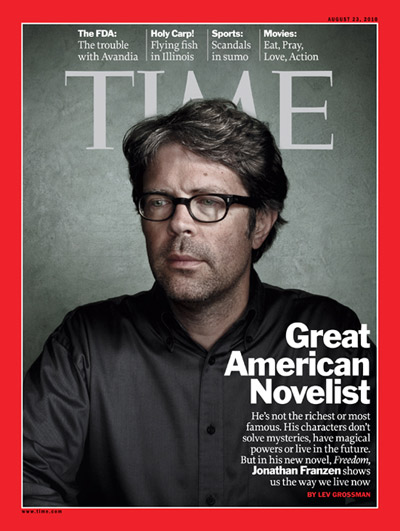
I also like Jonathan Franzen. I may have read all his writings, The Corrections remains my favorite one. I am currently reading his latest essays. He also shows suffering, misery, hardship in America. A different kind of suffering, but in the end, it is probably the same. Americas is great when it shows its weaknesses. But neither Sprinsteen nor Franzen are depressing, because they are generous, they are passionate. I don’t see any cynism. Hopefully, I am not naive. In one of his latest essays, a commencement address at Kenyon College, he links technology and love… The title is PAIN WON’T KILL YOU and in the NYT he made another version entitled Liking Is for Cowards. Go for What Hurts.
Here is the NYT full version. I think it is worth reading it. But you can use the two previous web links too. I will try to provide my French version later…
************************* Liking Is for Cowards. Go for What Hurts. By JONATHAN FRANZEN
Published: May 28, 2011
A COUPLE of weeks ago, I replaced my three-year-old BlackBerry Pearl with a much more powerful BlackBerry Bold. Needless to say, I was impressed with how far the technology had advanced in three years. Even when I didn’t have anybody to call or text or e-mail, I wanted to keep fondling my new Bold and experiencing the marvelous clarity of its screen, the silky action of its track pad, the shocking speed of its responses, the beguiling elegance of its graphics.
I was, in short, infatuated with my new device. I’d been similarly infatuated with my old device, of course; but over the years the bloom had faded from our relationship. I’d developed trust issues with my Pearl, accountability issues, compatibility issues and even, toward the end, some doubts about my Pearl’s very sanity, until I’d finally had to admit to myself that I’d outgrown the relationship.
Do I need to point out that — absent some wild, anthropomorphizing projection in which my old BlackBerry felt sad about the waning of my love for it — our relationship was entirely one-sided? Let me point it out anyway.
Let me further point out how ubiquitously the word “sexy” is used to describe late-model gadgets; and how the extremely cool things that we can do now with these gadgets — like impelling them to action with voice commands, or doing that spreading-the-fingers iPhone thing that makes images get bigger — would have looked, to people a hundred years ago, like a magician’s incantations, a magician’s hand gestures; and how, when we want to describe an erotic relationship that’s working perfectly, we speak, indeed, of magic.
Let me toss out the idea that, as our markets discover and respond to what consumers most want, our technology has become extremely adept at creating products that correspond to our fantasy ideal of an erotic relationship, in which the beloved object asks for nothing and gives everything, instantly, and makes us feel all powerful, and doesn’t throw terrible scenes when it’s replaced by an even sexier object and is consigned to a drawer.
To speak more generally, the ultimate goal of technology, the telos of techne, is to replace a natural world that’s indifferent to our wishes — a world of hurricanes and hardships and breakable hearts, a world of resistance — with a world so responsive to our wishes as to be, effectively, a mere extension of the self.
Let me suggest, finally, that the world of techno-consumerism is therefore troubled by real love, and that it has no choice but to trouble love in turn.
Its first line of defense is to commodify its enemy. You can all supply your own favorite, most nauseating examples of the commodification of love. Mine include the wedding industry, TV ads that feature cute young children or the giving of automobiles as Christmas presents, and the particularly grotesque equation of diamond jewelry with everlasting devotion. The message, in each case, is that if you love somebody you should buy stuff.
A related phenomenon is the transformation, courtesy of Facebook, of the verb “to like” from a state of mind to an action that you perform with your computer mouse, from a feeling to an assertion of consumer choice. And liking, in general, is commercial culture’s substitute for loving. The striking thing about all consumer products — and none more so than electronic devices and applications — is that they’re designed to be immensely likable. This is, in fact, the definition of a consumer product, in contrast to the product that is simply itself and whose makers aren’t fixated on your liking it. (I’m thinking here of jet engines, laboratory equipment, serious art and literature.)
But if you consider this in human terms, and you imagine a person defined by a desperation to be liked, what do you see? You see a person without integrity, without a center. In more pathological cases, you see a narcissist — a person who can’t tolerate the tarnishing of his or her self-image that not being liked represents, and who therefore either withdraws from human contact or goes to extreme, integrity-sacrificing lengths to be likable.
If you dedicate your existence to being likable, however, and if you adopt whatever cool persona is necessary to make it happen, it suggests that you’ve despaired of being loved for who you really are. And if you succeed in manipulating other people into liking you, it will be hard not to feel, at some level, contempt for those people, because they’ve fallen for your shtick. You may find yourself becoming depressed, or alcoholic, or, if you’re Donald Trump, running for president (and then quitting).
Consumer technology products would never do anything this unattractive, because they aren’t people. They are, however, great allies and enablers of narcissism. Alongside their built-in eagerness to be liked is a built-in eagerness to reflect well on us. Our lives look a lot more interesting when they’re filtered through the sexy Facebook interface. We star in our own movies, we photograph ourselves incessantly, we click the mouse and a machine confirms our sense of mastery.
And, since our technology is really just an extension of ourselves, we don’t have to have contempt for its manipulability in the way we might with actual people. It’s all one big endless loop. We like the mirror and the mirror likes us. To friend a person is merely to include the person in our private hall of flattering mirrors.
I may be overstating the case, a little bit. Very probably, you’re sick to death of hearing social media disrespected by cranky 51-year-olds. My aim here is mainly to set up a contrast between the narcissistic tendencies of technology and the problem of actual love. My friend Alice Sebold likes to talk about “getting down in the pit and loving somebody.” She has in mind the dirt that love inevitably splatters on the mirror of our self-regard.
The simple fact of the matter is that trying to be perfectly likable is incompatible with loving relationships. Sooner or later, for example, you’re going to find yourself in a hideous, screaming fight, and you’ll hear coming out of your mouth things that you yourself don’t like at all, things that shatter your self-image as a fair, kind, cool, attractive, in-control, funny, likable person. Something realer than likability has come out in you, and suddenly you’re having an actual life.
Suddenly there’s a real choice to be made, not a fake consumer choice between a BlackBerry and an iPhone, but a question: Do I love this person? And, for the other person, does this person love me?
There is no such thing as a person whose real self you like every particle of. This is why a world of liking is ultimately a lie. But there is such a thing as a person whose real self you love every particle of. And this is why love is such an existential threat to the techno-consumerist order: it exposes the lie.
This is not to say that love is only about fighting. Love is about bottomless empathy, born out of the heart’s revelation that another person is every bit as real as you are. And this is why love, as I understand it, is always specific. Trying to love all of humanity may be a worthy endeavor, but, in a funny way, it keeps the focus on the self, on the self’s own moral or spiritual well-being. Whereas, to love a specific person, and to identify with his or her struggles and joys as if they were your own, you have to surrender some of your self.
The big risk here, of course, is rejection. We can all handle being disliked now and then, because there’s such an infinitely big pool of potential likers. But to expose your whole self, not just the likable surface, and to have it rejected, can be catastrophically painful. The prospect of pain generally, the pain of loss, of breakup, of death, is what makes it so tempting to avoid love and stay safely in the world of liking.
And yet pain hurts but it doesn’t kill. When you consider the alternative — an anesthetized dream of self-sufficiency, abetted by technology — pain emerges as the natural product and natural indicator of being alive in a resistant world. To go through a life painlessly is to have not lived. Even just to say to yourself, “Oh, I’ll get to that love and pain stuff later, maybe in my 30s” is to consign yourself to 10 years of merely taking up space on the planet and burning up its resources. Of being (and I mean this in the most damning sense of the word) a consumer.
When I was in college, and for many years after, I liked the natural world. Didn’t love it, but definitely liked it. It can be very pretty, nature. And since I was looking for things to find wrong with the world, I naturally gravitated to environmentalism, because there were certainly plenty of things wrong with the environment. And the more I looked at what was wrong — an exploding world population, exploding levels of resource consumption, rising global temperatures, the trashing of the oceans, the logging of our last old-growth forests — the angrier I became.
Finally, in the mid-1990s, I made a conscious decision to stop worrying about the environment. There was nothing meaningful that I personally could do to save the planet, and I wanted to get on with devoting myself to the things I loved. I still tried to keep my carbon footprint small, but that was as far as I could go without falling back into rage and despair.
BUT then a funny thing happened to me. It’s a long story, but basically I fell in love with birds. I did this not without significant resistance, because it’s very uncool to be a birdwatcher, because anything that betrays real passion is by definition uncool. But little by little, in spite of myself, I developed this passion, and although one-half of a passion is obsession, the other half is love.
And so, yes, I kept a meticulous list of the birds I’d seen, and, yes, I went to inordinate lengths to see new species. But, no less important, whenever I looked at a bird, any bird, even a pigeon or a robin, I could feel my heart overflow with love. And love, as I’ve been trying to say today, is where our troubles begin.
Because now, not merely liking nature but loving a specific and vital part of it, I had no choice but to start worrying about the environment again. The news on that front was no better than when I’d decided to quit worrying about it — was considerably worse, in fact — but now those threatened forests and wetlands and oceans weren’t just pretty scenes for me to enjoy. They were the home of animals I loved.
And here’s where a curious paradox emerged. My anger and pain and despair about the planet were only increased by my concern for wild birds, and yet, as I began to get involved in bird conservation and learned more about the many threats that birds face, it became easier, not harder, to live with my anger and despair and pain.
How does this happen? I think, for one thing, that my love of birds became a portal to an important, less self-centered part of myself that I’d never even known existed. Instead of continuing to drift forward through my life as a global citizen, liking and disliking and withholding my commitment for some later date, I was forced to confront a self that I had to either straight-up accept or flat-out reject.
Which is what love will do to a person. Because the fundamental fact about all of us is that we’re alive for a while but will die before long. This fact is the real root cause of all our anger and pain and despair. And you can either run from this fact or, by way of love, you can embrace it.
When you stay in your room and rage or sneer or shrug your shoulders, as I did for many years, the world and its problems are impossibly daunting. But when you go out and put yourself in real relation to real people, or even just real animals, there’s a very real danger that you might love some of them.
And who knows what might happen to you then?
Jonathan Franzen is the author, most recently, of “Freedom.” This essay is adapted from a commencement speech he delivered on May 21 at Kenyon College.
*************************
More for myself! (A blog is also my personal journal)Bruce Springsteen in Switzerland: Dedicates ‘Land of Hope and Dreams’ to Nelson Mandela. Bruce Springsteen and the E Street Band were back in action again on Wednesday, playing a 26-song, two-hour-and-52-minute show at the Stade de Genève in Geneva, Switzerland. Highlights included “Frankie” which was played for the first time in 2013 and for only the fifth time this tour and the encores started with Bruce playing “The Promise” solo on the piano, “Youngstown” and “Murder Inc.” were also played. It was the first show this tour that “Wrecking Ball” was not played. In the 118 shows so far this tour, three songs still have perfect attendance: “Waitin’ on a Sunny Day,” “Born to Run” and “Dancing in the Dark.” Bruce dedicated “Land of Hope and Dreams,” the final song of the main set, to Nelson Mandela. Show began at 7:40 p.m. local time (six hours ahead of New Jersey)
Set list
1. Shackled and Drawn
2. Badlands
3. Death to My Hometown
4. Out in the Street (sign request)
5. Hungry Heart (sign request)
6. Candy’s Room (sign request)
7. She’s the One
8. Because the Night
9. Spirit in the Night
10. Frankie
11. The River
12. Youngstown
13. Murder Incorporated
14. Darlington County (sign request)
15. Working on the Highway
16. Bobby Jean
17. Waitin’ on a Sunny Day
18. The Rising
19. Land of Hope and Dreams (dedicated to Nelson Mandela)
Encore:
20. The Promise (solo piano)
21. Born in the U.S.A.
22. Born to Run
23. Dancing in the Dark
24. 10th Avenue Freeze-Out
25. American Land
26. Thunder Road (solo acoustic)
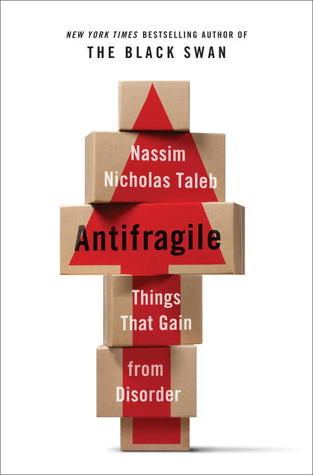
I have already talked about statistics here, and not in good terms. It was mostly related to Nicholas Nassim Taleb‘s works, The Black Swan and Antifragile. But this does not mean statistics are bad. They may just be dangerous when used stupidly. It is what Charles Wheelan explains among otehr things in Naked Statistics.
Naked Statistics belongs to the group of Popular Science. Americans often have a talent to explain science for a general audience. Wheelan has it too. So if you do not know about or hate the concepts of mean/average, standard deviation, probability, regression analysis, and even central limit theorem, you may change your mind after reading his book.
Also you will be explained the Monty Hall problem or equivalent Three Prisoners problem or why it is sometimes better (even if counterintuitive) to change your mind.
Finally Wheelan illustrates why statistics are useless and even dangerous when the data used are badly built or irrelevant (even if the mathematical tools are correctly used!). Just one example in scientific research (which is another topic of concern to me) “This phenomenon can plague even legitimate research. The accepted convention is to reject a hypothesis when we observe something that would happen by chance only 1 in 20 times or less if the hypothesis were true. Of course, if we conduct 20 studies, or if we include 20 junk variables in a single regression equation, then on average, we will get 1 bogus statistically significant finding. The New York Times magazine captured this tension wonderfully in a quotation from Richard Peto, a medical statistician and epidemiologist: “Epidemiology is so beautiful and provides such an important perspective on human life and death, but an incredible amount of rubbish is published”.
Even the results of clinical trials, which are usually randomized experiments and therefore the gold standard of medical research, should be viewed with some skepticism. In 2011, the Wall Street Journal ran a front-page story on what it described as one of the “dirty little secrets” of medical research: “Most results, including those that appear in top-flight peer-reviewed journals, can’t be reproduced. […] If researchers and medical journals pay attention to positive findings and ignore negative findings, then they may well publish the one study that finds a drug effective and ignore the nineteen in which it has no effect. […] On top of that, researchers may have some conscious or unconscious bias, either because of a strongly held prior belief or because a positive finding would be better for their career. (No one ever gets rich or famous by proving what doesn’t cure cancer. […] Dr. Ionnadis [a Greek doctor and epidemiologist] estimates that roughly half of the scientific papers published will eventually turn out to be wrong.” [Pages 222-223]
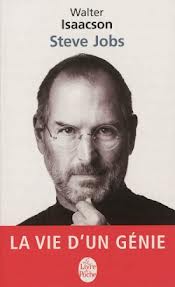
I finally read the Steve Jobs biography by Walter Isaacson. I hesitated a long time (the original edition was published in 2011) because I feared disappointement. I had read the excellent The Apple Revolution as well as Return to the Little Kingdom. I finally read it in French and it is excellent. Read it if you have an interest in the topic. I’m not going to do any analysis, but as I usually do just mention some striking or subjective extracts. The citations refer to the French paperback release dated October 2012.
Silicon Valley
Various cultural earthquakes upset San Francisco and SiIicon Valley in the late 1960s. There was the technological revolution, initiated by the increase of military contracts, which had attracted electronics companies, chip manufacturers, designers of video games and computer manufacturers. There was a sub-culture, the pirates – inventors of genius, cyberpunks, dilettantes as well as pure geeks, they also had in their ranks electronicians refusing to fit the mold of HP and their impetuous children who wanted to break down all barriers. There were (quasi-academic) research groups, who led in vivo experiments on the effects of LSD, such as Doug Engelbart’s Augmentation Research Center, who would later work at the development of the mouse and graphical user interfaces, or Ken Kesey, who praised the psychedelic drug in shows, combining music and light, run by a group of musicians who became the legendary Grateful Dead. There was also the hippie movement, from the Beat Generation of Kerouac, a native of San Francisco Bay, and political activists, born out of the Movement for Freedom of Expression of Berkeley. And encompassing all that, there were various spiritual movements seeking inner enlightenment – Zen, Hinduism, meditation, yoga, primal scream, sensory deprivation and Esalen massage.
Steve Jobs was the embodiment of the fusion of Flower Power and microchips, the pursuit of personal revelation and high tech: he was meditating in the morning, followed in the afternoon courses in physics at Stanford, working the Atari at night and dreaming of starting his own business. [Page 114]
A passion for entrepreneurship
Bushnell is of this opinion: “To be a successful entrepreneur, you must have something special and I saw this thing with Steve. He was not only interested in electronics, also by business. I showed him that one had to behave as if one would succeed in what one wanted to achieve and then everything would naturally follow. That’s what I always say: if you pretend to know what you do, people will follow. “[Page 111]
His closest friends think that having learned so young, he had been abandoned at birth had left indelible scars. “The need for total control of what he did comes from this injury” [Page 34] … “The most amazing thing about Steve is that he cannot help being cruel to some people – a kind of Pavlovian response. The key to the mystery is the fact that he was abandoned at birth.” [Page 35]
So he went back to Nolan Bushnell, “Steve asked me to put fifty thousand dollars on the table and in exchange he’d give me a third of Apple’s shares. I thought I was smart and I said no. When I look back, I still laugh. Not to cry!” [Page 142]
The reality distortion field
– “This is madness. It is impossible. ”
He was answered that Jobs would not listen.
– The best definition of this oddity, you find it in Star Trek. Steve creates a reality distortion field. In his presence, reality is malleable. It can make anyone believe almost anything. The effect of course disappears, when he is not there, but it prevents you seriously to have realistic expectations for anything.
RDF was a confusing mix of charisma and mental strength, it is the willingness to bend the facts so they fit the mold. [Page 207]
When Jobs decreed that the sodas in the fridge would be replaced by organic orange and carrot juice, someone on the team had printed T-shirts with: “Beware of Reality Distortion Field!” And on the back: “It comes from the juice!”
There is a small bug page 225: To draw circles, Atkinson found a trick based on the fact that the sums of odd numbers gave a succession of perfect squares (for example, 1 + 3 = 4, 1 + 3 + 5 = 8, etc.) [The statement is correct because the last sum is 9 and not 8!]
Being a pirate
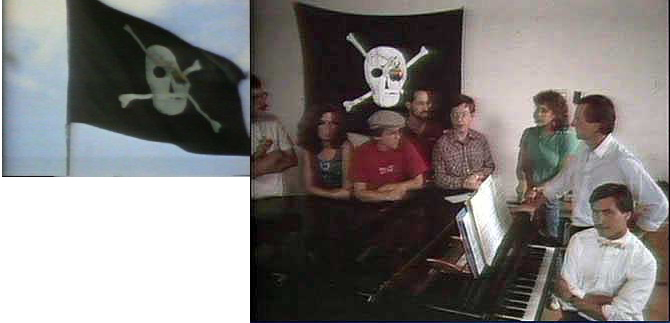
“Better to be a pirate than join the navy” [Page 248] And the Jolly Roger decorated with the Apple logo floated for a few weeks on the roof of Bandley 3.
The chapters on Jobs’ private life and Pixar are quite interesting. About the IPO of Pixar: “Earlier that year, Jobs had tried to find a buyer for Pixar, for fifty million dollars, just to recover his funds. At the end of this historic day, the actions he had kept – about 80% of the company – were worth more than 20 times that amount: one billion two hundred million dollars! It was nearly five times more than he had gained with the Apple IPO in 1980. But Jobs did not care to make a fortune, as he told John Markoff of the New York Times: “I do not intend to buy a yacht. I never did it for the money.” [Page 471]. He is in this respect very different from Larry Ellison, founder and CEO of Oracle with whom he became a friend who helped him to return to Apple.
Return to Apple
In this regard, there is an funny anecdote page 482: “Two years ago, Guy Kawasaki, Macworld magazine columnist (and former Apple evangelist) published in the magazine a parody telling Apple was buying NeXT and elected Jobs as CEO. The article featuring Mike Markkula talking to Jobs: “You want to spend the rest of your life selling Unix with a nice coating, or change the world?” And Jobs replied:” Now I am a father and I do not want to play adventurers.” The article made the assumption: “Following his troubles with NeXT, it is possible that Jobs, in his return to the parent company, will bring the Apple management a dose of humility. Bill Gates was also quoted; he said that if Jobs returned to the business, Microsoft would again have innovations to copy! Everything was invented and purely humorous. But the reality has this annoying habit of catching up all satires. “([Page 482 and see below]
And on his return: “His credo was perfection. He was not very good at compromise, or to arrange with reality. He did not like complexity. This was the case for the design of his products and the furniture of his houses, it was the same for his personal commitments. If he was sure of himself, then nothing could stop him, but if he had doubts, he sometimes preferred to throw in the towel rather than ending up in a situation that did not satisfy him completely. [Page 509]
Death
[With Markkula] They spent the rest of the time talking about the future of Apple. Jobs wanted to build a company that survives him and asked for his advice. Markkula replied that companies that remain are those who knew how to renew. That had been constant with Hewlett-Packard, beginning by constructing measuring instruments and then calculators and then again computers.” Apple was ousted by Microsoft from the market for personal computers, Markkula explained. You must change the course of Apple to another product. You have to be like a butterfly and accomplish your metamorphosis.” Jobs was hardly talkative, but he retained the lesson. [Page 515]
The music was obviously an essential art in the life of Jobs. We know his passion for Bob Dylan, Joan Baez, and the Beatles. But here’s a most interesting part: Bach, he said, was his favorite classical composer. He particularly liked the contrast between the two versions of the Goldberg Variations recorded by Glenn Gould – the first in 1995 by the little-known pianist of twenty-two years that he was, and the second in 1981, a year before his death. “They are like night and day, Steve told me one day after having listened to one after the other. The first is exuberant, young, brilliant, played so fast that it is a revelation. The second is more efficient, more austere. It reveals a deep soul, a painful experience. “Jobs was sick for the third time when he listened to the two versions. I asked him which was his favorite version. “Gould preferred the latest version. In the past, I preferred the first, the exuberant. But now, I understand better what he meant.”
Isaacson ends his book with a brilliant remark by Jobs on the topic of life and death. “But on the other hand, maybe it’s like an on/off switch. Click and nothing more!” He paused again and smiled. “This is surely why I never liked the on/off switches on the Apple products.”
The legacy
I could have put these final remarks earlier in the section A passion for entrepreneurship. “My passion has been to build a sustainable business, where people were motivated to manufacture great products. Everything else was secondary. Of course, it was great to make a profit, because it allowed us to create good products. But the motivation is the product, not profit. […] The difference is subtle, but in the end it is crucial because it defines all the people we hire, those we promote, the topics we discussed at meetings. […] People do not know what they want until they have it in front of them. That’s why I do not care about market research. […] The intersection between the arts and sciences. I love this juncture, IL has a magical aura. […] Our innovation holds a large part of humanity. I think great artists and great engineers are similar .. Both have the desire to express themselves. […] I have my own theory to explain the decline of companies like IBM and Microsoft. The company did a great job, innovates and comes almost to a monopoly in some areas. It was then that the quality of the product becomes less important. The company praises great sales people […] that eventually take control of the company. […] I hate people who say they are entrepreneurs when their sole objective is to build a start-up that they will sell or go IPO. They do not have the desire to build a real company. […] People should never stop innovating. […] I think most creative people want to thank their predecessors who left their legacy.” [Pages 889-892]
An incredible life. Jobs will remain one of the biggest celebrities of the twentieth century. I wondered when I finished reading this book what I remember of Apple and Jobs and here is the result.
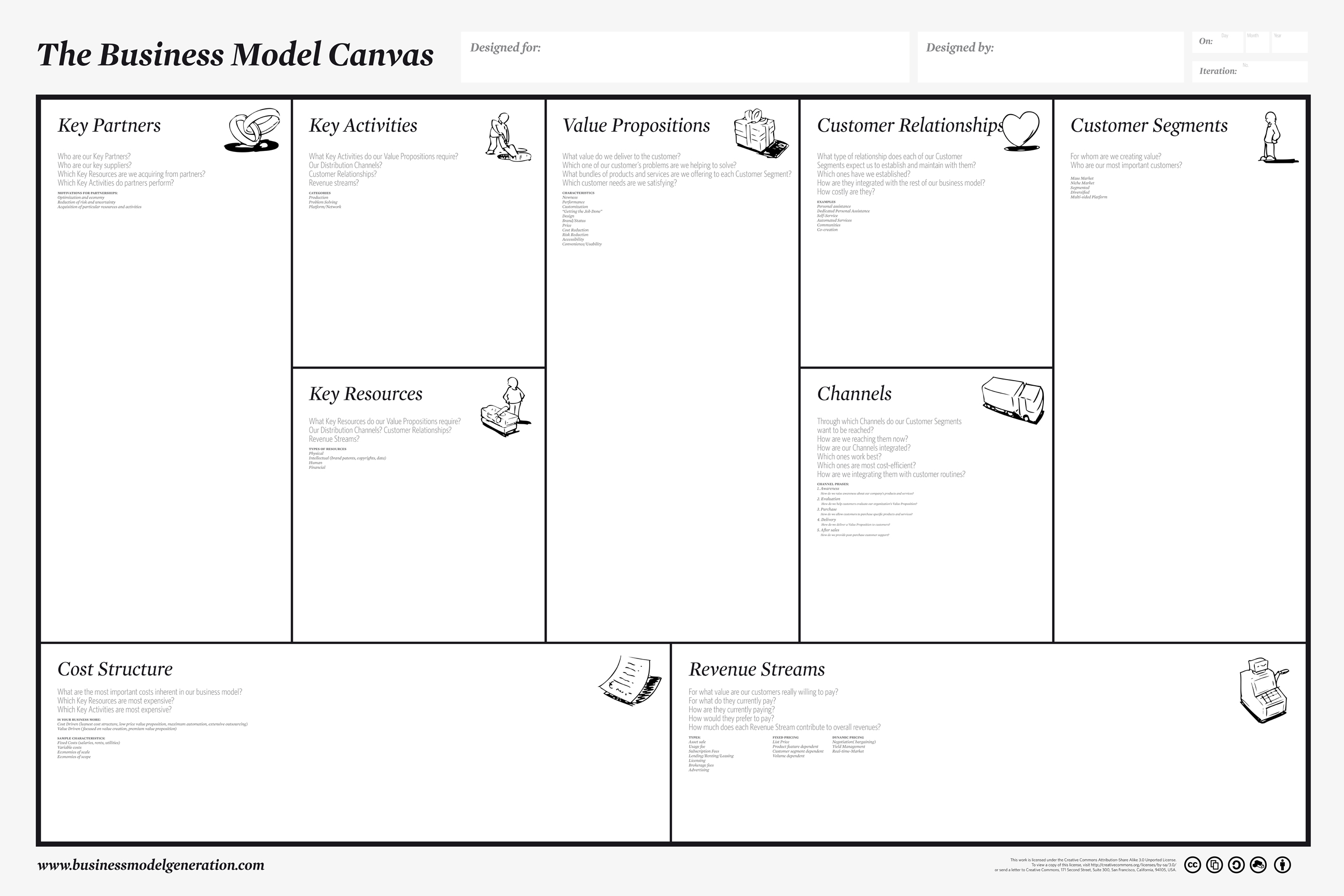
Last week, I attended a workshop organized by Raphael Cohen. He explained his IpOp process. You can read again the post I wrote a few months ago: Proven Tools for Converting Your Projects into Success (without a Business Plan). It’s really a good tool if you need to develop your own project. Cohen mentioned the famous Business Model Generation by Alexander Osterwalder and Yves Pigneur; and he showed us again its 9 building blocks. It has become such a standard… I never mentioned it here. Better late than never!
Following my recent post (part 1), here is what I keep from the book without giving all details. Moyer probably needs to sell a few copies!
Moyer introduces the Grunt Fund as a mechanism to allocate equity between founders. He is using the classical metrics I have used in the past (again see Equity Splits in Start-ups) but he adds one interesting point: a dynamic allocation based on future contributions such as time and cash, weighted with your value (reputation, experience, etc). His process is simple:
– Appoint a Leader
– Assign a theoretical value to the ingredients provided by the various Grunts.
– Keep track of the contributions and calculate the possible equity whenever you need based on the relative contributions by each Grunt.
A Grunt Fund makes some people uneasy. They like to know what they’re getting into and they like the I’s dotted and the T’s crossed. That’s fine. If this is you, then don’t use a Grunt Fund – get a job instead. [Page 50] Then be careful about who and what you need. It’s up to you to decide what you need, but be fair!
Moyer mentions on the following page Noam Wasserman’s The Founder’s Dilemma (which I have not read) as a theoritical validation of his approach.
Without entering too much detail, Moyer gives value to time (2x what would a normal salary be) and cash (4x the actual amount). This is subjective. The critical element is that all Grunts agree with the rules. It can change from one company to the other… “Remember, you need to compensate them for not only the work they did, but also for the risk they take.” [Page 64]
When it comes to ideas or intellectual property, Moyer has principles I am quite close to: “Don’t get me wrong, ideas are critical to a business’ success. But turning the idea into a reality is where the value is built, not in coming up with the idea in the first place.” [Page 82]
Sometimes you will need to remove someone. There are 3 possibilities:
– he/she resigns without cause. You need to reduce his slice;
– you terminate him/her without cause. The slice should be kept;
– you terminate with cause. He/she may lose the slice.
[Chapter 5 + Pages 141-145]
The Grunt Fund is for the early days only. When do you stop using it? When you have a predictable business model, or when you have raised $1M. [Page 114]
As a conclusion (and Moyer mentions it many times), “a Grunt Fund is a moral contract, not a legal contract. It tells us how to treat each other fairly. […] A Grunt Fund is the foundation of a trusting relationship.” [Pages 121-122]
An EPFL entrepreneur had contacted me about equity split between founders, employees and investors in a start-up. I mentioned my experience and related blog post on the topic: Equity Splits in Start-ups. Then he came back to me with a book he advised me to read. I am half way through it and it has interesting (and new to me) lessons. So thanks Justin 🙂
The book is entitled Slicing Pie, and subtitled Funding Your Company Without Funds.
I will probably go back when I am finished with this book, but already, here are some examples of what I liked:
The Gap
Somewhere between the inception of your earth-changing idea and the investor presentation to Andreessen Horowitz there is a gap. During that gap, you are expected to have actually built something that resembles a business enough that the gentle and kind venture capitalist will decide that you have your act together and write you a fact check. I call it “the Gap” because it’s during this time that you either fill the gap with behaviors that create a business or let is consume you and your wonderful idea. Most fledging businesses experience the latter.
The days of back-of-the-envelope deals are over. (In fact, they may never have actually existed.) Few investors are willing to provide capital to a company that is little more than a rough idea.
Nowadays, you need to have something worth investing in which often means a management team, a business plan, and, if you’re smart, a working prototype. For bonus points get a few beta customers who are actually paying you. Now you have something worth discussing. [page 2]
The need for Entrepreneurs
“Entrepreneurs give security to other people; they are the generators of social welfare.” The country needs entrepreneurs, the world needs entrepreneurs. Without them not much would happen.
In spite of the exciting life and important role of entrepreneurs, most people never become entrepreneurs. To most people, life is too risky. Most people can’t handle the ambiguity. Most people are afraid of failure. Every entrepreneur fails more often than they succeed. [pages 9-10]
Good and Bad Lessons
Failure is how an entrepreneur learns. Good lessons improve an entrepreneur chances for future success. If you created a product that nobody wants, if your employee leaves you, if a competitor comes out, if your marketing did not work, if you run out of money, you will learn.
Being an entrepreneur requires a lot of trust and confidence.
But if they get burnt by partners, they learn bad lessons. They spend more time covering their own butts. They learn to move more slowly and take fewer risks. They learn to be less like entrepreneurs and more like everyone else. [pages 10-11]
Grunts
Grunts are people who are willing to forgo cash compensation in exchange for a piece of the pie. Grunts do the work necessary to turn an idea into a reality. They will do the fun work and the dirty work. They are as comfortable licking stamps as they are building a strategic plan. [page 28] (I love grunts probably because in some aspects I am one, even if not an entrepreneur!)
As a conclusion to his first chapter, author Mike Moyer claims that an entrepreneur needs a method for slicing the pie that is easy to understand and
– rewards participants for the relative value they provide,
– provides motivation for them to continue to provide more ingredients,
– allows founders to fairly add or subtract participants to or from the company,
– is flexible in the face of rapid change.
Here’s probably one of the toughest post I ever had to write and I am not sure it is a good one, even if the topic I am addressing is great and important. But it’s been a challenge to summarize what I learnt: Nicholas Nassim Taleb gives in this follow-up to the Black Swan a very interesting analysis of how the world can be less exposed to Black Swans, not by becoming more robust only, but by becoming antifragile, i.e. by benefiting from random events. His views include tensions between the individual and the groups, how distributed systems are more robust than centralized ones, how small unites are less fragile than big ones. This does not mean Taleb is against orgamizations, governments or laws as too little intervention induces totally messy situations. It is about putting the cursor at the right level. Switzerland represents for Taleb a good illustration of good state organizations with little central government, a lot of local responsibility. He has similar analogies for the work place, where he explains that an independent worker, who knows well his market, is less fragile to crises than big corporations and their employees. One way to make systems less fragile is to put some noise, some randomness which will stabilize them. This is well-known in science and also in social science. Just remember Athens was randomly nominating some of its leaders to avoid excess!
You can listen to Taleb here:
Now let me quote the author. These are notes only but for serious reviews, visit the author’s website, www.fooledbyrandomness.com/. First Taleb is, as usual, unfair but maybe less than in the Black Swan. Here is an example: “Academics (particularly in social science) seem to distrust each other, […] not to mention a level of envy I have almost never seen in business… My experience is that money and transactions purify relations; ideas and abstract matters like “recognition” and “credit” warp them, creating an atmosphere of perpetual rivalry. I grew to find people greedy for credentials nauseating, repulsive, and untrustworthy.” [Page 17] Taleb is right about envy and rivalry but wrong in saying it is worse in academia; I think it is universal! In politics for example. But when money is available, maybe rivalry counts less than where there is little.
Now a topic close to my activity: “This message from the ancients is vastly deeper than it seems. It contradicts modern methods and ideas of innovation and progress on many levels, as we tend to think that innovation comes from bureaucratic funding, through central planning, or by putting people through a Harvard Business School class by one Highly Decorated Professor of Innovation and Entrepreneurship (who never innovated anything) or hiring a consultant (who never innovated anything). This is a fallacy – note for now the disproportionate contribution of uneducated technicians and entrepreneurs to various technological leaps, from the Industrial Revolution to the emergence of Silicon Valley, and you will see what I mean.” [Page 42] [Extreme and unfair again, even if not fully wrong!]
“The antifragility of some comes necessarily at the expense of the fragility of others. In a system, the sacrifices of some units – fragile units, that is, or people – are often necessary for the well-being of other units or the whole. The fragility of every start-up is necessary for the economy to be antifragile, and that’s what makes, among other things, entrepreneurship work: the fragility of the individual entrepreneurs and their necessarily high failure rate”. [Page 65] What surprised me later is that Taleb shows that this is true of restaurants (not many succeed) as much as of high-tech start-ups. So it is not only about the uncertainty of new markets, but about uncertainty above all.
Mathematics of convexity
I have to admit Taleb is not easy to read. Not because it is complex (sometimes his ideas are pure common sense), but because it is dense with different even if consistent ideas. The book is divided in 25 chapters, but also in 7 books. In fact, Taleb insists on it, he might have written 7 different books! Even his mathematics is simple. His definition of convexity is a little strange though I found it interested (I teach convex optimization, and you might not know, it was the topic of my PhD!).
Jensen inequality is interesting [Pages 342, 227 – Jensen was an amateur mathematician!]– the convex transformation of a mean is less or equal than the mean after convex transformation. Again individual (concave, we die) vs. collective (convex, antifragile, benefits from individual failures). So risk taking is good for collectivity if with insurance mechanisms. Risk taking + insurance vs. speculation with no value added. An example of a short and deep idea: “Decision making is based on payoffs, not knowledge”. [Page 337]
“Simply, small probabilities are convex to errors of computation. One needs a parameter, called standard deviation, but uncertainty about standard deviation has the effect of making the small probabilities rise. Smaller and smaller probabilities require more precision in computation. In fact small probabilities are incomputable, even if one has the right model – which we of course don’t.” [Taleb fails to mention Poincare yet he quoted him in the Black Swan, but whatever.]
A visible tension between individual and collective interests
Quotes again: “What the economy, as a collective, wants [business school graduates] to do is not to survive, rather to take a lot, a lot of imprudent risks themselves and be blinded by the odds. Their respective industries improve from failure to failure. Natural and nature-like systems want some overconfidence on the part of the individual economic agents, i.e., the overestimation of their chances of success and underestimation of the risks of failure in their business, provided their failure does not impact others. In other words, they want local, but not global overconfidence”. […] In other words, some class of rash, even suicidal, risk taking is healthy for the economy – under the conditions that not all people take the same risks and that these risks remain small and localized. Now, by disrupting the model, as we will see, with bailouts, governments typically favor a certain class of firms that are large enough to require being saved in order to avoid contagion to other businesses. This is the opposite of healthy risk taking; it is transferring fragility from the collective to the unfit. […] Nietzsche’s famous expression “what does not kill me makes me stronger” can be easily implemented as meaning Mithridatization or Hormesis but it may also mean “what did not kill me did not make me stronger, but it spared me because I am stronger than others; but it killed others and the average population is now stronger because the weak are gone”. […] This visible tension between individual and collective interests is new in history. […] Some of the ideas about fitness and selection are not very comfortable to this author, which makes the writing of some sections rather painful – I detest the ruthlessness of selection, the inexorable disloyalty of Mother Nature. I detest the notion of improvement thanks to harm to others. As a humanist, I stand against the antifragility of systems at the expense of individuals, for if you follow the reasoning, this makes us humans individually irrelevant. ” [Pages 75-77]
A National Entrepreneur Day
“Compare the entrepreneurs to the bean-counting managers of companies who climb the ladder of hierarchy with hardly ever any real downside. Their cohort is rarely at risk. My dream – the solution – is that we would have a National Entrepreneur Day, with the following message: Most of you will fail, disrespected, impoverished, but we are grateful for the risks you are taking and the sacrifices you are making for the sake of the economic growth of the planet and pulling others out of poverty. You are the source of our antifragility. Our nation thanks you.” [Page 80]
Local distributed systems, randomness and modernity
“You never have a restaurant crisis. Why? Because it is composed of a lot of independent and competing small units that do not individually threaten the system and make it jump from one state to another. Randomness is distributed rather than concentrated.” [Page 98]
“Adding a certain number of randomly selected politicians to the process can improve the functioning of the parliamentary system.” [Page 104]
“Modernity is the humans’ large-scale domination of the environment, the systematic smoothing of the world’s jaggedness, and the stifling of volatility and stressors. We are going into a phase of modernity marked by the lobbyist, the very, very limited liability corporation, the MBA, sucker problems, secularization, the tax man, fear of the boss…” [Page 108]
“Iatrogenics means literally “caused by the healer”. Medical error still currently kills between three times (as accepted by doctors) and ten times as many people as car accidents in the United States, it is generally accepted that harm from doctors – not including risks from hospitals germs – accounts for more deaths than any single cancer. Iatrogenics is compounded by the “agency problem” which emerges when one party (the agent) has personal interested that are divorced from those of the one using his services (the principal). An agency problem is present with the stockbroker and medical doctor whose ultimate interest is their own checking account, not your financial and medical health.” [Pages 111-112]
Theories and intervention.
“Theories are super-fragile outside physics. The very designation “theory” is even upsetting. In social science, we should call these constructs “chimeras” rather than theories. [Now you understand why Taleb has many enemies.] A main source of the economic crisis started in 2007 in the Iatrogenics of the attempt by […] Alan Greenspan to iron out the “boom-bust” cycle which caused risks to go hide under the carpet. The most depressing part of the Greenspan story is that the fellow was a libertarian and seemingly convinced of the idea of leaving systems to their own devices; people can fool themselves endlessly. […] The argument is not against the notion of intervention; in fact I showed above that I am equally worried about under-intervention when it is truly necessary. […] We have a tendency to underestimate the role of randomness in human affairs. We need to avoid being blinded to the natural antifragility of systems, their ability to take care of themselves and fight our tendency to harm and fragilize them by not giving them a chance to do so. […] Alas, it has been hard for me to fit these ideas about fragility within the current US political discourse. The democratic side of the US spectrum favors hyper-intervention, unconditional regulation and large government, while the Republican side loves large corporations, unconditional deregulation and militarism, both are the same to me here. Let me simplify my take on intervention. To me it is mostly about having a systematic protocol to determine when to intervene and when to leave systems alone. And we may need to intervene to control the iatrogenics of modernity – particularly the large-scale harm to the environment and the concentration of potential (though not yet manifested) damage, the kind of thing we only notice when it is too late. The ideas advanced here are not political, but risk-management based. I do not have a political affiliation or allegiance to a specific party; rather, I am introducing the idea of harm and fragility into the vocabulary so we can formulate appropriate policies to ensure we don’t end up blowing up the planet and ourselves.” [Pages 116-118]
“To conclude, the best way to mitigate interventionism is to ration the supply of information. The more data you get, the less you know.” [Page 128]
“Political and economic “tail” events are unpredictable and their probabilities are not scientifically measurable.” [Page 133]
The barbell strategy and optionality
“The Barbell strategy is a way to achieve anti-fragility, by decreasing downside rather than increasing upside, by lowering exposure to negative Black Swans. So just as Stoicism is the domestication, not the elimination, of emotions, so is the barbell a domestication, not the elimination, of uncertainty.” [Page 159] “It is a combination of two extremes, one safe and one speculative, deemed more robust than a monomodal strategy. In biological systems, the equivalent of marrying an accountant and having an occasional fling with a rock star; for a writer, getting a stable sinecure and writing without the pressures of the market. Even trial and error are a form of barbell.” [Glossary page 428]
“The strength of the computer entrepreneur Steve Jobs was precisely in distrusting market research and focus groups – those based on asking people what they want – and following his own imagination, his modus was that people don’t know what they want until you provide them with it.” [Page 171]
“America’s asset is simply risk taking and the use of optionality, the remarkable ability to engage in rational forms of trial and error, with no comparative shame in failing, starting again and repeating failure. In modern Japan, by contrast, shame comes, with failure, which causes people to hide risks under the rug, financial or nuclear.”
“Nature does a California-style “fail early” – it has an option and uses it. Nature understands optionality effects better than humans. […] The idea is voiced by Steve Jobs in a famous speech: “Stay hungry, stay foolish.” He probably meant “Be crazy but retain the rationality of choosing the upper bound when you see it.” Any trial and error can be seen as the expression of an option, so long as one is capable of identifying a favorable result and exploiting it.” [Page 181]
“Option is a substitute for knowledge- actually I don’t understand what sterile knowledge is, since it is necessarily vague and sterile. So I make the bold speculation that many things we think are derived by skill come largely from options, but well-used options, much like Thales’s situation [who had an option with olive presses – pages 173-174] rather than from what we claim to be understanding.” [Page 186]
Taleb is skeptical with experts, with anyone believing in a linear model academia -> applied science ->practice (“lecturing birds how to fly”); he believes in tinkering, heuristics, apprenticeship, and makes again many enemies for free! He claims the jet engine, financial derivatives, architecture, medicine were first developed by practitioners and then theorized by scientists, not invented or discovered by them.
Tinkering vs. research
“There has to be a form of funding that works. By some vicious turn of events, governments have gotten huge payoffs from research, but not as intended – just consider the Internet. It is just that functionaries are too teleological in the way they look for things and so are large corporations. Most large companies, such as Big Pharma, are their own enemies. Consider blue sky research, whereby grants and funding are given to people, not projects, and spread in small amounts across many researchers. It’s been reported that in California, venture capitalists tend to back entrepreneurs, not ideas. Decisions are largely a matter of opinion, strengthened with who you know. Why? Because innovations drift, and one needs flâneur-like abilities to keep capturing the opportunities that arise. The significant venture capital decisions were made without real business plans. So if there was any analysis, it had to be of a backup, confirmatory nature. Visibly the money should go to the tinkerers, the aggressive tinkerers who you trust will milk the option.” [Page 229]
“Despite the commercial success of several companies and the stunning growth in revenues for the industry as a whole, most biotechnology firms earn no profit.” [Page 237] [Optionality again]
“(i) Look for optionality; in fact, rank things according to optionality, (ii) preferably with open-ended, not closed-ended, payoffs; (iii) do not invest in business plans but in people, so look for someone capable of changing six or seven times over his career, or more (an idea that is part of the modus operandi of the venture capitalist Marc Andreessen); one gets immunity from the backfit narratives of the business plan by investing in people. Make sure you are barbelled, whatever that means in your business.” [Page 238]
“I did here just debunk the lecturing-Birds-How-to-Fly epiphenomenon and the “linear model”, suing simple mathematical properties of optionality. There Is no empirical evidence to support the statement that organized research in the sense it is currently marketed leads to great things promised by universities. [Cf also Thiel lamentations about the promise of technologies – https://www.startup-book.com/2010/10/12/tech-equals-salvation/ ] Education is an institution that has been growing without external stressors; eventually the thing will collapse.” [A conclusion to book IV, page 261]
Why is fragility non linear?
“For the fragile, the cumulative effect of small shocks is smaller than the single effect of an equivalent single large shock. For the antifragile, shocks bring more benefits (equivalently, less harm) as their intensity increases (up to a point).”
Via negativa
“We may not need a name for or even an ability to express anything. We may just say something about what it is not. Michelangelo was asked by the pope about the secret of his genius, particularly how he carved the statue of David. His answer was: It’s simple, I just remove everything that is not David.” [Page 302-304]
[…] “Charlatans are recognizable in that they will give you positive advice. Yet in practice, it is the negative that’s used by the pros. One cannot really tell if a successful person has skills, or if a person with skills will succeed – but we can pretty much predict the negative, that a person totally devoid of skills will eventually fail.”
[…] “The greatest – most robust – contribution to knowledge consist in removing what we think is wrong. We know a lot more what is wrong than what is right. Negative knowledge is more robust to error than positive knowledge. […] Since one small observation can disprove a statement, while millions can hardly confirm it [The Black Swan!], disconfirmation is more rigorous than confirmation. […] Let us say that, in general, failure (and disconfirmation) are more informative than success and confirmation.”
[Funnily, I remember the main critics against my book were the lack of [positive] proposal in the end. I should have said there we many about what not to do!]
“Finally, consider this modernized version in a saying from Steve Jobs: “People think focus means saying yes to the thing you’ve got to focus on. But that’s not what it means at all. It means saying no to the hundred other good ideas that there are. You have to pick carefully. I’m actually as proud of the things we haven’t done as the things I have done. Innovation is saying no to 1,000 things.” [Page 302-304]
Less is more
“Simpler methods for forecasting and inference can work much, much better than complicated ones. “Fast and frugal” heuristics make good decisions despite limited time. First extreme effects: there are domains in which the rare event (good or bad) plays a disproportionate share and we tend to be blind to it. Just worry about Black Swan exposures and life is easy. There may not be an easily identifiable cause for a large share of the problems, but often there is an easy solution, sometimes with the naked eye rather than the use of the complicated analyses. Yet people want more data to solve problems.” [Page 305-306]
“The way to predict rigorously is to take away from the future, reduce from it things that do not belong to the coming times. What is fragile will eventually break, and luckily we can easily tell what is fragile. Positive Black Swans are more unpredictable than negative ones. Now I insist on the via negativa method of prophecy as being the only valid one.” [Page 310]
“For the perishable, every additional day in the life translates into a shorter additional life expectancy. For the non perishable, every additional day may imply a longer life expectancy. On general, the older the technology, the longer it is expected to last. I am not saying that all technologies do not age, only that those technologies that were prone to aging are already dead.” [Page 319]
“How can we teach children skills for the twenty-first century, since we do not know which skills will be needed? Effectively my answer would make them read the classics. The future is in the past. Actually there is an Arabic proverb to that effect: he who does not have a past has no future.” [Page 320]
[As can be read later in the book Taleb does not like the Bay Area culture. And it is no coincidence, it is a region with nearly no past, nearly no history, but it certainly help it create Silicon Valley innovations…]
“If you have an old oil painting and a flat screen television, you will never mind changing the television, not the painting. Same with an old fountain pen and the latest Apple computer; [Taleb is really cautious with modernity and innovation, even if a user of it. With architecture, he has similar concerns. Again he prefers tradition to aggressive modernity. Same with the metric system vs. old methods] Top-down is usually irreversible, so mistakes tend to stick, whereas bottom-up is gradual and incremental, with creation and destruction along the way, thought presumably with a positive slope.” [Pages 323-24]
“So we can apply criteria of fragility and robustness to the handling of information – the fragile in that context is, like technology, what does not stand the test of time. […] Books that have been around for ten years will be around for ten more; books that have been around for two millennia should be around for quite a bit of time. […] The problem in deciding whether a scientific result or a new “innovation” is a breakthrough, that is, the opposite of noise, is that one needs to see all aspects of the idea – and there is always some opacity that time, and only time, can dissipate.” [Page 329]
“Now, what is fragile? The large, optimized, overreliance on technology, overreliance on the so-called scientific method instead of age-tested heuristics.”
“By issuing warnings based on vulnerability – that is, substractive prophecy – we are closer to the original role of the prophet: to warn, not necessarily to predict, and to predict calamities if people don’t listen.”
Ethics
“Under opacity and complexity, people can hide risks and hurt others. Skin in the game is the only true mitigator of fragility. We have developed a fondness for neomanic complication over archaic simplicity. […] The worst problem of modernity lies in the malignant transfer of fragility and antifragility from one party to the other, with one getting the benefits, the other one (unwittingly) getting the harm, with such transfer facilitated by the growing wedge between the ethical and the legal. Modernity hides it especially well. It is of course an agency problem.” [Page 373]
[You can/should have a look at table 7, page 377]
“In traditional societies, a person is only respectable and as worthy as the downside he (or, more, a lot more, than expected, she) is willing to face for the sake of others.” [Page 376]
“I want predictors to have visible scars on their body from prediction errors, not distribute these errors to society.” [Page 386]
[Don Quixote was already the sign of the end of the heroism, of the ethical behavior. Taleb’s models are Malraux and Ralph Nader – “the man is a secular saint” [Page 394]. His enemies Thomas Friedman, Rubin and Stieglitz]
[Is “skin in the game” the only way? The only solution? What about transparency?]
About Science
“Science must not be a competition; it must not have rankings – we can see how such a system will end up blowing up. Knowledge must not have an agency problem. One doctoral student once came to tell me that he believed in my ideas of fat tails and my skepticism of current methods of risk management, but that it would not help him get an academic job. “It’s what everybody teaches and uses in papers” he said. Another student explained that he wanted a job at a good university, so he could make money testifying as an expert witness – they would not buy my idea on robust risk management because “everyone uses these textbooks”. [Page 419]
“All I want is to remove the optionality, reduce the antifragility of some at the expense of others. It is simple via negativa. […] The golden rule: “Don’t do unto others what you don’t want them to do to you”. […] Everything gains or loses from volatility. Fragility is what loses from volatility or uncertainty. […] Time is volatility. Education in the sense of the formation of the character, personality, and acquisition of true knowledge, likes disorder; label-driven education and educators abhor disorder. Innovation is precisely something that grains from uncertainty.” [Pages 420-22]
“It so happens that everything nonlinear is convex, concave or both. […] We can build Black-Swan-protected systems thanks to detection of concavity, […] and with a mechanism called convex transformation, the fancier name for the barbell. […] Distributed randomness (as opposed to the concentrated type) is a necessity.”
[General comments]
Taleb sometimes gives the feeling of contradictions: marketing is bad, but Steve Jobs is great; barbell strategy and optionality is great, but isn’t it about risks and downsides transferred to others [Isn’t Thales a pure speculator?], cigarettes are bad but traditions are good.
Also this love of tradition makes people with more background at ease to take risks with barbell strategy; but what about the poor with nothing to lose? Benefits might statistically go to those who already have… [It reminds the story told by J.-B. Doumeng: It is a millionaire who recounts his difficult beginnings: “I bought an apple 50 cents, I polished it to shine and I sold it for one franc. With this, I bought two apples 50cts, I carefully polished and I sold them 2 Fr after a moment, I could buy a cart to sell my apples and then I made a big inheritance … “]
You now know why it has been a challenge. A very strange, dense, fascinating book, but if you like these concepts, you must read Antifragile. In fact you must read the Black Swan first, if you have not and if you like it, I am sure you will read Antifragile.