Category Archives: Must watch or read

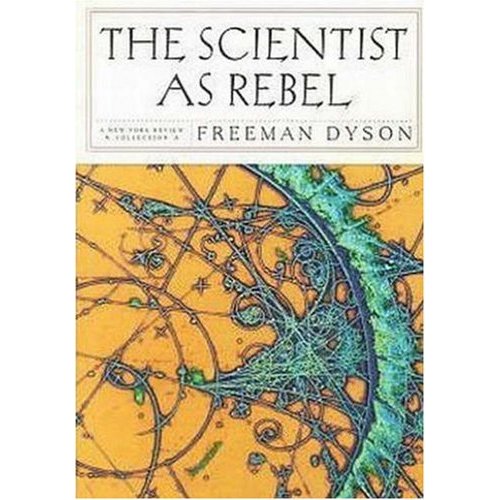
Freeman Dyson: The Scientist as Rebel

Freeman Dyson is a strange scientific blend of wise and moderate conservatism and pioneer of iconoclasm. He advocates cold analysis but loves what is strange. I just read The Scientist as Rebel, a wonderful book where everyone can find his or her share of intellectual stimulation.

Any relationship with innovation or entrepreneurial high-tech? Very little directly, and the subject is closer to my other articles on the books about reflexions on science (Smolin, Ségalat for example). There are actually many connections between scientific research and technology innovation, not the least being the question of creativity. Another tenuous link: he is the father of Esther Dyson, famous venture-capitalist in Silicon Valley.

Failure is another example. In an interview Dyson gave before writing this book said about its role: “You can’t possibly get a good technology going without an enormous number of failures. It’s a universal rule. If you look at bicycles, there were thousands of weird models built and tried before they found the one that really worked. You could never design a bicycle theoretically. Even now, after we’ve been building them for 100 years, it’s very difficult to understand just why a bicycle works – it’s even difficult to formulate it as a mathematical problem. But just by trial and error, we found out how to do it, and the error was essential. The same is true of airplanes.” From Freeman Dyson’s Brain

The Title “The Scientist as Rebel” also reminds me the quote by Pitch Johnson which I had mentioned in Entrepreneurs and Revolutions: “Entrepreneurs are the revolutionaries of our time.” And he had added: “Democracy works best when there is this kind of turbulence in the society, when those not well-off have a chance to climb the economic ladder by using brains, energy and skills to create new markets or serve existing markets better then their old competitors”

In this book, Dyson writes about ethics, religion, climate change and about scientists as different as Gödel, Erdös, Hardy, Oppenheimer, Feynman of course, Teller the indefensible, and Thomas Gold whom I had never heard of.

The chapter is called “A Modern Heretic.” Gold has covered topics as diverse as
– the physiology of the ear (validated 30 years later despite resistance of many kinds),
– the instability of Earth’s axis of rotation,
– the abiotic origin of natural gas and oil, (i. e. not derived from the degradation of living creatures)
– the existence of life within the Earth’s crust,
– the interpretation of pulsars.
He had no fear of making mistakes on such topics as
– the steady state universe,
– the moon’s surface being covered with a fine rock powder.
Gold was “an intruder but certainly not an ignorant” and added that “science is not fun if the scientist is never wrong.” I just found another blogger article on Gold: The Radical Ideas Of Thomas Gold.

Dyson has written a challenging, exciting book, and I can only encourage its discovery!

Prophet of Innovation – Joseph Schumpeter and Creative Destruction

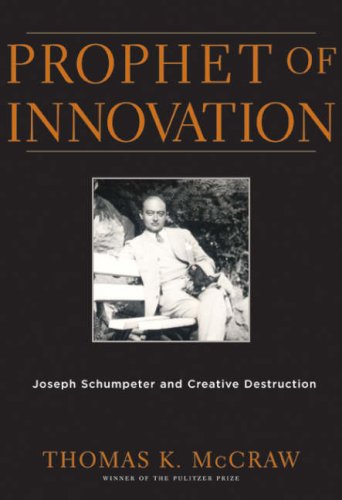
This is a (very long) summary of “Prophet of Innovation – Joseph Schumpeter and Creative Destruction” by Thomas McCraw, Harvard University Press, 2007. In fact, these are extracts from the book and I mentioned the pages as much as I could. If you are courageous enough to read until the end, you might be interested in buying the full book. Schumpeter is clearly the Prophet of Innovation and Thomas McCraw’s book is a great piece of historical and economic analysis. It is about Schumpeter life, which is by itself interesting. His life was not simple, a devastating first wedding, a personal bankruptcy, a short experience as a minister of finance, the rise of Nazism; stability [nearly?] came at Harvard with a new wedding. But it is first and foremost an amazing synthesis of what innovation and entrepreneurship are about. I could nearly feel a Schumpeterian when I read these clear explanations, despite the fact that Schumpeter was clearly a conservative. So let me try to summarize what I kept from this 700-page book (including 200 pages of notes).

Entrepreneurs are the agents of innovation and creative destruction [page 7]
Schumpeter especially emphasizes the role of new companies in making innovations that interrupt the circular flow. New firms “do not arise out of the old ones but start producing beside them”. In transportation for example, “it is not the owner of stage coaches who builds railways”. Schumpeter also argues that “the entrepreneur is never the risk bearer. The one who gives credit [that is, provides the necessary capital] comes to grief if the undertaking fails. … Even though the entrepreneur may risk his reputation, the direct responsibility of failure never falls on him. [Page 74]

In his definition, the entrepreneur is not a run-of-the-mill business executive, or even the owner of chief executive of a successful firm. The entrepreneur is “the modern type of captain of industry” – obsessively seeking an innovative edge. […] He is not driven solely by a wish to grow rich or by any other “motivation of the hedonist kind”. Instead he or she feels “the dream and will to found a private kingdom. […] There is the joy of creating, of getting things done, or simply of exercising one’s energy and ingenuity. [He] has some characteristics in common with Max Weber’s “charismatic leader”. [Pages 70-71]

The important players in this process are entrepreneurs and investment bankers, who generate “new purchasing power out of nothing”. The investment banker is not just the middleman standing between savers and users of capital; he is instead “a producer” of money and credit, “the capitalist par excellence”. Schumpeter hammered the function of banks in creating money. Keynes had said to him “there were not more than five people in the world who understood monetary theory”, adding that he, Schumpeter, assumed himself to be one of the five. [On note 21, page 533, the author adds “In the history of American capitalism, banks took a smaller role. This did not mean the United States was any less entrepreneurial, of course. It was the most entrepreneurial country on earth, but not because of its banks. Substantial new businesses were funded through “equity” by wealthy families.]

There are 5 types of innovation [page 73]:
(1) The introduction of a new good – or a new quality of a good.
(2) The introduction of a new method of production.
(3) The opening of a new market.
(4) The conquest of a new source of supply of raw-materials or half-manufactured goods.
(5) The carrying out of a new organization.

An important general lesson is that increases in scales almost always require advances in technology which often reduce marginal costs still further. [Note 35, page 525] Steel and automotive industries are just two examples of his time, or more generally steam, electricity, transistors.

Part II begins with an analysis of why entrepreneurship was never widespread even if there were “early forerunners such as Venice, Florence and the Netherlands.” It was even widely resisted for reasons which are “as much cultural and social as they are economic”. (We are talking about an analysis over centuries from the middle ages until the industrial revolution.)
(1) A conviction that spiritual life suffered grievous damage if people became immersed in materialism.
(2) The absence of a belief in upward social and economic mobility.
(3) No widespread sense of personal freedom and individual autonomy.
(4) The governance of most occupations and crafts by cartels (agreements to divide markets and keep prices high) and guilds (exclusive associations of craftspeople).
(5) Entailed estates market by primogeniture. Entailment (imposition of a specified succession of heirs) and primogeniture (inheritance solely by the family’s eldest son) discourage innovation and risk-taking.
(6) A primitive financial system that lacked paper money, stocks, bonds, or any other credit mechanism.
(7) The absence of the two pillars that support all successful business systems: a modern concept of private property and a framework for the rule of laws.

In 1911, Schumpeter flatly asserted that individual entrepreneurship held the key to economic growth in any country. This explains his fascination of the United States but Schumpeter may have missed that it had a strong entrepreneurial spirit from the start. “Capitalism came in the first ships”. [Pages 145-149] The economy has entered the realm of meritocracy, which is inherently hostile to hereditary class. Entrepreneurship had become a function, not a market of class. [Page 159]

In phase with my quoting Hegel [1] on passion, Schumpeter claims that “no company can ever retain a position at the top of its industry without doing very much more than this – without blazing new trails, without being devoted, heart and soul to the business alone”. Any company [falling into routines] “will soon be overtaken by aggressive, risk-taking competitive entrepreneurs”. “Entrepreneurs need extraordinary physical and nervous energy. The best of them can sustain their efforts on a high level only if they have that special kind of vision – … concentration on business to the exclusion of other interests”. [Page 162] That is why Schumpeter believes in “the Instability of Capitalism”: the whole idea of a capitalist equilibrium is misleading. […] The origins of broad expansions always come from innovations in specific industries, which then ramify into other parts of the economy … such as in textiles, then in steam engines and iron, then in electricity and chemicals. Overall industry-specific innovation does not follow but creates expansion. [Page 163]

He even added that “one cannot assume that capitalism will last forever. No other economic or social system has ever done so, and capitalism may be a transitional phase in a broad movement toward a more egalitarian order. [Note 36 page 566] Outside influences – wars, earthquakes, even many new technologies and inventions – are not the sources of the perpetual changes that characterize capitalism. Instead change is part and parcel of capitalism and it comes from entrepreneurial behavior. [Page 164] Early in the twentieth century, firms such as ATT, GE, Kodak and DuPont set up research departments. They made innovation part of their business routine. At the same time, new firms spring up alongside the giants. […] By definition, innovation causes obsolescence and Schumpeter warns against allowing the old to block the new.

Schumpeter ‘s key point is the insatiable pursuit of success and of the towering premium it pays that drives entrepreneurs and their investors to put so much time, effort and money into some new project whose future is completely uncertain. Financial speculation, though it gets bad press is an important part of the process [page 178]. The entrepreneur tries to preserve his high profit through patents, further innovation, secret processes and advertising – each move an act of aggression [Page 255]. Entrepreneurs reduce cost, then prices, stimulate demand and enable larger volumes. The dynamic process will come many times: “all successful firms have been entrepreneurial at some point, though a given company is certain to be more entrepreneurial at one point and less so at another. When their innovations dwindle, firms begin to die.” [page 181]

Part III – Business cycles – 1939, Capitalism, Socialism and Democracy – 1942, History of Economic Analysis – 1954. “Using theory, statistics and history” is a Schumpeter motto, you cannot just do one approach, you need to combine the three to make good analyses.
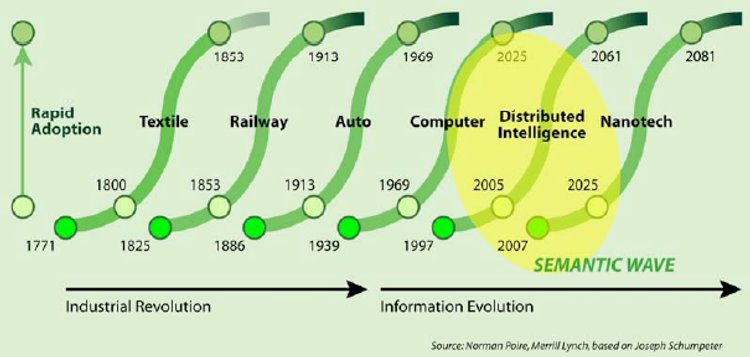
Business Cycles. Innovation propels the economy. New firms, entrepreneurs drive innovation. All companies must react, adapt. Meanwhile, powerful elements resist major innovations. Nobody ever is an entrepreneur all the time and nobody can ever be only an entrepreneur. The entrepreneur not only innovates but also carries day to day management. The entrepreneur may but need not be the person who furnishes capital. It is leadership rather than ownership. [Again] Risk bearing is no part of the entrepreneurial function. It is the capitalist who bears the risk. [Pages 254-255] A major theme: “the extreme difficulty of changing traditional ways of doing things”. [Page 257]

Schumpeter places heavy emphasis on the role of marketing. It was not enough to produce satisfactory soaps, it was also necessary to induce people to wash. [Page 258] Then he studies cases: textiles (cotton vs. silk) [page 258], rail [page 261], finance [page 264], automobile [page 266], steel [page 267], electricity [page 268]. But McGraw claims book is a relative failure. He apparently got lost into too many details.

Schumpeter also draws sharp distinctions between inventors and entrepreneurs and between inventions and innovations: “The making of an invention and the carrying out of the corresponding Innovation are, economically and sociologically, two entirely different things.” Often the two interact, but they are never the same, and innovations are usually more important than inventions. [page 259] “Necessity may be the mother of invention, but it does not automatically produce innovation” [page 260]. In conclusion of his book, “without innovations, no entrepreneurs; without entrepreneurial achievement, no capitalist returns and no capitalist propulsion. […] Stabilized capitalism is a contradiction in terms.”

In 1942, he published Capitalism, Socialism and Democracy. It is interesting to see the connections between Marx, Keynes and Schumpeter. They may disagree, but there was some respect due to the broadness of the vision and ambition. “The book begins with a penetrating and wholly serious fifty-eight-page analysis of Karl Marx’s work. […] Marx was the first economist of top rank to see and teach systematically how economic theory can be turned into historical analysis.” But Schumpeter thinks Marx was wrong because of “his oversimplified view of social classes”, not just capitalists and proletarians, he failed to distinguish the entrepreneur from the capitalist, and the wrong argument that “society’s total income would steadily fall”.

His first question was “Can capitalism survive? No I do not think that it can.” Even if capitalism has produced the greatest per capita output of goods ever recorded, […] in favor of the lower income groups, […] by virtue of its mechanisms […] thanks to businesses of grand size. Then Schumpeter introduces his famous term, “creative destruction”. It is an essential fact of capitalism. It is what capitalism consists in and what every capitalist concern has got to live in. He then criticizes the idea of perfect competition, which does not take business strategy into consideration. There is no perfect information. And there is a continued emergence of new products and new ways of doing things, which is the fundamental impulse that sets and keeps the capitalist engine in motion. Perfect competition and static assumptions are wrong [2]. The economy is about oligopolies, which engage in mass production with very large capital investments. All this does not ease equilibrium analysis or mathematical modeling. [Pages 348-354]

Schumpeter proposes a sharper focus on products and marketing as elements of competition. It is not [that kind of perfect] competition that counts, but the competition from the new commodity, the new technology, the new source of supply, the new type of organization. The economics profession did a capital crime: failing to acknowledge that continuous innovation is endogenous to capitalism. It should focus on change, […] with the mistaken idea that monopoly and big business are the same thing. Long-run cases of monopoly are almost non-existent. Technical innovation and organizational remodeling, not monopolistic profits, account for the prosperity of most great companies. Schumpeter identifies capitalist entrepreneurship with technology progress itself. As a matter of historical record, they were “essentially one and the same thing”, the first being the propelling force of the second.

The tendency of some industries to grow into big business while others do not has seldom been well understood, either today or during Schumpeter’s time. […] The economics literature on why firms grow large is very extensive and often controversial. [Note 55, page 613] Many scholars debated whether Schumpeter believed innovation to be helped or hindered by the rise of big business (see the Economist post – https://www.startup-book.com/2012/01/11/innovation-is-not-about-small-or-large-its-about-fast/ ). Indeed Schumpeter could seem inconsistent. He usually argued that size in and of itself does not preclude innovation, and can promote it in ways that would not occur in small businesses. He did not usually argue that small business was inherently less innovative and he admired entrepreneurial startups throughout his career. A typical misreading: “Schumpeter believed that technological innovations are more likely to be initiated by large rather than small firms” is inaccurate, but plausible! [Note 25, page 639].

His political analysis of capitalism, socialism and democracy may look dated even if it has interesting points. But I see bias as we all have when we talk about convictions or faith… [indeed see below!] Still, let me go on quoting. “Capitalism has developed the seeds of its own destruction. Persons of supernormal ability and ambition can reach a much higher standard of living, provided they would pursue business careers. Capitalism substituted impersonal efficiency to the feudal features. So that people have “the individualistic rope” to hang themselves. The bourgeoisie is politically helpless and unable not only to lead its nation, but even to take care of its particular class interest. Furthermore capitalism and in particular big business undercut not only the aristocracy, but also many small producers and merchants. A share of stock for tangible assets takes the life out of the property. And if this trend goes on long enough, there will be nobody left to defend the bourgeois values” [Page 357].

Large businesses do not command the same degree of loyalty from their workers. Employees take economic progress for granted but they have little emotional attachment to the success of their companies. (And because of the uncertainty), they feel personally insecure. Because people have come to expect a continuous flow of new products and methods, innovation itself is being reduced to routine, progress is depersonalized and automatized. Individual entrepreneurship becomes less salient. By reducing everything to a calculus of costs and benefits, it rationalizes. Economic efficiency is only one of the many human goals and not necessarily the most important to every individual so that the future of capitalism cannot be assured on the basis of is superior economic performance. (And do not forget, there are always cycles and crises…) [Page 358]

His criticism of socialism is also dated, but here it is: a socialist system must replace an economy based on mature big-business capitalism, through routine governmental action and will take 50 to 100 years to complete. The noneconomic attributes need to be primary motives but worth the price of reduced economic efficiency. Can innovation impulses be released as in capitalism this way? Furthermore, it has to be assumed that uncertainties or imperfect information are not an issue, that improvements can be disseminated by a central authority, that business cycles are eliminated, that unemployment does not exist, that the disappearance of the private sphere eliminates friction and antagonism. One way is to nationalize big business while neglecting small producers with a way to motivate managers. (Comment: Schumpeter analyzed Germany, the UK and the USA; not France, which in a way has some attributes of his description). [Page 360]

Then he switches to the analysis of democracy. Schumpeter is not sure of what common good is as it may mean different things for individuals. And it is not the same thing as the choice of the majority. He compares voters and voting to customers and buying, with advertising/marketing as similar. McCraw adds “it is as if he were discussing capitalism in America and democracy in Europe.” “He wrote on democracy as simply a mechanism, while ignoring its powerful ethical dimension.” [Pages 369-71]

[In an over-simplistic manner we can see the old tension between left-weak-collective- equality and right-strong-individual-freedom. In the French motto, I am not sure where we put fraternity.] McCraw quotes Churchill for this chapter: “The inherent vice of capitalism is the unequal sharing of blessings; the inherent vice of socialism is the equal sharing of miseries”. But as a conclusion, imperfect competition is according to Joan Robinson the most brilliant part of the book. (With a background in math, I particularly appreciate Schumpeter’s comment: “There is nothing in my structures that has not a living piece of reality behind it. This is not an advantage in every respect. It makes, for instance, my theories so refractory to mathematical formulation.” Indeed, there may have been far too much math in economy and not enough history…)

The part on World War II shows that the combination of high public investment (military spending) and individual entrepreneurship & large scale business may be the winning recipe, a combination of Keynes and Schumpeter, even if they were academic adversaries… [Pages 383-389]. What makes the book really interesting is indeed noticed by the author himself: “by comparison with other major theorists stretching from Adam Smith to Keynes, he insisted on giving opposing arguments not only their due, but far more.” And this will be confirmed by his History of Economic Analysis published posthumously in 1952.

For Schumpeter, the troubling issue was not economic at all but ideological; widespread prejudice against business, held over from the New Deal. Thus entrepreneurs would have to do their work “in the face of public antagonism, under burdens which eliminate capitalist motivations and make it impossible to accumulate venture capital”. (In these last two words, Schumpeter made early use of a term that became commonplace four decades later. He did not invent the phrase – its origin is obscure – but was one of the first economists to use it.) [Page 424]
The History of Economic Analysis is his grand ‘oeuvre. McCraw quotes Moby Dick’s Melville: “To produce a mighty work, you must choose a mighty theme”. The book “tracks important thinkers down both productive and non productive paths. It shows how potentially seminal ideas often get lost, only to be rediscovered decades or even centuries later.” He also describes bias. “All human beings grow up having subconsciously developed a sense of how the world works. […] All analysis begins with a distinct intuition that is almost inherently ideological, and usually our way of seeing them “can hardly be distinguished from the way in which we wish to see them. This is a dangerous situation for researchers.” […] “The first thing a man will do for his ideals is lie.” [Page 456]

As an example, Schumpeter notes that starting with Adam Smith, the classical economists made use of the term “stationary state” to describe both an existing situation and some condition they thought would materialize in the future, persisting to the stagnationist thesis – the notion that the age of innovation has passed and “mature” capitalism was at hand. And Mill’s ill-advised identification of the entrepreneur with the risk-bearer “only served to push the car still further on the wrong track.” Today in the twenty-first century, many economists add entrepreneurship to the three factors of production as traditionally conceived; land, labor and capital. That addition owes a very great deal to Schumpeter’s own work. [However] entrepreneurship is very difficult to measure and virtually impossible to express mathematically. Gains, returns only emerge when an entrepreneur innovates in some important way – and then disappear as the innovation spreads. Meanwhile they have contributed to general economic growth. The best example is the offering of a new product or a new brand. There are means available to the successful entrepreneurs – patents, strategy and son on for prolonging the life of his monopolistic or quasi-monopolistic position and for rendering it more difficult for competitors to close up on him. By connecting strategy to entrepreneurship in his History, Schumpeter shows that he has come to understand the connection far better than he did before. [Page 458] On the anecdotal side, Schumpeter understands better Keynes: “the arteriosclerotic economy whose opportunities for rejuvenating venture[s] decline while the old habits of saving form in times of plentiful opportunity persist.” Keynes saw the need to invest, Schumpeter the need for innovation. The problem is you need both at the same time.

Schumpeter represents advances in economy reasoning as nonlinear. History of Economic Analysis succeeds where much economic writing of our own time fails, having sacrificed the messy humanity of its subject on the altar of mathematical rigor. Above all else, Schumpeter’s History is an epic analytical narrative. It is about real human beings, moored in their own time, struggling like characters in a novel to resolve difficult problems. [Page 461]. Compared to Keynes, Schumpeter had no reason to think that life was something a person could be expected to enjoy automatically. It was one thing to grow up in Britain – stable, prosperous and ever-victorious – and quite another to be a child of vanquished and vanished Austria. No wonder his vision differed so thoroughly from that of sedentary Keynes as well as those of Smith, Ricardo or Mill. Unlike any of them, Schumpeter had to reinvent himself multiple times. For every episode of destruction, he tried to convert his experience intro a recreation or reinvention of some aspect of economics. [Page 468]

As an intermediate conclusion, again his famous quote in Business Cycles: “Without innovations, no entrepreneurs; without entrepreneurial achievement, no capitalist returns and no capital propulsion. The atmosphere of industrial revolutions – of “progress” – is the only one in which capitalism can survive”

In the last years of his life, he analyzed again what economics is about. The combination of narrative, numbers and theory could exercise a power that none of the three could do alone. Theories are stylized stories; but without real stories and statistics to back them up, they lose much of their force. He also emphasized a “principle of indeterminateness”, contrasting it with Marx economic determinism and one-size-fits-all fiscal Keynesian prescriptions. Time and chance made most economic predictions risky and all determinism futile. Wars and natural disasters disrupted even the most sophisticated forecasts. Equally important for this principle, is the human element of leadership. “Without committing ourselves either to hero worship or to its hardly less absurd opposite, we have got to realize that, since the emergence of exceptional individuals does not lend itself to scientific generalization, there is here an element that, together with the element of random occurrences with which it may be amalgamated, seriously limits our ability to forecast the future.” Schumpeter quest for exact economics had finally ended. [Pages 475-476].

After Schumpeter’s death, comments were many. “Schumpeter’s writings provided an ideal corrective to Keynes’s fatal omission of innovation’s important role in capitalist evolution. Conversely, Schumpeter’s own shortcomings lay exactly in the areas that Keynes’s theories illuminated – where consumption and investment could be considered as aggregates; where analysts could think in macro-economical terms about the total output of national economies.” On entrepreneurship, “his vision of the innovating entrepreneur, who did have glamour and was not dominated by middle-class values, could grow.” [Page 492].

Finally McCraw summarizes Schumpeter contributions:

“Innovation in the form of creative destruction is the driving force not only of capitalism but of material progress in general. Almost all businesses ultimately fail and almost always because they fail to innovate. Only through innovation and entrepreneurship can any business except a government-sponsored monopoly survive over the long term.” Schumpeter finally thought that entrepreneurship could occur within large and medium-sized firms as well as in small ones, despite bureaucratic obstacles. Thus “new men” founding “new firms” were still vital but they were no longer they only agents of innovation. “The history of the information technology industry confirms his thinking especially well – both the scrappy young firms in Silicon Valley that either perished or remained small-to-medium-sized and others that grew to be giants (Hewlett-Packard, Intel, Oracle, Cisco Systems, Amazon [sic], Google, Yahoo). Outside of Silicon Valley, the same pattern obviously holds for Microsoft and Dell Computer, founded by the teenagers Bill Gates in 1975 and Michael Dell in 1984”.

Two other topics were important, the money question and business cycles. “Daily transactions totaling trillions of dollars are driven by intra-corporate repositioning on currencies, by trading in stocks and bonds by funds management. This pattern fits perfectly Schumpeter’s theory of innovation and credit creation as the touchstones of capitalism.” […] “The rise of mixed economies both in industrialized and emerging countries (the major legacy of Keynes) has tended to flatten the business cycles” [Page 499]. He adds on a related note that we may have forgotten the deepness of “the crises in the 1780s, 1810s, 1830s, 1850s, 1870s, 1890s, 1907-08, 1920-21 and of course 1929-39. In 1929, the Dow Jones peaked at 381, in 1932, it was at 41. After the 40s, the business cycles were much smoother and brought under greater control”. Clearly the 2000 Internet crisis and 2008 financial crisis seem to be smoother.

At the same time, in the new world of academic economics, neither the Schumpeterian entrepreneur as an individual nor entrepreneurship as a phenomenon attracts much attention. A focus on the topic would be a quick ticket out of a job. But paradoxically, they’ve been broad enquiries into the nature of innovation. What is it that drives innovation? Several hundred case studies confirm Schumpeter’s thesis. [Page 500] He further adds a long bibliographical note, an opportunity for new readings! I noticed authors I do not know [yet!], such as Frederic Scherer and Mark Perlman [3].

“Schumpeter regarded inequality of opportunity as unacceptable, but he also held that the results produced by inequality of effort were deserved. He found disparity inevitable and effective in stimulating innovation Schumpeter made also a very subtle point: that the benefits to society of important innovations and the lavish profits accruing to winning entrepreneurs must be measured against the total cost of time and money invested in the same industry by unsuccessful entrepreneurs as well. They receive no returns for their efforts, but their competitive pressure spurs the winners to victory – to the great benefit of society. That the winners receive all the rewards is a mere detail – and a temporary one at that, since the “competing-down” element eventually diminishes that profit, as imitators copy the innovation”. [See my post scriptum on bias]

Not until the late twentieth century, long after Schumpeter’s death, did the significance of his emphasis on innovation, entrepreneurship, business strategy, creative destruction, and ample credit as the wellsprings for economic growth become fully clear.

Post-Scriptum: McCraw’s provides also many and interesting comments about Schumpeter views on the academic world: “A scholar’s most creative years came between the ages of twenty and thirty. For this reason, he urged students and colleagues to avoid the distractions of marrying young. Instead, they should concentrate on their work – sifting their brains for fresh ideas.”

About universities [page 416]: “the layman thinks he knows what a professor is. However, this term denotes a group of people who differ widely in type, function, and mentality. There is the academic administrator; the university politician; the teacher in the sense of a man who imparts current knowledge; the teacher in the sense of a man who imparts distinctive doctrines or methods; the scholar in the sense implied by “learnedness”; the organizer of research; the research worker whose strong point I ideas; the research worker whose strong point is skillful technique, experimentation and its counterparts in the social sciences. And all these – and others – are very different chaps and hardly ever fully understand and appreciate one another. Yet it takes all of them to make a modern university and it takes recognition of all these types and the way they cooperate or fail to cooperate in order to understand what a university is and how it works. And he who insists on merging them into a unitary professorial type and leaves it at that will obliterate not only secondary details, but essentials.”

About mathematics: Schumpeter apparently was never at ease with mathematics even if on his own, he performed daily exercises in calculus and tried to master advanced techniques such as matrix algebra. “Whatever the other advantages math may have, it is certainly the purest of human pleasures.” [Page 470]

About scientific bias: During a famous conference in 1948, he accused his fellow professionals in blindness to their own subjective prejudices. In economic analysis, the outcome of “science” depended in large part on the social situation of the individual thinker. “Logic, mathematics, physics and so on deal with experience that is largely invariant to the observer’s social location and practically invariant to historical change: for capitalist and proletarian, a falling stone looks alike. The social sciences do not share this advantage. It is possible, or so it seems, to challenge their findings not only on all the grounds on which the propositions of all sciences may be challenged but also on the additional one that they cannot convey more than a writer’s class affiliations and that, without reference to such class affiliations, there is no room for the categories of true or false. He adds “Model building consists in picking out certain facts rather than others”. [Page 477]

During that conference, he said that Marx was wrong in the increasing misery of the masses, Keynes was wrong on stagnationism and a state of permanent inanition without government stimulus. He criticized the distaste for big business, where only monopolies should be fought. “Schumpeter had come to realize, that like all other analysts, he had his own vision and accompanying ideology. […] What should be done? Nothing! So long as intellectual freedom reigns, one economist’s skewed vision will be balanced by another’s. Ideological vision is a good thing which motivates the scholars to do their work. [Pages 479-483].

About social “sciences”: The relationship of economics to the other social sciences is a complex story. There has been an on-going de-emphasis of courses in economic history in favor of ever more refined mathematical techniques, which have also invaded sister disciplines such as political science, sociology and economic history. After a lifelong struggle, he concluded that exact economics can no more be achieved than exact history, because no human story with a foreordained plot can be anything but fiction. Because of the infinite mixture of influences on human behavior, no two real economic situations are ever exactly alike [Page 504].

Notes: [1] “Passion is considered as something which is not good, which is more or less bad: humankind should not have any passion. But passion is not exactly the right word for what I just designated here. According to me, human activity derives in general from individual interests, from special aims or, if one prefers, from selfish intents. I mean that mankind puts all the energy of its will and of its nature to serve its goals, while sacrificing any other ambition, or rather while sacrificing everything else. […] We shall say therefore that nothing was ever done without being supported by the interest of those who collaborated. This interest, we shall call it passion when, while pushing back all other interests or goals, the entire individuality projects itself on its objective with all the inner fibers of its will and concentrates on this goal with all its strengths and all its needs. With this meaning, we must say that nothing great in this world has ever been accomplished without passion.” Hegel in Reason in History.
[2] Analysis never yields more than a statement about the tendencies present in an observable pattern. And these never tell us what will happen, but what would happen if the continued to act as they have [Note 11 page 636].
[3] Here are some books mentioned by McCraw
– Entrepreneurship, Technological Innovation, and Economic Growth: Studies in the Schumpeterian Tradition (The International Schumpeter Society Series) Frederic M. Scherer (Editor), Mark Perlman (Editor), 1992
– New Perspectives on Economic Growth and Technological Innovation. Frederic M. Scherer, 1999
– The Growth of the Firm: The Legacy of Edith Penrose by Christos Pitelis (with a chapter on Penrose and Joseph Schumpeter on innovation, profits, and growth).

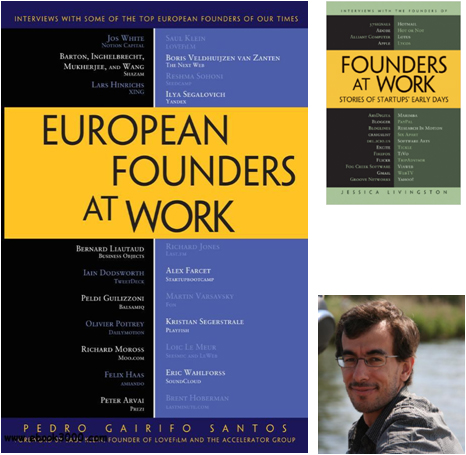
European Founders at Work

European Founders at Work is a very interesting book. It is the perfect complement to Founders at Work, particularly for the European dimension.

One comment though, I noticed 8 UK projects out of a little more than 20 and these 20 are mostly Software or Internet. More diversity may have been great. This being said, the lessons are great! Here are some… (and you will learn much more by reading the book entirely!)

About the US Market (for Europeans)

“I think that Europe has a lot of credibility in certain sectors, particularly media and the creative industry, but I think that in technology, generally, most of the world’s biggest companies were founded in the US and, therefore, the expectation in the US market is that in technology, they are going to be talking and buying from US companies. […] it’s important to become a US team in the US market. […] I think you need to be prepared to make a pretty big investment in the US and you need to be prepared to build up the business for several years,” Jos White – MessageLabs

“I would say that the IT sector, and especially enterprise software, is extremely global but remains dominated by US companies. There are very, very few examples of European IT and software companies that have managed to go global. I believe, the only way to make that happen is to go global very, very quickly, as we did from the outset.” Bernard Liautaud – Business Objects

“In my experience, if you come from a smaller European market, like Hungary or Sweden, you tend to think that it’s a nice next step to go to UK or Germany. The issue is that if you become successful there, it is still only a sixth of that of the US market. So, if you get a US competitor, you immediately become a regional player instead of a global player. So, very early on, I said we shouldn’t even be thinking about opening up offices in Frankfurt or in London because the way to make it globally was to first prove that we can make it on the world’s biggest market, which is the US. That’s going to be the truth at least for the next ten to fifteen years.” Peter Arvai – Prezi

“I think the reality is that it’s not about Europe vs. Silicon Valley. The best entrepreneurs in Europe understand Silicon Valley very well. They have spent time in Silicon Valley and developed relationships in Silicon Valley. Take all of that and all of the value that comes from that because you’re a fool if you think that Silicon Valley isn’t the most sophisticated, vibrant place for technology start-ups on the planet. It probably will continue to be so for the next twenty-five to fifty years because of the network. And the ecosystem is so profound there and keeps on getting stronger with Zynga, with Twitter, with Facebook, etc. I think any European entrepreneur or any entrepreneur in this space that doesn’t want to spend time or learn from Silicon Valley is foolish. But I think there’s a lot of things that you can learn and be aware of as an entrepreneur if you’re not in Silicon Valley, that you can use to your advantage.” Saul Klein – LoveFilm


The interviewed entrepreneurs

About success and failure

“Any successful entrepreneur knows that it was a combination of skill and attitude, with luck, that really leads to success. And there are very fine lines between success and failure” Jos White – MessageLabs

“I learned that the game is never over: you should never give up, stubbornness is somehow a requirement to lead a company to success, and the road to success is inevitably paved with failures. When things start to go wrong, the worst thing to do is panic and change everything.” Olivier Poitrey – DailyMotion

“I think as an entrepreneur you fail all the time. You’ve got failure built into your business. Right? So you don’t really keep track of failure. You never really fail. I think that’s essential when you’re an entrepreneur, that you’re not afraid of failure. You embrace failure. Your whole business is based on trying out stuff, being ready for stuff to fail and just taking the next step as soon as you fail.” Boris Veldhuijzen van Zanten – The Next Web

About ambition

“Come up with an idea which is impossible then try to find somebody who can make it un-impossible and then do deals which have never been done before.” from the Shazam founders

“[A new trend is] You definitely see entrepreneurs being extremely ambitious.” Reshma Sohoni – Seedcamp

“I guess one advice is it’s more exciting if you feel like you’re changing the world in a positive and innovative way. So we’d love to see more of those out of Europe.” Brent Hoberman – lastminute.com

“But it is probably harder in Europe in that it innovates less, because you have less-crazy investors financing crazy entrepreneurs. [Advice:] One, international. Two, innovation and no copycat. And then, three, big ambition.” Loic Le Meur – Le Web

About the team

“There are very few founders that stay with their businesses beyond five years and quite often, in my opinion, it’s because they didn’t manage to surround themselves with the right team.” Bernard Liautaud – Business Objects

“But also obviously you hire people that are better than you” Ian Dodsworth – TweetDeck

“I also learned how hiring the right people from the start is key: the very first people to join will shape the company’s personality. And finding talented people you are pleased to work with is very important to generate emulation from new hires. Olivier Poitrey – DailyMotion

“A common mistake is building the team. If they’re quite scared to part with something … Like when they’re quite scared to part with equity or bringing on mentors. “Do you want to be a big fish in a small pond or a big fish in a big pond?” They’re too closed with their equity and they try to do everything.” Reshma Sohoni – Seedcamp

“Another common mistake is like a cliché now, but it’s just the classic: “I’ll just build another feature and I’ll focus on my product.” Alex Farcet – Startupbootcamp

About entrepreneurship

“The main advice is just start. Many people have hundreds of ideas, but they never really start their own project. And if you fail, start again. Entrepreneurship is, in my point of view, the best and the only way to personal development” Lars Hinrichs – Xing

“There are a lot of moments like that where you don’t know what you’re doing, but this was the whole point.” Giacomo Peldi Guilizzoni – Balsamiq

“Do it.” It’s the best decision I’ve ever done in my whole life. […] And I was studying engineering as well, and I had one hundred classmates. And I know that almost zero of them actually went on to start a company, which is kind of crazy because I know a lot of them have good ideas. But none of them quite felt that they were able to pull it off.” Eric Wahlforss – Soundcloud

“I have been lucky enough to be born with optimism.” Richard Moss – moo.com

“Hang in there. Don’t give up. I heard that most start-ups fail because the founders stop working on them.” Richard Jones – last.fm

“I would be realistic and I would say, “Look, if you think you are the lucky sperm that’s going to get the ovule, go ahead and start the business.” It’s a very difficult thing to do with a very high probability of failure. But it is essential for society and even those who try and fail are also helping society. So I encourage people to try, but at the same time warning them how difficult it is. I am tenacious and I am sometimes lucky and I’m good at spotting trends. But I was also lucky. Most people who try businesses fail. That’s the truth and people should be warned about that.” Martin Varsavsky – FON

As a conclusion let me quote Saul Klein in his foreword… “Right now, Silicon Valley is peerless at both supporting innovation and creating serious scale. There’s been no master plan, but the 60-year interplay of government as an early catalyst; academia and established companies as early customers and sources of talent; and of course, investors willing to take risks and a long term view, have given entrepreneurs fertile ground to sow seeds and try to grow monsters with dragon’s teeth ready to conquer the world.You need every element of this ecosystem working perfectly to create monsters. This is serious progress. But the straight facts are that while we are unquestionably masters of invention in Europe, we don’t yet have the ecosystem— or perhaps the attitude. […] For me, the big question is if we are truly able to do this.”

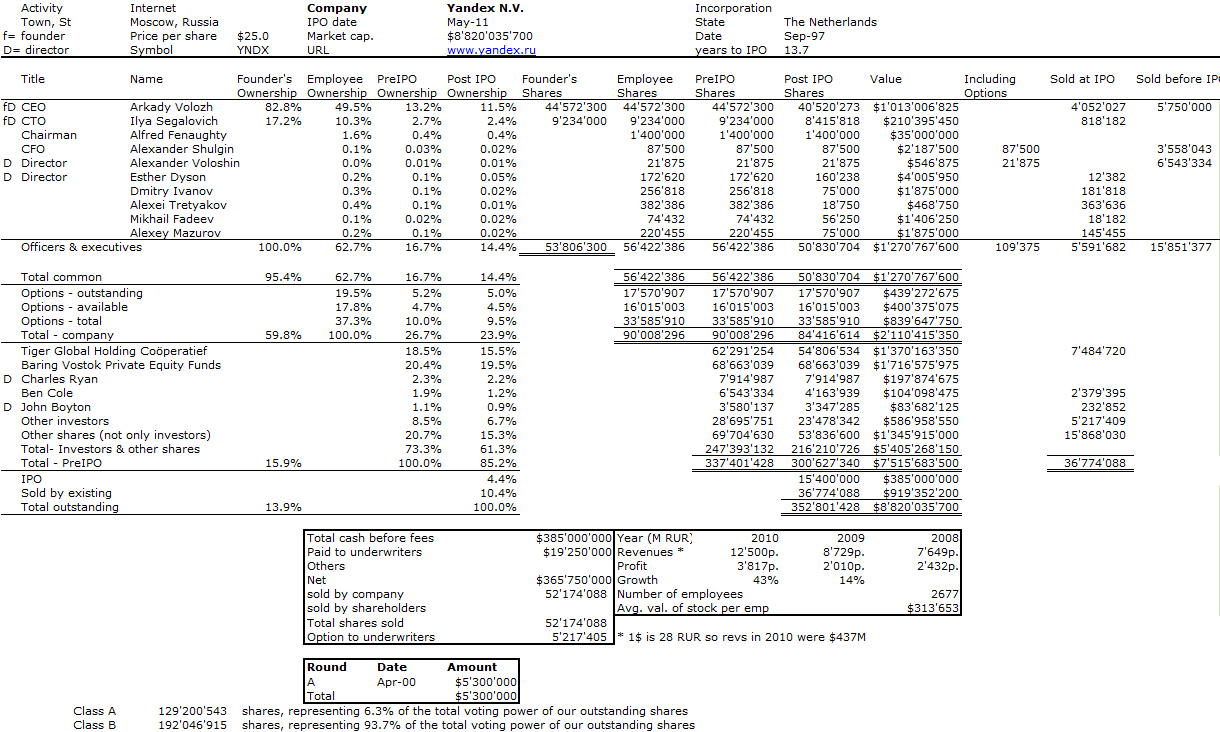
Post Scriptum: I am not finished yet. I love to add cap. tables and not so many of these entrepreneurs are running a publicly quoted company. Strangely enough, one is Russian, Yandex. Its foudner and CTO says something great about sales: “I think one of them is when you create a software product, you have to learn how to sell it, you have to learn how to make it a product. It’s a very basic skill. I think every engineer has to try that at least once, to sell the software he created, regardless of how bad it is. No matter how unpolished your product is, you have to try to explain why it is good for someone else.”

Here is Yandex amazing cap. table…

Click on picture to enlarge

After the lean startup, the anorexic startup

You must read The Anorexic Startup. Just because it is a funny tale about start-ups. More precisley author Mike Frankel claims it is a “A Tale of Sex, Drugs, and C++”. You will follow entrepreneur and hero, Dale Schmidt, from Day 37 to Day 155 of his great adventure!! You can either download the 15-page pdf on the author’s site or please him by buying it on Amazon for $1.20!

Following my review of The Lean Startup, the author of The Anorexic Startup contacted me and asked what I thought of his work. I read it, smiled first and then laughed. I love this short story and the 10-20 minutes it takes to read is worth your time. Realistic I am not sure, but certainly close to many true stories. The shortest and probably among the best stories I read on the (high-tech) start-up and entrepreneurship words. Enjoy!

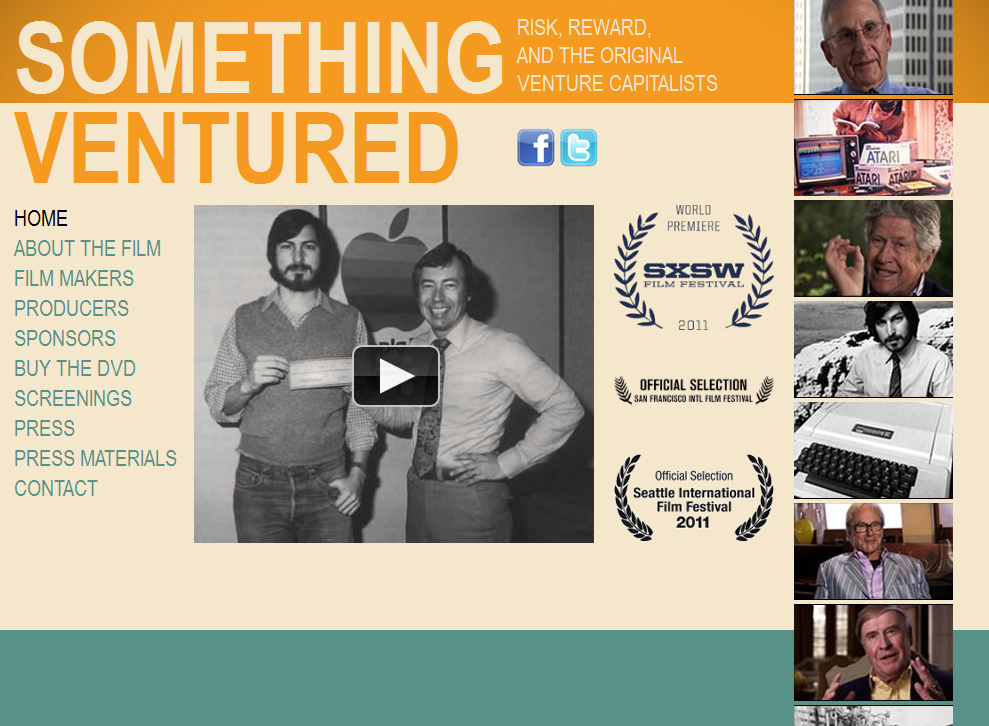
Something Ventured: a great movie

I just watched Something Ventured and I loved it. Loved it so much I plan to have it shown to as many EPFL students as possible in the spring! It is a movie about passion, enthusiasm, energy, changing the world and yes… about money. When asked about their hope about the movie, producers Molly Davis Paul Holland said: Our high hope for this film is that every student that wants to be an entrepreneur—at every level, high school, business school, on corporate campuses—sees it. We want to see more young people fall in love with entrepreneurship… And if we have a quieter, more serious goal, it’s that I want policymakers to look at this and say ‘What can we do to make it easier, not harder, for people in this country to start those kinds of businesses?’

I would have said I hope that every student — at every level — sees it. And the producers added we were trying to explain our vision for the movie and said, ‘What we are envisioning is a movie like Reds [Warren Beatty’s 1981 film about the original Bolsheviks], where you go back in time to talk about an exciting period — in that case 1917 Russia — and ask people in the present day what it was like back then. Dan said ‘Ok, so you want to make Reds but without the Communists.’ That is ultimately what came about: A really beautiful dialogue with really interesting men and the people they financed.

“A Film About Capitalism, and (Surprise) It’s a Love Story.”

This is the title of another article about the movie, where the journalist says “moviegoers can see what might be the rarest bird in the documentary world: a genuine love story about capitalism.” Somewhere else, the moviemaker, Dayna Goldfine explains: “I think what compelled us to take this one on, even though it is a positive view of business, was, one, it’s a chance to do this kind of alternative view. But also, what these guys were doing – both the entrepreneurs and the venture capitalists – was creating real products. So much of what has come down in terms of the financial tragedy of the last few years has been caused by the investment bankers –people who were really just creating financial instruments, as opposed to changing the world with technology by creating or funding an Apple Computer, or a Cisco Systems, or a Genentech”. Co-moviemaker Dan Geller adds: “I wouldn’t say that money was incidental – money was important – but the overwhelming enthusiasm was for taking these brilliant ideas and these inchoate technologies and making something earth-shattering with them. That’s the energy, I think, that comes through in these stories.”

Yes it is a movie about capitalism, about business. But it is also a movie about enthusiasm, happiness, failure also. It begins in 1957 with Fairchild and Arthur Rock. It could have begun with French expatriate Georges Doriot. A professor at Harvard who supposedly taught manufacturing (in fact it was about how many glasses to drink at a cocktail party and how to read newspapers – go to obituaries), Doriot did not create venture capital with ARD (even if he funded Digital Equipment – DEC) – Rock created the term later, but Doriot inspired most of the heroes of the movie: Tom Perkins, Bill Draper, Pitch Johnson, Dick Kramlich. And these guys funded Intel, Atari, Apple, Tandem, Genentech, Cisco. (The movie tells stories from the 60s to the 80s, but Google, Yahoo, Amazon, Facebook could have been added). Indeed with the movie, the Social Network, it’s the best movie I have seen about high-tech entrepreneurship. What I had nearly forgotten in The Social Network is the closed Boston society (Zuckerberg desperate efforts to enter high-end social clubs). Here also, the Wild West explains its success through openness and risk taking.

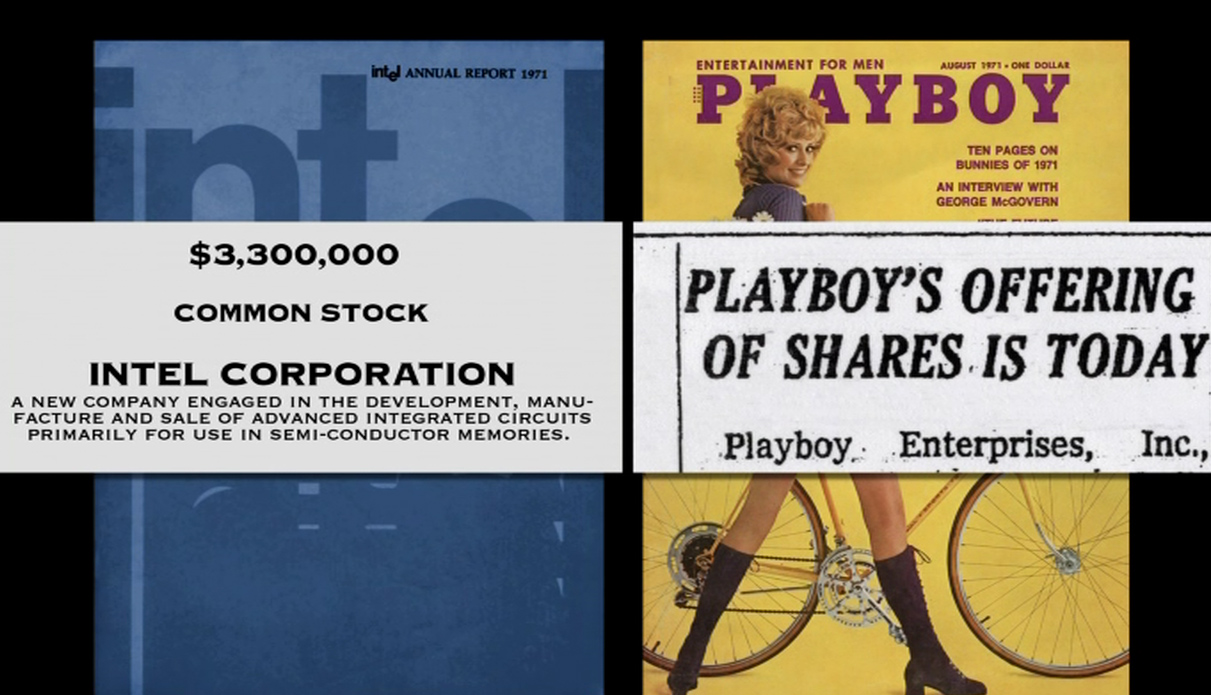
And the authors did not cheat. It is also about painful memories, how Powerpoint ended up in Microsoft hands, maybe because the entrepreneur had found it too tough before or how one of the rare women in this world, Sandy Lerner, the co-founder of Cisco, may have not forgiven her firing from the company she had created: “you gotta understand the game that you’re in. […] Look, there wasn’t a box for me.” So yes, it is also about failures, “living deads”, but there is a “feel good” attitude, funny moments, such as when Valentine visiting the Atari factory does not recognize the cigarette brands he smokes!! Or when Gordon Moore (the famous Moore law) remembers that Intel went public the same day as PlayBoy.

So if you do not know much (or even if you do know a lot) about Fairchild, Intel, Atari, Tandem, Genentech, Apple, Cisco, and even if you do not care about entrepreneurship, run and watch Something Ventured. Hopefully you will care!

Triumph of the Nerds

When I published Start-Up, a friend and colleague told me: “Why do you want to write something about high-tech entrepreneurship and start-ups. Nobody reads anymore. Make movies, videos!” He may have been right. Now that I heard about a new documentary about Silicon Valley and I will talk about this later in this post, it gave me the opportunity to look backwards. Triumph of the Nerds is a 3-episode (50 mns each) produced in 1996.

It is great, sometimes boring, often funny. Its author Robert X. Cringely is also the author of the related and very good book, Accidental Empires. You can watch the videos on YouTube and read the transcripts on PBS. I found Part I, the best. Part II about Microsoft and IBM is more serious, Part III about Apple is in-between.

First I found the best definition of a Nerd: “I think a nerd is a person who uses the telephone to talk to other people about telephones. And a computer nerd therefore is somebody who uses a computer in order to use a computer.”

Then about the semiconductor industry: “Intel not only invented the chip, they are responsible for the laid-back Silicon Valley working style. Everyone was on a first-name basis. There were no reserved parking places, no offices, only cubicles. It’s still true today. Here’s the chairman’s cubicle… Gordon Moore is one of the Intel founders worth $3 billion. With money like that, I’d have a door.” […] “Only Intel didn’t appreciate the brilliance of their own product, seeing it as useful mainly for powering calculators or traffic lights. Intel had all the elements necessary to invent the PC business, but they just didn’t get it.”

“What was needed was a version of some big computer language like BASIC, only modified for the PC. But it didn’t yet exist because the experts all thought that nothing would fit inside the tiny memory. Yet again the experts were wrong.” And here came … Microsoft … and Apple

Steve Jobs: “Remember that the Sixties happened in the early Seventies, right, so you have to remember that and that’s sort of when I came of age. So I saw a lot of this and to me the spark of that was that there was something beyond sort of what you see every day. It’s the same thing that causes people to want to be poets instead of bankers. And I think that’s a wonderful thing. And I think that that same spirit can be put into products, and those products can be manufactured and given to people and they can sense that spirit.”

Part III talks about how Xerox missed the high-tech revolution and Apple or Adobe used Xerox inventions. The output? “A software nerd is the richest man in the world.” We are in 1996. Gates: “You know, if you take the way the Internet is changing month by month, if somebody can predict what’s going to happen three months from now, nine months from now even today eh my hat’s off to them, I think we’ve got a phenomena here that is moving so rapidly that nobody knows exactly where it will go.”

Yes, it was an Accidental Empire.

There is another documentary Pirates of Silicon Valley but it looks very similar to Triumph of the Nerds, without the humour or Cringely. But the reason of this post, is the recent released of Something Ventured. This I will watch soon and hopefully show at EPFL to students and colleagues.

Here is the trailer:

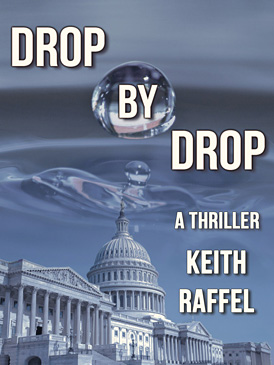
Drop by Drop – Keith Raffel

Here is my promised second post of the day, and this one does not have stats, numbers. It’s about a thriller. A Silicon Valley Washington DC thriller. I discovered Keith Raffel while looking for books about Silicon Valley and he is probably the only author who has created his mysteries (at least two) around the high-tech start-up world. I already commented his dot.dead and Smasher.

Drop by Drop is (unfortunately) not about Silicon Valley and start-ups, even if it begins there. The hero is a History professor at Stanford University though. And I enjoyed reading Raffel’s new work as much as his two previous novels. Do not get me wrong. This is probably not literature compared to Cormac McCarthy‘s Suttree or even Franzen’s The Corrections, but it is entertaining, the stories are good and the personalities always interesting and well-described. It is a good thriller! Though quite different, it reminded me of The Librarian by Larry Beinhart.

There is also something unusual, a feeling I got after reading Raffel’s three books. There is a kind of sadness that all his heroes experience in their relationships with women. Even tragedy. Women are at the same time fragile and strong, fragile because often in dangerous positions. This makes the personalities really interesting.

Drop by Drop is also an ebook. It is in fact the first book I read on a screen. And I could read it! The experience is strange. No page, just chapters and digital references. I read it with white fonts on a black background. And I enjoyed it. I still prefer paper, but I also noticed that I have sold more Start-Up ebooks than paper versions in 8 out of the last 12 months…

Coming back to the story, why didn’t Raffel fly east to Boston, which is the east-coast high-tech cluster, or even to New York, where there is the real life? The answer probably comes from the fact that Raffel has worked “as counsel to the Senate Intelligence Committee overseeing the secret world of the CIA, NSA, and other clandestine three-lettered agencies” before becoming a high-tech entrepreneur. He probably needed to share some his experience. I can tell you something I knew and is confirmed here: the high-tech start-up world may be a jungle with “vulture capitalists” but it is nothing compared to politics and in particular Washington DC!

I would not say there is a lot of action. I would almost say it is a psychological thriller. There is action, but what I liked the most were the hero’s fights with himself. “Our tradition stands for justice. That’s different than vengeance”. It reminds me that even if I am fascinated by President Obama, I am not sure to understand why he said “Justice is done” last May. This is another story. Well not really. This book really adresses in its own way the question: “Does the end justifies the means?” You will need to read it to find your own answer. You will also learn a little more about the American constitution.

From time to time, Raffel remembers he lives in Palo Alto. So let me finish with some quotes:
– About bankers: “For once he had abandoned his Silicon Valley khakis in favor of investment banker pinstripes.” … “An investment banker who takes companies public. And what does that consist of? A great roadshow, generating hype. All his IPO’s, every one, go out above the predicted range. In his business you count winners by dollars, not votes.”… “Investment bankers found themselves talking to the SEC enforcement crew regularly nowadays.”
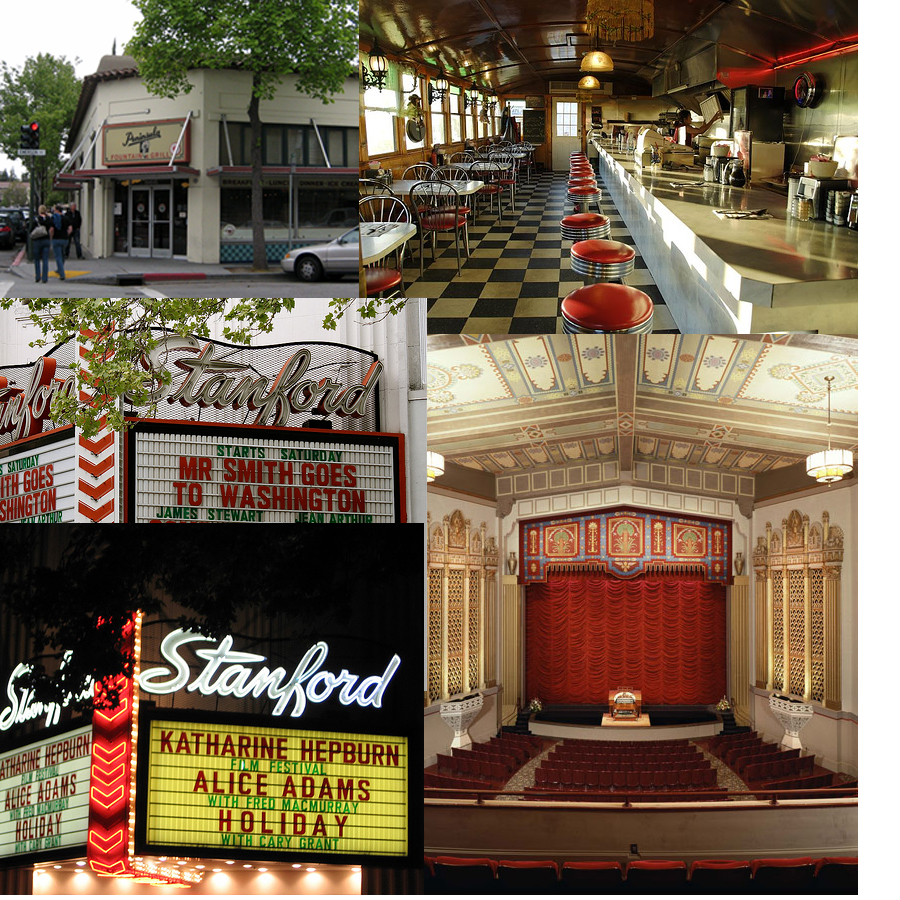
– About Palo Alto places, he seems to enjoy the Peninsula Creamery as well as the Stanford Theatre: “Since high school, I’d frequented the Stanford Theatre in downtown Palo Alto, a repertory house playing the best of Hollywood’s Golden Age.” (Without Hewlett Packard and the Packard foundation, this marvelous theatre would probably not exist anymore.)

Finally, one of his descriptions of California driving rules, “I navigated over to the carpool lane. Only in California would one driver plus one passenger equal a carpool. And only in California would such loose admission requirements still result in an almost empty lane,” reminded me of why Woody Allen hates California. “I don’t want to move to a city where the only cultural advantage is being able to make a right turn on a red light” — Alvy Singer (Woody Allen in Annie Hall). Well, I still love California! And Raffel seems to prefer it to Washington DC…

Smasher, another Silicon Valley mystery

Smasher is the second Silicon Valley thriller from Keith Raffel that I read. After reading dot.dead, I found this one more complex, and certainly as interesting. A mixture of a traditional thriller where the hero’s wife is smashed by a car, together with a good start-up story where the leader in the field is trying to smash the hero’s company and an academic story of intense competition between researchers in the physics field of [smashed] particles. Hence the title Smasher.

I already mentioned novels about start-ups or Silicon Valley (dot.dead, but also The Ultimate Cure). I have never mentioned though Po Bronson (I loved The First 20 Million Is Always the Hardest) or Michael Wolff (Burn Rate). I have not read (yet) Kaplan’s Start-up. On the academic side, there is Small World by the great David Lodge which I have not read (either…) There are of course many essays on the start-up or academic worlds (I mentioned many in my past posts in the must read category) but there are clearly not so many novels based on these worlds,

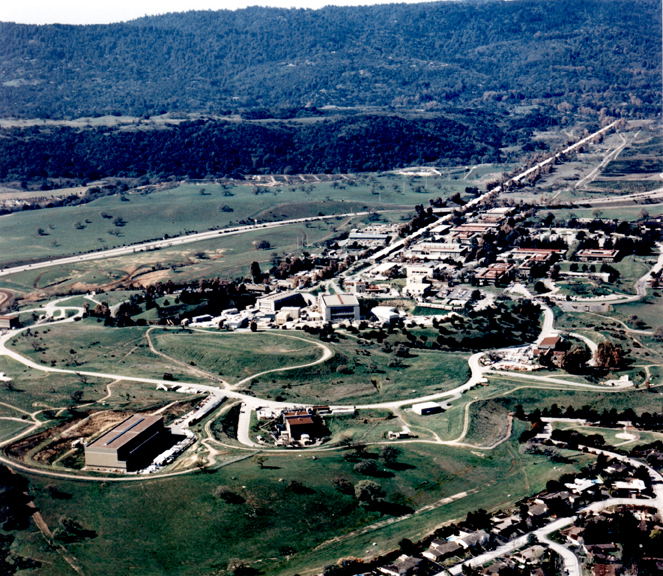
Raffel loves to take inspiration from real individuals in Silicon Valley. I had played at recognizing a few in dot.dead. Here it is less obvious; the academic smasher is a mixture of Feynman and Gell-Man. The start-up smasher looks more like Larry Ellison with his dark suits and love for Japanese architecture. But there is a little from Steve Jobs as well. The other characters existed in the first novel. I will not talk about the story and only shortly about the particle physics. I will say more about the start-up and broader Silicon Valley context. Smasher talks of Quarks and quirks, of Murray Gell-Man who got the Nobel prize for their discovery and of SLAC, the Stanford Linear Accelerator (a small CERN). You may identify SLAC both on the map and picture below.

There is indeed a link between particle physics and the start-up world. Raffel reminds us that the World Wide Web was invented at Cern thanks to Tim Berners-Lee. Slac had other spin-offs, but this is another story. Slac was also a home for the Homebrew Computer Club (see [1] and extract from page 214 below)

Smasher is also about women and science. “Stanford was on a campaign to recruit female undergraduates, Ph.D. candidates, and faculty to the natural sciences. My mother’s late aunt had been the first woman in the physics department back in the 1960s. In an effort to honor her and to appeal to what was still the second sex in the realm of natural sciences, the university was naming its particle physics lab after her. I’d lived in Palo Alto all my life and couldn’t recall a building, library, school or academic chair at Stanford labeled with a name except in return for a donation of dollars, euros, yens, dinars, or other convertible currency. So maybe Stanford was really serious about recruiting women.” And the invited professor for the ceremony adds: “We all follow in the footsteps of our predecessors. When I was a girl in France, I wanted to be Marie Curie. After two years as a graduate student at Stanford, after two years of hearing about her legacy, I wanted to be your great aunt.” (Page 12)

What may not be realistic is that this French professor smokes Gauloises (page 213). I know I left France a long time ago but I doubt professors still smoke them! It is pure work of fiction of course but Raffel adds in his acknowledgments that he found inspiration in Rosalind Franklin‘s life. A sad story which shows the complexity of being a woman in science or high-tech

A funny (sorry for the jump for sadness to humor) quote and apparently true [2] on the academic world is Clark Kerr once said his job as president of the University of California was to provide football for the alumni, sex for the students, and offices for the faculty. [The physics and Nobel prize professor] sanctum was twice the size of the [professor of English literature]’s but only a third the size of the business school professor [who is on the board of the hero’s start-up].” (Page 34)

It is also about VCs and term sheets. “VCs, bah. When you had no need for their money, investment offers would cascade over you like a tropical waterfall. When you could use a capital infusion – like now – the money flowed like water in a wadi, a riverbed in Sahara. In other words, it did not.” (Page 20)

“I drove west of Sand Hill Road. This was familiar territory, the Vatican of venture capitalism. In the bubble days of the late 1990s, office space on Sand Hill was the most expensive in the world. Here’s where the founders of Google, eBay, Amazon and Cisco had come, hat in hand, seeking the dollars required to turn the base metal of their dreams into stock market gold.” (Page 41)

Raffel has a few notes on Silicon Valley culture:
“The value of Silicon Valley company wasn’t in inventory or patents. It was in the brain of its employees.” (page 33)
“I had learned in the Valley that no more than two people could keep a business secret and that only worked if one of them was dead.” (Page 45 )
“Under an NDA? I asked. Non-disclosure agreements didn’t usually do much good in the Valley, which was built on loosey-goosey dissemination of intellectual capital, but having one couldn’t hurt. We had a raft of patent applications pending on the technology, but if they stole what we had, we would be defunct by the time we won any lawsuit.” (Page 94)
“Ron Qi, the inventor [of the technology incorporated in our product] and now head of engineering looked down as if examining the polish on his shoes. The other three around the table, Samantha Maxwell, our Korean-born MIT-educated marketing genius; Ori Mohr, the ex-Israeli paratrooper and kick-ass head of operations, and Bharat Gupta, the CFO, all moved their eyes back to me.” … “I saw Ron, who’d been brought up in the more deferential milieu of Taiwan…” (Page 44) [Immigrants again]
“I asked the engineers how the tweaking of the product was going, the sales rep what I could do to help them close their big deals, and the bean counters how much work was left to close the books for the latest quarter. What I heard from them was unfiltered by the vice presidents who reported to me. (The business professor) had told me that I could ask any employee anything but I could only tell my direct reports what to do. Managing the others was – who’d’ve thunk of it? – the jobs of their managers. As I popped into offices or cubicles, I was following the footsteps of the Founding Fathers of Silicon Valley, Bill Hewlett and Dave Packard, who advocated MWBA – management by walking around.” (Page 102)
“Thirty minutes later, I walked into a building named after Robert Noyce, one of the “traitorous eight” whose departure from Shockley Semiconductor loomed as large in Valley history as the exodus from Egypt did in the Bible. One of the founders of both Fairchild Semiconductor and Intel, Noyce was the co-inventor of the microprocessor, the electronic brain that ran everything from cell phones to server farms.” (Page 194)

A few more things on the academic world:

“It seems that the only way for a Stanford professor to win prestige is to start a successful company.
– Americans may not be interested in how the universe is made. I can tell you though, in Silicon Valley, they definitely want to know how money is made.
A researcher at CERN wanted to share information with others physicists. He invented a language to send it around and we ended up with the World Wide Web.
– Of course you would know our wonderful Sir Tim. […] The computer nerds at SLAC in the early 1970s hosted meetings of what they called the Homebrew Computer Club [1]. Steve Jobs and Steve Wozniak came.” … “And from that came Apple Computer and the whole PC industry. So you’re saying Silicon Valley wouldn’t be much without the physicists?”
(Page 214)

as well as

“I caught sight of a new photo over the desk. His head flanked by two earnest student types. He followed my eyes. “Another sign of my vanity.” Sergey Brin and Larry page developed their search algorithm as Stanford grad students and, of course, started their company to exploit it. Stanford got shares in the venture in return for their ownership of intellectual property.
– And how many millions did that piece of Google add to the university coffers?
– Three hundred and thirty six”
(Page 218)

Smasher is certainly not about literature, but it is (really) entertaining; nor does it belong to the category of the mystery masterpieces. Raffel does not have the genius (or experience) of James Ellroy, or even George Pelecanos and Henning Mankell but he is a real pleasure to read, I appreciate his talent, imagination and his interesting description of SV culture, history and dynamics.

[1] Homebrew Computer Club: “One influential event was the publication of Bill Gates’s Open Letter to Hobbyists, which lambasted the early hackers of the time for pirating commercial software programs.” http://en.wikipedia.org/wiki/Homebrew_Computer_Club. Another site is Memoir of a Homebrew Computer Club Member

[2] Another legacy was his wit—after writing a serious book “The Uses of the University”, Kerr surprised an audience with this riposte–“The three purposes of the University?–To provide sex for the students, sports for the alumni, and parking for the faculty.” From http://content.cdlib.org/view?docId=kt687004sg&chunk.id=d0e21648&brand=calisphere&doc.view=entire_text

dot.dead, a Silicon Valley mystery

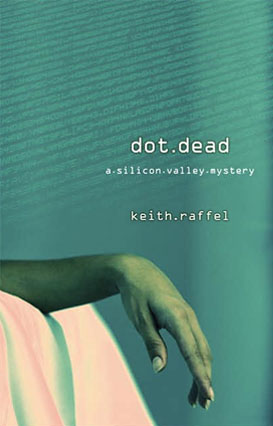
I seldom mention novels here. In fact, I only did it one with the excellent “The Ultimate Cure” by Peter Harboe-Schmidt. I nearly bought by accident dot.dead, the first novel written by Keith Raffel, a Silicon Valley entrepreneur turned into a thriller writer. And I enjoyed it.

There is no point in telling you anything about the story. It may not be very realistic, but which mystery novel is? The description of Silicon Valley, Palo Alto and Stanford University is nice and accurate though  and you have the feeling you are back there if you know the places. What I also enjoyed and what is relevant for this blog are the links with the high-tech start-up world.So let me quote Raffel.

– An interesting comment about motivation to be an entrepreneur (page 42), maybe the most surprising thing in the book! “She asked if the hard work required to start a business was worth it. […] -[It is] a kind of Catch-22. To found a successful company, you had to think it was more important than anything. But if you were intelligent enough to run such a company, you had to know it wasn’t. Realizing that, you could not have the drive needed to start the next Sun, HP…”

– A much less important detail (page 45): “[The company] had gone public at $12 a share. After three two-for-one splits, [he] had sold the company for $42 a share. An investment like this might explain the […] comfortable circumstances.” I let you compute the multiple!

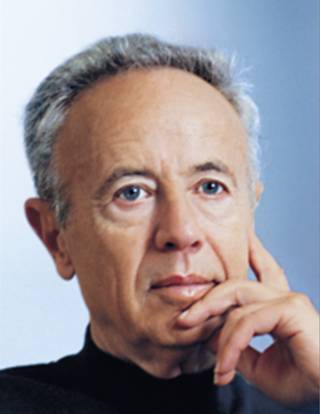
– Of course, when you read a fiction about Silicon Valely, you may try to guess if the author found inspiration in real individuals. Paul is the easy one (page 16): “While not quite at the level of Bill Hewlett or Dave Packard, Paul still rated as a Silicon Valley legend. Born in Hungary, Pál Békés had been a baby when his parents carried him across the border into Austria during the 1956 revolution. Paul Berk, as his parents rechristened him, graduated from the Bronx School of Sciences at sixteen and from Stanford…” Well it is not exactly the personal history of Andy Grove at Wikipedia but close enough: “During the Hungarian Revolution of 1956, when he was 20, András István Gróf left his home and family and escaped across the border into Austria, where he eventually made his way to the United States in 1957. There, he changed his name to Andrew S. Grove. Arriving in the United States in 1957, with little money, Grove retained a “passion for learning.” He earned a bachelor’s degree in chemical engineering from the City College of New York in 1960, and earned a Ph.D. in chemical engineering from the University of California, Berkeley in 1963.”

– The other people I tried to identify with less success are the board members of the company (page 57): in addition to Paul, there is
” Bryce Smithwick, board member as well as corporate counsel. sat to Paul’s right, leaning forward an Armani-clad leopard.
” Darwin Yancey, the technical genius behind Paul’s previous company. As usual Darwin’s glasees had slipped down his nose so that he peered at Paul with his head cocked back. Darwin had worked eighteen hour days [in the previous start-up] but to everyone one surprise had not followed Paul to [his new start-up]. Instead, he retired with his millions in the south of France. “My wife told me that our firrst twenty years of marriage belonged to work and that the next twenty years belonged to her.”
“A rare representative of her gender in the macho world of top venture capitalists, Margot Fullbright had cofounded Chance and Fullbright. Seated next to me, she had her hands folded on the table like a prim schoolgirl. A sideways glance showed me that the short skirt of her expensive suit was designed to show off the thighs of a Parisian runway model, not a buisiness executive. But Margot, approaching fifty, had a body toned as much as shiatsu, Bikram yoga, and two-thousand-dollar-a-day spas could achieve. Known for her ability to do complex calculations in her head, her mind was in even better shape.
“The fifth board member, wearing his trademark bowtie, hie crew-cut hiar beginning to show a few flecks of gray, was leon Henderson, a Stanford professor. A handful of former students, inculding three Fortune 500 CEOS, had thrown him a sixty-fifth birthday party the previous January. I myself had taken his entrepreneurship course and now met him vevery month or two for breakfast at Stanford’s Tresidder Union, where he offered me parctical advice on management and product positioning.

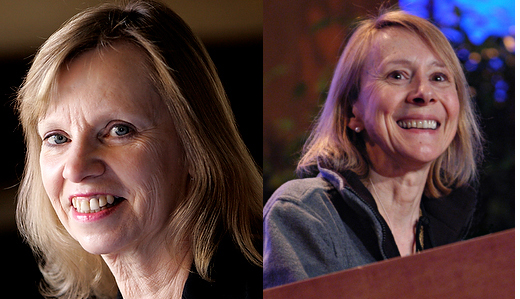
I do not know who these people are. There are a few women in VC, including Ann Winblad and Esther Dyson. Raffel is right, it is a macho world. They could all exist and look like SV stereotypes.


Ann Winblad (left) – Esther Dyson (right)

Another detail on bankers (page 100): “I had the natural prejudice against investment bankers. We worked seventy-hour weeks to make a start-up successful. Then, when the payoff came, investment bankers got a six-percent cut for a few weeks’ effort.”

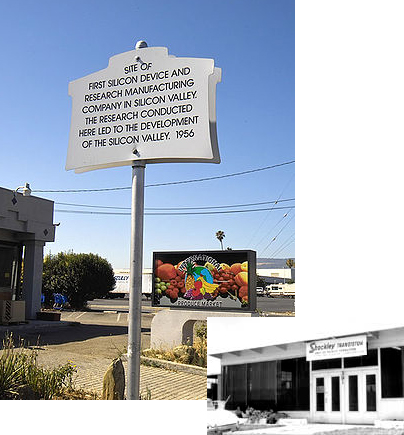
Raffel could not avoid telling his Silicon Valley history (page 107). Nicely written: “Riding in the back of my parents’ Country Squire station wagon thirty years earlier, I would have been passing apricot orchards and horse trails. We didn’t know it, but they had already been condemned when William Shockley opened a company in 1955 to exploit his invention of the transistor. In an almost biblical sense, Shockley Semiconductor was the progenitor of hundreds of the firms flourishing in the Valley, for people from Shockley begat Fairchild and people from Fairchild begat Intel and someone from Intel begat Apple, and so on. In a variation on the biblical theme, two of Shockley’s most promising disciples, Gordon Moore and Robert Noyce, revolted against the founding father of the Valley to start that first competitor, Fairchild Semiconductor. Shockley was left claiming betrayal and ended his days using his Nobel Prize to defend his indefensible view on eugenics. This drama set the tone for Valley culture: young, brilliant technologists breaking away from companies run by the previous generation of entrepreneurs and founding their own.”

I plan to discover soon if Raffel’s latest novels bring pieces of interesting data.