The Anatomy of an Entrepreneur

A new report has been published thanks to the Kauffman foundation. The study, entitled “The Anatomy of an Entrepreneur,” led by co-authors Vivek Wadhwa, Raj Aggarwal, Krisztina “Z” Holly, and Alex Salkever gives very interesting features about the background and motivations of entrepreneurs.

The paper can be found on the Kauffman foundation web site and here are some key lessons:

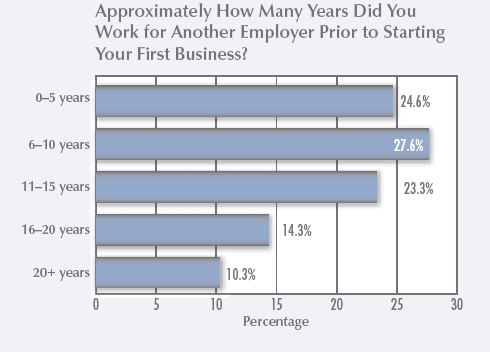
– founders are generally well-educated, middle class; they have a family and experience. So this kills a little the school drop-out, young, nerdy entrepreneur…

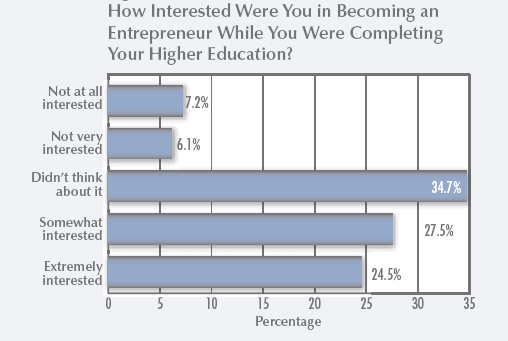
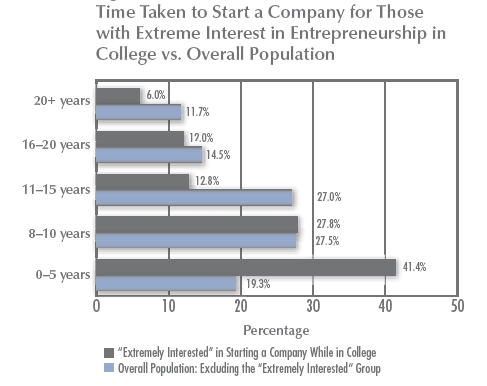
They do not always or often think about becoming an entrepreneur early in their life:

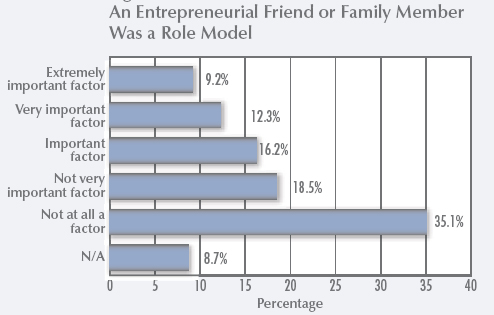
Another interesting element is about role model or mentor:

Now, when the study focuses on young entrepreneurs, the view is slightly different:

It is where the Yahoo, Google founders come in the picture probably.

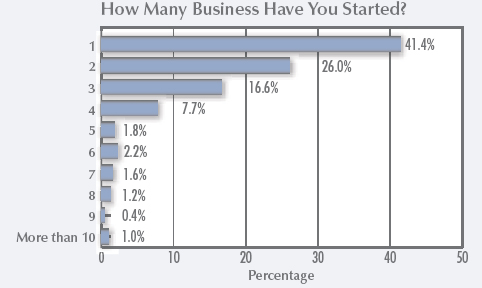
Finally, there are many serial entrepreneurs. I am a little surprised because I am not sure succesful entrepreneurs are necessarily serial entrepreneurs. In any this would not contradict the findings and this is interesting:

If there is one thing I want to add, it is about the definition of “founder” that the authors have used:

a “founder” was “an early employee, who typically joined the company in its first year, before the company developed its products and perfected its business model.”

Depending on how many of these founders were employees rather than entrepreneurs may have an impact on the data which are provided here. A well-funded VC-backed company may attract in its first year very experienced people who are not necessarily entrepreneurs. But this being said, all this is of real interest.

No Business Plan? No Worry?

A study dated December 2008 shows that submitting a business plan to venture capitalists would be at best a symbolic act, at worst of no interest or at least with no relation to the investment decision.

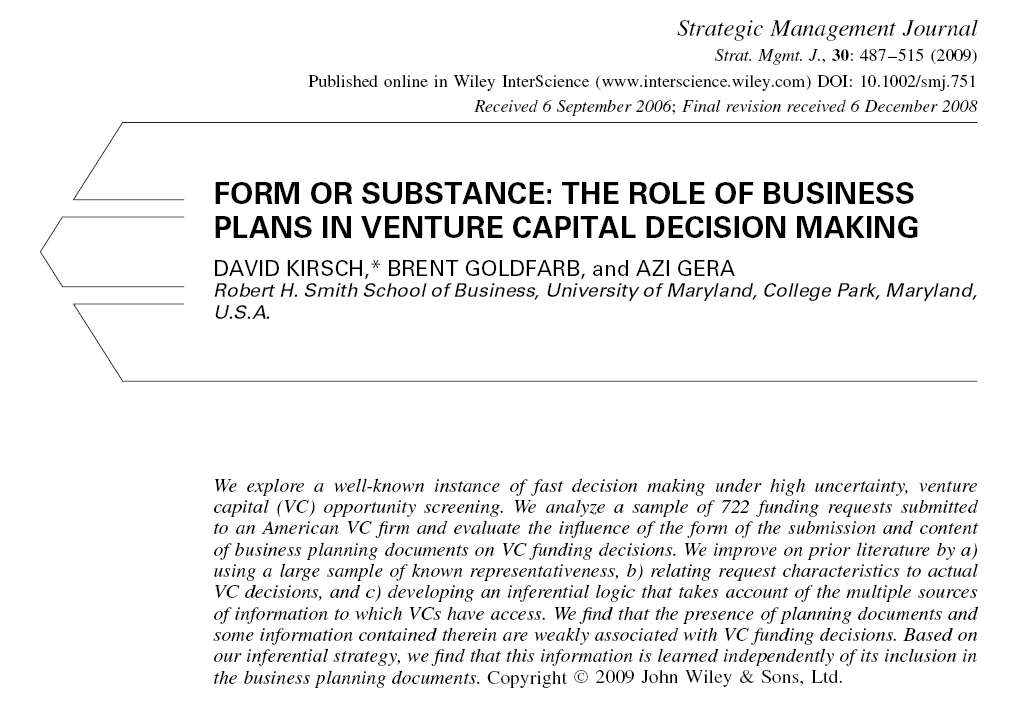
The paper entitled “Form or Substance: The Role of Business Plans in Venture Capital Decision Making” was written by David Kirsch, Brent Goldfarb and Azi Gera of the University of Maryland and published in the Strategic Management Journal.

Based on the analysis of more than 1000 documents, les authors have tested 7 hypotheses relative to business plans:

1- the impact of a standard document,

2- statements of prior non-VC external private equity funding

3- the articulation of financing requests

4- reference to management team members

5- reference to prior educational human capital

6- reference to the prior entrepreneurial experience of founding team members

7- reference to the prior professional business experience of founding team members.

The results are quite striking: hypotheses 1, 2, 3, 5 and 7 are not validated et only hypotheses 4 and 6 would received a limited validation.

Their conclusions are quite clear: “business planning artifacts are not important sources of information for venture decision makers. The submission of planning documents is, at best, a ceremonial act.” and they add “neither the presence of business planning documents nor their content serve a communicative role for venture capitalists… Critical information is learned through alternative channels.”.

But I need to add, and this is now a personal point of view, that all this does not mean that a business plan is not necessary for any entrepreneur who wishes to raise capital…

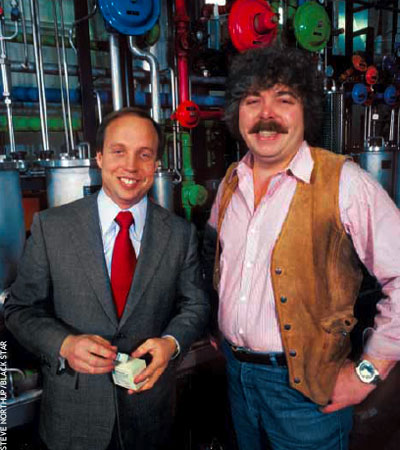
Bob Swanson & Herbert Boyer: Genentech

Here is my second contribution to Créateurs, the Geneva newsletter, where I have been asked to write short articles about famous success stories. I began last quarter with Adobe and its founders John Warnock and Charles Geschke, here is now Bob Swanson, Herbert Boyer, founders of Genentech.

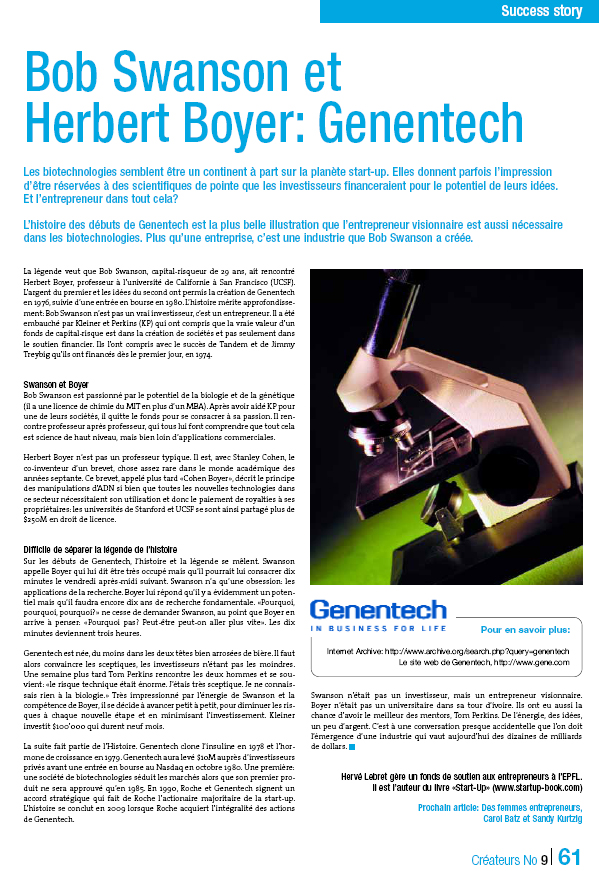
Bob Swanson and Herbert Boyer: Genentech

In the start-up world, biotechnologies do not seem to belong to the same world: they seem to always be reserved to high-caliber scientists not to say Nobel prize winners that investors would back with their money. So… where is the entrepreneur?

The story about the Genentech beginnings is probably the best illustration that a visionary entrepreneur is also necessary in biotechnologies. Much more than just a start-up, it is an entire industry that Bob Swanson founded.

The legend says that Bob Swanson, a 29-year old venture capitalist, met Herbert Boyer, a professor at the University of California in San Francisco (UCSF). The money of Bob and the ideas of Herbert made possible the creation of Genentech in 1976, followed by its IPO in 1980. The story deserves however a little more attention. Bob Swanson was not really an investor. He is an entrepreneur. he has been hired by Kleiner and Perkins (KP) who had understood that the real value of a venture capital firm is to create company and not only to fund them. They understood this after the success of Tandem and Jimmy Treybig whom they financed from day 1 in 1974. (See KP first fund).

Bob Swanson is fascinated by the potential of biology and genetics. (He has a BS in chemistry from MIT and an MBA). After helping KP for one their portfolio company, he leaves the fund to dedicate himself to his new passion. He meets many professors in the Bay Area but all of them explain him that their work is about science, leading edge science for sure and very far from commercial applications.

Herbert Boyer is not a typical professor. Together with Stanley Cohen, he is the inventor of a patented technology, which was not common in the academic world of the seventies. Known as the Cohen-Boyer patent, it describes how to manipulate the DNA and it is so fundamental that any new technology in the field needs to use this patent, which means obtaining a license on the technology and paying royalties to its owners, Stanford University and UCSF. In total, more than $250M was generated in royalties over 20 years.

The beginnings of Genentech are a combination of history and legend. Swanson calls Boyer who tells him he is very busy but he agrees on a 10-minute talk on a Friday afternoon. Swanson is obsessed about one single thing: the applications of research. Boyer replies that there is certainly some potential but it will require another 10 years of research. “Why, why, why?” Swanson does not stop saying to the point that Boyer finally concludes “why not? May be it can be faster.” The 10-minute talk has become a 3-hour discussion. Genentech is born, at least in two minds full of beer!

They still have to convince the skeptics. Among them, the potential investors. A week later, Tom Perkins meets with the two men and he remembers: “the technical risks were huge. I was very skeptical. I did not know anything in biology.” Kleiner is however very impressed by the energy of Swanson and the expertise of Boyer. He decides to try, step by step in order to diminish the risks and minimize the initial investment. Kleiner invests $100’000 which will last nine months.

The rest is History. Genentech synthesizes insulin in 1978 and growth hormone in 1979. Genentech also raised $10M with private investors before going public on Nasdaq in 1980. For the first time, a biotech company goes public with no revenue and its first product is not approved yet (it will be in 1985 only). In 1990, Roche and Genentech will sign a strategic partnership which makes the Swiss company its major shareholder. In 2009, Roche acquired all the remaining shares of Genentech.

Swanson was not an investor, but a visionary entrepreneur. Boyer was not a professor in his ivory tower. They were also lucky to have the best of mentors, Tom Kleiner. A lot of energy and passion, great ideas, some money. It is an almost accidental meeting which is responsible for the growth of a industry worth tens of billions of dollars.

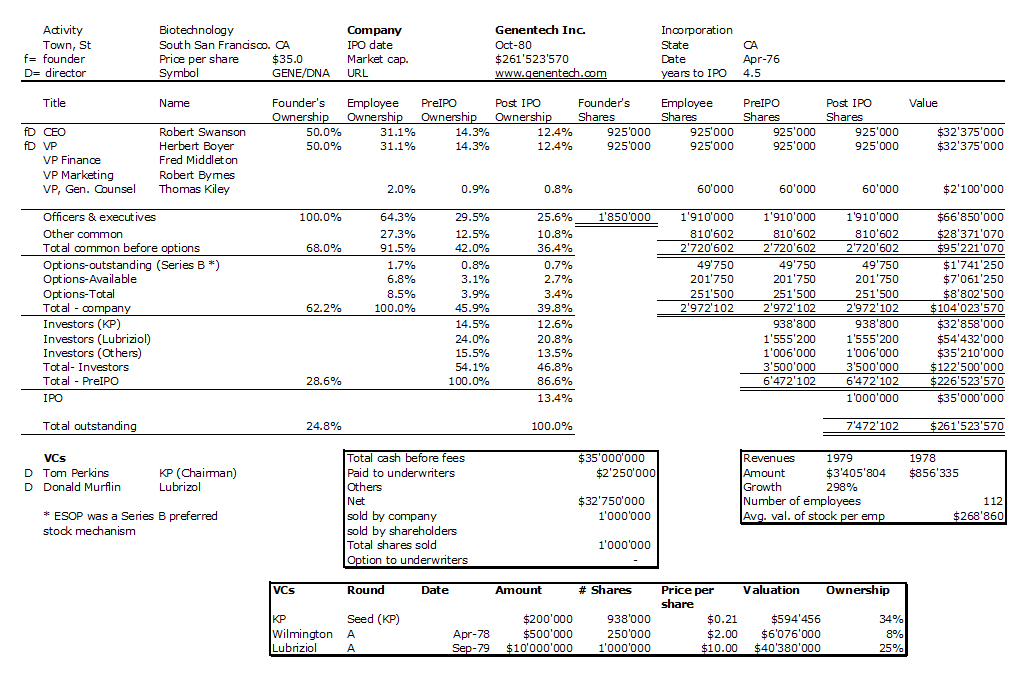
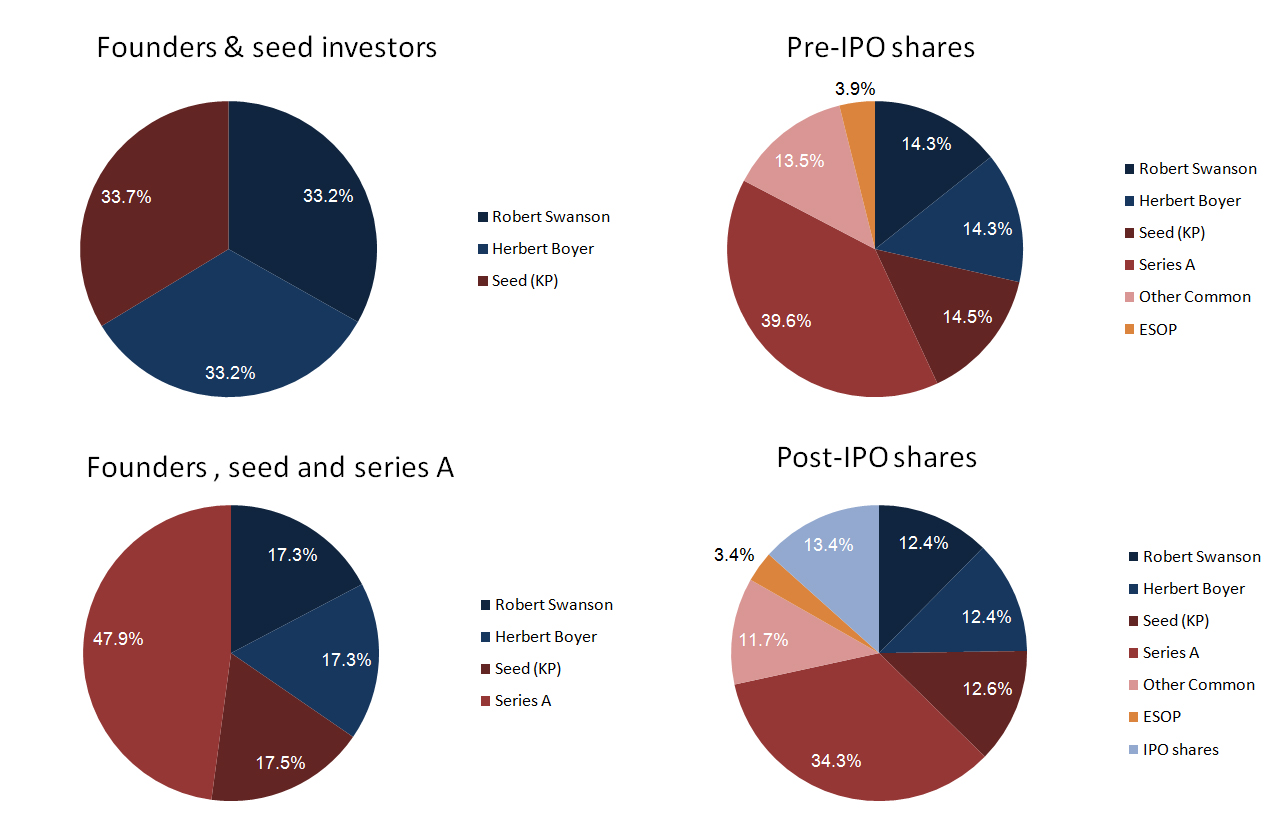
Icing on the cake, the Genentech capitalization table at its IPO:

Pour en savoir plus:

Internet Archive:
http://www.archive.org/search.php?query=genentech

The Genentech web site:
http://www.gene.com

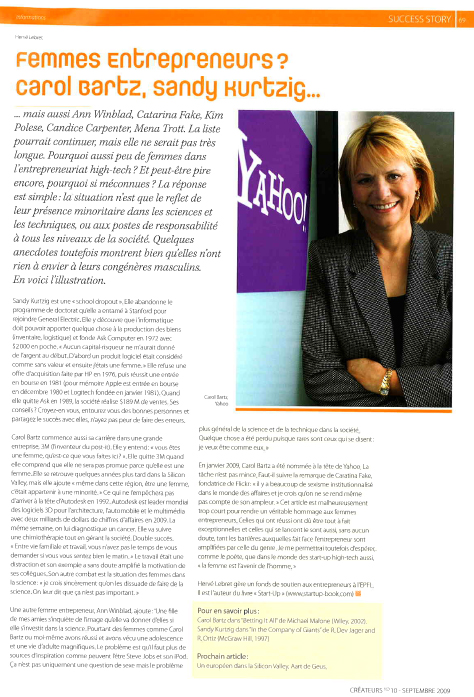
Next quarter: Women entrepreneurs, Carol Batz and Sandy Kurtzig

Belgium and Start-Ups

After Finland, Sweden, here comes Belgium. A recent study has been published: “Le financement des spin-offs universitaires en Belgique” by Fabrice Pirnay (HEC-ULg) & Sarah Van Cauwenbergh (CeFiP) – May 2009. It is about spin-offs from universities in the French and Dutch-speaking parts of belgium. I am not sure it is available online though.

Because it is not a marketing tool, it may not make everyone happy as it shows once again that there are weaknesses in our innovation systems and that we are also far behind the USA. I participated to a workshop to discuss the study and the lessons I want to remember are that if we want to favor growth, we need ambition, i.e. high quality teams, resources and an international strategy. Because tehre is a chicken and egg issue between money and people, I remain convinced that international exposure is a good initial bet, I mean sending people abroad as well as inviting people to come where we live. We also need mot role models, mentors so that we should use our diaspora and our alumni.

Now instead of going any further in a complex analysis, here are the advice of an unusual roel model: Jacques Brel. My colleague Bernard Surlemont (qui m’avait invité à ce workshop) showed me this great document where the Belgian singer talks about passion, fear of failing and work vs. talent. They are in French only…

Passion

Fear

Work

Index Ventures, Minsh, Poken and others

Last Friday, I organized “venture ideas @ EPFL” with Jordi Montserrat from venturelab. We had the opportunity to have great entrepreneurs from Minsh, Poken, Basisnote and the 20 winners of the ventureleaders program.

Last but not least, Neil Rimer, founder and general partner of Index Ventures shared his thoughts about Thinking Bigger.

More on the EPFL’s venture ideas page and the past events.

Sweden and start-ups

As I mentioned in a recent post, I have spent a few days in Sweden where I discovered some features of the Swedish start-up scene. I was invited by Anders Gezelius who has a very interesting profile: a graduate of KTH – Stockholm with an MBA from Wharton, he worked Californie for Intel and then co-founded a startup which was selling accounting software. After the M&A of the start-up, he has gone back to Sweden where he runs Mentor4Research and Coach & Capital.

Here are the talks I made for:
– Stockholm Innovation & Growth: why do start-ups succeed or fail?
– Mentor4research: What we may still learn from Silicon Valley

If there is one interesting lesson that I also learnt from my recent trip to Boston (cf the MIT venture mentoring service), it is that the combination of mentoring and investing as a business angel may become more and more critical. Both are very much needed. Mentors may be seen as friends of entrepreneurs and give advice based on their experience. They may or may not become business angels who invest at an early stage in start-ups.

One of the best illustration of mentoring is given by the encounter of Steve Jobs and Bob Noyce when the Apple founder needed advice…

Entrepreneurs and Revolutions

Nicolas Hayek, founder of Swatch, was yesterday at the Forum des 100.

He talked about the Economic crisis and called for an “International of Entrepreneurs”! His talk was in French and can be found here.

Ironically, in my book , I had quoted Pitch Johnson on a similar topic: “Entrepreneurs are the revolutionaries of our time.” And he had added: “Democracy works best when there is this kind of turbulence in the society, when those not well-off have a chance to climb the economic ladder by using brains, energy and skills to create new markets or serve existing markets better then their old competitors”

So should I conclude with “Entrepreneurs of the World, Unite!”

The question was also discussed in a very interesting debate between Emmanuel Todd and Pascal Couchepin (in French again).

Three Things Every Startup Should Do

Xconomy is becoming one of my favorite web sites. Here is a short post about three things every startup should do

Focus on one thing. Whether you make a location-based tracking device, an energy-efficient motor, or a social network for job-seekers, carve out the specific market you’re going after. And then make your product a must-have for that market, using every possible competitive advantage you have. Do what you do better than anyone else, but don’t try to do it all.
Work on what you’re passionate about. Every successful startup has a story about why it does what it does. That story should ring true with the founders’ backgrounds and expertise. Investors (and customers) can tell right away if a company representative is going through the motions.
Cut to the chase. What is your company doing that’s special? How is it different from your competitors? People will decide whether your company sounds promising in the first 30 seconds of your pitch, so make sure you answer those questions upfront.

I will be in Stockholm next week delivering 2 talks on start-ups, one being about success and failure (Stockholm Innovation), the other one about what we still have to learn from the USA (Avslutningskonferens 2009). I certainly could have used these 3 points.

Entrepreneurship during recession and economic crisis.

Does the crisis have an impact on entrepreneurship. This was the question I was asked by Manuela Salvi on the Swiss Radio (RSR) today. You can listen to my answer (in French) by ckicking here.

rsr.gif

Here is my answer in more detail: reality is complex and I am not aware of complete studies on the topic. However the Kauffman foundation has published an interesting report on the topic: Entrepreneurs and Recessions: Do Downturns Matter?

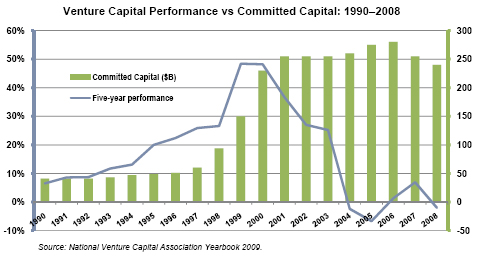
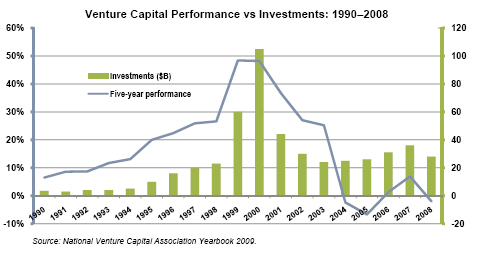
The data set used for this study was a comprehensive list of all 8,464 companies that have gone public on U.S. markets from 1975 to 2006. There were nine such [recession] periods in the timeframe in question: 1907–1908, 1918–1921, 1929–1939, 1953–1954, 1957–1958, 1973–1975, 1980–1982, 1990–1991, and 2001–2003. The figure below does not show big differences between recession and growth period with the exception may be of World War II and also the recent years. But it may be too early to say about the 2001-2006 period.

In another study entitled Economic Crisis Survey, the Kauffman foundation shows that 71% of American people believe that “in light of the economic crisis, it has become more difficult to become an entrepreneur in America”. However anecdotes are many which show real success: Texas Instruments, Revlon were started during the Great Depression, Microsoft, Apple during the Oil crisis. Without even talking about company creation, product launch such as Pampers in 1961 and the iPod in 2001 show that a crisis does not prevent innovation.

Here is an extract from the first report:

“At a high level we essentially are concerned with the relationship between the supply of companies (“births”) by founding period, and the outcome achieved by those date-based founding cohorts over time. To deal with this supply aspect, a few broad points can be made. The first is what we might call the scarcity argument. It says that fewer companies are founded during difficult economic times, so we can expect disproportionately fewer successful companies to emerge from that economically constrained population. Why might we expect fewer companies founded during recessions, for example?

There are several reasons. First, entrepreneurs might decide to delay creating companies until the economy into which they anticipate selling products or services is more robust. This argument applies most strongly to entrepreneurs in service industries where there is little lag time from company founding until first product/service sale. If there is a longer lag between company founding and product launch, we might not expect entrepreneurs, all else being equal, to hesitate as much in starting their new ventures. Why? Because first revenues might be anticipated to more likely coincide with a resurgent economy.

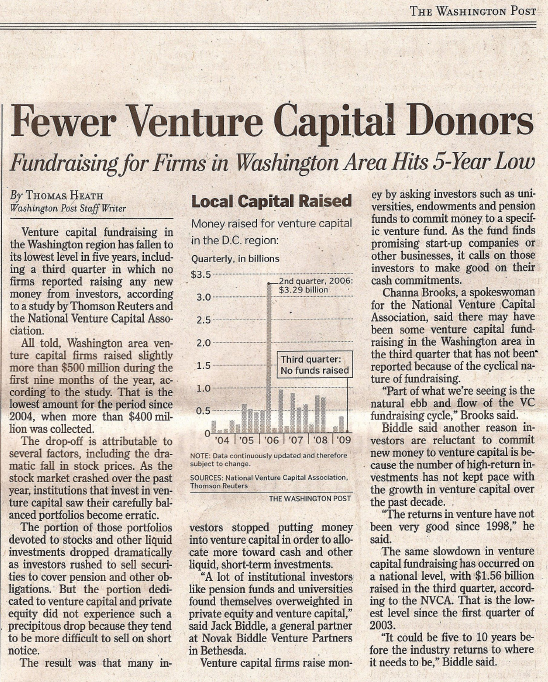
There are other reasons to expect fewer companies to be founded during economic downturns. One has to do with entrepreneurs’ unwillingness to leave their current places of employment during a weak economy. Another, and perhaps more compelling, obstacle to company founding in weak economic periods might be the limited availability of risk capital during such periods. To the extent that it is difficult to raise money for a new entrepreneurial venture, we might expect fewer companies founded during such periods.

The preceding touches mostly on supply issues—why we might (or might not) expect more companies to be founded during weaker economic periods. There also is a demand issue. Even if similar numbers of companies are founded, it is plausible that more of these companies do not achieve material financial success due to the poor economy at founding, thus leading to poorer longer-term outcomes for cohorts of companies founded during weak economic periods.

In summary, we can plausibly make three broad points. First, it is reasonable to expect that fewer companies will be founded during weak economic periods. Second, companies founded during those periods might be expected to fail at higher rates than companies founded during more economically receptive periods. Third, the combination of lower birth rates and higher failure rates would conspire to deplete company cohorts founded during recessionary periods.”

There is therefore some difficulty in assessing the impact. As a way to finish this post, without concluding, let me quote another blog (in French) envie d’entreprendre which explains why an entrepreneur would have a higher likeliness of success in periods of crisis:

Since financing is more difficult to obtain, those who know how to operate in a low-cost, frugal environment have an edge. Since many people wait and see, even are “frozen”, using the crisis as an excuse not to act or cannot act because of lack of financing, there is less competition. Since there is less competition, the employment market is easier [and more talents are available]. Finally, the fact of being unemployed may be the opportunity to start the entrepreneurial adventure.

I like these arguments,
– less competition
– more talents available
– better efficiency because one has to be more frugal.

Periods of recession and crisis seem to create more opportunities but it remains clear that entrepreneurs always try, whatever the difficulty of the times.

Can Business Schools Teach Entrepreneurship?

An interesting post by Xconomy on the topic. It’s been a on-going topic and there are no clear answers.

Check the post at Can Business Schools Teach Entrepreneurship?

In “vibrant ecosystems” such as Route 128 and Silicon Valley, business schools are embedded and students easily find or develop ideas. But I am less sure Business Schools really teach. They explain, they expose and of course they teach management. As I comment on that post:

There is a talk by Prof Byer (Stanford) about the Silicon Valley and Stanford ecosystems, where the author claims about 5% of companies are direct transfers of technology:http://spie.org/documents/Newsroom/audio/Byer.pdf
It is not clear how many companies Stanford alumni have created. At least 2′500 but probably many more. Now the role of business schools is another subject of interest. You have stories on both sides, i.e. pure engineers or scientists (Google, Yahoo, Cisco in the academia, Apple outside) or entrepreneurs from bus. schools (Sun Micro, eBay).