This blog contains original articles as well as articles from the book "Start-Up", by Hervé Lebret, which exists both in English and French. It is available on Amazon as well as in electronic versions. To buy it, click here.

Archive for the ‘Innovation’ Category

What is the mentor role?

Tuesday, August 31st, 2010

I recently read Fred Wilson’s post on The CEO Mentor and Coach. As usual his post and the high number of comments are interesting. I would just like to add one of the best descriptions of a mentor I have read. It is what Robert Noyce represented for Steve Jobs. You can find the full account in the book The Man Behind the Microchip by Leslie Berlin or in a shorter account she gave for the Computer History Museum (pdf file - 6MB).

So here is a short account of Noyce’s mentoring!

“Bob Noyce took me under his wing. I was young, in my twenties. He was in his early fifties. He tried to give me the lay of the land, give me a perspective that I could only partially understand. You can’t really understand what is going on now unless you understand what came before”

“When Noyce left daily management at Intel in 1975, he turned his attention to the next generation of high-tech entrepreneurs. This is how he met Jobs.” Noyce was not attracted initially by the hippie style, “but over time, Noyce’s feelings about Apple began to change. This was due, in no small measure, to Steve Jobs, who deliberately sought out Noyce as a mentor. (Jobs also asked Jerry Sanders and Andy Grove if he could take them to lunch every quarter and “pick your brain”). “Steve would regularly appear at our house on his motorcycle” Bowers [Noyce’s wife] recalls “Soon he and Bob were disappearing into the basement, talking about projects.”

Noyce answered Jobs’ phone calls – which invariably began with “I’ve been thinking about what you said” or “I have an idea” – even when they came at midnight. At some point he confided to Bowers, “If he calls late again, I’m going to kill him,” but still he answered the phone.

Jobs agrees that his relationship was almost more filial than professional. “The things I remember about Bob are the personal things. I remember him teaching me how to ski better. And he was very interested in – fascinated by – the personal computer, and we talked a lot about that.

A start-up is a baby

Monday, August 23rd, 2010

I’ve been using this analogy a lot in my talks or courses. Fred Wilson has been using it to in his latest post, The Expanding Birthrate Of Web Startups.

In my talks, the slide is the following (you can check slide 61 in the pdf I posted in Start-Up, the book: a visual summary):

In full text, it is again
- Do parents know about educating a baby? so why do we say to founders to gain experience first?
- Do parents control everything it does, forever? so why founders are so paranoid about losing control?
- Would they give/abandon responsibility to teachers, doctors, “professionals”? so should not founders just hire the best people to increase chance of success?
A start-up is a baby which needs to grow and its founders should help it succeed (and yes your start-up baby is the most beautiful on earth… )

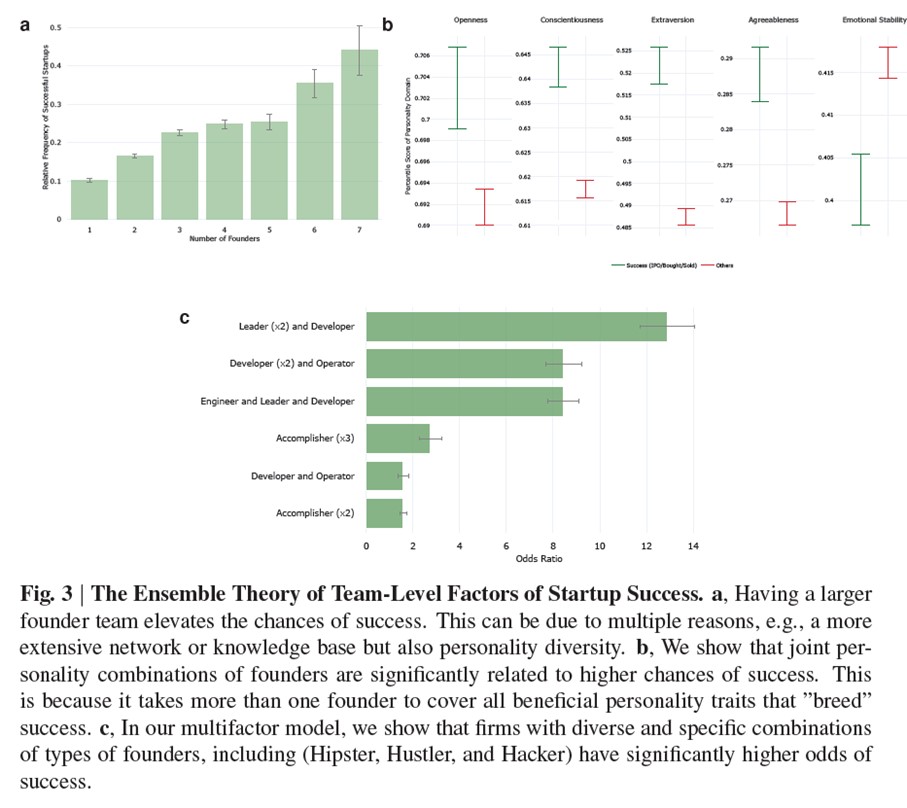
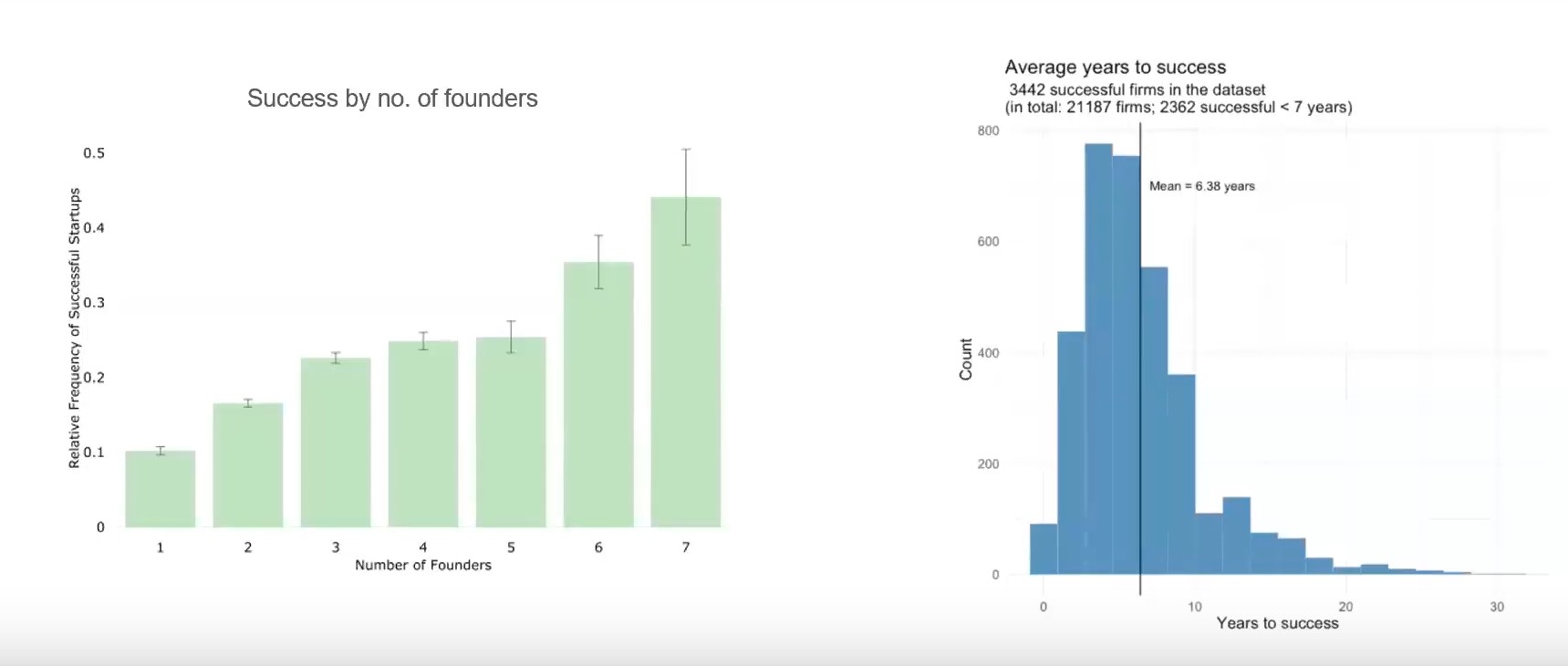
Finally, I usually add, maybe because I am a bit traditional, that I strongly believe single-parent families/companies are tougher for the kid so find a partner, never found a start-up alone.

What’s interesting with Wilson, is that he helps me enrich the analogy with parenting, so he sees the investor, not the founder as a parent. For me, the investor is a mentor, a godfather… so here are a few comments related to the analogy in his post:

- “I am committing to the care and feeding of the company until cash flow breakeven (the startup equivalent of adulthood)” (Wilson himself)
- “I worry like a parent with too many kids. Who is going to take care of all of these kids?” (Wilson again)
- “Parenting is a good way to put it. Unsure about the “pulling the plug” comparison though, doesn’t go very well with parenting!” (Loic Lemeur)
- “The super-angels and the angels, don’t try to play “parent”. They play friend. It’s a mutual benefit relationship, but the ultimate control is to the entrepreneur. Usually the friends and family who are excited about your seed round (when you leave their company), are not thinking about follow-on.” (Prasanna Sankaranarayanan)
-”do you think the “orphaned startups” will suffer because their “parent investors” remove themselves” (Adam Wexler)
-”an environment not unlike pre- or emerging-industrial third world nations. High infant mortality, the necessity of conserving scarce resources for those infants with provable indications that they CAN survive the initial impediments. It doesn’t mean that the parents love or value the survivors more, but rather that as a practical matter there are few options. [...] if a ‘gifted child’ is to be sustained through the vagaries of infancy, then it’s important for both the company and the investor(s) to consider this up front. [...] When, at the outset, it becomes clear that substantial investment in capital equipment, research and development, or extended operation at a loss is required if a ‘gifted child’ is to be sustained through the vagaries of infancy, then it’s important for both the company and the investor(s) to consider this up front. ” (Rich Miller)
- “We make fun of parents today who enroll their kids in the right kindegarden so they can get into Princeton, Yale, Harvard, but perhaps they aren’t so wrong if we applied that logic to startups….what do you need to do as an early stage company to ‘get into the right school’ when you come of age?” (Dave Hendricks)
- “But that’s not good parenting… if you want your child/portfolio company to succeed long term, you’ve got to consider where the road will take you, because the easy road/early exit isn’t a lock and is usually a lot harder than you think” (Reece Pacheco)
- “History: birthrate without control produces malnourished kids.” (Agilandam)
- “Short answer: A lower % of these “kids” will make it to their 3rd birthday.” (Andy Swan)
- “I thought you were going to make a separate point, that there aren’t enough acquirers — Google is active, Microsoft, Yahoo and others much less so — to adopt all the kids who don’t go public.” (Glen Kelman)
- “If programs like Y Combinator are getting our smartest kids to start companies instead of going to law school, McKinsey etc then that’s going to lead to good things for our industry and our economy.” (Chris Dixon)
- “Also… you say that entrepreneurs should find a one or 2 VCs and have a long term relationship with them. Isn’t this true for VCs too? Doesn’t it make sense to have the same investors lead the company from birth to adulthood and not one VC for the “toddler” period, one of the “child”, one of for the teen? If we take that analogy a little bit further, we know that foster kids who are taken from foster family to foster family usually don’t end up as “well” as the ones who get the same frame all along?” (Julien)

So the analogy has some value. You can react…

Job creation: who’s right? Grove or Kauffman

Monday, July 19th, 2010

Two recent articles seem to draw different conclusions on the critical role of start-ups. The Kauffman foundation just published a report entitled The Importance of Startups in Job Creation and Job Destruction

Andy Grove, the former CEO of Intel, is someone who knows so much about Silicon Valley that his recent article How to Make an American Job Before It’s Too Late is much more disturbing. Let me just quote him:

It’s our own misplaced faith in the power of startups to create U.S. jobs. Americans love the idea of the guys in the garage inventing something that changes the world. New York Times columnist Thomas L. Friedman recently encapsulated this view in a piece called “Start-Ups, Not Bailouts.” His argument: Let tired old companies that do commodity manufacturing die if they have to. If Washington really wants to create jobs, he wrote, it should back startups.

Mythical Moment.

Friedman is wrong. Startups are a wonderful thing, but they cannot by themselves increase tech employment. Equally important is what comes after that mythical moment of creation in the garage, as technology goes from prototype to mass production. This is the phase where companies scale up. They work out design details, figure out how to make things affordably, build factories, and hire people by the thousands. Scaling is hard work but necessary to make innovation matter. The scaling process is no longer happening in the U.S. And as long as that’s the case, plowing capital into young companies that build their factories elsewhere will continue to yield a bad return in terms of American jobs. Scaling used to work well in Silicon Valley. Entrepreneurs came up with an invention. Investors gave them money to build their business. If the founders and their investors were lucky, the company grew and had an initial public offering, which brought in money that financed further growth.

Intel Startup

I am fortunate to have lived through one such example. In 1968, two well-known technologists and their investor friends anted up $3 million to start Intel Corp., making memory chips for the computer industry. From the beginning, we had to figure out how to make our chips in volume. We had to build factories; hire, train and retain employees; establish relationships with suppliers; and sort out a million other things before Intel could become a billion-dollar company. Three years later, it went public and grew to be one of the biggest technology companies in the world. By 1980, which was 10 years after our IPO, about 13,000 people worked for Intel in the U.S. Not far from Intel’s headquarters in Santa Clara, California, other companies developed. Tandem Computers Inc. went through a similar process, then Sun Microsystems Inc., Cisco Systems Inc., Netscape Communications Corp., and on and on. Some companies died along the way or were absorbed by others, but each survivor added to the complex technological ecosystem that came to be called Silicon Valley. As time passed, wages and health-care costs rose in the U.S., and China opened up. American companies discovered they could have their manufacturing and even their engineering done cheaper overseas. When they did so, margins improved. Management was happy, and so were stockholders. Growth continued, even more profitably. But the job machine began sputtering.

U.S. Versus China

Today, manufacturing employment in the U.S. computer industry is about 166,000 — lower than it was before the first personal computer, the MITS Altair 2800, was assembled in 1975. Meanwhile, a very effective computer-manufacturing industry has emerged in Asia, employing about 1.5 million workers — factory employees, engineers and managers. The largest of these companies is Hon Hai Precision Industry Co., also known as Foxconn. The company has grown at an astounding rate, first in Taiwan and later in China. Its revenue last year was $62 billion, larger than Apple Inc., Microsoft Corp., Dell Inc. or Intel. Foxconn employs more than 800,000 people, more than the combined worldwide head count of Apple, Dell, Microsoft, Hewlett-Packard Co., Intel and Sony Corp.

10-to-1 Ratio

Until a recent spate of suicides at Foxconn’s giant factory complex in Shenzhen, China, few Americans had heard of the company. But most know the products it makes: computers for Dell and HP, Nokia Oyj cell phones, Microsoft Xbox 360 consoles, Intel motherboards, and countless other familiar gadgets. Some 250,000 Foxconn employees in southern China produce Apple’s products. Apple, meanwhile, has about 25,000 employees in the U.S. — that means for every Apple worker in the U.S. there are 10 people in China working on iMacs, iPods and iPhones. The same roughly 10-to-1 relationship holds for Dell, disk-drive maker Seagate Technology, and other U.S. tech companies.

If you download the Kauffman paper, you will read that newly-established companies create jobs whereas established companies destroy jobs (they create fewer jobs than they destroy others). There is no contradiction between the two papers, they both show the critical role of innovation, but Grove is adding it is far from sufficient in the long term: you also need to make this initial wealth creation sustainable through job creation in manufacturing. It is all the more interesting that Mr. Grove has a very, very long experience in the field…

University licensing to start-ups - part 2

Tuesday, June 15th, 2010

As an addition to the post, dated May 4, 2010, I’d like to add a few slides which describe visually the balance between royalties and equity (with some possible antidilution). If you did not have the previous pdf slides, you should check my previous post first. What these new slides show are linear variations of the equity-royalty (possible) balance.

It may not be universally accepted, but in a way more royalty induces less equity and more equity induces less royalty. Also there may be an anti-dilution mechanism:
- many universities state the equity level will stay the same up to a given amount of money invested or up to the 1st round of funding. Given the habit of investors of taking 30-50% of the company after the 1st round, you can compute back how much equity it would have been at incorporation.
- one university, UNC, and I mentioned that in the comment to my post, asks for antidilution until exit at the 0.75% level. Interesting!

What is also interesting is that globally, Stanford, Caltech, Carnegie Mellon and UNC are very similar (small royalties) and MIT may appear as similar for equity but higher for royalties. All this should be handled with care but is probably not too far from a good summary…

So my visuals are not perfect, neither my comments above, but if I am not clear, just contact me! You can download the pdf slides or click on the picture that follows.

What makes a good technology company? A mastery of fear and envy.

Thursday, June 3rd, 2010

I’ve just read an article which nicely describes a feature of entrepreneurship and innovation that is not often discussed. You may read it in French as I have translated it in the French part of my blog, Qu’est-ce qui fait d’une entreprise de technologie un succès? Un mélange de peur et d’envie or you can go on the web site where the article was published, Is Elon Musk the Bill Gates of Green?. It is really its subtitle which is I think striking: What makes a good technology company? A mastery of fear and envy.

For those who would not know, Elon Musk is the head of Tesla Motors, a start-up I wrote about in a recent post, Tesla Motors and Paypal a tale of two founders. Indeed the initial love story between the founders did not end well.

So I think you should read Is Elon Musk the Bill Gates of Green?

Morten Lund at St Gallen’s symposium

Tuesday, May 18th, 2010

Do you know Morten Lund? You just need to know he was a early investor in Skype.

He was recently in St Gallen, you can  watch his talk or read the interview below. Nothing really new, but quite interesting. Thanks to Jordi, for the link :-)
Jordi apparently read it on the new platform Inno-Swiss

All that follows are Morten’s words, not mine…

Here is a pretty good interview from the programme (with my comments):

Speaking of “the entrepreneur” is always tricky, as there is no clear-cut definition. One way of approaching this problem is to ask entrepreneurs themselves what they think entrepreneurship is all about. Let us hear first from the serial entrepreneur Morten Lund (DK) who covers this year’s topic in a most comprehensive way. He is young, he is famous for having invested very early in the VoIP service Skype, he learnt the ups and downs of entrepreneurship the hard way and he is realistic about the outcome of entrepreneurial endeavours – even those of the St. Gallen Symposium.

Morten Lund, there are a lot of investment opportunities out there right now. You, as an entrepreneur, must enjoy yourself a lot.

I am bankrupt at the moment (I was when I did the interview), so I cannot do a lot, but then, on the other hand, I can help other people start mind-blowing businesses. In a downturn like this, most entrepreneurs move in the opposite direction to the cycle. When everything collapsed two years ago, a lot of people where investing in start-ups they did not know anything about. (Including myself)

How this?

The clever guys, they cashed in two and a half years ago ( I know quite some) and they are now buying up like crazy from all the bankrupt guys (idiots) like me. For real start-ups, like what I have been doing in technology, this time is, of course, amazing. The reason is that this technology is now mature. Both from the consumer side, as people are using computers all the time and they buy a lot online, and from the technology side, where it has become so easy to develop a website or a web service or to rent servers.

For instance, you have the world’s biggest infrastructure at Amazon which you can just tap into with no set-up fee. So those two components, the e-side and the consumer side, work now and the developers and infrastructure are amazing, and then combine this with the fact that you can actually get developers because they have been fired and are much more realistic salary price-wise – that is all together probably the biggest opportunity in technology history.

What is your part in this game?

Imagine how we would have gone to the cattle market a hundred years ago and seen that perfect cow that gives milk, delivers some good babies and lots of meat you can eat. These are all the processes in the game in which I have been for over 15 years, creating companies, and through trial and error, finding those perfect cows that actually deliver (Christian and Assen – dont be offended :). And now, the technology and the people who want to buy and use it have combined in a way that suits someone like me perfectly. And that is, of course, a dream.

Is it the right time for entrepreneurs? Are they agents of change?

An agent of change for me is more somebody who is standing outside and wants to label people like me. But it is impossible to put a label on me. I am not a consultant, I am not an investor, I am not even an entrepreneur, I am many things in one.

So what are you?

I am mostly a guy facilitating a trampoline. I am the guy who dares to jump the crazy jumps on the trampoline and that people try out like a trampoline. I am facilitating a catapult. The best you can do now is to launch start-ups with good people, but you do have to have simply amazing, crazy, smart, good, cool, nice people, because these kinds of people can challenge SAP in one of their niches. But they have to be amazingly smart, hard working, into their stuff and vibrant. And they have to complement each other perfectly. Then, with added luck, it is possible.

What are the ingredients of entrepreneurial success?

Entrepreneurs are executing a vision and turning it into reality. You need a lot of skills in that process – accounting skills, sales skills, people skills, science skills, presentation skills and so on. The entrepreneur closes his eyes and lowers his hands, then uses all he has himself and reaches out to the world for the best of the competences to make it happen.

He has to be smart and trustworthy and socially strong enough to make his thing take off. How many times have you drawn your small ideas on a piece of paper for your friend but they never became reality. It is the entrepreneur who has the (mental) capital to get the idea off the piece of paper and into sales.

It is about skills, but it is also about luck, is it not?

In my world everybody knows that you have to work superhard (and be disciplined like hell). But then remember, there are global opportunities with technologies and the internet, but there is also global competition.

There will be another two hundred start-ups, some in the same market as you, so you also have to be lucky to break through or to find the right people or to chose the right strategy or to find the first client and adapt all of those things as you go along. You always have to acknowledge luck as part of your entrepreneurial success.

And sometime you fail.

That is why I am apparently so interesting. A lot of people tried what I tried, they have been categorised either as geniuses or losers. If you are one of those people in history who actually dares to talk about the fact that you failed, it seems very strange. And Ooh! If you are honest and talk about failure, that seems to be very new.

Do we need more of a failure culture?

Maybe we do have to be more realistic. So when we have an entrepreneur symposium at St. Gallen, we could also have a failure symposium because failure is much, much more likely than success if you are an entrepreneur. But you do not want to talk about it. I mean, eight out of ten seminars fail. It is very important for you to have the courage to say “I will”, “I can”, “I dare to do this”, but also “I can and dare and see that I can fail”. Then you become really strong.

But is the entrepreneur as an individual not massively overrated?

Again, you want to put a label on it, you want to categorise people. There are very few one-man brands in the world. Michael Jackson did it. (But)Everybody would acknowledge that he needed the band to create the music. In entrepreneurship, as well, you have the initial guy who starts something or who finds the team. But entrepreneurship is much more about team work and group effort.

There is a saying that true entrepreneurs are long-term oriented. But your entrepreneurial career does not reflect that in any way.

I would love to have a long-lasting business that I could keep forever (EVEBREAD = Everlasting Bread and is my dream of a such company). I would love to have this green tech company that purifies water of which I would be the proud owner forever. I think we all would love that. But with entrepreneurship you really have to remember that the entrepreneur can take the idea off a table and turn it into some kind of sales or product. The big corporations will then be so happy to buy this when it works, because they know how to make a critical thing huge. That is why they have a big corporation.

They do not believe they can be innovative at the same level, so they want to buy as soon as an entrepreneur has started. And they are much better at the managing game when you get to a certain level. So I get in quick, get out quick, it is true. Because it pretty often happens that you cannot say no if somebody wants to buy your stuff. The entrepreneurs in charge can get a lot of money, and most of the entrepreneurs, me especially, will take this money and do more of what they did before, meaning turning ideas into reality.

In your opinion, what is the best political and social context for entrepreneurship?

Put crudely, the best model for entrepreneurship in history is the model of American society, because it has created the Gates, the Carnegies and most of the biggest companies we know in a very short time. The Americans can beat anyone and every start-up because they always have the best start-ups and the most successful (financial eco-system until now). Talking about the best social model or political climate for entrepreneurship, I think we have been pretty lucky in the Scandinavian countries, but I doubt whether it is sustainable. (China and India will eat us alive :)
You have to be hungry to be a successful entrepreneur. You have to want to prove to the world, especially coming from small countries like Switzerland (and Denmark), that you can do it. The Nordic model makes people too demanding, they are not hungry any more (dinner is served for free no matter how stupid you behave). That is unfortunate, because I love to live here. Denmark is facing some real shit now. It will be very difficult to keep up all these crazy standards of social living.

Are entrepreneurs role models?

Yes, because we think that entrepreneurship is something we want (have) to do. But we forget that being an entrepreneur can mean failure. Successful entrepreneurs are role models, but seven out of ten entrepreneurs are not role models because they fail.

Interview: Johannes Berchtold

40th St. Gallen Symposium

Gazelles and Gorillas - part 2

Wednesday, April 21st, 2010

Following my post of April 19, Gazelles and Gorillas - high growth startups, I went back to the chapter 8 of my book where I compared the growth of the European and American gorillas. I had not computed then the 5-year and 10 year growth of these very successful companies. The following table gives the results of my work this morning. These are not gazelles (20% growth), there extremely fast gazelles!

Gorillas seem to grow at 100% rates or doubled their sales each year on average… Now growth is never an easy path (ask Steve Jobs about Apple growth!) so let me add much more details. Below, you will see the yearly growth of all these companies and you may notice there are sometimes a lot of ups and downs!

Gazelles and Gorillas - high growth startups

Monday, April 19th, 2010

Since I have been interested in start-ups, i.e. 1997, I have always been puzzled about the macroeconomic impact of start-ups, i.e. fast growing companies, mostly in high-tech. The famous Intel, Apple, Microsoft, Cisco, Yahoo, and other Google have an impact, but what is it exactly for the economy?

Surprisingly, it is not that well-known. I have read in the past weeks some recent papers on the topic that you may download if you are interested. The Kauffman foundation which I have mentioned already is doing a great job and particularly Dane Strangler. He is the author of High-Growth Firms and the Future of the American Economy and of Exploring Firm Formation: Why is the Number of New Firms Constant? as well as Where Will The Jobs Come From?

Thanks to his reports, I became aware of older studies such as Gazelles as Job Creators – A Survey and Interpretation of the Evidence and High-Impact Firms: Gazelles Revisited both dated 2008. Finally the Brittish government has its own study, High growth firms in the UK: Lessons from an analysis of comparative UK performance.  This last report is interesting as it not only considers gazelles, the fast growing companies, but also gorillas, the young fast growing companies which reached a large size in less than 10 or 15 years.

The first answers were provided in 1981 by David Birch who showed that large firms were not the providers of job creation anymore. But even today, the answer to the question is not so clear. At least it took me longer than I would have thought to understand what all these reports claimed. So for example, here is a table of how small, mid-size and large firms create jobs in the USA. The numbers come with no real guaranty as I have compiled them from a number of sources, mostly the High-Impact Firms: Gazelles Revisited

So what does this mean? First high-impact firms contribute to most of the new job creation in the USA. What are high-impact firms? These are the firms which grow at a 20% annual rate (in jobs and sales*), the fast growing firms. As you may see, low-impact firms also create jobs but only if they are SMEs (small and mid-size). It explains why we think that fast-growing small firms are so important.

But it is an over-simplification. High-impact firms are not small and all these studies also show that:

- they are not young. On average, they are 25-years old.

- they are not necessarily high-tech, they can be found in all sectors of the economy.

- a minority is VC-backed. This is obvious as we have here about 300′000 gazelles and probably only a few thousand companies are VC-backed each year in the US.

More on gazelles here. Now, what about Gorillas? Gorillas are extremely fast growing and young companies. The UK report above defines them as less than 15 years old, with the same growth as gazelles. I remember that Geoffrey Moore defines them as leaders in their market. Well, not much is known about them. The UK report mentions there was no Gorilla in the UK whereas Yahoo, eBay, Amazon, Yahoo and Google were Gorillas in the USA.

Dane Strangler in his report is providing more interesting data. They are not the gorillas per se, but probably quite close:

- In any given year, the top-performing 1 percent of young firms generate roughly 40 percent of new job creation.
- Fast-growing young firms, comprising less than 1 percent of all companies, generate roughly 10 percent of new jobs in any given year.

Qiote impressive! Well, I still do not have all the answers I would like to have, but I now know gazelles are important, and gorillas maybe even more. And at the end, what is the impact of high-tech, of venture capital is just another but interesting story!

*: Growth in terms of jobs is more complex than 20%… experts use the Employment Growth Quantifier (EGQ), that is the product of the absolute and percent change in employment over a four-year period of time and take it as bigger than 2 for “high-impact”… A 20% increase in sales is also a factor 2 over the same period of time.

The crisis and the American model

Thursday, March 4th, 2010

I seldom do it this way. I will not translate my French post about a personal analysis of the crisis and the American model. A crisis which is much more general than the financial and economic crisis. It is also a crisis of creativity, invention and innovation at least in Europe. So we look at the USA for a model and solutions. This creates tensions. Many of my friends and colleagues disagree with my fascination for the USA, which by the way, is limited to a very small number of things!

So I give a few directions including a previous post on the book by Lee Smolin, The Trouble with Physics. Go to French or if you do not, at least go and watch No One Knows About Persian Cats. Where’s the link? I think our crisis is about individuals and society, the inability of the university, of the school, of the family, of the society in general to let people express their dreams, their self-confidence, their creativity and their inventiveness. The pressure is so high that (self-)censorhsip and fraud prevail sometimes.

You may think I am out of my mind. So let me finish with the way I finished my book by quoting Wilhelm Reich from “Listen, Little Man”. A small essay by the number of pages, a big one in the impact it creates. “I want to tell you something, Little Man; you lost the meaning of what is best inside yourself. You strangled it. You kill it wherever you find it inside others, inside your children, inside your wife, inside your husband, inside your father and inside your mother. You are little and you want to remain little.” The Little Man, it’s you, it’s me. The Little Man is afraid, he only dreams of normality; it is inside all of us. We hide under the umbrella of authority and do not see our freedom anymore. Nothing comes without effort, without risk, without failure sometimes. “You look for happiness, but you prefer security, even at the cost of your spinal cord, even at the cost of your life”.

I am quite convinced that our crisis at least in Europe is about self-confidence, trust, creativity, inventiveness and innovation. It has not much to do with the technology, the economy and a lot to do with how individuals can grow in the society. If you followed me until now, thanks! Please, please, react!

The Good Old Days

Monday, February 8th, 2010

Two pieces of news caught recently my attention. One is entitled Frank Quattrone, Star Banker of Technology Ventures, Talks Wistfully of the Good Old Days—Before Netscape’s IPO.

The other one is less nostalgic because of the web site name, which I quite like: You’re in Deep Chip Now.

Here is the full text captured from the site:

I will not comment this but let me come back on Quattrone. Quattrone was a star of the IPO world as you may read from this Xconomy blog. What is striking is that in the last 8 years, following the Internet bubble, there has been less venture capital, fewer IPOs. The reasons are many. But the key question remains: are we facing a major innovation crisis? After the transistor in the 60’s, the computer in the 70’s and the PC in the 80’s, the Internet and mobile communications in the 90’s, what have the 00’s given us? And what about the 10’s… I do not have any answer. What about you?